
Blog
Thoughts, sometimes off-topic, sometimes controversial.
-
Wine Mentions Matter Before the Customer Makes a Choice
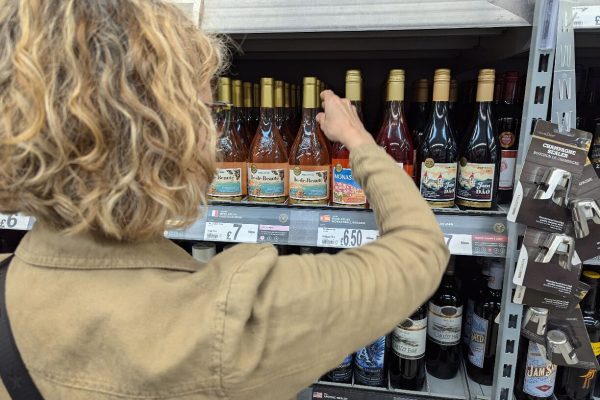
Robert Joseph argues that wine buying is unusually stressful because it combines several psychological effects that discourage purchasing: loss aversion, choice overload and the desire to make decisions quickly. He cites behavioural research showing that too much choice becomes particularly problematic when products are difficult to compare, have many attributes, the buyer feels time or social pressure, and the buyer cannot clearly describe what they want. Wine fits these conditions almost perfectly. Shoppers face hundreds of bottles, unfamiliar regions and producers, different vintages and grapes, complicated labels and relatively small price differences. The result can be hesitation, lower confidence, regret…
-
Wine Has a Replacement Problem
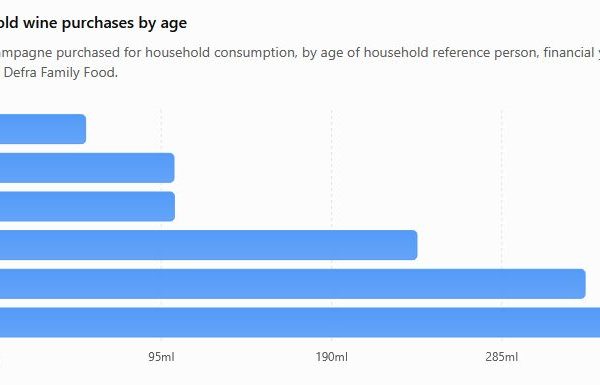
There’s a long piece on the BBC about young adults increasingly turning to prescription drugs rather than alcohol. That, together with greater health awareness, the growing use of other drugs and the rise of prescribed weight-loss drugs, made me wonder about the effect all this has on wine consumption. Wine drinking tends to make up a larger share of alcohol consumption as people get older. A particularly useful UK source is Defra’s Family Food dataset for the 2024 financial year, which reports household purchases of “wine and champagne” according to the age of the household reference person. ml per person…
-

Ice in Wine: A Debate with a Better Solution
One of the most divisive wine questions is, is it acceptable to put ice in wine? Wine traditionalists tend to say no. Their argument is that wine has been carefully produced to achieve a particular balance of flavour, aroma, acidity and alcohol. As ordinary ice melts, it adds water to the glass and gradually changes that balance. A crisp white wine may become thin, while the fruit and complexity of a rosé can fade. In their view, adding ice means undoing some of the winemaker’s work. Other drinkers are far less concerned about convention. They argue that wine should be…
-

Why I Choose a Web Site Over Social Media
I prefer to manage a website as my main platform while most wine communicators are concentrating on boosting their social media presence. I do use social media to share headlines, draw attention and message, but the bulk of my content stays firmly on my site. For example, my Instagram posts tend to alienate “the algorithm” because they include a link, disabled by the platform, that can’t even be followed directly, but does point people towards where content can be found. While gaining followers on social platforms is useful and even fun, it’s not my primary goal. You might think this…
-
What is in the Mouth Shapes What is in the Glass
Sometimes, when I taste food, and wine, the first taste is so much better than those that follow. It is not simply that the wine changes in the glass, though it sometimes does. It is also that the palate changes. The first sip arrives on a relatively fresh canvas. Every sip after that is judged in the context of what has just happened in the mouth. Hydration clearly has its benefits, but I have also been told by wine experts that water should not necessarily be drunk between every sip of wine. Water can temporarily alter the conditions in the…
-
No-Low Wine Remains a Niche Market
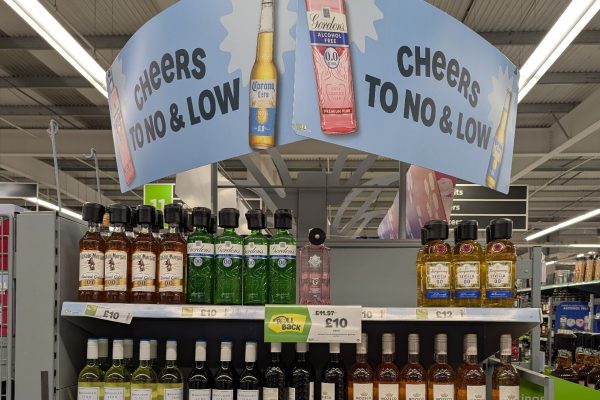
On Tim Atkin’s site, Jason Millar argues that “no-low” alcohol, especially wine, is far more hype than transformation. Jason says UK no/low still wine has actually fallen from 1.7% to 1.5% of still-wine spend over four years, and much growth in no-alcohol wine is cannibalising low-alcohol wine rather than replacing standard wine. He says sparkling no-low is doing better, but the total no-low wine market remains tiny compared with the wider UK off-trade wine market. Buyer loyalty is weak, with many people purchasing no/low wine only once a year, often for Dry January, Christmas drivers, or special occasions. The article…
-

When Old Vintages Linger Too Long on the Shelf
I buy, and am sent, a lot of bottles, which means I get to see certain trends developing across the wine market. One that has become increasingly noticeable is the number of older vintages, or previous years’ releases, still sitting on retail shelves. From my perspective, it has caused quite a few bottles not to taste as they should. In these cases, I have chosen not to review them. You could describe these wines as ‘tired’, but the reality is that many mass-consumer wines are made to be drunk when they are released. A year or two later, they may…
-
Research into Wine Complexity
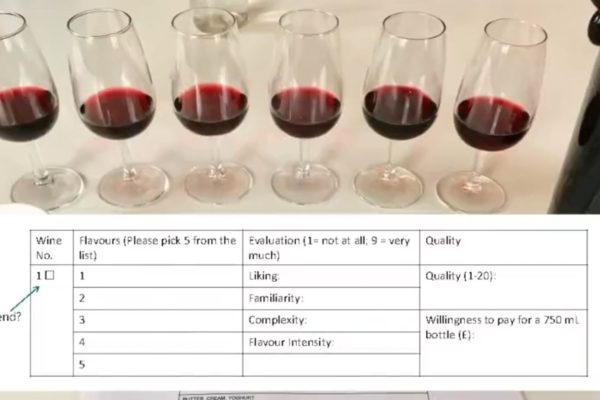
I have written previously about the idea of complexity in wine, but it is also important to look at the research in order to understand it more fully. A particularly interesting TEDx presentation, The Art and Science of Wine Tasting by Qian Janice Wang, explores the question of what wine complexity really is or isn’t. Her discussion suggests that chemical complexity does not necessarily correspond to perceived wine complexity. In other words, a wine with a more complicated chemical composition is not automatically experienced as more complex by the person tasting it. The presentation also highlights that complexity can involve…
-

Italian Wine Has a Trust Problem and the Official Checker is Not Helping
Italian wine has built one of the most serious anti-counterfeit systems in Europe, but it still has a glaring weakness: the last step, where the consumer is supposed to verify the bottle, is not good enough. The official Trust Your Wine app was launched by IPZS in 2017 as the state-backed way to check DOCG and DOC seals by scanning the datamatrix and querying the official system, and it remains available today in the Google Play and Apple app stores. It promises bottle-level authenticity, provenance and traceability. That promise matters because the underlying problem is real. In March 2026, the…
-
Introducing Wine Headlines: Daily Industry News
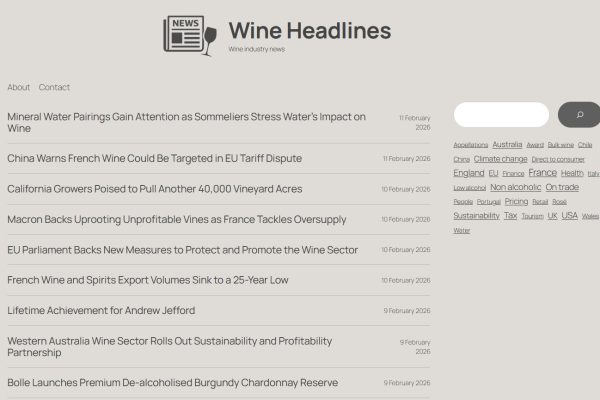
I’ve recently launched a new website, wineheadlines.com, which offers a broader range of news drawn from across the wine industry. It’s intended for anyone with a professional or personal interest in wine, and caters to a wide readership that includes consumers, PR professionals, retailers, importers, producer organisations and winemakers themselves. This new site emerged as an offshoot of winedrinker.co.uk, the site you’re currently visiting. While researching stories for this site, both for its content and out of personal interest, I regularly sift through a high volume of industry news and press releases from multiple sources. Many are have poor or…
-

Learn About Wine Through Cause and Effect
The Sommpour’s WSET Diploma D3 Audible Cheat Sheets, created by Anna Belani-Ellis, form a structured audio learning series following the official WSET Diploma D3 “Wines of the World” syllabus. Released progressively on Substack, the episodes can be streamed or downloaded, allowing students to study flexibly while maintaining continuity with the textbook. They are not summaries or shortcuts but explanatory tools designed to strengthen understanding of the causal links that define wine style, quality, and price, precisely the analytical reasoning required at Diploma level. Each recording stays fully aligned with the syllabus and focuses on using facts rather than memorising them.…
-

Why There are No Luxury Wines, Only Prestigious Ones
Jean-Noël Kapferer, Emeritus Professor of Marketing at HEC Paris and expert in prestige and luxury management, explores how the concept of luxury applies across different cultures and industries, with particular insight into wine. He defines luxury as something desirable but inaccessible, needlessly expensive, and emotionally powerful. True luxury, he argues, must be “somewhere else”, distinct, exclusive, and difficult to attain. When discussing wine, Kapferer is deliberately provocative, asserting that “there are no luxury wines,” only wines that may form part of a luxurious lifestyle. Even the most expensive bottles remain accessible to the wealthy and therefore cannot reach the same…
-

Meta No Longer Recommending Wine Pages
The Northwest Wine Report says that Meta has begun telling many wine, beer and spirits-related businesses that their Facebook Pages will no longer be recommended by Facebook’s algorithms, which those businesses say is already reducing reach and, by extension, revenue. The author says the change appears to have hit at least hundreds and possibly far more businesses, with confirmations from wineries, retailers and related organisations across several US West Coast states and at least one report from Denmark, while Instagram does not appear to be affected so far. A major theme is confusion about both the message and the reason.…
-

The Future of AI for Wine Consumers
I recently read a new article at The Drinks Business about how artificial intelligence is being used to change the direct-to-consumer wine experience. It described a Napa Valley winery using AI concierges, conversational commerce and text messaging to increase engagement and sales. While this may sound innovative, to me as someone who works in IT, it feels like a narrow view of what AI could offer and one that mainly serves the winery rather than the drinker. The approach described is simplistic because it relies on chat tools that are limited to a single producer’s range and perspective. In practice,…
-
New Food & Wine Pairing Tool
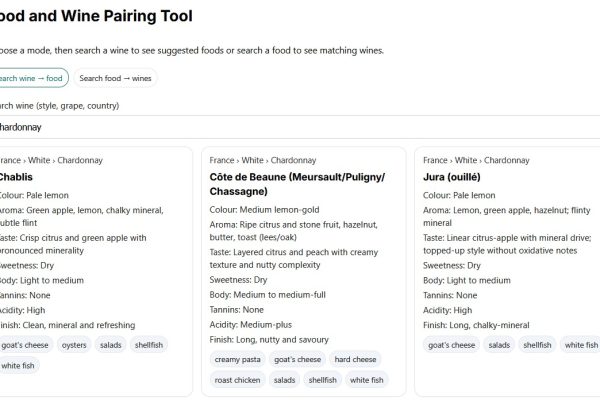
Following the work on my Typicity tool, I began exploring whether it could be adapted to handle food and wine pairing in both directions. I have now put together a simple tool that does just that. You simply choose the mode, either wine to food or food to wine and then begin typing to receive tailored suggestions. Try it here
-
Irish Wine Warnings Spill Over to the UK
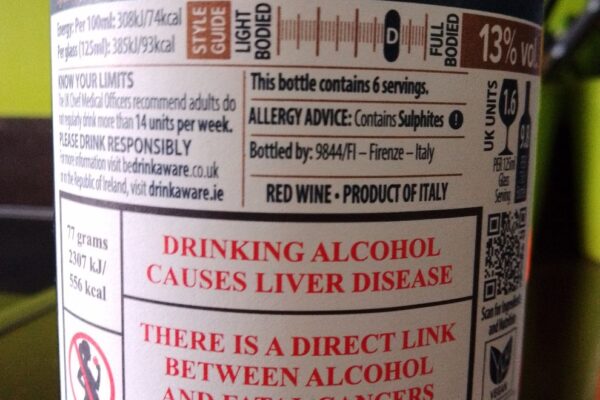
On a recent trip to Aldi I picked up a bottle of wine and did a double-take. The back label carried a stark message that drinking causes liver disease, that there is a direct link between alcohol and fatal cancers. These are the new Irish-style warnings in a UK supermarket, even though this kind of labelling is not mandatory here and in fact is not even fully compulsory in Ireland yet. Ireland’s labelling rules under the Public Health (Alcohol) (Labelling) Regulations 2023, were signed in May 2023 and were originally due to come into force on 22 May 2026, with…
-
Have We Gone Past Peak Wine Choice?
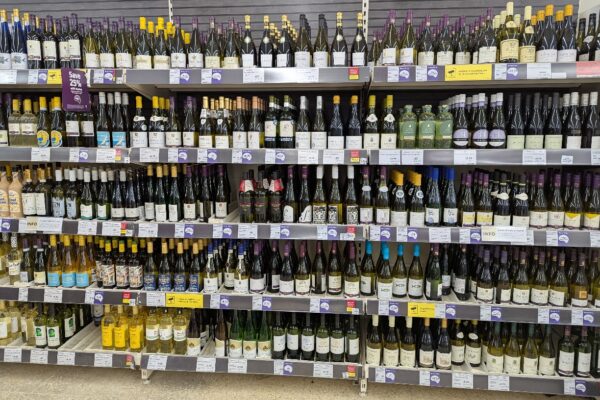
When I go to tastings and scan wine ranges for offers across supermarkets, I am starting to notice the same thing: the lists are slowly shrinking. People might be noticing price increases, but the real story is the gradual narrowing of what’s actually available. It prompts an uncomfortable question: have we gone past peak wine choice? Inside the trade, the mood points in that direction. The industry seems to be focussing on managing contraction rather than chasing expansion. Consolidation dominates the conversation. Large players such as Vinarchy are severely cutting down on their brands. Big distributors are turning away hundreds…
-

Wine on Cunard Queen Anne
At the end of October 2025, my wife and I took a short cruise aboard the Cunard Queen Anne, visiting ports in Spain and Portugal. I’d intended to take a break from writing about wine, but I couldn’t resist putting together a few reflections and tips based on the experience. Carnival, with the new ship Queen Anne, is targeting younger travellers by modernising the experience without ditching its heritage. Queen Anne shows this shift with contemporary dining concepts, livelier nightlife like the Bright Lights Society, casual venues, lighter design and wellness touches. Reports suggest more guests in their thirties and…
-
Typicity Tool
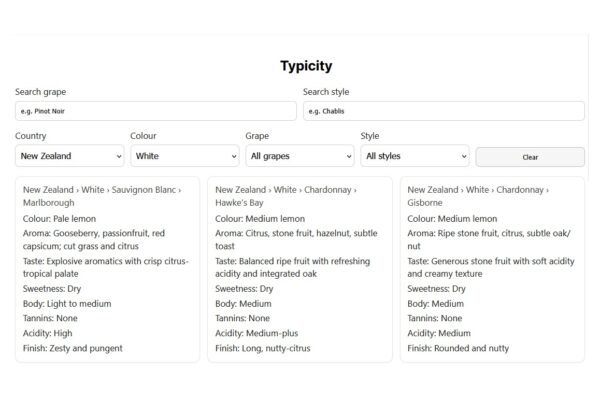
When tasting many wines during large wine tastings, I often find my brain eventually becomes a bit numb trying to pinpoint what different things actually taste like. I’m also aware that I need to broaden my wine vocabulary and include a wider range of descriptive terms. With that in mind, I felt I needed a tool to help me better understand wine typicity and what a wine should taste like. I had a look around but couldn’t find anything that really did what I wanted, so I ended up creating one myself. It gives me a starting point when my…
-
Demise of the Wine List
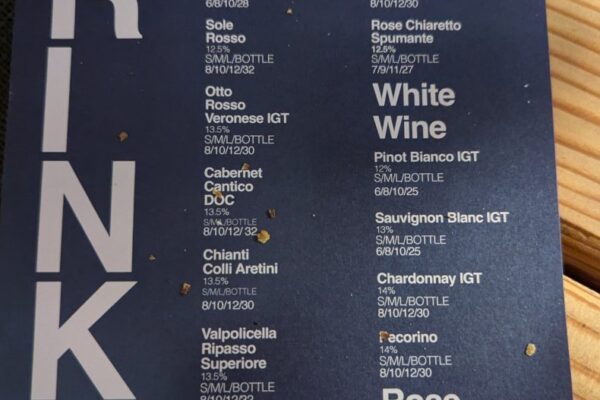
A noticeable trend in informal hospitality is the slow demise of the wine list. Fewer people are drinking wine when eating out, largely due to affordability issues. The rising costs in hospitality, driven by duty increases, environmental packaging regulations and national insurance, make both customers and proprietors more cautious. For proprietors, there is less incentive to curate and maintain a thoughtful wine list when demand is falling, and this leads to a gradual erosion of what was once a point of pride. A recent experience illustrated this perfectly. In the UK, at an otherwise excellent Italian market and pizzeria, which…
Pick Lists
Majestic | The Wine Society | Tesco | Waitrose | Sainsbury’s | Morrisons | Co-op | Asda | Lidl | £7 and Under | Over £20
Did You Know?
Supermarkets remain the dominant purchasing channel, used by 77.8% of respondents. More
Champagne remains the leading celebratory sparkling wine at 33.4%, followed by Prosecco at 27.4% and English Sparkling wine at 20%. More
34% of people identify high wine prices as a leading frustration. More
Australian wine exports to China have collapsed from around $1.2 billion to less than $10 million. More
Wine’s aroma is not determined solely by which flavour compounds it contains. More
Low-to-moderate wine consumption is associated with lower mortality. More
Moderate water stress can be part of what creates flavour and terroir expression. More
Wine appears less frequently online than other alcoholic drinks. More
Independent retailers had 9% fewer customers in March 2026 than two years earlier. More
Average spend per bottle in independents has risen by 23% since 2019, compared with 21% in supermarkets. More.
Nearly a third (32%) of UK consumers say they have already used AI for alcoholic drinks advice. More
Among socially active wine buyers, 37% have bought a wine recommended online. More
In 2026, 72% of consumers now think wine knowledge is essential to appreciation, up 20 percentage points on 2025. More
Rías Baixas wines reached more than 107 countries in 2025 and exports represented 31 per cent of the denomination’s total sales. More
Light Strike Can Cause Wine Degradation in Just One Day. More
People actively adjust their wine choices depending on who might see them. More
In the UK, 73% of Alcohol is Bought From Retail Rather Than Hospitality. More
UK wine production reached 124,377 hectolitres that year, meaning the UK accounted for roughly 0.05 per cent of world output. More
For Crémant, grapes must be harvested by hand and the wines must undergo at least nine months’ ageing before release. More
In 2024, the UK was the second-largest export market for Champagne globally, after the United States. More
Local UK bottling of wine represents about 40% of imported wine. More
Around 1% of people, typically severe asthmatics, have a sulphite sensitivity. More
A large 80% of Australian wine arrives in the UK in bulk. More
Only about 0.02% of Australia’s landmass is dedicated to vineyards. More
In 2024, New Zealand produced only 1% of the World’s wine. More
In 2024, the US imported 37% of World production of Pinot Grigio and the UK was is in second place at 27%. More
In 2024, the UK was South Africa’s largest export market, with 40% of total exports. More
In 2024, the United Kingdom imported 22.3 million bottles of Champagne, a decline of 12.7% compared to the previous year. More
Larger Champagne producers source grapes from as many as 80 different vineyards throughout Champagne. More
Champagne houses and growers collectively produce around 300 million bottles annually. More
In 2025, the Champagne region was home to about 2,124 Champagne houses and approximately 19,000 growers. More
Provence is one of the leaders in the conversion to organic viticulture, with 61% of vineyards certified. More
8% of the South Africa’s grape production is Fairtrade-certified. More
Up to 80% of wine aroma compounds come from grape skins. More
Glycerol is the third-largest component of most dry wines after water and alcohol which is why they so often feel ‘smooth’ or ‘silky’ in the mouth. More
Humans are more than 400 times more sensitive to bitter than sweet. More
Humans can detect the earthy molecule geosmin at about 100 parts per trillion and camels are so sensitive to it they can locate damp ground from roughly 50 miles away. More
During the phylloxera crisis of the nineteenth century, 90% of Europe’s vineyards were destroyed. More
In 2025, for La Vieille Ferme, also known as “The Chicken Wine”, sales surged by 49.4% to £110.8 million. More
In 2025, in the UK, Yellow Tail held the top position with sales, marking a 9.8% increase over the previous year. More
In 2024, the UK was the second-largest wine importer in volume and value. More
In 2024, the UK was the fifth-largest wine-consuming country globally. More
In 2025, global wine consumption continued its downward trend, estimated at 214.2 million hectolitres, the lowest since 1961. More
In 2025, online alcohol sales had a 20% increase in value over five years. More
In 2025, the number of UK vineyards rose to 1,104 and wineries to 238, with land under vine expanding to 4,841 hectares, a 510% increase since 2005. More
Moët Hennessy alone commands nearly 46.66% of the Champagne market, with the top three producers together holding about 61%, and the top five controlling over 72%. More
In 2024, the Champagne market was worth roughly €3.92 billion. More
In the marketing year 2023/24, white wine accounted for roughly 55% of Spain’s output, whereas red and rosé together made up about 45%. More
In the UK, 92% of wine is consumed within 48hrs of purchase. More
The majority of wines, 95%, use commercial rather than wild yeast. More
Between 0.5 and 10 litres of water, per litre of wine, are needed for cleaning during winemaking. More
Machine harvesting can achieve up to 100 tons of fruit per day vs 1 ton for a human. More
In Germany, 2025 was the smallest wine vintage since 2010. More
The majority of vineyards, 90% in 2019, are farmed with heavy chemical interventions. Only 6% are organic. More
90% of low and coastal areas in south Europe and California will no longer be able to produce good wine by the end of the century. More
IMAGE WALL
Tools
Recent

Tags
25% Off Wine Aldi Amarone Argentina Articles Asda Australia Austria Award Awards25 Bizarre Blog Books Bordeaux Bulk Bottling Cabernet Sauvignon Carménère Cava Champagne Chardonnay Chile Climate Change Coop Crémant Decanter Duty English Wine EPR Fairtrade Food France Germany Glossary Greece Health Hungary Italy IWSC Jeroboams Laithwaites Liberty Wines Lidl Low Alcohol M&S Majestic Malbec Merch Merlot Morrisons Natural Nero d'Avola News New Zealand Non-Alcoholic Ocado Old Vine Organic Past Tastings Pick List Pinotage Pinot Grigio Pinot Noir Port Portugal Primitivo Prosecco Regulations Research Reviews Ribera del Duero Riesling Rioja Ripasso Rose Sainsbury's Saperavi Sauvignon Blanc Shiraz Sicily South Africa Spain Sparkling Supermarkets Sustainable Tax Terroir Tesco The Wine Society Unrepresented USA Valpolicella Virgin Wines Waitrose Wanderlust Welsh Wine What to Buy Wine Art WineGB WIne Glasses Zinfandel