
Bulk Bottling
-
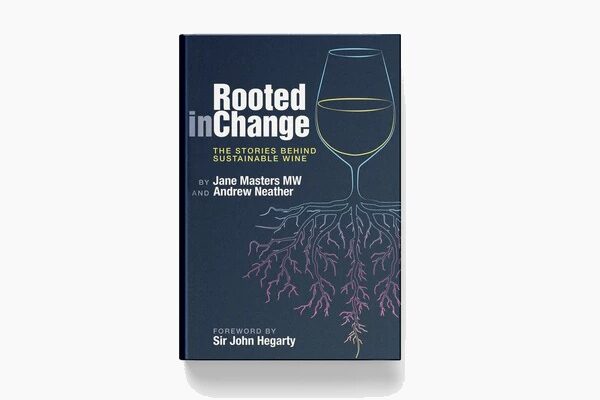
Rooted in Change: The Stories Behind Sustainable Wine
Jane Masters MW and Andrew Neather have created something different in the world of wine publishing: a serious, grounded examination of wine’s relationship with climate change, sustainability and trade. Published in 2025 and running to 248 pages, the book avoids lifestyle fluff and instead offers a sober, evidence-based account of where wine stands today and where it’s heading. Masters brings weighty authority as a Master of Wine and former Chair of the Institute of Masters of Wine, with a particular interest in sustainability. Neather, known for his decade-long stint as the wine critic at the London Evening Standard, brings clarity…
-
Spain’s Wine Industry at a Red-White Crossroads
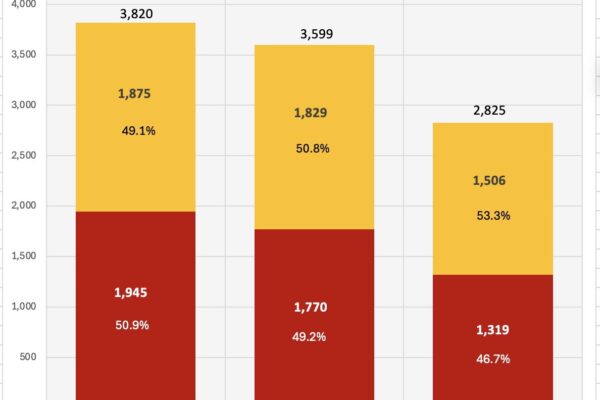
The American Association of Wine Economists recently posted a chart showing Spain’s wine production has been declining and it has also shifted away from red. Spain’s falling output is mostly a climate story, amplified by weaker demand and policy responses. After peaking in 2018, production has trended lower as drought, heat and erratic rainfall have reduced yields and made harvests earlier and more variable. 2023 was especially poor, with Spain’s wine output dropping to about 28.3 million hectolitres, its lowest since the mid-1990s. At the same time Spain’s vineyard area edged down by about 1% in 2023, and authorities activated…
-

Global and UK Wine Market Insights
The International Vine and Wine Organisation’s new report on the global vine and wine sector in 2024 outlines a challenging year shaped by ongoing climatic and economic pressures. Worldwide vineyard surface area continued to shrink for the fourth consecutive year, now standing at 7.1 million hectares. Major vine-growing countries such as Spain and France saw further reductions, while Italy and India stood out with modest growth. Wine production suffered significantly, reaching only 225.8 million hectolitres, the lowest level in over six decades. Severe weather events including frost, drought and excessive rainfall disrupted harvests across both hemispheres. While Italy managed a…
-

On Bulk Shipping and Bottling
Andy Neather has written a thought-provoking article about Bulking Up, the role of bulk wine in the UK wine industry. At Encirc’s bottling plant in Cheshire, huge volumes of wine are imported in bulk from countries like Australia, Chile and the US and bottled locally. This method now accounts for at least 40% of wine sold in the UK, including many of the top brands. Despite its low profile, bulk wine is central to understanding major industry challenges, from sustainability to shifting consumer preferences and international tariffs. Bulk wine has seen a resurgence, overturning the belief that UK bottling was…
-
Thoughts on Wine Price vs Value
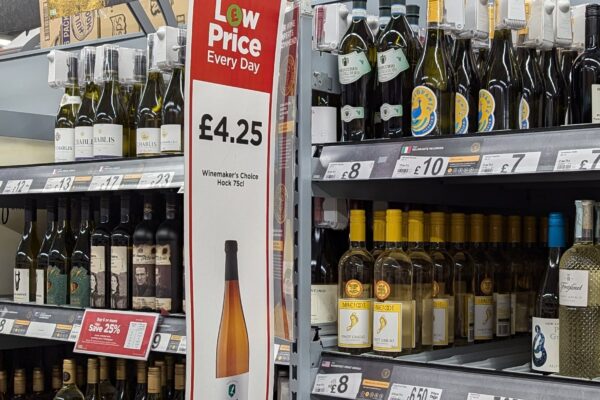
When you purchase a bottle of wine, you might assume that most of the price goes towards the wine itself. However, the reality is often quite different, particularly for lower-priced and very highly priced wines. Here, I explore the complexities of wine pricing and explain why the relationship between price and quality is not as straightforward as it may seem. In the UK, the pricing structure of inexpensive wines reveals an perhaps unexpected allocation of costs. Consider a £5.99 bottle of wine. Of this amount, £1.00 typically goes to VAT, £2.16 covers UK excise duty, and £0.10 accounts for customs…
-
New UK Wine Funding Comes with Dubious New Reforms
The UK government has launched the Future Winemakers’ Scheme with an investment of £1.5 million to support the burgeoning domestic wine industry, focusing on the education and training of future viticulturists and winemakers. Announced by Environment Secretary Steve Barclay at the WineGB conference, this initiative aims to cultivate skilled professionals to sustain and expand the industry’s rapid growth over the past two decades. The scheme is part of a broader effort to streamline regulations and enhance support for the sector, which currently employs around 2,300 full-time and 8,300 part-time workers, with expectations of a 50% employment increase next year. The…
-

UK Bulk Wine Bottlers Embrace Cork for Sustainability
The Drinks Business is reporting that two leading UK bulk wine bottlers are making a move back to traditional cork stoppers. This change comes amidst growing demand among wine brands for more sustainable packaging solutions. This trend is largely driven by cork’s sustainable credentials, which are becoming more valued by both consumers and wine brands. The decision by Encirc Beverages and Broadland Drinks to install new corking lines at their UK facilities is a result of rising demand for cork-sealed wines. Encirc is responding to a top wine brand’s request to switch from screwcaps to cork for its bulk-shipped wines…
-

Bulk Packaging and Local Bottling
A hidden part of the UK wine industry to consumers, is the process of bulk packaging, transporting and local UK bottling of wine which represents about 40% of imported wine. This reduces transportation costs and the environmental impact but also carries implications for the provenance and authenticity of the wine. If you look at the back label of a bottle you might see a bottling code rather than a statement that it’s bottled near origin. The bottling plant code on wine bottles is typically, F for France, D for Germany, and W, commonly used for the UK. While the use…
Pick Lists
Majestic | The Wine Society | Tesco | Waitrose | Sainsbury’s | Morrisons | Co-op | Asda | Lidl | £7 and Under | Over £20
Did You Know?
Supermarkets remain the dominant purchasing channel, used by 77.8% of respondents. More
Champagne remains the leading celebratory sparkling wine at 33.4%, followed by Prosecco at 27.4% and English Sparkling wine at 20%. More
34% of people identify high wine prices as a leading frustration. More
Australian wine exports to China have collapsed from around $1.2 billion to less than $10 million. More
Wine’s aroma is not determined solely by which flavour compounds it contains. More
Low-to-moderate wine consumption is associated with lower mortality. More
Moderate water stress can be part of what creates flavour and terroir expression. More
Wine appears less frequently online than other alcoholic drinks. More
Independent retailers had 9% fewer customers in March 2026 than two years earlier. More
Average spend per bottle in independents has risen by 23% since 2019, compared with 21% in supermarkets. More.
Nearly a third (32%) of UK consumers say they have already used AI for alcoholic drinks advice. More
Among socially active wine buyers, 37% have bought a wine recommended online. More
In 2026, 72% of consumers now think wine knowledge is essential to appreciation, up 20 percentage points on 2025. More
Rías Baixas wines reached more than 107 countries in 2025 and exports represented 31 per cent of the denomination’s total sales. More
Light Strike Can Cause Wine Degradation in Just One Day. More
People actively adjust their wine choices depending on who might see them. More
In the UK, 73% of Alcohol is Bought From Retail Rather Than Hospitality. More
UK wine production reached 124,377 hectolitres that year, meaning the UK accounted for roughly 0.05 per cent of world output. More
For Crémant, grapes must be harvested by hand and the wines must undergo at least nine months’ ageing before release. More
In 2024, the UK was the second-largest export market for Champagne globally, after the United States. More
Local UK bottling of wine represents about 40% of imported wine. More
Around 1% of people, typically severe asthmatics, have a sulphite sensitivity. More
A large 80% of Australian wine arrives in the UK in bulk. More
Only about 0.02% of Australia’s landmass is dedicated to vineyards. More
In 2024, New Zealand produced only 1% of the World’s wine. More
In 2024, the US imported 37% of World production of Pinot Grigio and the UK was is in second place at 27%. More
In 2024, the UK was South Africa’s largest export market, with 40% of total exports. More
In 2024, the United Kingdom imported 22.3 million bottles of Champagne, a decline of 12.7% compared to the previous year. More
Larger Champagne producers source grapes from as many as 80 different vineyards throughout Champagne. More
Champagne houses and growers collectively produce around 300 million bottles annually. More
In 2025, the Champagne region was home to about 2,124 Champagne houses and approximately 19,000 growers. More
Provence is one of the leaders in the conversion to organic viticulture, with 61% of vineyards certified. More
8% of the South Africa’s grape production is Fairtrade-certified. More
Up to 80% of wine aroma compounds come from grape skins. More
Glycerol is the third-largest component of most dry wines after water and alcohol which is why they so often feel ‘smooth’ or ‘silky’ in the mouth. More
Humans are more than 400 times more sensitive to bitter than sweet. More
Humans can detect the earthy molecule geosmin at about 100 parts per trillion and camels are so sensitive to it they can locate damp ground from roughly 50 miles away. More
During the phylloxera crisis of the nineteenth century, 90% of Europe’s vineyards were destroyed. More
In 2025, for La Vieille Ferme, also known as “The Chicken Wine”, sales surged by 49.4% to £110.8 million. More
In 2025, in the UK, Yellow Tail held the top position with sales, marking a 9.8% increase over the previous year. More
In 2024, the UK was the second-largest wine importer in volume and value. More
In 2024, the UK was the fifth-largest wine-consuming country globally. More
In 2025, global wine consumption continued its downward trend, estimated at 214.2 million hectolitres, the lowest since 1961. More
In 2025, online alcohol sales had a 20% increase in value over five years. More
In 2025, the number of UK vineyards rose to 1,104 and wineries to 238, with land under vine expanding to 4,841 hectares, a 510% increase since 2005. More
Moët Hennessy alone commands nearly 46.66% of the Champagne market, with the top three producers together holding about 61%, and the top five controlling over 72%. More
In 2024, the Champagne market was worth roughly €3.92 billion. More
In the marketing year 2023/24, white wine accounted for roughly 55% of Spain’s output, whereas red and rosé together made up about 45%. More
In the UK, 92% of wine is consumed within 48hrs of purchase. More
The majority of wines, 95%, use commercial rather than wild yeast. More
Between 0.5 and 10 litres of water, per litre of wine, are needed for cleaning during winemaking. More
Machine harvesting can achieve up to 100 tons of fruit per day vs 1 ton for a human. More
In Germany, 2025 was the smallest wine vintage since 2010. More
The majority of vineyards, 90% in 2019, are farmed with heavy chemical interventions. Only 6% are organic. More
90% of low and coastal areas in south Europe and California will no longer be able to produce good wine by the end of the century. More
IMAGE WALL
Tools
Recent






Tags
25% Off Wine Aldi Argentina Articles Asda Australia Austria Award Awards25 Bizarre Blog Books Bordeaux Bulk Bottling Cabernet Sauvignon Carménère Cava Champagne Chardonnay Chile Climate Change Coop Crémant Decanter DoctorWine Duty English Wine EPR Fairtrade Food France Germany Glossary Greece Health Hungary Italy IWSC Jeroboams Laithwaites Legislation Liberty Wines Lidl Low Alcohol M&S Majestic Malbec Merch Merlot Morrisons Natural Nero d'Avola News New Zealand Non-Alcoholic Ocado Old Vine Organic Past Tastings Pick List Pinotage Pinot Noir Port Portugal Primitivo Prosecco Regulations Research Retailers Reviews Ribera del Duero Riesling Rioja Ripasso Rose Sainsbury's Sauvignon Blanc Shiraz Sicily South Africa Spain Sparkling Supermarkets Sustainable Tax Terroir Tesco The Wine Society Unrepresented USA Valpolicella Virgin Wines Waitrose Wanderlust Welsh Wine What to Buy Wine Art WineGB WIne Glasses Zinfandel