
Simon Judge
-
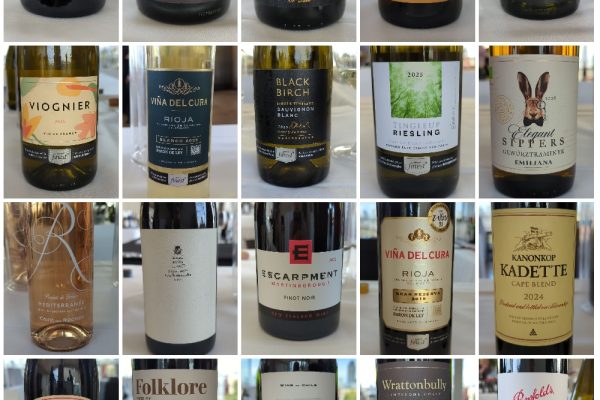
Tesco Autumn Winter Press Tasting
In early October 2026, I headed to London for the Tesco press tasting, where there were an impressive 153 wines to work through, including more than 50 new additions to the range. It has been a particularly busy year for Tesco’s wine team, with more than 150 new wines launched throughout 2026. And it’s not just the size of the range that has been growing, the wines have also delivered Tesco’s best-ever results in wine competitions this year. Among the highlights were 11 gold medals and 76 silver medals, as well as a prestigious Platinum award at the 2026 Decanter…
-
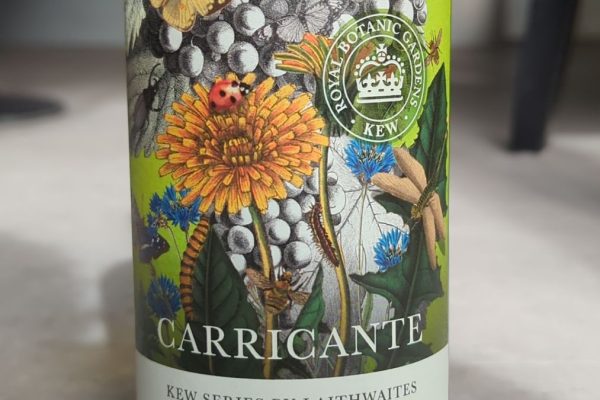
Kew Series Carricante
Kew Series Carricante is made in collaboration with the Royal Botanic Gardens, Kew, using Carricante, an indigenous Sicilian grape variety. This is the 2024 vintage, from vineyards on the slopes of Mount Etna in Sicily and has a refreshingly modest 11% ABV. Made by W/O Wines from organically grown grapes, it is also vegan. The W/O philosophy is all about doing things without (W/O) compromise, with sustainability placed front and centre. That extends to the packaging, with a bottle made from 100% post-consumer recycled wild glass and no neck foil. In the glass it is a pale lemon colour. Lemon…
-
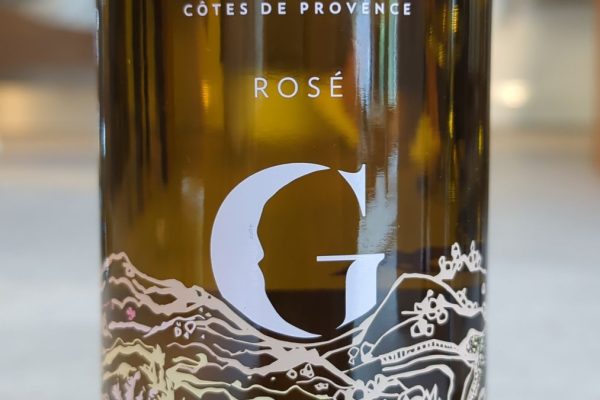
Maison Galoupet ‘G de Galoupet’ Organic Rosé
Maison Galoupet is a 300-year-old estate sitting along the Mediterranean coast in the Côtes de Provence. It holds prestigious Cru Classé status, a distinction awarded to only 18 producers in the region. In 2019, Moët Hennessy acquired the 160-hectare estate and put organic certification and sustainability at the heart of its operations. There is a strong focus on regional biodiversity too, with the estate home to five million bees and a queen bee breeding station run in partnership with the Observatoire Français d’Apidologie. G de Galoupet is a blend of 60% Grenache, 15% Cinsault, 10% Rolle, 10% Syrah and 5%…
-
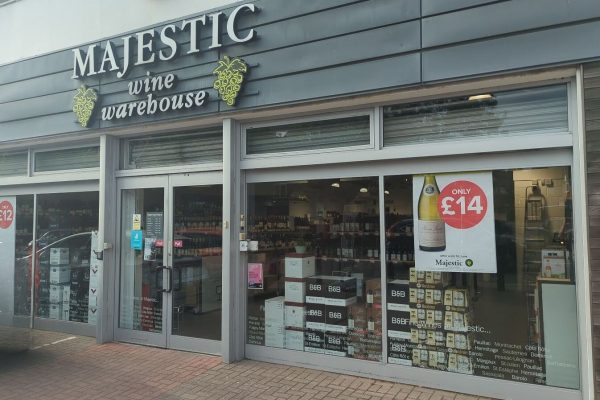
Tesco Might Buy Majestic Wine
According to London South East, Tesco has emerged as one of the bidders considering an acquisition of Majestic Wine Group, and at first glance it might seem like an unusual move for Britain’s largest supermarket. Look a little closer, though, and the logic becomes much more interesting. Majestic’s owner, Fortress Investment Group, began a formal sale process several weeks ago. Majestic operates more than 200 stores across the UK and Jersey, while also supplying restaurants, hotels and other hospitality businesses through its commercial operation and Enotria. One analyst suggested that Tesco could potentially pursue a deal through Booker, its wholesale…
-

Rugby Saracens Rename Coach to ‘Wine Consultant’
The Sun newspaper reports that the rugby team, Saracens, have changed Brendan Venter’s official job title from “Head of Rugby Culture” to “Wine Consultant”, apparently as a way of avoiding Premiership Rugby’s compulsory media duties for senior coaching figures. Under league rules, the relevant rugby lead is expected to attend weekly press conferences and handle pre- and post-match media commitments. Venter had already missed an official pre-season media day, costing Saracens a £5,000 fine, and the club was also penalised after he failed to fulfil media duties around their opening league win over Leicester. Saracens are reportedly disputing the fines…
-

£7 and Under Pick List
Welcome to my selection of great wines at £7 or less, drawn from over 1,500 wines I’ve tried at press tastings in the past year. I update the list regularly as I discover new favourites. Finding a great bottle of wine doesn’t mean you have to break the bank. From crisp, aromatic whites to rich, full-bodied reds, here is your definitive list of the best affordable wines, complete with their vintage, supplier, cost and a brief tasting note to help you choose. Asda Lidl Majestic Morrisons Tesco
-
Lidl Pick List
If you have been following my recent tasting adventures, you will know that I have tasted over 210 wines from the Lidl tastings over the past year. To make it easier for you to find my favourite bottles, I have put together this summary, updated four times a year, highlighting my picks. To help you easily find the wines on your next shopping trip, I have grouped all of my top recommendations by country, complete with vintages, prices and a brief tasting note for each. If buying on these recommendations, check the vintage, as I have found Lidl wines can…
-
Lidl Winter Wine Tour
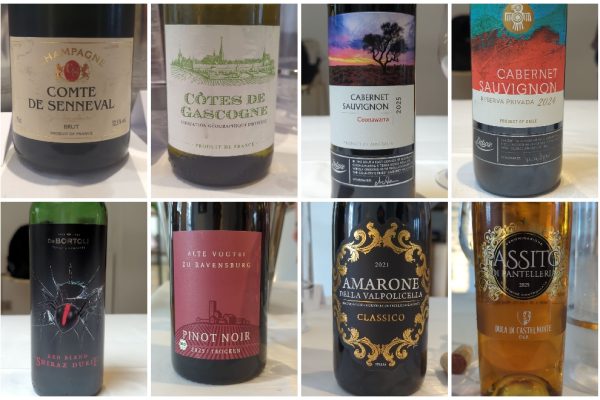
In late September 2026, I attended Lidl’s Winter Tasting, which showcased wines from the forthcoming Winter Wine Tour, available in stores from 29 October 2026 until 28 January 2027, alongside some wines from the core range. As I previously mentioned, Lidl’s Wine Tours have moved from a monthly to a quarterly format. With this change, there were fewer wines than usual at the tasting, with 33 on show. Here are the ones that caught my attention: Champagne Comte de Senneval Brut NV 12.5% £13.99Produced by the UCC Alliance Champagne Jacquart, Union de Coopérative de la Champagne (UCC). Pale lemon in…
-

Understanding the Wine Glass Bottle
This article was prompted by my review of a 750ml can of wine. It actually made me think more deeply about glass wine bottles. We rarely spare a thought for the everyday bottle sitting on our dining table. However, look closer. That simple glass bottle is not simple at all. It is a remarkably dense, highly engineered convergence of eighteenth-century international trade mathematics, physical chemistry, photochemical shielding, and a modern, high-stakes battle over supply-chain carbon logistics. The Trade Mathematics of the Standard Bottle To understand why wine across the globe is almost universally sold in 750ml vessels, you must look…
-

Co-op Pick List
Welcome to my latest Co-op wine roundup. Over the recent Autumn/Winter and Spring/Summer press events, I have tasted over 140 wines from the two tastings to find my favourite bottles available at the Co-op. This is a bi-annual summary updated every April and October, designed to help you navigate the shelves and discover everything from excellent value weekday bottles to top choices for special occasions. Below is my curated list of top picks, grouped by country, complete with vintages, prices, and a quick tasting note for each. Please note that not all bottles are in all stores, prices may change…
-
Co-op Autumn Winter Press Tasting
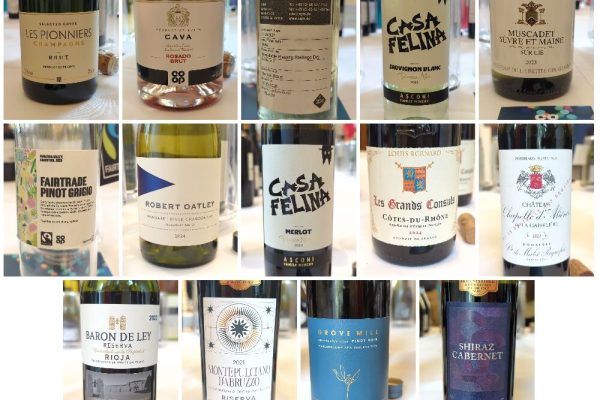
In late September 2026, I attended Co-op’s Autumn/Winter press tasting in London, where 71 wines were on show. Co-op is refreshing its Fairtrade range, both in terms of quality and branding. The wines will share a consistent two-panel label design, with the right-hand panel giving each wine a better space to tell its own story. Co-op became the world’s largest seller of Fairtrade wine in 2015 and remains the UK’s largest, accounting for 79% of all Fairtrade wine sold by volume in the UK in 2025. That year, Co-op sourced 15.3 million litres of wine on Fairtrade terms, equivalent to…
-
25% Off Wine at Morrisons
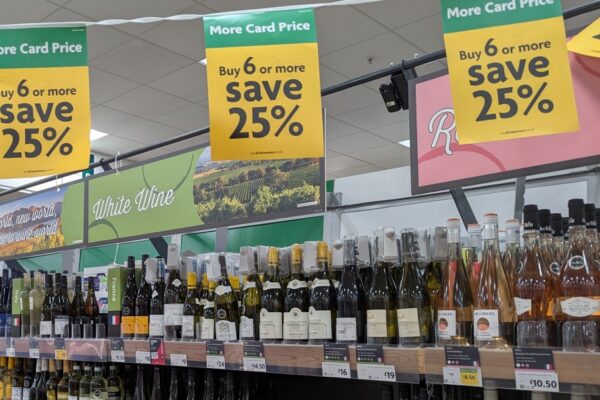
Morrisons has 25% discount on 6 or more bottles of wine, More Card price, £6 or more from 29 September 2026 until 11 October 2026. See the Morrisons pick list for recommendations. Note that the Morrisons web site is deficient and can only show one offer, for a wine, at a time. If you go in store you will find some wines are on double offer!
-
Vintage Roots 40th Anniversary Tasting
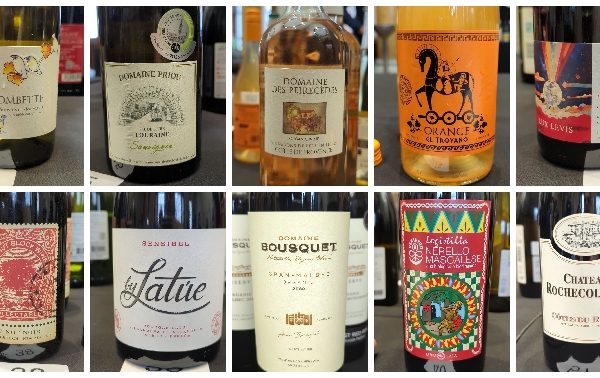
In late September 2026, I attended Vintage Roots’ trade tasting celebrating 40 years since the company was founded. With 12 producer tables and more than 150 organically certified wines to taste, it was a chance to explore the range and meet some of the people behind it. Vintage Roots was ahead of its time, seeking out organic wines back in 1986, when organic wine was a much less familiar proposition. The business began with support from Margaret Thatcher’s Enterprise Allowance Scheme, which gave budding entrepreneurs £40 a week, equivalent to state benefit at the time, for a year to help…
-

Beck Ink
I came across Beck Ink while eating at Unwined, a wine bar and restaurant near Waterloo in London. It comes from Judith Beck in Austria, close to Lake Neusiedl in the east of the country, where she works organically and biodynamically, with a low-intervention approach to winemaking. Beck Ink is a blend of Zweigelt and St. Laurent grapes. Despite the “Ink” name and its deep colour, this isn’t intended to be a massive or heavily extracted red. This is the 2023 vintage, at 12% ABV. There is a deep cherry, cinnamon and clove on the aroma. It tastes wonderfully juicy,…
-
Finest Nero d’Avola
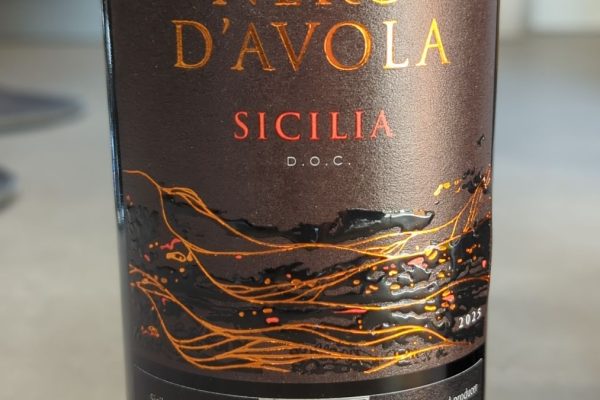
This Finest Nero d’Avola was one my wife picked up at Tesco and it turned out to be a great choice. It is good to see the producer, Colomba Bianca, actually named rather than finding another anonymous bulk-bottled wine. This is bottled at source in western Sicily, around Mazara del Vallo and Salemi in the province of Trapani, by this wine co-operative representing some 2,480 individual grape growers. Colomba Bianca is not simply a mass wine producer either. The co-operative has been moving towards more quality-focused bottled wines, including organic ranges and wines made from selected old vineyards. The grape…
-
Veuve Ambal Crémant de Bourgogne Blanc de Blanc
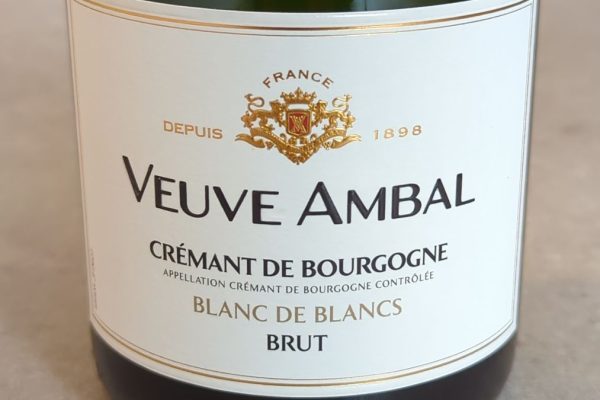
This is a new wine at Majestic. Its from Burgundy, made by Maison Veuve Ambal, a producer that has been around since 1898. The business is now run by the sixth generation of the Piffaut family and today has a strong commitment to sustainable practices, having earned France’s highest official tier of environmental certification. Veuve Ambal is also one of the principal producers of Crémant de Bourgogne. This is a non-vintage sparkling wine made from 95% Chardonnay and 5% Aligoté, both white grapes, hence the Blanc de Blancs name. It is made in the same way as Champagne, with a…
-
Over £20 Pick List
This list is for when you are looking to celebrate a special occasion, host a memorable dinner party or simply treat yourself to something truly exceptional. Over the last year, I have tasted over 1500 wines at retailer press tastings to bring you my favourite premium wines priced over £20. Asda Benoît Renaud Blanc de Blanc Grand Cru Champagne (NV) – £32.00 An intense Grand Cru Champagne delivering crisp citrus, green apple, and white floral aromas backed by almond and rich brioche. Louis Bernard Champagne Brut (2018) – £28.00 A precise and toasty brut Champagne showcasing citrus and orchard fruit…
-

Asda Pick List
Welcome to the Asda pick list. I have tasted over 160 wines from the two tastings recently hosted by Asda, their Autumn/Winter showcase and the Exceptional range tasting. Asda has recently recorded its strongest ever performance in international wine competitions, winning 460 awards across the IWC, IWSC and Decanter World Wine Awards in 2026, more than any other UK supermarket. The retailer secured 13 Gold, 118 Silver, 286 Bronze and 43 Commended awards, representing 16% year-on-year growth and reinforcing its position as the UK’s most awarded supermarket for wine. To help you navigate the aisles and find the absolute best…
-
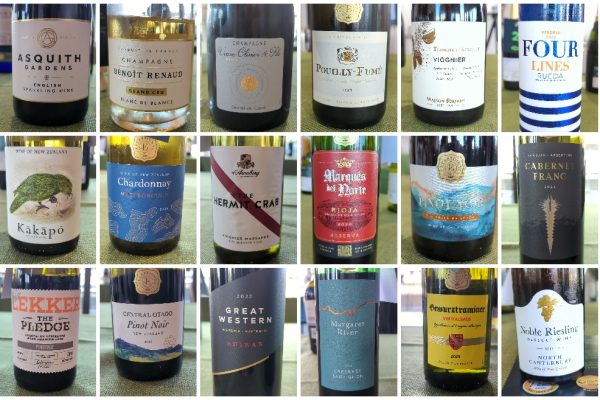
Asda Autumn Winter Wine Showcase
In September 2026, I was at the National Theatre in London for Asda’s Autumn/Winter Wine Showcase. Asda is continuing to focus on offering great value at every level, with most of the new wines mentioned below being launched at around the same time as the tasting. It has also been a record-breaking year for awards. Asda picked up an impressive 460 medals across the International Wine Challenge (IWC), International Wine & Spirit Competition (IWSC) and Decanter World Wine Awards (DWWA), more than any other retailer. Even more impressively, 46% of the wines entered received either a Gold or Silver medal.…
-
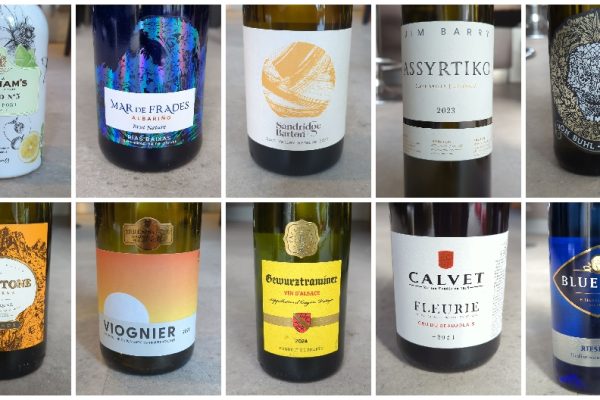
Wine With Asian Food
My previous accidental success pairing food and wine at Maki & Ramen got me thinking more seriously about Asian food and wine. Those who follow this site will know that I have a somewhat chequered history with food and wine pairing. Quite often, the wine that is supposed to work simply doesn’t, although every now and then there is a real hit. It can all feel a bit random, which is one of the reasons I generally prefer to drink and appreciate wine on its own. Then there is the wording you see on so many bottles: “great with Asian…
Pick Lists
Majestic | The Wine Society | Tesco | Waitrose | Sainsbury’s | Morrisons | Co-op | Asda | Lidl | £7 and Under | Over £20
Did You Know?
Australian wine exports to China have collapsed from around $1.2 billion to less than $10 million. More
Wine’s aroma is not determined solely by which flavour compounds it contains. More
Low-to-moderate wine consumption is associated with lower mortality. More
Moderate water stress can be part of what creates flavour and terroir expression. More
Wine appears less frequently online than other alcoholic drinks. More
Independent retailers had 9% fewer customers in March 2026 than two years earlier. More
Average spend per bottle in independents has risen by 23% since 2019, compared with 21% in supermarkets. More.
Nearly a third (32%) of UK consumers say they have already used AI for alcoholic drinks advice. More
Among socially active wine buyers, 37% have bought a wine recommended online. More
In 2026, 72% of consumers now think wine knowledge is essential to appreciation, up 20 percentage points on 2025. More
Rías Baixas wines reached more than 107 countries in 2025 and exports represented 31 per cent of the denomination’s total sales. More
Light Strike Can Cause Wine Degradation in Just One Day. More
People actively adjust their wine choices depending on who might see them. More
In the UK, 73% of Alcohol is Bought From Retail Rather Than Hospitality. More
UK wine production reached 124,377 hectolitres that year, meaning the UK accounted for roughly 0.05 per cent of world output. More
For Crémant, grapes must be harvested by hand and the wines must undergo at least nine months’ ageing before release. More
In 2024, the UK was the second-largest export market for Champagne globally, after the United States. More
Local UK bottling of wine represents about 40% of imported wine. More
Around 1% of people, typically severe asthmatics, have a sulphite sensitivity. More
A large 80% of Australian wine arrives in the UK in bulk. More
Only about 0.02% of Australia’s landmass is dedicated to vineyards. More
In 2024, New Zealand produced only 1% of the World’s wine. More
In 2024, the US imported 37% of World production of Pinot Grigio and the UK was is in second place at 27%. More
In 2024, the UK was South Africa’s largest export market, with 40% of total exports. More
In 2024, the United Kingdom imported 22.3 million bottles of Champagne, a decline of 12.7% compared to the previous year. More
Larger Champagne producers source grapes from as many as 80 different vineyards throughout Champagne. More
Champagne houses and growers collectively produce around 300 million bottles annually. More
In 2025, the Champagne region was home to about 2,124 Champagne houses and approximately 19,000 growers. More
Provence is one of the leaders in the conversion to organic viticulture, with 61% of vineyards certified. More
8% of the South Africa’s grape production is Fairtrade-certified. More
Up to 80% of wine aroma compounds come from grape skins. More
Glycerol is the third-largest component of most dry wines after water and alcohol which is why they so often feel ‘smooth’ or ‘silky’ in the mouth. More
Humans are more than 400 times more sensitive to bitter than sweet. More
Humans can detect the earthy molecule geosmin at about 100 parts per trillion and camels are so sensitive to it they can locate damp ground from roughly 50 miles away. More
During the phylloxera crisis of the nineteenth century, 90% of Europe’s vineyards were destroyed. More
In 2025, for La Vieille Ferme, also known as “The Chicken Wine”, sales surged by 49.4% to £110.8 million. More
In 2025, in the UK, Yellow Tail held the top position with sales, marking a 9.8% increase over the previous year. More
In 2024, the UK was the second-largest wine importer in volume and value. More
In 2024, the UK was the fifth-largest wine-consuming country globally. More
In 2025, global wine consumption continued its downward trend, estimated at 214.2 million hectolitres, the lowest since 1961. More
In 2025, online alcohol sales had a 20% increase in value over five years. More
In 2025, the number of UK vineyards rose to 1,104 and wineries to 238, with land under vine expanding to 4,841 hectares, a 510% increase since 2005. More
Moët Hennessy alone commands nearly 46.66% of the Champagne market, with the top three producers together holding about 61%, and the top five controlling over 72%. More
In 2024, the Champagne market was worth roughly €3.92 billion. More
In the marketing year 2023/24, white wine accounted for roughly 55% of Spain’s output, whereas red and rosé together made up about 45%. More
In the UK, 92% of wine is consumed within 48hrs of purchase. More
The majority of wines, 95%, use commercial rather than wild yeast. More
Between 0.5 and 10 litres of water, per litre of wine, are needed for cleaning during winemaking. More
Machine harvesting can achieve up to 100 tons of fruit per day vs 1 ton for a human. More
In Germany, 2025 was the smallest wine vintage since 2010. More
The majority of vineyards, 90% in 2019, are farmed with heavy chemical interventions. Only 6% are organic. More
90% of low and coastal areas in south Europe and California will no longer be able to produce good wine by the end of the century. More
IMAGE WALL
Tools
Recent
Tags
25% Off Wine Aldi Amarone Argentina Articles Asda Australia Austria Award Awards25 Bizarre Blog Books Bordeaux Bulk Bottling Cabernet Sauvignon Carménère Cava Champagne Chardonnay Chile Climate Change Coop Crémant Decanter Duty English Wine EPR Fairtrade Food France Germany Glossary Greece Health Hungary Italy IWSC Jeroboams Laithwaites Legislation Liberty Wines Lidl Low Alcohol M&S Majestic Malbec Merch Merlot Morrisons Natural Nero d'Avola News New Zealand Non-Alcoholic Ocado Old Vine Organic Past Tastings Pick List Pinotage Pinot Grigio Pinot Noir Port Portugal Primitivo Prosecco Research Reviews Ribera del Duero Riesling Rioja Ripasso Rose Sainsbury's Saperavi Sauvignon Blanc Shiraz Sicily South Africa Spain Sparkling Supermarkets Sustainable Tax Terroir Tesco The Wine Society Unrepresented USA Valpolicella Virgin Wines Waitrose Wanderlust Welsh Wine What to Buy Wine Art WineGB WIne Glasses Zinfandel