
Crémant
-
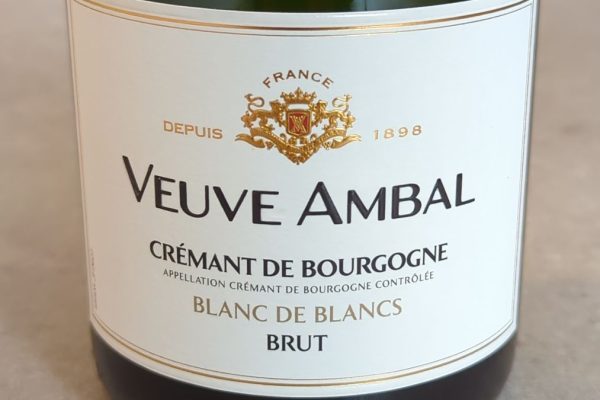
Veuve Ambal Crémant de Bourgogne Blanc de Blanc
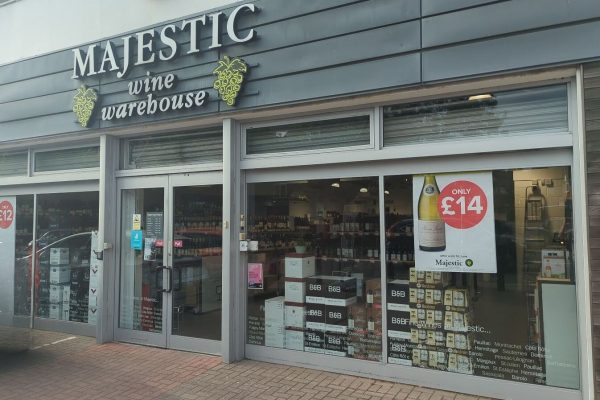
This is a new wine at Majestic. Its from Burgundy, made by Maison Veuve Ambal, a producer that has been around since 1898. The business is now run by the sixth generation of the Piffaut family and today has a strong commitment to sustainable practices, having earned France’s highest official tier of environmental certification. Veuve Ambal is also one of the principal producers of Crémant de Bourgogne. This is a non-vintage sparkling wine made from 95% Chardonnay and 5% Aligoté, both white grapes, hence the Blanc de Blancs name. It is made in the same way as Champagne, with a…
-
BBC Good Food – Crémant
BBC Good Food’s round-up presents Crémant as a strong middle ground between Prosecco and Champagne, made by the traditional method, generally drier and more layered than Prosecco, but usually much cheaper than Champagne. They mention that Crémant now covers sparkling wines from eight French regions, so styles vary quite a bit, from lean and citrusy to richer, more brioche-led bottles. The wines mentioned are: Kew Gardens Crémant de Loire Rosé Brut £18.99 Laithwaites. Hunter’s Miru Miru Marlborough Brut NV £19.99 Laithwaites. Roche Lacour Crémant de Limoux 2022 £15.99 Laithwaites. Arthur Metz Crémant d’Alsace Organic Brut £15 Ocado. Moillard-Thomas Crémant de…
-
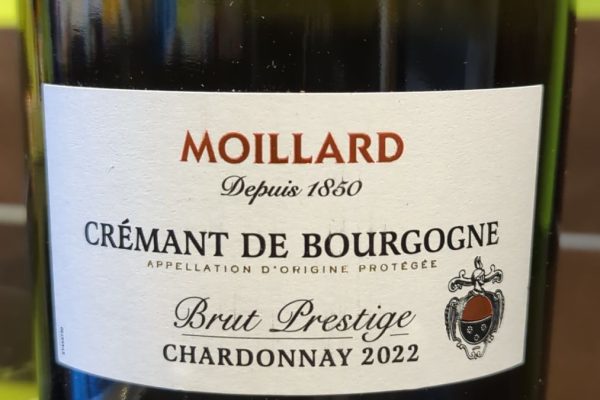
Moillard Crémant de Bourgogne Chardonnay
This 2021 vintage sparkling is wine made entirely from Chardonnay and produced in the traditional method by Moillard, one of Burgundy’s most historic and respected houses, established in the 18th century in Nuits-Saint-Georges. This vintage has spent twelve months on lees, going beyond the nine-month minimum required for Crémant, giving it extra depth and complexity. The wine has a pale golden yellow colour with a very energetic rush of bubbles at first pour, as shown in my photograph. Aromas are floral and nutty with hints of apple drifting through. On the tongue it is distinctly dry, with a bright acidic…
-

Understanding Crémant
Crémant stands as a French example of how outstanding sparkling wine can be made outside the Champagne region. The term refers to quality traditional-method sparkling wines that are protected by appellation and produced in specific regions under detailed rules. In France, the Crémant producers’ federation brings together eight AOPs (L’Appellation d’origine protégée): Alsace, Bordeaux, Bourgogne, Die, Jura, Limoux, Loire and Savoie. For Crémant, grapes must be harvested by hand, the amount of juice obtained from pressing must not exceed 100 litres per 150 kilos of grapes, and the wines must undergo at least nine months’ ageing before release, with commercial…
-

Louis Couturier Crémant de Bordeaux Rosé
A sparkling Rosé from the heart of the Entre-deux-Mers, the stretch of land between the Dordogne and Garonne rivers. Dry in style and produced by Les Grands Chais de France, a large cooperative and négociant house known for its wide portfolio across Bordeaux and beyond, this wine comes in at 11.5% ABV. It is made predominantly from Merlot at 90% with a touch of Cabernet Franc making up the rest. Its quality has not gone unnoticed, earning a Bronze medal at the IWC 2025. It pours with a rose gold hue, throwing off a fine stream of small bubbles in…
-
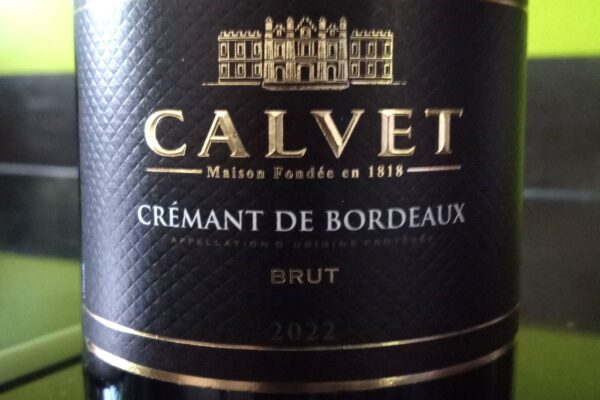
Calvet Crémant de Bordeaux Blanc
This sparkling wine from Bordeaux is a blend of 70% Sémillon and 30% Cabernet Franc, made using the traditional method with the second fermentation in the bottle that lasts for 11 months. This the 2022 vintage and sits at 12% ABV. The bubbles are small and stayed for a very long time, giving it a visual elegance not always found at this price point. There’s a buttery brioche aroma, the result of the bottle fermentation, lifted by a zesty citrus note that keeps things fresh. On tasting, it’s fruity and bright, with flavours of sherbet and citrus. There’s a hint…
-

Taste the Difference Crémant d’Alsace
Taste the Difference Crémant d’Alsace is made from 75% Pinot Blanc and 25% Pinot Gris from Alsace in France. This non-vintage wine sits at 12% ABV and undergoes its second fermentation in bottle, in the same way as Champagne, and is aged for 18 months on its lees. I first discovered it at the Sainsbury’s Spring Summer Press Tasting, where it stood out as one of my favourites thanks to its flavour and value. I decided to re-try it in a different context and correct a few earlier misconceptions. For starters, it’s clearly made by Cave du Roi Dagobert, as…
-
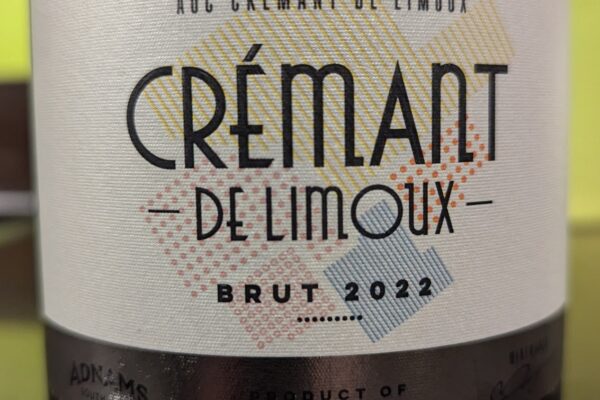
Adnams Crémant de Limoux
Crémant has gained attention in recent years, due to the growing popularity of Crémant wines as an affordable alternative to Champagne. Produced by Maison Antech, this Crémant is a 70/30 blend of Chardonnay and Chenin Blanc with an alcohol content of 12% ABV. The production process follows the traditional method, the same method used to make Champagne. Grapes are handpicked and whole bunch pressed before undergoing secondary fermentation in the bottle, which creates the signature bubbles. Crémant de Limoux is aged on the lees for a minimum of nine months. Maison Antech goes beyond this requirement, extending the lees ageing…
-
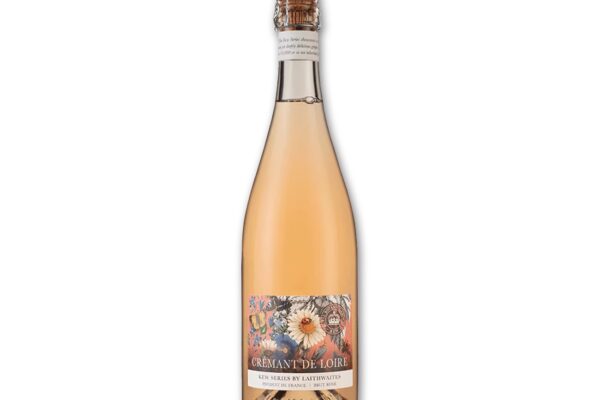
Kew Gardens Crémant de Loire Rosé Brut
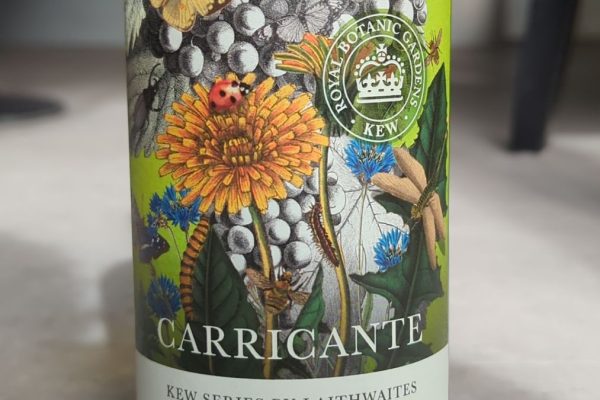
This wine, created in collaboration with the Royal Botanic Gardens, Kew, features a beautifully designed label that captures the essence of nature. The nude cork adds a rustic charm, enhancing the overall aesthetic appeal. On pouring, the wine reveals a strong mousse and an attractive blush colour. The bottle label promises berry fruit and citrus elegance. When three of us sampled this wine, we noted a slight hint of strawberry, but it was the citrus, grapefruit-like, that dominated the palate. The wine is crisp and dry, with a refreshing acidity. Overall, this wine offers a refreshing experience, making it a…
-
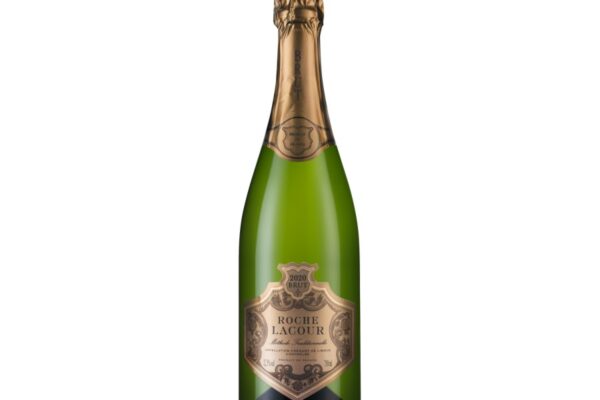
Roche Lacour Crémant de Limoux
This sparkling wine captures the essence of the South of France, specifically from beneath the hills of Limoux. It is made from a blend of 60% Chardonnay, 20% Pinot Noir and 20% Chenin Blanc and is 12.5% ABV. This 2020 vintage heralds the return of Laurent Mingaud, its original winemaker, who brings his expertise back to this celebrated sparkling. One of the key aspects of the Roche Lacour Crémant de Limoux is its production method, which mirrors the meticulous process used for Grande Marque Champagne. This includes fermenting nearly half of the blend in oak, contributing to the wine’s distinctive…
-

Crémant Rising in Popularity in the UK
An article in Joe discusses a shift in the UK’s sparkling wine preferences, with Crémant emerging as a popular alternative to Prosecco. Despite Prosecco’s continued popularity, with Brits consuming around 130 million bottles annually and making up nearly 25% of Italy’s exports of the sparkling wine to the UK, the French sparkling wine Crémant is gaining traction. It’s made using the same method as Champagne but comes from regions outside of Champagne, making it a more affordable option. Crémant has seen a significant rise in popularity, with sales increasing by 51% at Waitrose and 47% for M&S Crémant de Bordeaux.…
Pick Lists
Majestic | The Wine Society | Tesco | Waitrose | Sainsbury’s | Morrisons | Co-op | Asda | Lidl | £7 and Under | Over £20
Did You Know?
Australian wine exports to China have collapsed from around $1.2 billion to less than $10 million. More
Wine’s aroma is not determined solely by which flavour compounds it contains. More
Low-to-moderate wine consumption is associated with lower mortality. More
Moderate water stress can be part of what creates flavour and terroir expression. More
Wine appears less frequently online than other alcoholic drinks. More
Independent retailers had 9% fewer customers in March 2026 than two years earlier. More
Average spend per bottle in independents has risen by 23% since 2019, compared with 21% in supermarkets. More.
Nearly a third (32%) of UK consumers say they have already used AI for alcoholic drinks advice. More
Among socially active wine buyers, 37% have bought a wine recommended online. More
In 2026, 72% of consumers now think wine knowledge is essential to appreciation, up 20 percentage points on 2025. More
Rías Baixas wines reached more than 107 countries in 2025 and exports represented 31 per cent of the denomination’s total sales. More
Light Strike Can Cause Wine Degradation in Just One Day. More
People actively adjust their wine choices depending on who might see them. More
In the UK, 73% of Alcohol is Bought From Retail Rather Than Hospitality. More
UK wine production reached 124,377 hectolitres that year, meaning the UK accounted for roughly 0.05 per cent of world output. More
For Crémant, grapes must be harvested by hand and the wines must undergo at least nine months’ ageing before release. More
In 2024, the UK was the second-largest export market for Champagne globally, after the United States. More
Local UK bottling of wine represents about 40% of imported wine. More
Around 1% of people, typically severe asthmatics, have a sulphite sensitivity. More
A large 80% of Australian wine arrives in the UK in bulk. More
Only about 0.02% of Australia’s landmass is dedicated to vineyards. More
In 2024, New Zealand produced only 1% of the World’s wine. More
In 2024, the US imported 37% of World production of Pinot Grigio and the UK was is in second place at 27%. More
In 2024, the UK was South Africa’s largest export market, with 40% of total exports. More
In 2024, the United Kingdom imported 22.3 million bottles of Champagne, a decline of 12.7% compared to the previous year. More
Larger Champagne producers source grapes from as many as 80 different vineyards throughout Champagne. More
Champagne houses and growers collectively produce around 300 million bottles annually. More
In 2025, the Champagne region was home to about 2,124 Champagne houses and approximately 19,000 growers. More
Provence is one of the leaders in the conversion to organic viticulture, with 61% of vineyards certified. More
8% of the South Africa’s grape production is Fairtrade-certified. More
Up to 80% of wine aroma compounds come from grape skins. More
Glycerol is the third-largest component of most dry wines after water and alcohol which is why they so often feel ‘smooth’ or ‘silky’ in the mouth. More
Humans are more than 400 times more sensitive to bitter than sweet. More
Humans can detect the earthy molecule geosmin at about 100 parts per trillion and camels are so sensitive to it they can locate damp ground from roughly 50 miles away. More
During the phylloxera crisis of the nineteenth century, 90% of Europe’s vineyards were destroyed. More
In 2025, for La Vieille Ferme, also known as “The Chicken Wine”, sales surged by 49.4% to £110.8 million. More
In 2025, in the UK, Yellow Tail held the top position with sales, marking a 9.8% increase over the previous year. More
In 2024, the UK was the second-largest wine importer in volume and value. More
In 2024, the UK was the fifth-largest wine-consuming country globally. More
In 2025, global wine consumption continued its downward trend, estimated at 214.2 million hectolitres, the lowest since 1961. More
In 2025, online alcohol sales had a 20% increase in value over five years. More
In 2025, the number of UK vineyards rose to 1,104 and wineries to 238, with land under vine expanding to 4,841 hectares, a 510% increase since 2005. More
Moët Hennessy alone commands nearly 46.66% of the Champagne market, with the top three producers together holding about 61%, and the top five controlling over 72%. More
In 2024, the Champagne market was worth roughly €3.92 billion. More
In the marketing year 2023/24, white wine accounted for roughly 55% of Spain’s output, whereas red and rosé together made up about 45%. More
In the UK, 92% of wine is consumed within 48hrs of purchase. More
The majority of wines, 95%, use commercial rather than wild yeast. More
Between 0.5 and 10 litres of water, per litre of wine, are needed for cleaning during winemaking. More
Machine harvesting can achieve up to 100 tons of fruit per day vs 1 ton for a human. More
In Germany, 2025 was the smallest wine vintage since 2010. More
The majority of vineyards, 90% in 2019, are farmed with heavy chemical interventions. Only 6% are organic. More
90% of low and coastal areas in south Europe and California will no longer be able to produce good wine by the end of the century. More
IMAGE WALL
Tools
Recent



Tags
25% Off Wine Aldi Amarone Argentina Articles Asda Australia Austria Award Awards25 Bizarre Blog Books Bordeaux Bulk Bottling Cabernet Sauvignon Carménère Cava Champagne Chardonnay Chile Climate Change Coop Crémant Decanter Duty English Wine EPR Fairtrade Food France Germany Glossary Greece Health Hungary Italy IWSC Jeroboams Laithwaites Legislation Liberty Wines Lidl Low Alcohol M&S Majestic Malbec Merch Merlot Morrisons Natural Nero d'Avola News New Zealand Non-Alcoholic Ocado Old Vine Organic Past Tastings Pick List Pinotage Pinot Grigio Pinot Noir Port Portugal Primitivo Prosecco Research Reviews Ribera del Duero Riesling Rioja Ripasso Rose Sainsbury's Saperavi Sauvignon Blanc Shiraz Sicily South Africa Spain Sparkling Supermarkets Sustainable Tax Terroir Tesco The Wine Society Unrepresented USA Valpolicella Virgin Wines Waitrose Wanderlust Welsh Wine What to Buy Wine Art WineGB WIne Glasses Zinfandel