
Non-Alcoholic
-
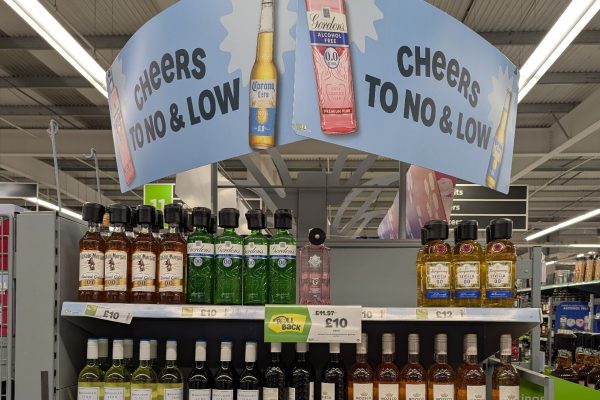
No-Low Wine Remains a Niche Market
On Tim Atkin’s site, Jason Millar argues that “no-low” alcohol, especially wine, is far more hype than transformation. Jason says UK no/low still wine has actually fallen from 1.7% to 1.5% of still-wine spend over four years, and much growth in no-alcohol wine is cannibalising low-alcohol wine rather than replacing standard wine. He says sparkling no-low is doing better, but the total no-low wine market remains tiny compared with the wider UK off-trade wine market. Buyer loyalty is weak, with many people purchasing no/low wine only once a year, often for Dry January, Christmas drivers, or special occasions. The article…
-
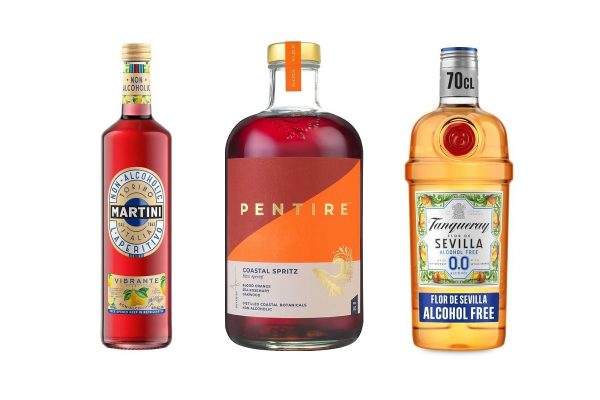
Non-Alcoholic Aperitivo and Spritz
Majestic kindly sent me some samples of non-alcoholic Aperitivo and Spritz drinks to try for Dry January. I tasted them side by side, which allowed me to compare and contrast. Each was served over ice, mixed 50:50 with tonic. Martini Vibrante Non-Alcoholic AperitivoThis Italian aperitivo is infused with artemisia, bergamot, chamomile and a mix of other key botanicals. It uses de-alcoholised wine as its base and sits at under 0.5% alcohol by volume. The colour is a bit artificial-looking, like strawberry jelly, which might surprise those expecting a more natural hue. Flavour-wise, it delivers the familiar bittersweet style of vermouth,…
-
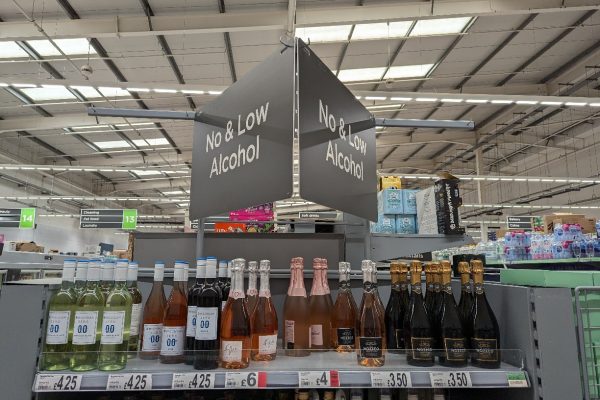
Understanding Non-Alcoholic Wine
Dry January has become the annual moment when even committed wine drinkers are tempted to experiment, not just because they want to “be good”, but because it gives a time to reset habits, compare options and talk about it socially. Ahead of the previous 2025 Dry January challenge, Alcohol Change UK said 15.5 million people were planning a booze-free January, with saving money and better sleep among the top motivations. That one-month change has turned into a year-round shift. “Sober-curious” socialising has moved from niche to normal. People still want a drink in hand at a dinner party, a date,…
-
British Consumers More Negative About Non-Alcoholic Wine
A new study investigates how consumers in Australia, the UK and the US perceive and evaluate non-alcoholic wine. It analyses more than eleven thousand online product reviews covering 326 products sold through major e-commerce platforms, applying sentiment analysis, topic modelling and logistic regression to identify what shapes satisfaction and how perceptions vary across markets and wine styles. The findings show that consumers are most satisfied when they feel the product offers good value for money and fits with health-led or lifestyle-driven drinking choices. These two factors have the strongest positive influence on satisfaction. Curiosity and expectations also play a role,…
-

Shifting Tastes in a Changing Global Market
The IWSR Global Trends Report 2025 highlights a number of developments that reflect a complex and evolving wine marketplace, shaped by economic, social and technological forces. Premiumisation remains a feature of the wine category, but it is no longer uniform. Economic pressures and changing values mean consumers are increasingly selective, opting for premium wines in specific situations rather than as a consistent behaviour. This shift is particularly relevant in more stable or growing regions such as parts of South America and Asia, while Europe sees more restrained growth. Consumers are drinking less overall, but when they do indulge, they are…
-

Independent Wine Retailer Trends
There’s an interesting article at Drinks Retailing News on independent wine retailer trends. Wine remains a key focus for independent UK drinks retailers, with France and Italy once again ranked as the most popular countries of origin, followed by Spain. Areas of growing interest have shifted, with Greece topping the list, closely followed by Portugal, England and parts of Eastern Europe, including Georgia and Romania. Georgia, in particular, is attracting attention for its traditional qvevri-aged wines. Sauvignon Blanc continued to dominate as the most popular grape variety, followed by Chardonnay, with Pinot Noir and Malbec also frequently mentioned. Looking ahead,…
-
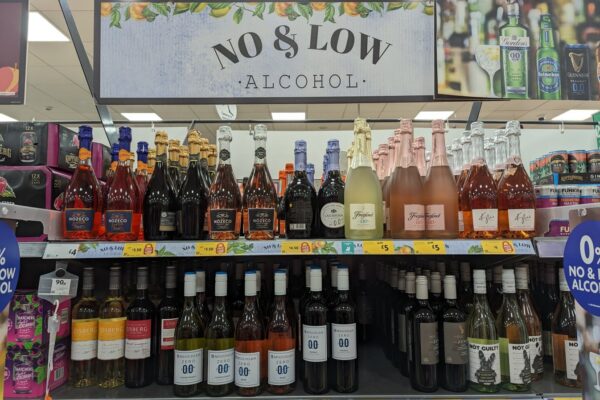
Global Surge in No-Alcohol Drinks
The IWSR (International Wine and Spirits Research) is a top authority on global alcohol beverage market data, analysis and insights, providing strategic intelligence to the industry. According to the IWSR No- and Low-Alcohol Strategic Study 2024, the market is experiencing a transformative shift, driven by younger consumers and evolving preferences. Across 10 key markets, including the US, Brazil, UK, and Japan, no-alcohol is expected to grow at a compound annual growth rate (CAGR) of 7%, while low-alcohol volumes remain static. Key findings highlight that the US and Brazil are poised as key growth markets, with CAGRs of 18% and 10%,…
-
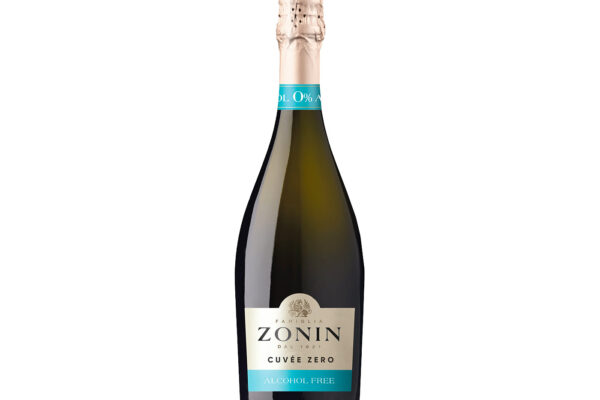
ZONIN Cuvée Zero
ZONIN has a new offering in the increasingly popular area of low- and no-alcohol wines. While many products in this category often taste more like juice than wine, sparkling varieties tend to hold up better due to the appeal of the bubbles. This recent launch from ZONIN, a producer known for premium Prosecco and collaborations such as Kylie Minogue’s excellent Prosecco, caught my attention because it is made from Glera grapes, the same variety used in Prosecco and is promoted as a premium option. ZONIN’s challenge has been to develop a product with wine-like characteristics that can closely replicate sparkling…
-
The Paradoxes of Dealcoholised Wine Production
In the DrinksBusiness, an anonymous wine producer criticises the growing trend of dealcoholised wines, arguing that the process is energy-intensive, costly, and significantly alters the wine’s original qualities, resulting in a product that lacks flavour and structure. The producer contends that the necessary additives to recreate the wine’s taste and stability are unnatural and environmentally detrimental. They believe dealcoholised wine contradicts the essence of traditional winemaking, which values natural transformation and environmental respect, and question why consumers would choose such products over non-alcoholic alternatives. There’s also the risk that consumers might indeed turn to beverages that were never alcoholic in…
-

Exploring Sustainability Trade-offs in Non-Alcoholic Wine Production
New research titled “Balancing Gains and Losses—A Research Note on Tradeoffs in the Case of Non-Alcoholic Wines in Germany,” authored by Frederik Nikolai Schulz, Alexander A. Kugel, and Jon H. Hanf, in Germany, explores the increasing significance of non-alcoholic wines . It highlights the dynamic market development of these products in recent years and addresses the lack of literature on their sustainability impacts across ecological, economic and social dimensions. The authors identify trade-offs where positive aspects in one sustainability dimension often come with drawbacks in another, such as the increased use of resources in alcohol removal processes versus the economic…
Pick Lists
Majestic | The Wine Society | Tesco | Waitrose | Sainsbury’s | Morrisons | Co-op | Asda | Lidl | £7 and Under | Over £20
Did You Know?
Australian wine exports to China have collapsed from around $1.2 billion to less than $10 million. More
Wine’s aroma is not determined solely by which flavour compounds it contains. More
Low-to-moderate wine consumption is associated with lower mortality. More
Moderate water stress can be part of what creates flavour and terroir expression. More
Wine appears less frequently online than other alcoholic drinks. More
Independent retailers had 9% fewer customers in March 2026 than two years earlier. More
Average spend per bottle in independents has risen by 23% since 2019, compared with 21% in supermarkets. More.
Nearly a third (32%) of UK consumers say they have already used AI for alcoholic drinks advice. More
Among socially active wine buyers, 37% have bought a wine recommended online. More
In 2026, 72% of consumers now think wine knowledge is essential to appreciation, up 20 percentage points on 2025. More
Rías Baixas wines reached more than 107 countries in 2025 and exports represented 31 per cent of the denomination’s total sales. More
Light Strike Can Cause Wine Degradation in Just One Day. More
People actively adjust their wine choices depending on who might see them. More
In the UK, 73% of Alcohol is Bought From Retail Rather Than Hospitality. More
UK wine production reached 124,377 hectolitres that year, meaning the UK accounted for roughly 0.05 per cent of world output. More
For Crémant, grapes must be harvested by hand and the wines must undergo at least nine months’ ageing before release. More
In 2024, the UK was the second-largest export market for Champagne globally, after the United States. More
Local UK bottling of wine represents about 40% of imported wine. More
Around 1% of people, typically severe asthmatics, have a sulphite sensitivity. More
A large 80% of Australian wine arrives in the UK in bulk. More
Only about 0.02% of Australia’s landmass is dedicated to vineyards. More
In 2024, New Zealand produced only 1% of the World’s wine. More
In 2024, the US imported 37% of World production of Pinot Grigio and the UK was is in second place at 27%. More
In 2024, the UK was South Africa’s largest export market, with 40% of total exports. More
In 2024, the United Kingdom imported 22.3 million bottles of Champagne, a decline of 12.7% compared to the previous year. More
Larger Champagne producers source grapes from as many as 80 different vineyards throughout Champagne. More
Champagne houses and growers collectively produce around 300 million bottles annually. More
In 2025, the Champagne region was home to about 2,124 Champagne houses and approximately 19,000 growers. More
Provence is one of the leaders in the conversion to organic viticulture, with 61% of vineyards certified. More
8% of the South Africa’s grape production is Fairtrade-certified. More
Up to 80% of wine aroma compounds come from grape skins. More
Glycerol is the third-largest component of most dry wines after water and alcohol which is why they so often feel ‘smooth’ or ‘silky’ in the mouth. More
Humans are more than 400 times more sensitive to bitter than sweet. More
Humans can detect the earthy molecule geosmin at about 100 parts per trillion and camels are so sensitive to it they can locate damp ground from roughly 50 miles away. More
During the phylloxera crisis of the nineteenth century, 90% of Europe’s vineyards were destroyed. More
In 2025, for La Vieille Ferme, also known as “The Chicken Wine”, sales surged by 49.4% to £110.8 million. More
In 2025, in the UK, Yellow Tail held the top position with sales, marking a 9.8% increase over the previous year. More
In 2024, the UK was the second-largest wine importer in volume and value. More
In 2024, the UK was the fifth-largest wine-consuming country globally. More
In 2025, global wine consumption continued its downward trend, estimated at 214.2 million hectolitres, the lowest since 1961. More
In 2025, online alcohol sales had a 20% increase in value over five years. More
In 2025, the number of UK vineyards rose to 1,104 and wineries to 238, with land under vine expanding to 4,841 hectares, a 510% increase since 2005. More
Moët Hennessy alone commands nearly 46.66% of the Champagne market, with the top three producers together holding about 61%, and the top five controlling over 72%. More
In 2024, the Champagne market was worth roughly €3.92 billion. More
In the marketing year 2023/24, white wine accounted for roughly 55% of Spain’s output, whereas red and rosé together made up about 45%. More
In the UK, 92% of wine is consumed within 48hrs of purchase. More
The majority of wines, 95%, use commercial rather than wild yeast. More
Between 0.5 and 10 litres of water, per litre of wine, are needed for cleaning during winemaking. More
Machine harvesting can achieve up to 100 tons of fruit per day vs 1 ton for a human. More
In Germany, 2025 was the smallest wine vintage since 2010. More
The majority of vineyards, 90% in 2019, are farmed with heavy chemical interventions. Only 6% are organic. More
90% of low and coastal areas in south Europe and California will no longer be able to produce good wine by the end of the century. More
IMAGE WALL
Tools
Recent



Tags
25% Off Wine Aldi Amarone Argentina Articles Asda Australia Austria Award Awards25 Bizarre Blog Books Bordeaux Bulk Bottling Cabernet Sauvignon Carménère Cava Champagne Chardonnay Chile Climate Change Coop Crémant Decanter Duty English Wine EPR Fairtrade Food France Germany Glossary Greece Health Hungary Italy IWSC Jeroboams Laithwaites Legislation Liberty Wines Lidl Low Alcohol M&S Majestic Malbec Merch Merlot Morrisons Natural Nero d'Avola News New Zealand Non-Alcoholic Ocado Old Vine Organic Past Tastings Pick List Pinotage Pinot Grigio Pinot Noir Port Portugal Primitivo Prosecco Research Reviews Ribera del Duero Riesling Rioja Ripasso Rose Sainsbury's Saperavi Sauvignon Blanc Shiraz Sicily South Africa Spain Sparkling Supermarkets Sustainable Tax Terroir Tesco The Wine Society Unrepresented USA Valpolicella Virgin Wines Waitrose Wanderlust Welsh Wine What to Buy Wine Art WineGB WIne Glasses Zinfandel