Prosecco
-
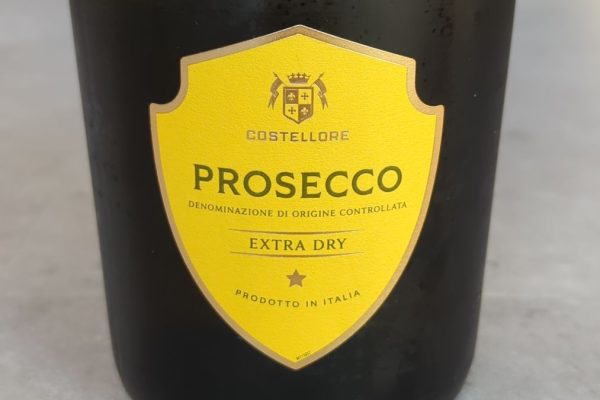
Costellore Prosecco
I picked up this wine as Aldi’s ‘Wine of the Week’, and at a sort of giveaway price it felt very much like a bottle designed to get people through the doors There’s no vintage and no mention of the producer, so I did not expect much, but it turned out to be a pleasant surprise. The producer code, IT/VI/4816, seems to point towards Cantina di Soave / Cadis 1898, a name associated with high price ‘Maximilian I’ Prosecco. Extra Dry is actually sweeter than Brut, which is a bit confusing because “extra dry” sounds as though it should be…
-
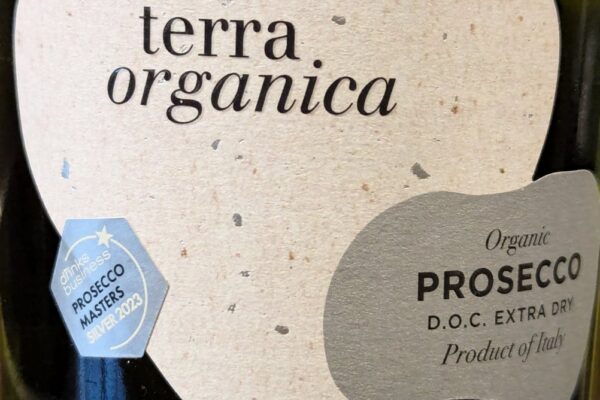
Terra Organica Prosecco
Terra Organica Prosecco is an organic and vegan-friendly Prosecco, notable for being the first of its kind to eliminate the traditional foil cap, a decision aimed at reducing its carbon footprint and waste. It is made in small batches by the family-run winery led by winemaker Claudio Galosi. The prosecco features a low alcohol content of 10.5%, making it a lighter, yet still very flavoursome choice. Each purchase of Terra Organica contributes 1% of the sale to non-profit organisations dedicated to protecting the environment, underlining the brand’s commitment to ecological causes. Terra Organica Prosecco has a fine, delicate mousse, a…
-

Kylie Minogue Prosecco
When my wife picked up this Kylie Minogue Prosecco, I had my doubts. Too much Prosecco DOC (not DOCG) nowadays is mass-produced, resulting in a loss of the distinctive taste it once had. I assumed this newly launched, non-Rosé Prosecco from Kylie Minogue would be just a bottle relying on celebrity branding to disguise a mediocre wine. How wrong I was. This Prosecco is sourced from the renowned Zonin 1821 estate, known for producing some of the better and more expensive Proseccos on the market. The pretty bottle, adorned with delicate heart stamps, is more than just attractive packaging and…
-
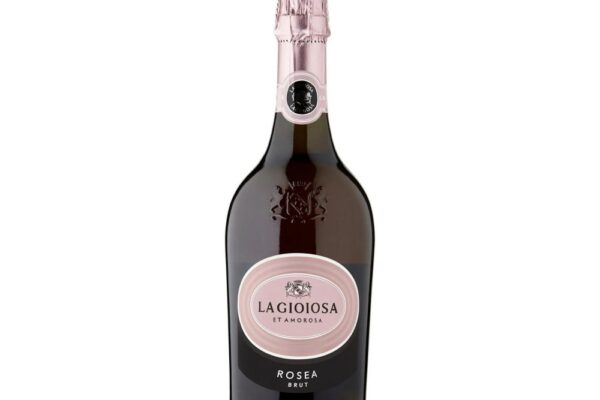
La Gioiosa et Amorosa Rosea NV
La Gioiosa et Amorosa Rosea NV was a great surprise gift at a recent dinner party, which is how I came to try this different wine. Produced by La Gioiosa, a prominent name in Italian wine known particularly for its Prosecco, this rosé variant offers a twist on the traditional. Helmed by winemaker Valerio Fuson, this wine features a modest alcohol content of 11% ABV and draws its name from the cheerful local motto, ‘Marca Gioiosa et Amorosa’, translating to ‘march with joy and love’. The wine enjoys a high rating of 4.0 on Vivino. Unlike typical Prosecco, the label…
-

Sparkling Wine Purchase Factors
There’s new study-based research (PDF download) into recent sparkling wine consumers in Ontario, Canada, offering insights into the cues that drive their purchase decisions. Sparkling wine’s global market is experiencing significant growth. This uptrend is notable given the distinct nature of sparkling wine, often purchased for celebrations rather than regular consumption. Research has highlighted the importance of both intrinsic and extrinsic factors in influencing sparkling wine purchases. Consumers prioritise taste, smell, and the price-quality ratio, while also considering the wine’s origin and brand reputation. Interestingly, the significance of these cues can shift based on whether the purchase is for personal…
-

Valdo Prosecco DOC Extra Dry
Despite not holding the more prestigious DOCG designation, this wine makes a subtle statement by mentioning Valdobbiadene, it’s origin, on its label — usually only done for Prosecco of the DOCG category. Contrary to what one might expect, ‘Extra Dry’ in this context always refers to a subtly sweet flavour profile. Valdo Prosecco DOC Extra Dry surpasses expectations set by its modest 3.6 score on Vivino. Having in a pale straw yellow hue, it entices with a nose that mixes floral notes with the crisp, fresh scent of apples. The taste is reminiscent of sherbet, offering a fizziness that adds…
-

Italy Launches Campaign to Educate Britons on Prosecco Label
Italy has initiated a campaign to educate Britons on the correct use of the term ‘Prosecco’. The Italian DOC Consortium launched an advertising campaign in London emphasising that Prosecco is a geographically protected label, reserved for sparkling wines produced in specific Italian regions. The campaign, displayed in over 80 locations in London, aims to reach over 15 million people. The move follows legal victories to protect the Prosecco designation, amidst rising popularity of other sparkling wines in Britain.
-
The Growth and Challenges of the Prosecco DOC Industry
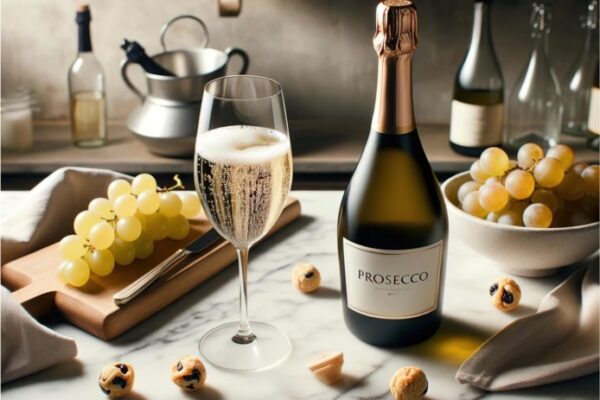
A new research paper “Dominant business models and sustainable long-term growth, A System Dynamics-based analysis of the Prosecco wine industry” (pdf) investigates the strong growth of the Prosecco (DOC) industry and its implications for long-term sustainability. The industry’s great rise can be attributed to a variety of factors. Regulatory changes in 2009 significantly expanded the production area for Prosecco, transforming it into an international success. This was coupled with a rapid increase in production capacity, which allowed the industry to offer competitive pricing. The number of bottles produced escalated from 140 million in 2010 to 627 million in 2021. Another…
-
Conegliano Valdobbiadene DOCG Prosecco Tasting
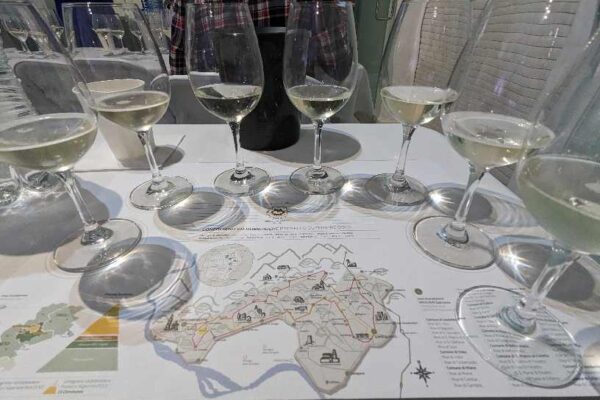
On Tuesday 10th October I attended the Conegliano Valdobbiadene DOCG Prosecco Trade & Media tasting. The Conegliano Valdobbiadene Prosecco Superiore DOCG region lies near Venice, in the foothills of the pre-alps. This small area is known for its steep vineyards, which are primarily tended by hand due to the challenging terrain. These labour-intensive practices have entrenched a tradition of high-quality production, albeit at a lower output compared to the larger and flatter DOC region. The distinction in quality between DOCG and non-DOCG Prosecco is, in part, a product of the geographical and logistical challenges posed by the hilly Conegliano Valdobbiadene…
-
Climate Change Threatens Prosecco
Climate change is posing a severe threat to Prosecco, according to recent research published in the iScience journal. Originating from Italy’s mountainous vineyards, Prosecco has seen a decline in grape yields due to extreme weather conditions and soil degradation. The risk extends beyond losing an agricultural product as it also threatens entire communities’ history and cultural roots. Extreme weather events, including sudden, intense rainfall and droughts, are making it increasingly difficult for Prosecco producers. These conditions lead to soil erosion and slope failures in the steep vineyards of Northern Italy. This year, the vineyards experienced massive spring rainfall and hailstones,…
-

Best Supermarket Prosecco of 2023
A recent article in the Evening Standard highlights the Best supermarket Prosecco of 2023. According to the Prosecco DOC Consortium, the UK imported 130 million bottles in 2022, reflecting a 3.5% increase from the 2021 volume. However, the Evening Standard’s article contains an inaccuracy, stating that Prosecco is made in the same way as Champagne, which is not the case. The selected Proseccos are: Aldi Castellore Organic ProseccoM&S Conte Priuli Oro ProseccoTesco Finest Prosecco Valdobbiadene DOCGSainsbury’s Conegliano Prosecco, Taste the DifferenceASDA Extra Special Valdobbiadene ProseccoWaitrose ProseccoLa Gioiosa Prosecco Gold (Majestic)Kylie Minogue Prosecco RoséMionetto Orange Label ProseccoFreixenet Prosecco D. O. C.
Pick Lists
Majestic | The Wine Society | Tesco | Waitrose | Sainsbury’s | Morrisons | Co-op | Asda | Lidl | £7 and Under | Over £20
Did You Know?
Australian wine exports to China have collapsed from around $1.2 billion to less than $10 million. More
Wine’s aroma is not determined solely by which flavour compounds it contains. More
Low-to-moderate wine consumption is associated with lower mortality. More
Moderate water stress can be part of what creates flavour and terroir expression. More
Wine appears less frequently online than other alcoholic drinks. More
Independent retailers had 9% fewer customers in March 2026 than two years earlier. More
Average spend per bottle in independents has risen by 23% since 2019, compared with 21% in supermarkets. More.
Nearly a third (32%) of UK consumers say they have already used AI for alcoholic drinks advice. More
Among socially active wine buyers, 37% have bought a wine recommended online. More
In 2026, 72% of consumers now think wine knowledge is essential to appreciation, up 20 percentage points on 2025. More
Rías Baixas wines reached more than 107 countries in 2025 and exports represented 31 per cent of the denomination’s total sales. More
Light Strike Can Cause Wine Degradation in Just One Day. More
People actively adjust their wine choices depending on who might see them. More
In the UK, 73% of Alcohol is Bought From Retail Rather Than Hospitality. More
UK wine production reached 124,377 hectolitres that year, meaning the UK accounted for roughly 0.05 per cent of world output. More
For Crémant, grapes must be harvested by hand and the wines must undergo at least nine months’ ageing before release. More
In 2024, the UK was the second-largest export market for Champagne globally, after the United States. More
Local UK bottling of wine represents about 40% of imported wine. More
Around 1% of people, typically severe asthmatics, have a sulphite sensitivity. More
A large 80% of Australian wine arrives in the UK in bulk. More
Only about 0.02% of Australia’s landmass is dedicated to vineyards. More
In 2024, New Zealand produced only 1% of the World’s wine. More
In 2024, the US imported 37% of World production of Pinot Grigio and the UK was is in second place at 27%. More
In 2024, the UK was South Africa’s largest export market, with 40% of total exports. More
In 2024, the United Kingdom imported 22.3 million bottles of Champagne, a decline of 12.7% compared to the previous year. More
Larger Champagne producers source grapes from as many as 80 different vineyards throughout Champagne. More
Champagne houses and growers collectively produce around 300 million bottles annually. More
In 2025, the Champagne region was home to about 2,124 Champagne houses and approximately 19,000 growers. More
Provence is one of the leaders in the conversion to organic viticulture, with 61% of vineyards certified. More
8% of the South Africa’s grape production is Fairtrade-certified. More
Up to 80% of wine aroma compounds come from grape skins. More
Glycerol is the third-largest component of most dry wines after water and alcohol which is why they so often feel ‘smooth’ or ‘silky’ in the mouth. More
Humans are more than 400 times more sensitive to bitter than sweet. More
Humans can detect the earthy molecule geosmin at about 100 parts per trillion and camels are so sensitive to it they can locate damp ground from roughly 50 miles away. More
During the phylloxera crisis of the nineteenth century, 90% of Europe’s vineyards were destroyed. More
In 2025, for La Vieille Ferme, also known as “The Chicken Wine”, sales surged by 49.4% to £110.8 million. More
In 2025, in the UK, Yellow Tail held the top position with sales, marking a 9.8% increase over the previous year. More
In 2024, the UK was the second-largest wine importer in volume and value. More
In 2024, the UK was the fifth-largest wine-consuming country globally. More
In 2025, global wine consumption continued its downward trend, estimated at 214.2 million hectolitres, the lowest since 1961. More
In 2025, online alcohol sales had a 20% increase in value over five years. More
In 2025, the number of UK vineyards rose to 1,104 and wineries to 238, with land under vine expanding to 4,841 hectares, a 510% increase since 2005. More
Moët Hennessy alone commands nearly 46.66% of the Champagne market, with the top three producers together holding about 61%, and the top five controlling over 72%. More
In 2024, the Champagne market was worth roughly €3.92 billion. More
In the marketing year 2023/24, white wine accounted for roughly 55% of Spain’s output, whereas red and rosé together made up about 45%. More
In the UK, 92% of wine is consumed within 48hrs of purchase. More
The majority of wines, 95%, use commercial rather than wild yeast. More
Between 0.5 and 10 litres of water, per litre of wine, are needed for cleaning during winemaking. More
Machine harvesting can achieve up to 100 tons of fruit per day vs 1 ton for a human. More
In Germany, 2025 was the smallest wine vintage since 2010. More
The majority of vineyards, 90% in 2019, are farmed with heavy chemical interventions. Only 6% are organic. More
90% of low and coastal areas in south Europe and California will no longer be able to produce good wine by the end of the century. More
IMAGE WALL
Tools
Recent



Tags
25% Off Wine Aldi Amarone Argentina Articles Asda Australia Austria Award Awards25 Bizarre Blog Books Bordeaux Bulk Bottling Cabernet Sauvignon Carménère Cava Champagne Chardonnay Chile Climate Change Coop Crémant Decanter Duty English Wine EPR Fairtrade Food France Germany Glossary Greece Health Hungary Italy IWSC Jeroboams Laithwaites Legislation Liberty Wines Lidl Low Alcohol M&S Majestic Malbec Merch Merlot Morrisons Natural Nero d'Avola News New Zealand Non-Alcoholic Ocado Old Vine Organic Past Tastings Pick List Pinotage Pinot Grigio Pinot Noir Port Portugal Primitivo Prosecco Research Reviews Ribera del Duero Riesling Rioja Ripasso Rose Sainsbury's Saperavi Sauvignon Blanc Shiraz Sicily South Africa Spain Sparkling Supermarkets Sustainable Tax Terroir Tesco The Wine Society Unrepresented USA Valpolicella Virgin Wines Waitrose Wanderlust Welsh Wine What to Buy Wine Art WineGB WIne Glasses Zinfandel