Bordeaux
-
Bordeaux to Allow Sweetening of Wines
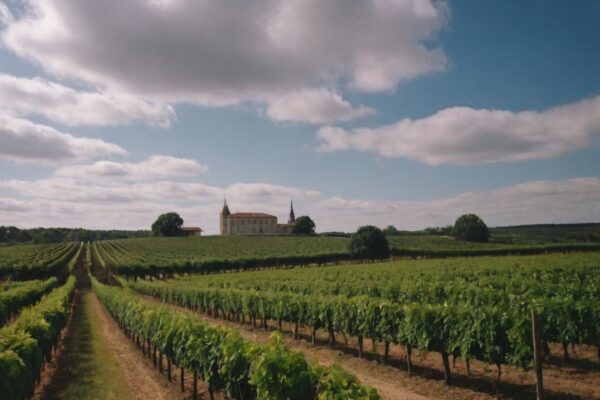
Meininger reports that Bordeaux and Bordeaux Supérieur producers are updating rules that will allow wines of all styles, including reds, clarets, rosés and whites, to contain up to 7 grams of residual sugar per litre after fermentation. The move will mark a departure from Bordeaux’s traditional association with fully dry wines and has prompted concerns that the region could follow other European appellations towards softer, more commercially driven styles. The proposal was approved by the appellations’ management body on 26 June 2026, following a wider ruling by France’s INAO permitting the sweetening of dry AOC still wines under certain conditions.…
-
Calvet Prestige Sauvignon Blanc Cuvée Fumée
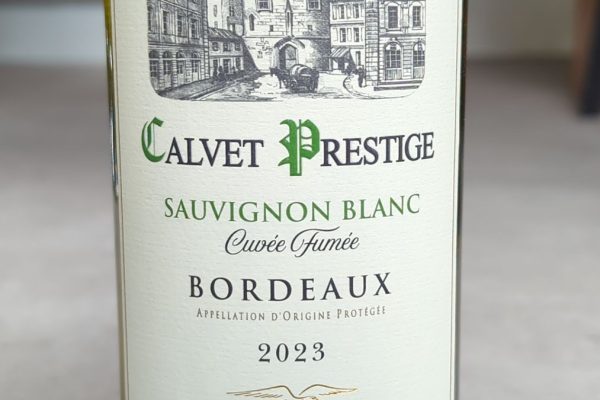
Calvet Prestige Sauvignon Blanc Cuvée Fumée comes from Bordeaux, and Calvet is part of the large Les Grands Chais de France (LGCF) group. The Prestige name was chosen in honour of the very select “Diplôme du Prestige de France”, awarded to Maison Calvet in 1958. Cuvée Fumée is the key phrase here. “Fumée” means “smoked” or “smoky” in French, so “Cuvée Fumée” on a wine label generally translates as a “smoky blend”, although the back label describes it as fresh and oaky. The 2023 vintage comes in at 12% ABV and is made from 100% Sauvignon Blanc. In the glass…
-

Château Méaume Matured Bordeaux Supérieur
Exclusively available at Majestic, this special release of Château Méaume has been introduced to honour 45 years of partnership between the winery and the retailer. It’s a significant bottle for both, marking a relationship that began in 1980 when the British owners, Alan and Sue Johnson-Hill, attended the opening of Majestic’s very first store. Their son, Mark, now leads the winemaking, taking the reins for this 2019 vintage. Made predominantly from Merlot grown near the famous regions of Pomerol and Saint-Émilion, this Bordeaux Supérieur benefits from low-yield vines and has been matured in oak for no less than a year.…
-
Understanding Cru Bourgeois du Médoc
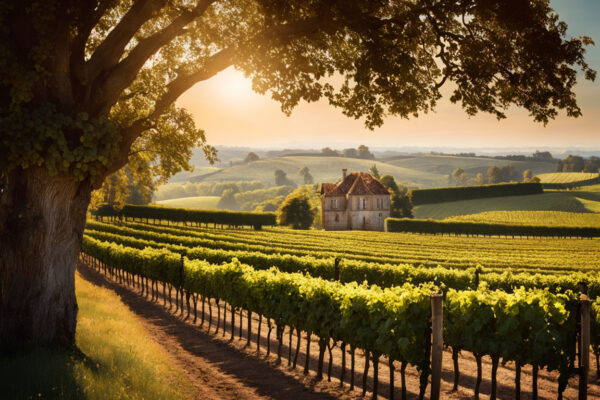
Building upon the my previous article on Understanding Bordeaux Wines, this piece looks into the world of Cru Bourgeois du Médoc, a classification that offers high-quality yet accessible wines from Bordeaux’s Left Bank. The term Cru Bourgeois has historical roots that trace back to the Middle Ages. During this period, the term “bourgeois” referred to the citizens, or bourgeoisie, who lived in the “burgh” (bourg) of Bordeaux. These citizens, often wealthy and influential, began acquiring some of the region’s most esteemed lands for viticulture. Over time, the designation of Cru Bourgeois became associated with these holdings as these landowners cultivated…
-

Comte de Saint Emmanuel
This arrived by accident, a substitute for a bottle that never turned up. The name may sound grand, but it’s a white label name without particular provenance. However, behind it is the producer Amand Chaperon, with grapes coming from the Entre-Deux-Mers region. A blend of Merlot and Cabernet Sauvignon, it promised familiarity, though expectations were kept low given its 2024 vintage. I suspected something overly tannic and too young to enjoy now. It opens with a dark fruit aroma, immediately giving way to a generous burst of fruit on the first sip. The structure is medium bodied, with medium tannins…
-
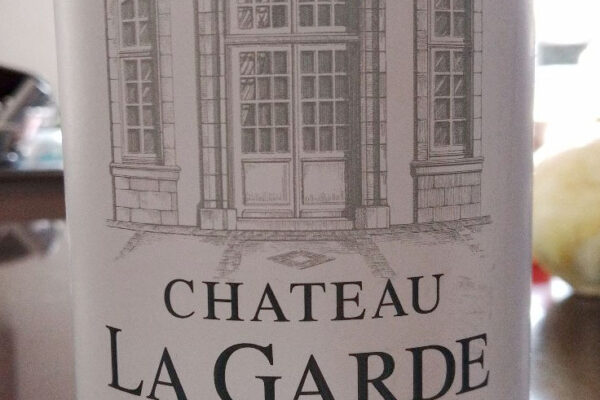
Château La Garde
I picked this up a few months ago from Aldi when it was featured as ‘Wine of the Week’ at a tempting £4.99, though the final price was £5.75 since I happened to be visiting Wales at the time. On a side note, Wales has some peculiar minimum pricing rules and, oddly, even the large Tesco stores seemed to offer only a fraction of the range you’d find in England. I wasn’t entirely sure what I’d bought, though the pricing label suggested it normally retails at £19.99. A little digging revealed this 2017 vintage to be a blend of 52%…
-
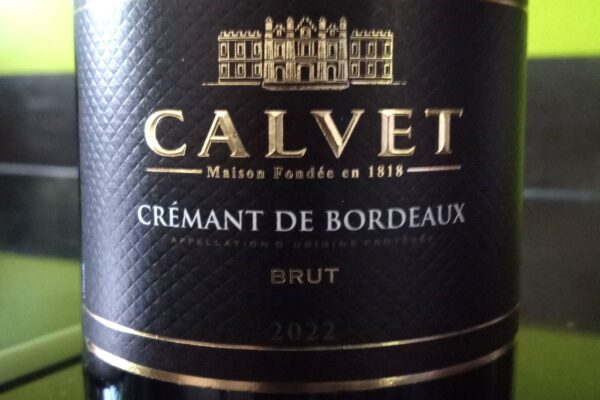
Calvet Crémant de Bordeaux Blanc
This sparkling wine from Bordeaux is a blend of 70% Sémillon and 30% Cabernet Franc, made using the traditional method with the second fermentation in the bottle that lasts for 11 months. This the 2022 vintage and sits at 12% ABV. The bubbles are small and stayed for a very long time, giving it a visual elegance not always found at this price point. There’s a buttery brioche aroma, the result of the bottle fermentation, lifted by a zesty citrus note that keeps things fresh. On tasting, it’s fruity and bright, with flavours of sherbet and citrus. There’s a hint…
-
How Climate Change is Affecting Bordeaux Wine Producers
New research examines the impact of climate change on the income of wine producers in the Bordeaux region. The study analyses the relationship between climate variables, vineyard characteristics and economic performance. The findings indicate that rising temperatures and changing rainfall patterns significantly affect vineyard yields and income, with high temperatures during the bloom period (May to July) reducing yields, while warmer conditions during ripening (August to September) have a positive effect. Rainfall variability, particularly excessive precipitation during the bloom period, also negatively impacts yields. Wine producers in Bordeaux have responded by adapting their business strategies. Many have expanded their vineyard…
-

Belle France Bordeaux Rouge
This bottle of Belle France Bordeaux Rouge, purchased as part of Aldi’s Wine of the Week promotion, represents excellent value for money and is almost certainly sold at below cost to get customers into stores. Priced at £9.99, and reduced to only £4.99, which is quite a bargain for a Bordeaux. The wine is a blend of Merlot (65%), Cabernet Sauvignon (25%) and Cabernet Franc (10%), made by Producta Vignobles, a cooperative with a long history of pioneering the sale of AOC wines in supermarkets since 1960. This level of traceability to an identifiable producer, via a barcode on the…
-
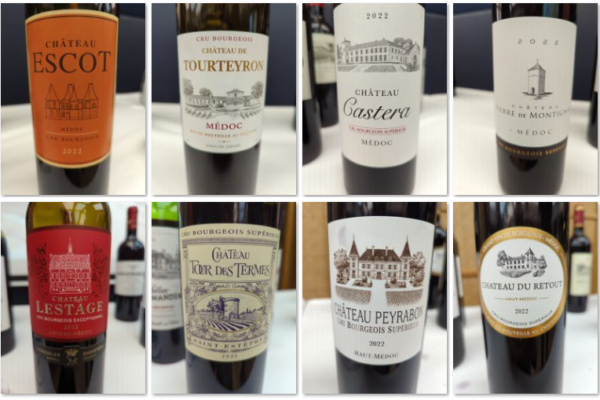
Cru Bourgeois du Médoc
In mid-November 2024, I attended a Cru Bourgeois du Médoc tasting event in London, featuring a selection of 64 wines from the 2022 vintage. Roughly 60% of the wines presented were seeking representation, making it an interesting event for industry professionals and wine merchants on the lookout for new additions. I’ve put together a short overview article for newcomers to Cru Bourgeois du Médoc. It covers the essentials, including the region’s location, the classification system, production numbers and the typical flavour profile of these wines. It also outlines the three-tiered Cru Bourgeois classification system that recognises quality among non-classified Médoc…
-
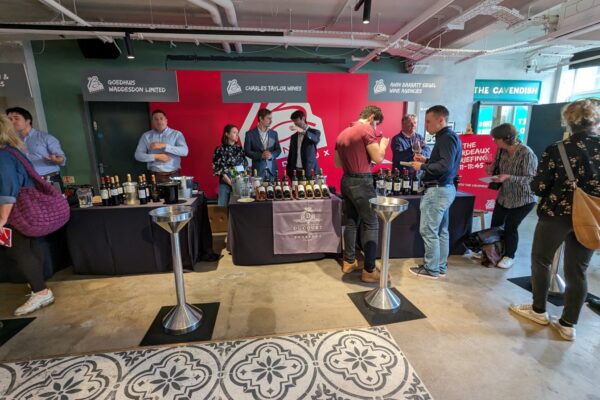
The Bordeaux Experience
On 1st May 2024, the inaugural event of Vins de Bordeaux’s new global campaign, ‘The Bordeaux Crew’ came to London, designed collaboratively by the region’s winemaking community. This initiative was supported by the Bordeaux Wine Council (CVIB) and aimed to engage both the wine industry and enthusiasts. The event showcased a curated selection of over 100 Bordeaux wines, ranging from modern interpretations to classic vintages. Attendees had the opportunity to explore the diverse portfolio of Bordeaux wine through various activities staged throughout the venue. Among the activities were pop-up talks, providing insights into Bordeaux’s winemaking traditions and innovations. A unique…
-

The Decline of Bordeaux Wine
The Bordeaux wine region of France is currently facing a myriad of challenges that threaten its position in the global wine market. Red wine consumption in France has seen a significant decline in recent decades. Many French consumers are now opting for alternative beverages like beer. While premium Bordeaux wines continue to find buyers, the demand for entry-level red wines has dwindled. This drop in demand has led to falling prices, making it more attractive for many vintners to uproot their vineyards and seek compensation rather than continue with wine production. In response to these challenges, the French government has…
Pick Lists
Majestic | The Wine Society | Tesco | Waitrose | Sainsbury’s | Morrisons | Co-op | Asda | Lidl | £7 and Under | Over £20
Did You Know?
Australian wine exports to China have collapsed from around $1.2 billion to less than $10 million. More
Wine’s aroma is not determined solely by which flavour compounds it contains. More
Low-to-moderate wine consumption is associated with lower mortality. More
Moderate water stress can be part of what creates flavour and terroir expression. More
Wine appears less frequently online than other alcoholic drinks. More
Independent retailers had 9% fewer customers in March 2026 than two years earlier. More
Average spend per bottle in independents has risen by 23% since 2019, compared with 21% in supermarkets. More.
Nearly a third (32%) of UK consumers say they have already used AI for alcoholic drinks advice. More
Among socially active wine buyers, 37% have bought a wine recommended online. More
In 2026, 72% of consumers now think wine knowledge is essential to appreciation, up 20 percentage points on 2025. More
Rías Baixas wines reached more than 107 countries in 2025 and exports represented 31 per cent of the denomination’s total sales. More
Light Strike Can Cause Wine Degradation in Just One Day. More
People actively adjust their wine choices depending on who might see them. More
In the UK, 73% of Alcohol is Bought From Retail Rather Than Hospitality. More
UK wine production reached 124,377 hectolitres that year, meaning the UK accounted for roughly 0.05 per cent of world output. More
For Crémant, grapes must be harvested by hand and the wines must undergo at least nine months’ ageing before release. More
In 2024, the UK was the second-largest export market for Champagne globally, after the United States. More
Local UK bottling of wine represents about 40% of imported wine. More
Around 1% of people, typically severe asthmatics, have a sulphite sensitivity. More
A large 80% of Australian wine arrives in the UK in bulk. More
Only about 0.02% of Australia’s landmass is dedicated to vineyards. More
In 2024, New Zealand produced only 1% of the World’s wine. More
In 2024, the US imported 37% of World production of Pinot Grigio and the UK was is in second place at 27%. More
In 2024, the UK was South Africa’s largest export market, with 40% of total exports. More
In 2024, the United Kingdom imported 22.3 million bottles of Champagne, a decline of 12.7% compared to the previous year. More
Larger Champagne producers source grapes from as many as 80 different vineyards throughout Champagne. More
Champagne houses and growers collectively produce around 300 million bottles annually. More
In 2025, the Champagne region was home to about 2,124 Champagne houses and approximately 19,000 growers. More
Provence is one of the leaders in the conversion to organic viticulture, with 61% of vineyards certified. More
8% of the South Africa’s grape production is Fairtrade-certified. More
Up to 80% of wine aroma compounds come from grape skins. More
Glycerol is the third-largest component of most dry wines after water and alcohol which is why they so often feel ‘smooth’ or ‘silky’ in the mouth. More
Humans are more than 400 times more sensitive to bitter than sweet. More
Humans can detect the earthy molecule geosmin at about 100 parts per trillion and camels are so sensitive to it they can locate damp ground from roughly 50 miles away. More
During the phylloxera crisis of the nineteenth century, 90% of Europe’s vineyards were destroyed. More
In 2025, for La Vieille Ferme, also known as “The Chicken Wine”, sales surged by 49.4% to £110.8 million. More
In 2025, in the UK, Yellow Tail held the top position with sales, marking a 9.8% increase over the previous year. More
In 2024, the UK was the second-largest wine importer in volume and value. More
In 2024, the UK was the fifth-largest wine-consuming country globally. More
In 2025, global wine consumption continued its downward trend, estimated at 214.2 million hectolitres, the lowest since 1961. More
In 2025, online alcohol sales had a 20% increase in value over five years. More
In 2025, the number of UK vineyards rose to 1,104 and wineries to 238, with land under vine expanding to 4,841 hectares, a 510% increase since 2005. More
Moët Hennessy alone commands nearly 46.66% of the Champagne market, with the top three producers together holding about 61%, and the top five controlling over 72%. More
In 2024, the Champagne market was worth roughly €3.92 billion. More
In the marketing year 2023/24, white wine accounted for roughly 55% of Spain’s output, whereas red and rosé together made up about 45%. More
In the UK, 92% of wine is consumed within 48hrs of purchase. More
The majority of wines, 95%, use commercial rather than wild yeast. More
Between 0.5 and 10 litres of water, per litre of wine, are needed for cleaning during winemaking. More
Machine harvesting can achieve up to 100 tons of fruit per day vs 1 ton for a human. More
In Germany, 2025 was the smallest wine vintage since 2010. More
The majority of vineyards, 90% in 2019, are farmed with heavy chemical interventions. Only 6% are organic. More
90% of low and coastal areas in south Europe and California will no longer be able to produce good wine by the end of the century. More
IMAGE WALL
Tools
Recent



Tags
25% Off Wine Aldi Amarone Argentina Articles Asda Australia Austria Award Awards25 Bizarre Blog Books Bordeaux Bulk Bottling Cabernet Sauvignon Carménère Cava Champagne Chardonnay Chile Climate Change Coop Crémant Decanter Duty English Wine EPR Fairtrade Food France Germany Glossary Greece Health Hungary Italy IWSC Jeroboams Laithwaites Legislation Liberty Wines Lidl Low Alcohol M&S Majestic Malbec Merch Merlot Morrisons Natural Nero d'Avola News New Zealand Non-Alcoholic Ocado Old Vine Organic Past Tastings Pick List Pinotage Pinot Grigio Pinot Noir Port Portugal Primitivo Prosecco Research Reviews Ribera del Duero Riesling Rioja Ripasso Rose Sainsbury's Saperavi Sauvignon Blanc Shiraz Sicily South Africa Spain Sparkling Supermarkets Sustainable Tax Terroir Tesco The Wine Society Unrepresented USA Valpolicella Virgin Wines Waitrose Wanderlust Welsh Wine What to Buy Wine Art WineGB WIne Glasses Zinfandel