
Italy
-
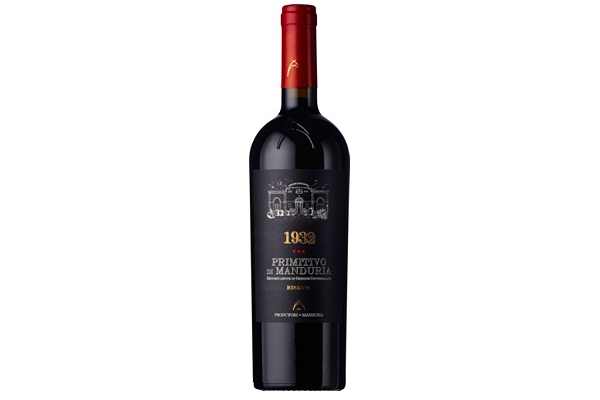
Produttori Primitivo di Manduria Riserva
The 2019 vintage from Manduria’s Consorzio Produttori Vini showcases the deep-rooted history of the winery, founded in 1932. This year is proudly indicated on the label. This full-bodied wine, with its robust 14.5% alcohol content, is also suitable for vegans. The wine has been carefully aged in oak barrels for at least nine months, a process that has imparted a complexity and structure. The nose is rich with dark berry fruit, where blackberry and fig notes are predominant, followed by an undercurrent of liquorice. The high alcohol content is well-integrated, providing silky tannins that contribute to a good length and…
-
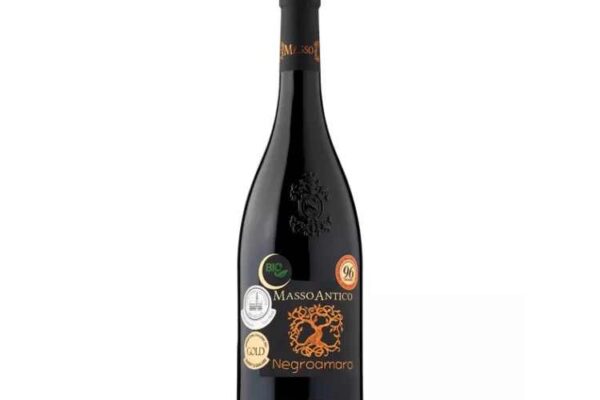
Masso Antico Negroamaro
The Masso Antico Negroamaro from Salento, Puglia, comes with a reputation that sets high expectations. Awarded a gold medal at the Gilbert & Gaillard International Challenge 2021 and rated 4.1 on Vivino, not to mention its IWSC bronze, this organic wine certainly has a lot to live up to. Upon uncorking, the first thing that strikes you is the colour—a youthful and thin hue that suggests a relatively young vintage, although the bottle doesn’t specify the year. The bouquet is advertised as intense, but I found it less so, lacking the robustness one might expect from a Negroamaro, a grape…
-
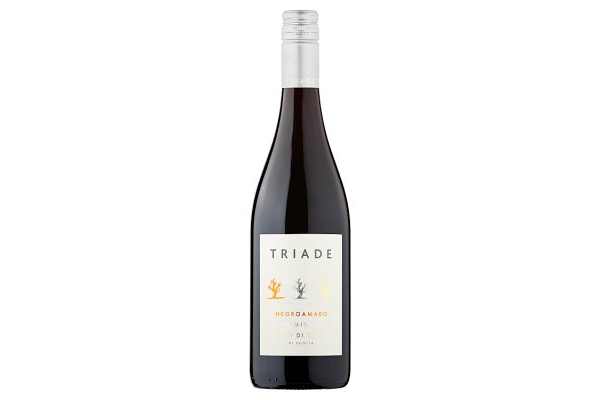
Triade Rosso IGT Puglia
Triade Rosso is a interesting red wine from Puglia in Italy. This blend combines three grape varieties: Primitivo, Negroamaro, and Nero di Troia. The result is a wine that is deep red in colour, offering a different type of complexity. On the nose, the wine greets you with a bouquet of blueberries, dark cherries, cinnamon and black pepper. The taste is pleasing and spicy, with subtle hints of chocolate and oak that add depth to the flavour. The wine has gained a 3.8 rating on Vivino, which suggests it has been well-received. As someone who counts Primitivo and Negroamaro among…
-
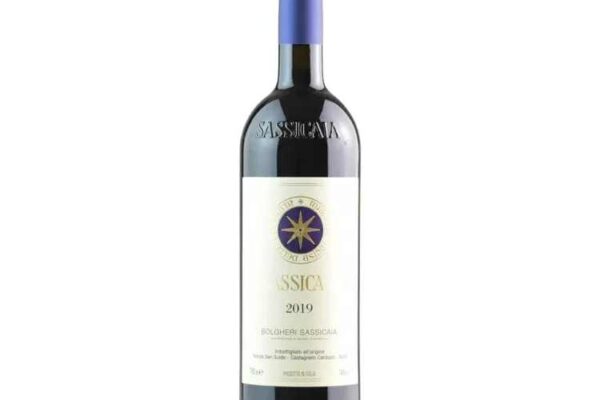
Super Tuscan
A Super Tuscan wine refers to red wines produced in Tuscany, Italy, that don’t adhere to the traditional wine-making rules of the region. In the 1970s, some Tuscan wine producers began to feel constrained by the strict wine-making regulations of the region. These rules dictated which grape varieties could be used, the methods of production and even the ageing process. To experiment and innovate beyond these regulations, a few producers started crafting wines using non-traditional grape varieties such as Cabernet Sauvignon and Merlot. Though these wines couldn’t be labelled with prestigious denominations like Chianti or Brunello di Montalcino because they…
-

Specially Selected Toscana Rosso
The Specially Selected Toscana Rosso 2021 is a red, 14% alcohol, wine that’s medium to full-bodied. Its origins are somewhat shrouded in mystery, with the bottle labels being coy about the wine producer. Despite the lack of provenance, there’s a clue of its origin on the back label – a mention of bottled for Buontalenti Srl, which matches the collaborative effort of small growers and expert winemakers mentioned on the front label. The blend, though again not explicitly stated, is likely a classic Super Tuscan trio: Sangiovese, Merlot and Cabernet Sauvignon. There’s a resemblance to Terre del Buontalenti from Majestic,…
-

Corte Lenguin Valpolicella Ripasso Classico Superiore
I recently had the pleasure of dining at the excellent Mercato Italiano in Bridport, Dorset. It was here that I discovered the Corte Lenguin Valpolicella Ripasso, DOC certified and medium to full-bodied. The blend of Corvina Veronese, Corvinone and Rondinella grapes blends beautifully to create a great flavour. A high rating of 4.0 on Vivino hints at the wine’s popularity. The ruby red hue prepares the palate for the burst of fruitiness. On the first sip, you get a mix of cherry and blueberry with whispers of spices and liquorice. Elegance is the term that best describes the tannin profile…
-

Italy’s Wine Classifications
The top of Italian wine classification is the Denominazione di Origine Controllata e Garantita (DOCG). Wines under this category have undergone the most stringent regulations. They come from precisely delineated regions and have passed a meticulous taste examination and chemical tests. The regulations encompass aspects ranging from grape varieties and wine production methods to specific ageing requirements. Below DOCG in terms of rigidity is the Denominazione di Origine Controllata (DOC). Wines under this classification still signify high quality and originate from designated regions. They must conform to a set of stipulations concerning grape varieties, yield caps, wine production techniques and…
-

Fantini Italian Wine Tasting
On the 29th September I had the pleasure of attending an Italian wine tasting at Morrish & Banham‘s shop in Bridport, Dorset. It was hosted by Illaria Zenaro of Fantini in Italy who are represented in the UK by Liberty Wines. Fantini are unusual for an Italian producer in that the majority, 95%, of their wines are exported from Italy rather than for their domestic market. The tasting was also unusual in that I found that all the wines were very memorable in their own ways and I would happily drink any of them again. Here are my notes: Whites:…
-

Pazzia Primitivo di Manduria
This Primitivo di Manduria has gained a reputation, not just for its 4.2 rating on Vivino but also for being among Vivino’s the top 25 Southern Italy Primitivo wines in the United Kingdom at the time of writing this review. A previous 2019 vintage was a Bronze IWC winner. Decanter’s review of previous vintages, which scored an 89, described it as inky dark in the glass with bags of ripe, fleshy fruit flavour, think black cherries and salted plums, velvety, rich and fruit-forward. The 2021 vintage is full-bodied and aromatic. It’s not as tannic as you might expect, which can…
-

Pontarelli Toscana Rosso
This wine, IGT classified, is a blend of 15% Cabernet Sauvignon, 15% Merlot and a dominant 70% Sangiovese produced exclusively for Marks & Spencer. It undergoes a mixed fermentation process, utilising a combination of concrete, stainless steel tanks and large oak casks. This method is designed to enhance the wine’s fruit characters. Critics seem to appreciate this wine, with Decanter awarding it an 89 and even listing it among Marks & Spencer’s top wine buys for the summer. On Vivino this 2020 vintage stands out with a 3.9 score, rating higher than any of its predecessors. Upon tasting, the wine…
-

Italy Loses Wine-making Leadership to France
Reuters is reporting on the decline in wine production in Italy. The wine output in Italy is expected to decrease by 12% this year (2023), falling below 44 million hectolitres. This significant drop is attributed to extreme weather conditions and fungal diseases that have adversely affected the vineyards. As a result of this decline, Italy has lost its leadership position in wine-making to France. However, the concern isn’t primarily about Italy losing its lead in wine production volumes and is instead suffering more from the decline in both local and international demand.
-

Climate Change Threatens Prosecco
Climate change is posing a severe threat to Prosecco, according to recent research published in the iScience journal. Originating from Italy’s mountainous vineyards, Prosecco has seen a decline in grape yields due to extreme weather conditions and soil degradation. The risk extends beyond losing an agricultural product as it also threatens entire communities’ history and cultural roots. Extreme weather events, including sudden, intense rainfall and droughts, are making it increasingly difficult for Prosecco producers. These conditions lead to soil erosion and slope failures in the steep vineyards of Northern Italy. This year, the vineyards experienced massive spring rainfall and hailstones,…
-
Ripasso
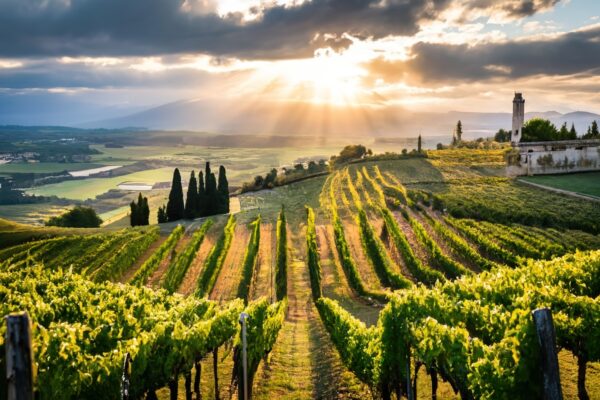
The word “Ripasso” literally means ‘re-passed’ in Italian. This term is used to describe a specific winemaking technique that involves a second fermentation process. Originally, this method was developed in the Veneto region of Italy, and it is most commonly associated with Valpolicella wines. After the initial fermentation of the wine, the young wine is added to a cask containing the skins and lees left over from the production of Amarone or Recioto (a sweet wine and ancestor of Amarone), other wines from the same region. The wine then undergoes a second fermentation, absorbing additional tannins, flavours and complexities from…
-

Passo del Cardinale Primitivo di Manduria
I recently had the pleasure of trying a Primitivo that has been given an award by Gambero Rosso magazine, a global authority on Italian food, wine and travel. With a rating of 4.1 on Vivino and an impressive 4.3 for its latest 2022 vintage, this wine piqued my interest. Upon tasting, I found it to be medium to full-bodied, maintaining a good balance with Black Forest-fruit flavours and a subtle note of vanilla. It’s not as intense as, for example, La Masseria Del Borgo, but rather more akin to a classic Primitivo. In my opinion, it’s more suitable to be…
-
ASDA Extra Special Soave Classico
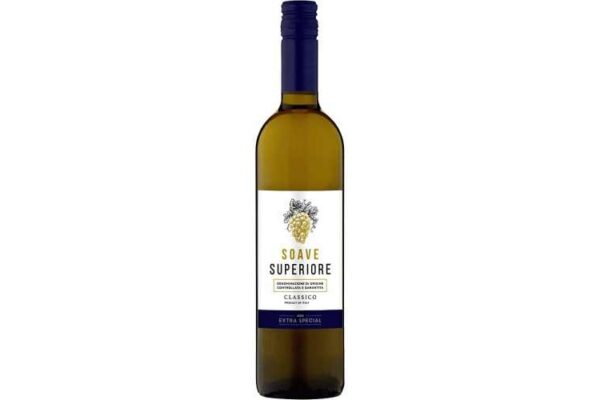
This nutty, white wine is from Italy’s Veneto region. Soave is renowned for its delicate smoothness and freshness and it is made primarily with Garganega grapes forming a minimum of 70% of the blend. There are two Soave classifications – Denominazione di Origine Controllata (DOC) and Denominazione di Origine Controllata e Garantita (DOCG). The DOC region, larger and flatter in terrain, is known for producing usually unoaked Soave, notable for its dry, zingy palate with hints of citrus and almond. The more prestigious DOCG classification usually has a lower yield which produces a higher quality wine. DOCG Soave exhibits increased…
-
Wines of Vesevo & Fantini Tasting – Campania & Puglia, Italy
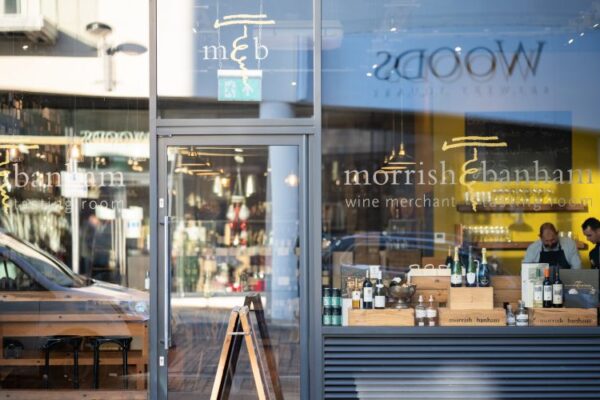
The Vesevo & Fantini wine tasting events at Morrish & Banham (M&B) will showcase Italian wines created by Valentine Sciotto. The events will be hosted at M&B’s Dorchester and Bridport locations on 28th and 29th September 2023. The evenings will include an aperitif, canapés and a guided tasting of six wines. Tickets are £25 and wines tasted will be offered at a 10% discount. I’ll be reporting back on this event.
-

Masciarelli Montepulciano d’Abruzzo
With a medium body, this wine has flavours of ripe cherries, accompanied by sweet spices and an enticing whisper of smoke. Under Italian wine regulations, a Montepulciano d’Abruzzo wine must contain at least 85% Montepulciano with Sangiovese permitted to make up to 15% of the remaining blend. The wine is required to be aged for at least 5 months before being released. This wine has been recommended by the Daily Mail and the 2020 vintage has its highest ever rating of 3.9 on Vivino. Mass market Montepulciano d’Abruzzo is often disappointing but this the exception. My wife and I discovered…
-

Italy’s 2023 Wine Harvest in Jeopardy
Italy’s 2023 wine harvest is projected to decrease by up to 14% due to extreme weather conditions associated with climate change, including intense heat, storms and wildfires, according to agricultural group Coldiretti. An initial forecast predicts a national production of around 43 million hectolitres, down from 50 million in 2022, potentially marking one of the smallest Italian wine harvests on record. This situation varies across regions, with southern and central areas of Italy expecting heavier declines, whilst northern regions remain stable for now. Despite potential reductions in yield, some wineries, such as those in Sicily, anticipate maintaining grape quality, even…
Pick Lists
Majestic | The Wine Society | Tesco | Waitrose | Sainsbury’s | Morrisons | Co-op | Asda | Lidl | £7 and Under | Over £20
Did You Know?
Australian wine exports to China have collapsed from around $1.2 billion to less than $10 million. More
Wine’s aroma is not determined solely by which flavour compounds it contains. More
Low-to-moderate wine consumption is associated with lower mortality. More
Moderate water stress can be part of what creates flavour and terroir expression. More
Wine appears less frequently online than other alcoholic drinks. More
Independent retailers had 9% fewer customers in March 2026 than two years earlier. More
Average spend per bottle in independents has risen by 23% since 2019, compared with 21% in supermarkets. More.
Nearly a third (32%) of UK consumers say they have already used AI for alcoholic drinks advice. More
Among socially active wine buyers, 37% have bought a wine recommended online. More
In 2026, 72% of consumers now think wine knowledge is essential to appreciation, up 20 percentage points on 2025. More
Rías Baixas wines reached more than 107 countries in 2025 and exports represented 31 per cent of the denomination’s total sales. More
Light Strike Can Cause Wine Degradation in Just One Day. More
People actively adjust their wine choices depending on who might see them. More
In the UK, 73% of Alcohol is Bought From Retail Rather Than Hospitality. More
UK wine production reached 124,377 hectolitres that year, meaning the UK accounted for roughly 0.05 per cent of world output. More
For Crémant, grapes must be harvested by hand and the wines must undergo at least nine months’ ageing before release. More
In 2024, the UK was the second-largest export market for Champagne globally, after the United States. More
Local UK bottling of wine represents about 40% of imported wine. More
Around 1% of people, typically severe asthmatics, have a sulphite sensitivity. More
A large 80% of Australian wine arrives in the UK in bulk. More
Only about 0.02% of Australia’s landmass is dedicated to vineyards. More
In 2024, New Zealand produced only 1% of the World’s wine. More
In 2024, the US imported 37% of World production of Pinot Grigio and the UK was is in second place at 27%. More
In 2024, the UK was South Africa’s largest export market, with 40% of total exports. More
In 2024, the United Kingdom imported 22.3 million bottles of Champagne, a decline of 12.7% compared to the previous year. More
Larger Champagne producers source grapes from as many as 80 different vineyards throughout Champagne. More
Champagne houses and growers collectively produce around 300 million bottles annually. More
In 2025, the Champagne region was home to about 2,124 Champagne houses and approximately 19,000 growers. More
Provence is one of the leaders in the conversion to organic viticulture, with 61% of vineyards certified. More
8% of the South Africa’s grape production is Fairtrade-certified. More
Up to 80% of wine aroma compounds come from grape skins. More
Glycerol is the third-largest component of most dry wines after water and alcohol which is why they so often feel ‘smooth’ or ‘silky’ in the mouth. More
Humans are more than 400 times more sensitive to bitter than sweet. More
Humans can detect the earthy molecule geosmin at about 100 parts per trillion and camels are so sensitive to it they can locate damp ground from roughly 50 miles away. More
During the phylloxera crisis of the nineteenth century, 90% of Europe’s vineyards were destroyed. More
In 2025, for La Vieille Ferme, also known as “The Chicken Wine”, sales surged by 49.4% to £110.8 million. More
In 2025, in the UK, Yellow Tail held the top position with sales, marking a 9.8% increase over the previous year. More
In 2024, the UK was the second-largest wine importer in volume and value. More
In 2024, the UK was the fifth-largest wine-consuming country globally. More
In 2025, global wine consumption continued its downward trend, estimated at 214.2 million hectolitres, the lowest since 1961. More
In 2025, online alcohol sales had a 20% increase in value over five years. More
In 2025, the number of UK vineyards rose to 1,104 and wineries to 238, with land under vine expanding to 4,841 hectares, a 510% increase since 2005. More
Moët Hennessy alone commands nearly 46.66% of the Champagne market, with the top three producers together holding about 61%, and the top five controlling over 72%. More
In 2024, the Champagne market was worth roughly €3.92 billion. More
In the marketing year 2023/24, white wine accounted for roughly 55% of Spain’s output, whereas red and rosé together made up about 45%. More
In the UK, 92% of wine is consumed within 48hrs of purchase. More
The majority of wines, 95%, use commercial rather than wild yeast. More
Between 0.5 and 10 litres of water, per litre of wine, are needed for cleaning during winemaking. More
Machine harvesting can achieve up to 100 tons of fruit per day vs 1 ton for a human. More
In Germany, 2025 was the smallest wine vintage since 2010. More
The majority of vineyards, 90% in 2019, are farmed with heavy chemical interventions. Only 6% are organic. More
90% of low and coastal areas in south Europe and California will no longer be able to produce good wine by the end of the century. More
IMAGE WALL
Tools
Recent




Tags
25% Off Wine Aldi Amarone Argentina Articles Asda Australia Austria Award Awards25 Bizarre Blog Books Bordeaux Bulk Bottling Cabernet Sauvignon Carménère Cava Champagne Chardonnay Chile Climate Change Coop Crémant Decanter Duty English Wine EPR Fairtrade Food France Germany Glossary Greece Health Hungary Italy IWSC Jeroboams Laithwaites Legislation Liberty Wines Lidl Low Alcohol M&S Majestic Malbec Merch Merlot Morrisons Natural Nero d'Avola News New Zealand Non-Alcoholic Ocado Old Vine Organic Past Tastings Pick List Pinotage Pinot Grigio Pinot Noir Port Portugal Primitivo Prosecco Research Reviews Ribera del Duero Riesling Rioja Ripasso Rose Sainsbury's Saperavi Sauvignon Blanc Shiraz Sicily South Africa Spain Sparkling Supermarkets Sustainable Tax Terroir Tesco The Wine Society Unrepresented USA Valpolicella Virgin Wines Waitrose Wanderlust Welsh Wine What to Buy Wine Art WineGB WIne Glasses Zinfandel