
Simon Judge
-

25% Off Wine at Tesco
Tesco has save 25% off wine with Clubcard when you buy 6+ bottles that are over £5.50, until Mon 30/10/23.
-

The Wine Buying Experience in Specialist Wine Retailers
There’s an interesting new whitepaper titled “Wine Decisions: The Wine Buying Experience in Independent Specialist Wine Retailers” based on a research study conducted by KAM in collaboration with Hallgarten & Novum Wines, focusing on consumer behavior within the UK’s independent specialist wine retail sector. This study, involving 1,185 participants, explores the driving factors influencing consumer preferences and purchase decisions amidst economic challenges like rising inflation. The research reveals that despite financial tightening, value for money remains a crucial aspect for consumers while purchasing wine, but not strictly in terms of price. Consumers are attracted to specialist wine retailers due to…
-

Mousiness
Wine mousiness is a fault that arises during the wine making process, mainly due to the presence of undesirable Brettanomyces (‘Brett’) and Lactobacillus. These microorganisms produce certain compounds like tetrahydropyridine that are responsible for the unpleasant odour and taste associated with this fault. It’s called ‘mousiness’ or ‘mouse cage’ due to the characteristic odour and flavour which can be likened to mouse fur or a mouse cage, though it can also manifest as a taste reminiscent of stale tortillas or cornflakes, particularly in the aftertaste. This fault is more often encountered in un-sulphured and natural wines as the absence of…
-

French Wine Gold Medal Insights
The French online magazine TheLocal has an enlightening article (you can only view once before goes to paywall) on French wine gold medals that you might have seen on French wine bottles. In 2022, over 24,000 medals were awarded, originating from various wine competitions (les concours) held throughout France. These competitions require a fee for participation and wines are tasted blind by a panel of judges, typically four, who evaluate and score them. However, these medals do not guarantee quality. They indicate a group of judges found the wine superior to its peers in that particular competition. These medals are…
-

Orange Wine is Breaking into the Mainstream
The Telegraph newspaper is explaining how orange wine is breaking into the mainstream. Once a niche taste favoured by few, orange wines are starting to go mainstream. They sit between red and white wines, although their vinification process sharply deviates from that of rosé. While rosé comes from red grapes handled much like white ones, orange wine is created from white grapes, but treated like red during vinification. The extended interaction between the juice and the skins, gives the wine with its characteristic amber colour, a noticeable viscosity and a unique texture. The tannins and flavours, extracted from the skin…
-

Light Strike
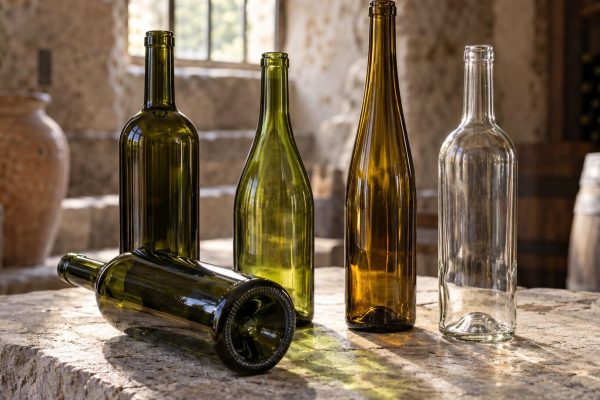
Light strike in wine, caused by exposure to sunlight or artificial light, leads to unpleasant aromas and flavours reminiscent of sewage, rotten eggs, wet wool or cooked cabbage. This is due to the generation of compounds such as dimethyl disulphide created when light reacts with riboflavin in the wine, creating off-smelling sulphur compounds. The problem is most pronounced in white, sparkling and rosé wines. While some consumers and some in the wine trade are aware of this issue, many people remain oblivious. Green and amber glass bottles offer more protection compared to clear glass and it’s best to store wine…
-

What is Sustainable Wine?
Sustainable wine covers a range of practices aimed at diminishing the adverse impacts of wine production on the planet while ensuring the long-term viability for the industry. At the core of sustainable wine are organic and biodynamic practices. These are concerned with minimising the negative environmental impact of farming and food production and promoting soil health. The global relevance of sustainable practices in the wine industry is gaining momentum, addressing the challenges posed by the environmental impacts of agricultural processes. Certifications like the Demeter Biodynamic certification are being obtained by numerous wineries, together with demonstrating a commitment towards biodiversity, solar…
-

Wine Buyers Want a Personal Touch for Subscriptions
Recently, the wine subscription market has seen an increase in demand for a more personalised experience. Subscribers are no longer content with fixed selections and want curated choices that match with their unique palate. In a recent edition of the Subscription Commerce Readiness Report, The Loyalty Factor, PYMNTS Intelligence conducted a survey involving over 2,000 U.S. consumers with retail product subscriptions to grasp the factors influencing merchant choice and fostering enduring relationships. Subscribers are particularly keen on personalising the wines in their subscription box, a sentiment that seems stronger in this category than in others. They express a desire to…
-

Corte Lenguin Valpolicella Ripasso Classico Superiore
I recently had the pleasure of dining at the excellent Mercato Italiano in Bridport, Dorset. It was here that I discovered the Corte Lenguin Valpolicella Ripasso, DOC certified and medium to full-bodied. The blend of Corvina Veronese, Corvinone and Rondinella grapes blends beautifully to create a great flavour. A high rating of 4.0 on Vivino hints at the wine’s popularity. The ruby red hue prepares the palate for the burst of fruitiness. On the first sip, you get a mix of cherry and blueberry with whispers of spices and liquorice. Elegance is the term that best describes the tannin profile…
-

New Wine
-

Reducing the Carbon Footprint of Wine: The Bottle Weight Accord
The wine industry is increasingly under scrutiny for its environmental impact, particularly its carbon footprint. A recent report by Dr. Peter Stanbury, prepared for the Sustainable Wine Roundtable (SWR) (pdf), has shed light on the significant but often overlooked aspect of the weight of wine bottles. The report reveals that the single largest source of carbon emissions in the wine industry is the glass bottle. This is attributed to the energy-intensive manufacturing process and the emissions generated during transportation. To address this, the SWR has announced a Bottle Weight Accord which aims to reduce the average weight of a 750ml…
-
Rapid Growth of Vineyards Bolsters England’s Agricultural Sector
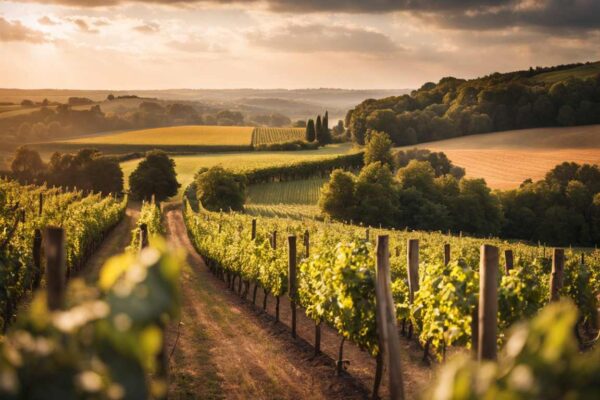
Vineyards have emerged as the fastest-growing edible agricultural sector in England, according to recent DEFRA statistics, with grapes now constituting 36% of the country’s soft fruit crop, marking a sector growth rate of 21% over the past year. Wines of Great Britain has reported a significant growth in vine plantings by 74% over five years to 4,300 hectares, and projections indicate that plantings might expand to 7,600 hectares by 2032, potentially yielding around 24.7 million bottles. An ambitious sustainability initiative has also been unveiled by WineGB aiming to lessen the industry’s carbon emissions and boost biodiversity across the UK’s vineyards.…
-
Conegliano Valdobbiadene DOCG Prosecco Tasting
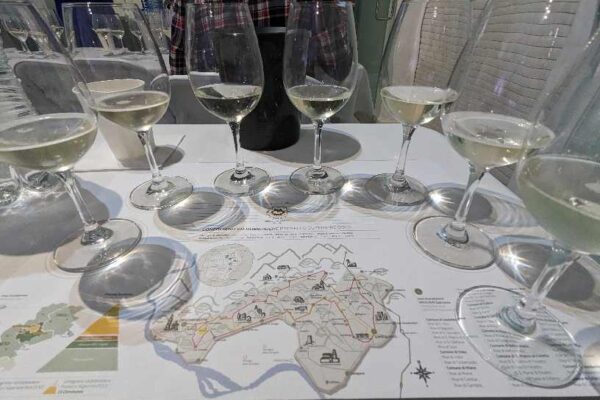
On Tuesday 10th October I attended the Conegliano Valdobbiadene DOCG Prosecco Trade & Media tasting. The Conegliano Valdobbiadene Prosecco Superiore DOCG region lies near Venice, in the foothills of the pre-alps. This small area is known for its steep vineyards, which are primarily tended by hand due to the challenging terrain. These labour-intensive practices have entrenched a tradition of high-quality production, albeit at a lower output compared to the larger and flatter DOC region. The distinction in quality between DOCG and non-DOCG Prosecco is, in part, a product of the geographical and logistical challenges posed by the hilly Conegliano Valdobbiadene…
-

25% off Wine at Asda
Asda has 25% off wine, on £5.50 per bottle or more, until 11:59pm on Wednesday 25 October 2023.
-

What is Appellation Marlborough Wine?
Appellation Marlborough Wine (AMW) is a certification mark signifying a commitment among some winemakers in Marlborough, New Zealand, to uphold high-quality standards and preserve the unique characteristics of wines produced in this region. Initiated and trademark registered in 2018, AMW primarily aimed to safeguard the authenticity, origin and integrity of Marlborough’s popular Sauvignon Blanc. The drive for AMW’s creation stemmed from concerns among local winemakers regarding the quality of Sauvignon Blanc bottled outside New Zealand, which potentially threatened the reputation of Marlborough wines. By being part of AMW, currently 53 AWM vintners aim to ensure consumers can reliably identify and…
-

Crisis Distillation
The Wine Economist is reporting that the concept of crisis distillation is resurfacing in the global wine industry. This practice involves government programmes buying surplus wine to convert it into industrial alcohol, aiming to stabilise wine prices and grower incomes. While it was a common practice in the European Union, especially during the COVID-19 pandemic, the situation today is different. The current wine surplus is more due to falling demand than excessive supply. The EU has attempted reforms to make the wine sector more market-driven, but the effectiveness of these measures is still uncertain. Crisis distillation is seen as a…
-

Blutengarten Riesling
I have just had the pleasure of trying a wine that I wouldn’t have picked up myself due to its very low price, but my wife did, and I must say it was a great surprise. With a 3.9 score on Vivino, this wine punches above its weight. It’s off-dry, making it versatile enough for a variety of food pairings or enjoyable on its own. The flavour profile features apple, gooseberry and lime. These flavours come together in a harmonious blend that’s both refreshing and complex. It’s the kind of wine that you might expect to pay a premium for,…
-

The French Wine Industry’s Battle Against Climate Change
According to an article in Nature, the French wine industry, a major part of French culture and economy, is grappling with the challenges posed by climate change. With its strict appellation d’origine contrôlée (AOC) system, which sets rigid rules about geography, grape varieties, and production techniques, the industry faces unique challenges. However, French wine-growers are not waiting for legislative changes. Instead, they are proactively seeking innovative solutions to adapt to the new climate realities. Spring buds in vineyards are emerging earlier due to warming March temperatures but frosts are still common in April. To protect the buds, some vineyard owners…
-

You Look Like I Need Wine
-

Italy’s Wine Classifications
The top of Italian wine classification is the Denominazione di Origine Controllata e Garantita (DOCG). Wines under this category have undergone the most stringent regulations. They come from precisely delineated regions and have passed a meticulous taste examination and chemical tests. The regulations encompass aspects ranging from grape varieties and wine production methods to specific ageing requirements. Below DOCG in terms of rigidity is the Denominazione di Origine Controllata (DOC). Wines under this classification still signify high quality and originate from designated regions. They must conform to a set of stipulations concerning grape varieties, yield caps, wine production techniques and…
Pick Lists
Majestic | The Wine Society | Tesco | Waitrose | Sainsbury’s | Morrisons | Co-op | Asda | Lidl | £7 and Under | Over £20
Did You Know?
Australian wine exports to China have collapsed from around $1.2 billion to less than $10 million. More
Wine’s aroma is not determined solely by which flavour compounds it contains. More
Low-to-moderate wine consumption is associated with lower mortality. More
Moderate water stress can be part of what creates flavour and terroir expression. More
Wine appears less frequently online than other alcoholic drinks. More
Independent retailers had 9% fewer customers in March 2026 than two years earlier. More
Average spend per bottle in independents has risen by 23% since 2019, compared with 21% in supermarkets. More.
Nearly a third (32%) of UK consumers say they have already used AI for alcoholic drinks advice. More
Among socially active wine buyers, 37% have bought a wine recommended online. More
In 2026, 72% of consumers now think wine knowledge is essential to appreciation, up 20 percentage points on 2025. More
Rías Baixas wines reached more than 107 countries in 2025 and exports represented 31 per cent of the denomination’s total sales. More
Light Strike Can Cause Wine Degradation in Just One Day. More
People actively adjust their wine choices depending on who might see them. More
In the UK, 73% of Alcohol is Bought From Retail Rather Than Hospitality. More
UK wine production reached 124,377 hectolitres that year, meaning the UK accounted for roughly 0.05 per cent of world output. More
For Crémant, grapes must be harvested by hand and the wines must undergo at least nine months’ ageing before release. More
In 2024, the UK was the second-largest export market for Champagne globally, after the United States. More
Local UK bottling of wine represents about 40% of imported wine. More
Around 1% of people, typically severe asthmatics, have a sulphite sensitivity. More
A large 80% of Australian wine arrives in the UK in bulk. More
Only about 0.02% of Australia’s landmass is dedicated to vineyards. More
In 2024, New Zealand produced only 1% of the World’s wine. More
In 2024, the US imported 37% of World production of Pinot Grigio and the UK was is in second place at 27%. More
In 2024, the UK was South Africa’s largest export market, with 40% of total exports. More
In 2024, the United Kingdom imported 22.3 million bottles of Champagne, a decline of 12.7% compared to the previous year. More
Larger Champagne producers source grapes from as many as 80 different vineyards throughout Champagne. More
Champagne houses and growers collectively produce around 300 million bottles annually. More
In 2025, the Champagne region was home to about 2,124 Champagne houses and approximately 19,000 growers. More
Provence is one of the leaders in the conversion to organic viticulture, with 61% of vineyards certified. More
8% of the South Africa’s grape production is Fairtrade-certified. More
Up to 80% of wine aroma compounds come from grape skins. More
Glycerol is the third-largest component of most dry wines after water and alcohol which is why they so often feel ‘smooth’ or ‘silky’ in the mouth. More
Humans are more than 400 times more sensitive to bitter than sweet. More
Humans can detect the earthy molecule geosmin at about 100 parts per trillion and camels are so sensitive to it they can locate damp ground from roughly 50 miles away. More
During the phylloxera crisis of the nineteenth century, 90% of Europe’s vineyards were destroyed. More
In 2025, for La Vieille Ferme, also known as “The Chicken Wine”, sales surged by 49.4% to £110.8 million. More
In 2025, in the UK, Yellow Tail held the top position with sales, marking a 9.8% increase over the previous year. More
In 2024, the UK was the second-largest wine importer in volume and value. More
In 2024, the UK was the fifth-largest wine-consuming country globally. More
In 2025, global wine consumption continued its downward trend, estimated at 214.2 million hectolitres, the lowest since 1961. More
In 2025, online alcohol sales had a 20% increase in value over five years. More
In 2025, the number of UK vineyards rose to 1,104 and wineries to 238, with land under vine expanding to 4,841 hectares, a 510% increase since 2005. More
Moët Hennessy alone commands nearly 46.66% of the Champagne market, with the top three producers together holding about 61%, and the top five controlling over 72%. More
In 2024, the Champagne market was worth roughly €3.92 billion. More
In the marketing year 2023/24, white wine accounted for roughly 55% of Spain’s output, whereas red and rosé together made up about 45%. More
In the UK, 92% of wine is consumed within 48hrs of purchase. More
The majority of wines, 95%, use commercial rather than wild yeast. More
Between 0.5 and 10 litres of water, per litre of wine, are needed for cleaning during winemaking. More
Machine harvesting can achieve up to 100 tons of fruit per day vs 1 ton for a human. More
In Germany, 2025 was the smallest wine vintage since 2010. More
The majority of vineyards, 90% in 2019, are farmed with heavy chemical interventions. Only 6% are organic. More
90% of low and coastal areas in south Europe and California will no longer be able to produce good wine by the end of the century. More
IMAGE WALL
Tools
Recent




Tags
25% Off Wine Aldi Amarone Argentina Articles Asda Australia Austria Award Awards25 Bizarre Blog Books Bordeaux Bulk Bottling Cabernet Sauvignon Carménère Cava Champagne Chardonnay Chile Climate Change Coop Crémant Decanter Duty English Wine EPR Fairtrade Food France Germany Glossary Greece Health Hungary Italy IWSC Jeroboams Laithwaites Legislation Liberty Wines Lidl Low Alcohol M&S Majestic Malbec Merch Merlot Morrisons Natural Nero d'Avola News New Zealand Non-Alcoholic Ocado Old Vine Organic Past Tastings Pick List Pinotage Pinot Grigio Pinot Noir Port Portugal Primitivo Prosecco Research Reviews Ribera del Duero Riesling Rioja Ripasso Rose Sainsbury's Saperavi Sauvignon Blanc Shiraz Sicily South Africa Spain Sparkling Supermarkets Sustainable Tax Terroir Tesco The Wine Society Unrepresented USA Valpolicella Virgin Wines Waitrose Wanderlust Welsh Wine What to Buy Wine Art WineGB WIne Glasses Zinfandel