What is in the Mouth Shapes What is in the Glass

Posted by

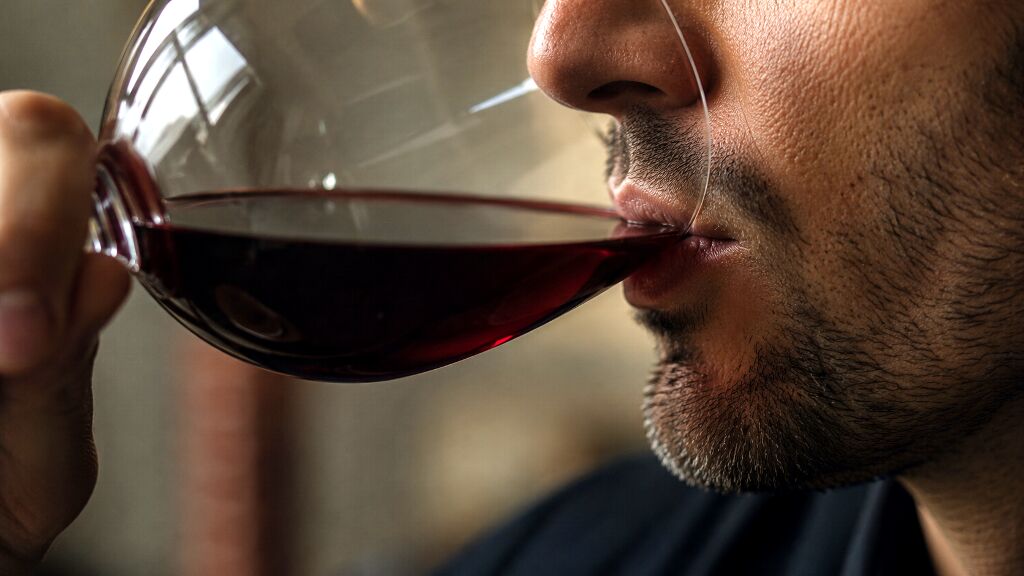
Sometimes, when I taste food, and wine, the first taste is so much better than those that follow. It is not simply that the wine changes in the glass, though it sometimes does. It is also that the palate changes. The first sip arrives on a relatively fresh canvas. Every sip after that is judged in the context of what has just happened in the mouth.

Hydration clearly has its benefits, but I have also been told by wine experts that water should not necessarily be drunk between every sip of wine. Water can temporarily alter the conditions in the mouth. It may rinse away texture, dilute lingering flavours, change the perception of acidity, or make the next sip seem sharper or flatter depending on the water itself. Very cold water, sparkling water, or strongly mineral water can have an even greater effect. Even chlorine in the glass, from water, can alter perception.

Sommelier Amanda McCrossin warns against sipping water immediately before tasting wine, because it may make it harder to perceive the wine’s intended flavours, aromas and structure. The first sip of wine sets a baseline for the palate, while the second and third sips may reveal further layers of fruit, spice, minerality and texture. But those later impressions are never neutral. They are shaped by the first sip, by what was tasted before it and by whatever else has happened in the mouth.

This has wider implications for tasting, particularly for people like me who taste many wines in succession. What comes before matters. I often return to wines during tastings, especially those poured at the beginning or those I am unsure about. A wine can seem different when revisited later, not only because it may have opened up in the glass, but because my own frame of reference has shifted.

In that sense, the taste of wine depends on context. Wine affects wine. One bottle can make the next seem brighter, duller, sweeter, harsher or more restrained. Even the practice of “zebra striping”, alternating alcoholic drinks with water, may not be ideal if the aim is to taste wine as precisely as possible, even if it may still make sense for moderation and hydration.

Coming back to a wine afresh the next day can be revealing. Sometimes it seems better because it needed time to breathe. Sometimes it seems better because my perceptions have been reset. The wine may have changed, but so have I.
Did You Know?

Nearly a third (32%) of UK consumers say they have already used AI for alcoholic drinks advice. More

Among socially active wine buyers, 37% have bought a wine recommended online. More

In 2026, 72% of consumers now think wine knowledge is essential to appreciation, up 20 percentage points on 2025. More

Rías Baixas wines reached more than 107 countries in 2025 and exports represented 31 per cent of the denomination’s total sales. More

Light Strike Can Cause Wine Degradation in Just One Day. More

People actively adjust their wine choices depending on who might see them. More

In the UK, 73% of Alcohol is Bought From Retail Rather Than Hospitality. More

UK wine production reached 124,377 hectolitres that year, meaning the UK accounted for roughly 0.05 per cent of world output. More

For Crémant, grapes must be harvested by hand and the wines must undergo at least nine months’ ageing before release. More

In 2024, the UK was the second-largest export market for Champagne globally, after the United States. More

Local UK bottling of wine represents about 40% of imported wine. More

Around 1% of people, typically severe asthmatics, have a sulphite sensitivity. More

A large 80% of Australian wine arrives in the UK in bulk. More

Only about 0.02% of Australia’s landmass is dedicated to vineyards. More

In 2024, New Zealand produced only 1% of the World’s wine. More

In 2024, the US imported 37% of World production of Pinot Grigio and the UK was is in second place at 27%. More

In 2024, the UK was South Africa’s largest export market, with 40% of total exports. More

In 2024, the United Kingdom imported 22.3 million bottles of Champagne, a decline of 12.7% compared to the previous year. More

Larger Champagne producers source grapes from as many as 80 different vineyards throughout Champagne. More

Champagne houses and growers collectively produce around 300 million bottles annually. More

In 2025, the Champagne region was home to about 2,124 Champagne houses and approximately 19,000 growers. More

Provence is one of the leaders in the conversion to organic viticulture, with 61% of vineyards certified. More

8% of the South Africa’s grape production is Fairtrade-certified. More

Up to 80% of wine aroma compounds come from grape skins. More

Glycerol is the third-largest component of most dry wines after water and alcohol which is why they so often feel ‘smooth’ or ‘silky’ in the mouth. More

Humans are more than 400 times more sensitive to bitter than sweet. More

Humans can detect the earthy molecule geosmin at about 100 parts per trillion and camels are so sensitive to it they can locate damp ground from roughly 50 miles away. More

During the phylloxera crisis of the nineteenth century, 90% of Europe’s vineyards were destroyed. More

In 2025, for La Vieille Ferme, also known as “The Chicken Wine”, sales surged by 49.4% to £110.8 million. More

In 2025, in the UK, Yellow Tail held the top position with sales, marking a 9.8% increase over the previous year. More

In 2024, the UK was the second-largest wine importer in volume and value. More

In 2024, the UK was the fifth-largest wine-consuming country globally. More

In 2025, global wine consumption continued its downward trend, estimated at 214.2 million hectolitres, the lowest since 1961. More

In 2025, online alcohol sales had a 20% increase in value over five years. More

In 2025, the number of UK vineyards rose to 1,104 and wineries to 238, with land under vine expanding to 4,841 hectares, a 510% increase since 2005. More

Moët Hennessy alone commands nearly 46.66% of the Champagne market, with the top three producers together holding about 61%, and the top five controlling over 72%. More

In 2024, the Champagne market was worth roughly €3.92 billion. More

In the marketing year 2023/24, white wine accounted for roughly 55% of Spain’s output, whereas red and rosé together made up about 45%. More

In the UK, 92% of wine is consumed within 48hrs of purchase. More

The majority of wines, 95%, use commercial rather than wild yeast. More

Between 0.5 and 10 litres of water, per litre of wine, are needed for cleaning during winemaking. More

Machine harvesting can achieve up to 100 tons of fruit per day vs 1 ton for a human. More

In Germany, 2025 was the smallest wine vintage since 2010. More

The majority of vineyards, 90% in 2019, are farmed with heavy chemical interventions. Only 6% are organic. More

90% of low and coastal areas in south Europe and California will no longer be able to produce good wine by the end of the century. More

IMAGE WALL