
Simon Judge
-

Moillard Thomas Santenay Rouge
Moillard Thomas Santenay Rouge 2022 is a 100% Pinot Noir from Burgundy, aged for 12 months in oak barrels. It’s a wine that impresses straight from the bottle, needing no time to open up. For it’s vintage, the light colour shows a very slight touch of browning, correctly suggesting it leans towards a savoury style. There’s an immediate aroma of cherry and earthiness, with a subtle trace of caramel. The flavour continues in this vein, savory at its core, but with raspberry and cherry fruit giving it vibrancy and lift. Through the middle part of the taste, there’s a lovely…
-

Catnip Wine for Cats
A New Zealand start-up, Muttley’s Estate, is aiming to turn the country into a commercial catnip producer with the development of a shelf-stable pet wine made from the herb. Catnip, which has been in New Zealand since 1870, is known to improve the mood of most cats and help ease anxiety in dogs. With rising global demand, especially in the pet and natural health industries, the market for catnip essential oil is expected to grow significantly, reaching around $400 million by 2030. Muttley’s Estate is believed to be the first company globally to produce a pet wine that can be…
-

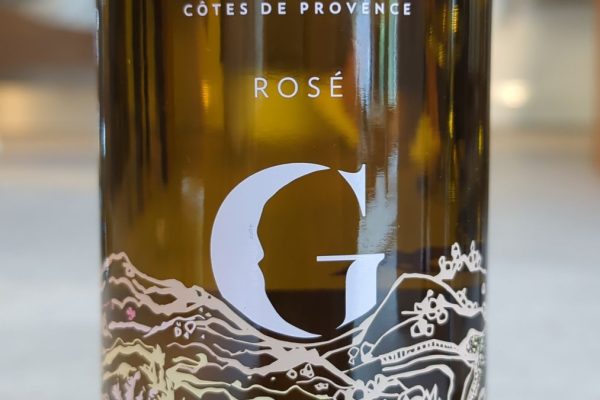
La Belle Angèle Rosé
La Belle Angèle Rosé takes its name from a figure of the early 20th century, a muse of the French Impressionists whose charm and elegance inspired many. Produced by La Belle Angèle Wines in Nuits-Saint-Georges, France, the bottle itself reflects a refined aesthetic and the producer’s website is very well presented – a rare case where I link as it’s very well done. This 2024 vintage, 12% ABV, blends Cinsault and Grenache grapes, sourced from the Gers and the Languedoc. The Cinsault brings a sense of freshness, while the Grenache adds richness and a deeper concentration. In the glass, it…
-

Wildstone Roussanne
From the Chilean producer Luis Felipe Edwards, Wildstone is a wine that pays tribute to the rugged stone that emerges untamed from the landscape, carving its own way through plains and forests of Chile itself. The grapes for this white come from the Colchagua Coast, an area increasingly recognised for producing distinctive wines. I first came across this Roussanne last year at the Waitrose Autumn press tasting. It’s one of those bottles that might slip under the radar due to the Roussanne grape having a relatively low profile, especially outside of Rhône, France. In fact, even John, the highly knowledgeable…
-

Risks Undermining EPR Goals
At the London Wine Fair on 21 May 2025, Harshal Gore from PackUK, an arm of Defra, provided an update on the ongoing developments around Extended Producer Responsibility (EPR). While acknowledging EPR as strategically sound, Gore admitted the scheme has suffered repeated setbacks. He pointed out that 2025 has marked significant progress, with the establishment of PackUK and the initiation of a new finance system managed by an external software firm. A collaborative approach with monthly meetings involving industry stakeholders has also been adopted to guide the project. Key updates include the release of a Recyclability Assessment Model (RAM), offering…
-

Taste the Difference Crémant d’Alsace
Taste the Difference Crémant d’Alsace is made from 75% Pinot Blanc and 25% Pinot Gris from Alsace in France. This non-vintage wine sits at 12% ABV and undergoes its second fermentation in bottle, in the same way as Champagne, and is aged for 18 months on its lees. I first discovered it at the Sainsbury’s Spring Summer Press Tasting, where it stood out as one of my favourites thanks to its flavour and value. I decided to re-try it in a different context and correct a few earlier misconceptions. For starters, it’s clearly made by Cave du Roi Dagobert, as…
-

My Top Wines at Any Price
This article is a companion piece to my earlier post on the top wines by value. While much of my website focuses on affordable wines and highlighting the best value options, this post takes a different approach. I regularly attend tastings focused on specific countries or appellations, not only to discover under-valued gems but also to calibrate my palate against top-tier wines. But what are the absolute best wines I’ve tasted, regardless of price? Perhaps you’re celebrating a one-off special occasion and want to experience something truly memorable. What should you go for in that case? Another way to frame…
-

Definition Stellenbosch Cabernet Sauvignon
I first came across this wine last year when it was announced as a new wine at a Majestic press tasting. Since then, I’ve purchased it twice and had the chance to spend a bit more time with it, getting to understand it better on each occasion. The wine is made by Kanonkop for Majestic as part of their Definition range. This collection is designed to represent what Majestic sees as the benchmark expressions of key wine styles from around the world, produced in partnership with respected wineries. The idea is to give customers a clear sense of what a…
-

25% Off Wine at Sainsbury’s
Sainsbury’s has 25% off wine for Nectar loyalty card holders, sparkling and Champagne, 6 bottles or more, £6 or more (£7 in Wales), from 21 May 2025 to 31 May 2025. Excludes Sainsbury’s Locals. See the latest Sainsbury’s press tasting for tips on what to buy.
-

25% Off Wine at Asda
Asda has 25% off wine, on £5.50 per bottle or more, 6 bottles or more, from 22 May 2025 until 26 May 2025. See the latest press tasting for tips on what to buy.
-

IWC Results Announced
The International Wine Challenge (IWC) results are out. The IWC has reported that the quality of wines submitted in its latest competition has reached new levels. Despite challenges posed by climate change, such as erratic weather patterns and reduced yields, renowned wine regions and producers continue to deliver exceptional wines. Notable names like Maison Albert Bichot, Edouard Delaunay, Moët & Chandon, Penfolds and Nyetimber have all secured gold medals, reflecting their commitment to excellence. The competition’s rigorous judging process, which involves blind tastings by panels of experts, ensures impartiality and highlights the best in the industry. Co-chairs Sam Caporn MW…
-

25% Off Wine at Waitrose
Waitrose has 25% off 6 bottles or more of wine and Champagne priced between £5 and £100 from 21 May to 3 June 2025 inclusive. See the recent press tasting for tips on what to buy.
-

London Wine Fair 2025
I visited the London Wine Fair 2025 in May 2025. The event featured 433 exhibitors showcasing an impressive 3,213 products. There were prominent, dedicated pavilions representing France, Italy, Romania, Japan, Greece, Macedonia and Georgia. Each of these had clearly made a strong effort to stand out, with Romania, Japan, Greece, Macedonia and Georgia in particular aiming to establish and expand their footprint in the UK market. In contrast, New Zealand, Australia, Portugal and Spain were notably absent as national pavilions, though this was unsurprising. These countries already enjoy a firm footing in the UK and host their own large-scale trade…
-

25% Off Wine at Morrisons
Morrisons has 25% discount on 6 or more bottles of wine, More card price, £6 or more from 20 May 2025 until 25 May 2025. See the recent press tasting for tips on what to buy.
-

25% Off Wine at Tesco
Tesco has save 25% off wine with Clubcard when you buy 6+ bottles that are £6 and over (£7 in Wales), from 20 May 2025 until 26 May 2025. See the recent Tesco tasting and Picks for tips on what to buy.
-

IWSC 2025 Results
The IWSC 2025 results are now available. The very top Gold winners, each awarded a score of 97, are: tekhi – Gurjaani Wine FactoryGuremani Otskhanuri Sapere 2022Imereti, Georgia Morris WinesOld Premium Rare Muscat NVRutherglen, Victoria, Australia Bolero & CompanySabado Grand Khikhvi Qvevri 2023Gurjaani, Kakheti, Georgia Lo SparviereSylvò Extra Brut 2015Franciacorta, Lombardy, Italy Georgian Wines & Spirits CompanyTamada Qvevri White 2019Kakheti, Georgia Sugrue South DownsThe Trouble With Dreams Magnum Brut 2009Sussex, England D’OliveirasVerdelho 2001Madeira, Portugal The ful list of awards is on the IWSC web site.
-

Wine Merchant Top 100 2025
The winners of this year’s Wine Merchant Top 100 have been revealed. These represent the top 10% from nearly 1,000 wines assessed during a rigorous day of judging in April, involving 36 independent wine merchants. Further details about why each wine was chosen will be shared in a special supplement due out in July, which will also highlight the highly commended entries. In the Sparkling Wine category, the top honour went to Grande Réserve, Premier Cru, Pierre Mignon, Champagne, France NV (£35.74, Alliance Wine), while the best value sparkling wine was Llopart Corpinnat Brut Panoramic, Penedès 2018 (£26.75, Hallgarten &…
-
My Top Wines By Value
This post is all about the best of the best when it comes to value in wine I have tasted recently. I have a separate page listing what I think are the best value wines overall, but this is a selection of those few that stand out even more. These are, in my view, the very best wines by value. Of course, this is a subjective space. My taste may not match yours. And wine evolves, so by the time you read this, some of these wines may have changed. That said, I will update this post over time. One…
-

Vinho Verde Sun Lotion
Aldi has electronic shelf labelling so they can easily change products and prices. I spotted this in the health area of the Woking store.Electronic shelf label gone rogue or new Vinho Verde packaging?
-

Parcel Series English Sparkling Brut
Majestic’s Parcel Series wines are sourced from top-tier wineries that discreetly offer a limited amount of stock at significantly reduced prices. This arrangement allows the producers to free up valuable cellar space, while presenting customers with a rare chance to enjoy high-quality wines for much less than their usual cost. This particular wine is a non-vintage English Sparkling made by Rolling Green Hills Ltd. The name has appeared in various supermarket tastings concerning English Sparkling wines, and while it is widely speculated to be Nyetimber behind the label, this remains unconfirmed. The wine is labelled Brut, which suggests a very…
Pick Lists
Majestic | The Wine Society | Tesco | Waitrose | Sainsbury’s | Morrisons | Co-op | Asda | Lidl | £7 and Under | Over £20
Did You Know?
Australian wine exports to China have collapsed from around $1.2 billion to less than $10 million. More
Wine’s aroma is not determined solely by which flavour compounds it contains. More
Low-to-moderate wine consumption is associated with lower mortality. More
Moderate water stress can be part of what creates flavour and terroir expression. More
Wine appears less frequently online than other alcoholic drinks. More
Independent retailers had 9% fewer customers in March 2026 than two years earlier. More
Average spend per bottle in independents has risen by 23% since 2019, compared with 21% in supermarkets. More.
Nearly a third (32%) of UK consumers say they have already used AI for alcoholic drinks advice. More
Among socially active wine buyers, 37% have bought a wine recommended online. More
In 2026, 72% of consumers now think wine knowledge is essential to appreciation, up 20 percentage points on 2025. More
Rías Baixas wines reached more than 107 countries in 2025 and exports represented 31 per cent of the denomination’s total sales. More
Light Strike Can Cause Wine Degradation in Just One Day. More
People actively adjust their wine choices depending on who might see them. More
In the UK, 73% of Alcohol is Bought From Retail Rather Than Hospitality. More
UK wine production reached 124,377 hectolitres that year, meaning the UK accounted for roughly 0.05 per cent of world output. More
For Crémant, grapes must be harvested by hand and the wines must undergo at least nine months’ ageing before release. More
In 2024, the UK was the second-largest export market for Champagne globally, after the United States. More
Local UK bottling of wine represents about 40% of imported wine. More
Around 1% of people, typically severe asthmatics, have a sulphite sensitivity. More
A large 80% of Australian wine arrives in the UK in bulk. More
Only about 0.02% of Australia’s landmass is dedicated to vineyards. More
In 2024, New Zealand produced only 1% of the World’s wine. More
In 2024, the US imported 37% of World production of Pinot Grigio and the UK was is in second place at 27%. More
In 2024, the UK was South Africa’s largest export market, with 40% of total exports. More
In 2024, the United Kingdom imported 22.3 million bottles of Champagne, a decline of 12.7% compared to the previous year. More
Larger Champagne producers source grapes from as many as 80 different vineyards throughout Champagne. More
Champagne houses and growers collectively produce around 300 million bottles annually. More
In 2025, the Champagne region was home to about 2,124 Champagne houses and approximately 19,000 growers. More
Provence is one of the leaders in the conversion to organic viticulture, with 61% of vineyards certified. More
8% of the South Africa’s grape production is Fairtrade-certified. More
Up to 80% of wine aroma compounds come from grape skins. More
Glycerol is the third-largest component of most dry wines after water and alcohol which is why they so often feel ‘smooth’ or ‘silky’ in the mouth. More
Humans are more than 400 times more sensitive to bitter than sweet. More
Humans can detect the earthy molecule geosmin at about 100 parts per trillion and camels are so sensitive to it they can locate damp ground from roughly 50 miles away. More
During the phylloxera crisis of the nineteenth century, 90% of Europe’s vineyards were destroyed. More
In 2025, for La Vieille Ferme, also known as “The Chicken Wine”, sales surged by 49.4% to £110.8 million. More
In 2025, in the UK, Yellow Tail held the top position with sales, marking a 9.8% increase over the previous year. More
In 2024, the UK was the second-largest wine importer in volume and value. More
In 2024, the UK was the fifth-largest wine-consuming country globally. More
In 2025, global wine consumption continued its downward trend, estimated at 214.2 million hectolitres, the lowest since 1961. More
In 2025, online alcohol sales had a 20% increase in value over five years. More
In 2025, the number of UK vineyards rose to 1,104 and wineries to 238, with land under vine expanding to 4,841 hectares, a 510% increase since 2005. More
Moët Hennessy alone commands nearly 46.66% of the Champagne market, with the top three producers together holding about 61%, and the top five controlling over 72%. More
In 2024, the Champagne market was worth roughly €3.92 billion. More
In the marketing year 2023/24, white wine accounted for roughly 55% of Spain’s output, whereas red and rosé together made up about 45%. More
In the UK, 92% of wine is consumed within 48hrs of purchase. More
The majority of wines, 95%, use commercial rather than wild yeast. More
Between 0.5 and 10 litres of water, per litre of wine, are needed for cleaning during winemaking. More
Machine harvesting can achieve up to 100 tons of fruit per day vs 1 ton for a human. More
In Germany, 2025 was the smallest wine vintage since 2010. More
The majority of vineyards, 90% in 2019, are farmed with heavy chemical interventions. Only 6% are organic. More
90% of low and coastal areas in south Europe and California will no longer be able to produce good wine by the end of the century. More
IMAGE WALL
Tools
Recent



Tags
25% Off Wine Aldi Amarone Argentina Articles Asda Australia Austria Award Awards25 Bizarre Blog Books Bordeaux Bulk Bottling Cabernet Sauvignon Carménère Cava Champagne Chardonnay Chile Climate Change Coop Crémant Decanter Duty English Wine EPR Fairtrade Food France Germany Glossary Greece Health Hungary Italy IWSC Jeroboams Laithwaites Legislation Liberty Wines Lidl Low Alcohol M&S Majestic Malbec Merch Merlot Morrisons Natural Nero d'Avola News New Zealand Non-Alcoholic Ocado Old Vine Organic Past Tastings Pick List Pinotage Pinot Grigio Pinot Noir Port Portugal Primitivo Prosecco Research Reviews Ribera del Duero Riesling Rioja Ripasso Rose Sainsbury's Saperavi Sauvignon Blanc Shiraz Sicily South Africa Spain Sparkling Supermarkets Sustainable Tax Terroir Tesco The Wine Society Unrepresented USA Valpolicella Virgin Wines Waitrose Wanderlust Welsh Wine What to Buy Wine Art WineGB WIne Glasses Zinfandel