
Simon Judge
-

Waitrose Spring Press Tasting 2025
I was invited to the Waitrose & Partners Spring Wine Tasting in London in April 2025, where 159 products were showcased across all drinks categories. The selection reflected a clear focus on both innovation and quality, with several key trends standing out. For Waitrose, Crémant is currently the fastest-growing category, with sales up 19% compared to last year. There has also been a notable rise in interest in lesser-known regions through the Loved & Found range, which now includes six new varieties. Their own label wines are also seeing real momentum, particularly the No.1 range which has doubled in size…
-

M&S Spring Press Tasting
In April 2025 I went to the M&S press tasting in London, where the retailer showcased a raft of new wines and several old favourites. Innovation in English wine was front-and-centre. M&S has released its first own-label Charmat-method sparkling, meaning the second fermentation is carried out in tank rather than in the bottle. Alongside this comes the new, traditional method, Rockferne Brut, made exclusively for M&S by Roebuck Estates in Sussex and highlighted among my picks below. A clear trend was a surge in demand for smaller formats. M&S has introduced twelve new half-bottles and minis this month, creating one…
-

Mount Rozier Chenin Blanc Reserve
Mount Rozier Chenin Blanc Reserve is a white wine from the foothills of the Hottentot Mountains, produced by the Mount Rozier winery in South Africa’s Western Cape wine region. The estate has a rich heritage, founded at the turn of the 19th century by Annie Rozier, a local flower merchant known for gathering wildflowers in the Schapenberg hills around her family’s homestead. She gained a reputation for making natural remedies and medicines, becoming a beloved figure in the local community. Today, the Mount Rozier Estate remains committed to preserving its natural surroundings, with 30 hectares of land designated for the…
-

Russians Lure European Diplomats with Wine Tasting Invite
In April 2025, researchers revealed Russia’s APT29 (Cozy Bear) resumed phishing attacks on European diplomats, using a wine tasting invitation. The emails mimic European Ministry of Foreign Affairs correspondence and re-target diplomats who don’t respond. Links lead to a malicious file, wine.zip, dropped under specific conditions. Inside, a PowerPoint executable (wine.exe) exploits DLL side-loading to run an obfuscated loader called Grapeloader. The emails imitate a European Ministry of Foreign Affairs and are resent if ignored, with subject lines such as “Wine tasting event (update date)” and “For Ambassador’s Calendar”. Their embedded link sits on infrastructure that withholds the malicious file…
-
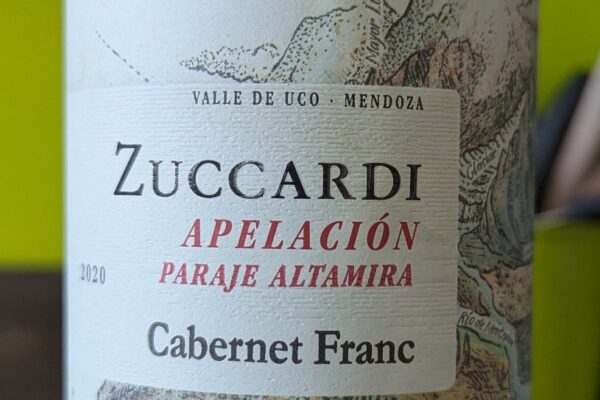
Apelación Cabernet Franc
Apelación Cabernet Franc by Zuccardi is an interesting expression of this variety, made by a winery more widely known for its Malbec. Made from 100% Cabernet Franc, the grapes are carefully sourced from select vineyards in Paraje Altamira and across the wider Uco Valley in Mendoza, Argentina, a region renowned for its high-altitude viticulture. The wine is fermented using native yeasts in concrete vats, a traditional technique that allows for a pure expression of the fruit. It is then matured in 2,500-litre foudres, which offer subtle oak influence without overpowering the varietal character. The 2020 vintage comes in at 14%…
-

Learn About No Alcohol Wine
New research on Dealcoholized wine: Techniques, sensory impacts, stability, and perspectives of a growing industry“ is a detailed review examining the production, sensory implications, stability concerns and future prospects of dealcoholised wine. Growing interest in dealcoholised wine is largely driven by health-conscious consumers, social trends encouraging reduced alcohol intake, and legal considerations such as road safety. Consumers increasingly seek alternatives that offer the benefits and enjoyment of traditional wine without the associated alcohol content. The global market for such products is expanding rapidly, estimated to exceed US$10 billion. The review outlines a range of post-fermentation techniques used to remove or…
-

Definition Saint-Émilion Grand Cru
This 2018 vintage of Saint-Émilion Grand Cru comes from the right bank of the River Garonne, from the family-run Château du Roy. It is made from 35-year-old vines and sits at 13.5% ABV. While it’s Merlot-led, it also includes some Cabernet Franc and Cabernet Sauvignon. I almost didn’t review this bottle. On opening, it was underwhelming, both in aroma and flavour. I didn’t bother decanting at the time, thinking it unnecessary given the seemingly low tannins and lack of sediment, but in hindsight that was a mistake. Even after a full day open, it still felt muted and a little…
-

Blueprint Pinot Noir
Blueprint Pinot Noir from Waitrose is part of a range created to highlight excellent-value, classic wines from around the world. Each bottle is chosen not just for quality, but for how faithfully it represents its style and place of origin. The label design reflects the winemaker’s region, adding a touch of visual charm to the experience. This particular Pinot Noir stands out by delivering impressive quality despite not coming from one of the traditionally celebrated regions for the grape. Produced in Romania by Cramele Recaș, it offers a fresh take on the variety and demonstrates that Pinot doesn’t have to…
-
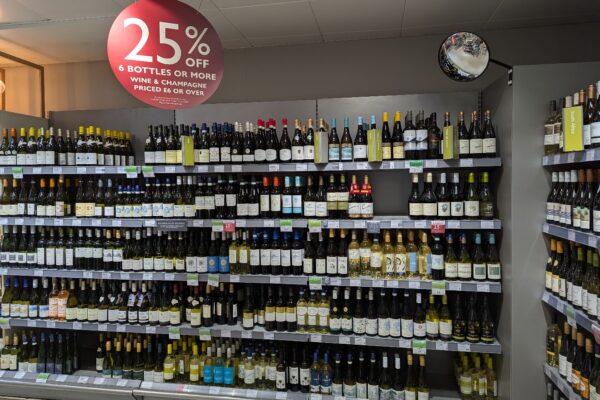
25% Off Wine at Waitrose
Waitrose has 25% off 6 bottles or more of wine and Champagne priced between £6 and £100 from 16 April to 22 April 2025 inclusive. See the recent press tasting for tips on what to buy.
-

25% Off Wine at Morrisons
Morrisons has 25% discount on 6 or more bottles of wine, More card price, £6 or more until 21 April 2025.
-

Les Dauphins Cotes du Rhone
Les Dauphins wines take their cue from the vibrant spirit of 1920s Paris, a time when jazz, art, fine food and wine flourished and when the Rhône Valley saw the formation of its first co-operatives. This cultural backdrop shapes the character of these wines, which are made by the Union des Vignerons des Côtes du Rhône, a co-operative with over six decades of heritage. Grapes are carefully selected by winemakers Thierry Walet and Camille Potau from plots across the Southern Rhône Valley, farmed by long-standing grower-partners, a network of 2000 families whose dedication ensures the continued quality and identity of…
-

Provence Rosé Tasting
In April 2025, I joined a virtual masterclass hosted by Ray O’Connor MW, ambassador for Vins de Provence. Aimed at trade and press, the session tackled the question: “Provence rosé: are they all the same?” and explored the breadth and diversity the region has to offer. Ray took us through the regions and sub-regions of Provence, looking into grape varieties, terrain, climate, relevant statistics and the pivotal role of the Centre du Rosé research centre. The educational element has its own article on Understanding Provence Rosé, while this write-up focuses solely on the tasting element of the session. We sampled…
-
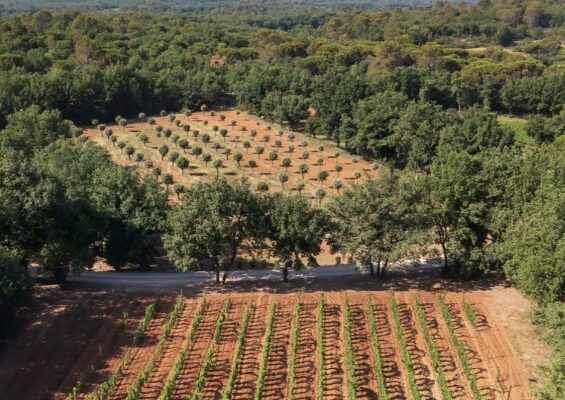
Understanding Provence Rosé
History Provence, located in the sun-drenched south of France, is globally renowned for producing some of the finest rosé wines. Its legacy in winemaking stretches back to 600 BC with the founding of Marseille and the planting of the region’s first vineyard. Over the centuries, wine production in Provence evolved under the influence of monasteries from the 5th to 12th centuries and was later shaped by the rise of major Provençal winegrowing families in the early 20th century. A significant shift occurred in the 1970s, when quality became a priority in rosé production, ushering in a new era that redefined…
-
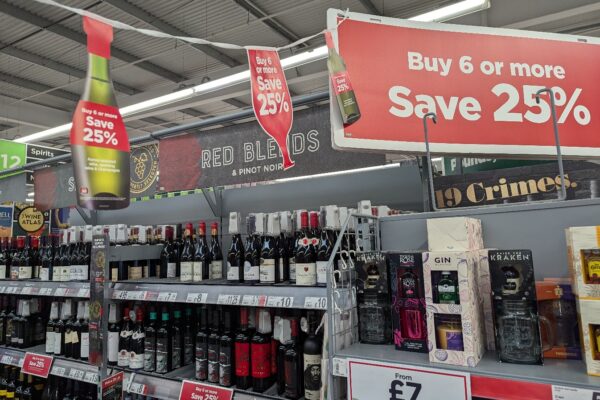
25% Off Wine at Asda
Asda has 25% off wine, on £5.50 per bottle or more, 6 bottles or more, from 11 April 2025 until 5 May 2025. See the Autumn/Winter Press tasting for tips on what to buy.
-

w/o Organic Grillo Spumante
From Sicily comes a new project from winemaker Dino Taschetta: w/o – meaning a wine made without compromise. This sparkling wine is made from the indigenous Grillo grape believed to be a cross between Cataratto and Zibibbo (Muscat of Alexandria). Grillo is a versatile grape capable of producing both still and sparkling wines. In this case, it’s been used to create a sparkling wine made using the Charmat method, the same process used for Prosecco. The 2023 vintage sits at a relatively light 11% ABV and is bottled in a UK first, 100% recycled ‘wild’ glass, giving it a sustainable…
-
25% Off Wine at Sainsbury’s
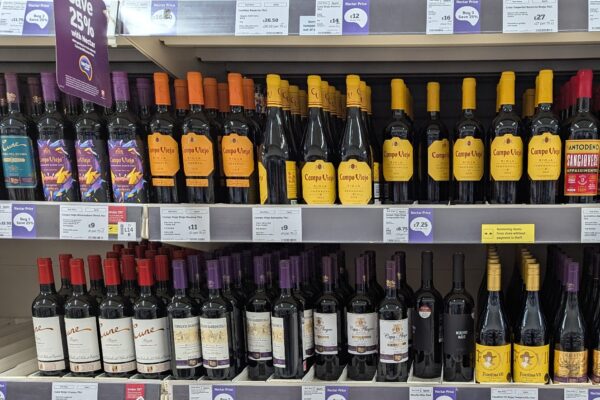
Sainsbury’s has 25% off wine for Nectar loyalty card holders, sparkling and Champagne, 6 bottles or more, £6 or more (£7 in Wales), from 9 April 2025 to 19 April 2025. See the last Sainsbury’s press tasting for tips on what to buy.
-
Morrisons Spring Summer Press Tasting 2025
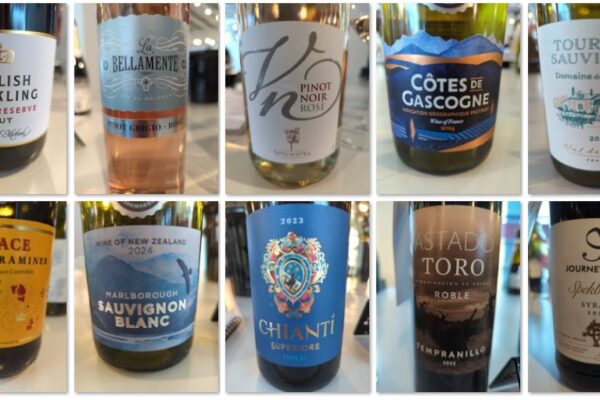
In April 2025, I was invited to the Morrisons Spring Summer Press Tasting in London, where around 100 wines were on show. A pianist added a touch of class to the event, playing gentle background music as we tasted our way through the selection. Morrisons is showing a focus on sourcing quality wines from less obvious regions, aiming to offer strong value without sacrificing quality. A good example of this is the La Bellamente Pinot Grigio Blush NV from Moldova, mentioned further below, offering an acceptable rosé for only £6 and only £4.50 during 25% off promotion. In light of…
-
Nyetimber Classic Cuvee, Half Bottle
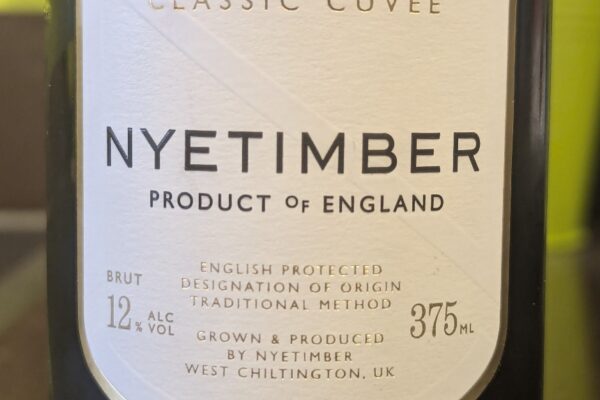
Nyetimber’s Classic Cuvée is their flagship sparkling wine, made in West Sussex using the same traditional method employed in Champagne. Nyetimber has gained serious recognition over the years, most notably through the achievements of their head winemaker, Cherie Spriggs. In 2018, she became the first person outside of Champagne, and the first woman, to be named Sparkling Winemaker of the Year, a testament to the exceptional quality found in each bottle. Made from the classic grape trio of Chardonnay, Pinot Noir and Pinot Meunier, it’s a wine that consistently impresses. This particular format is a half bottle, ideal for those…
-
25% Off Wine at Tesco
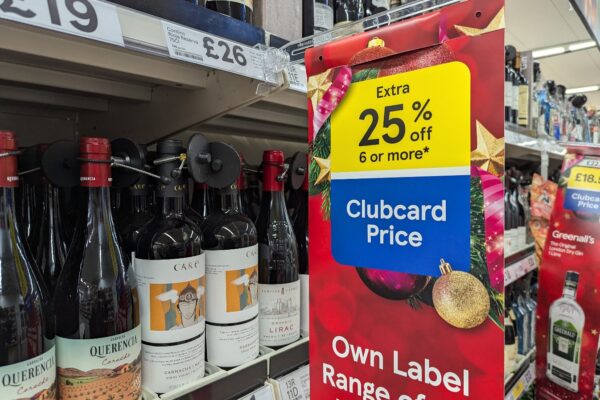
Tesco has save 25% off wine with Clubcard when you buy 6+ bottles that are £6 and over (£7 in Wales), from 8 April 2025 until 21 April 2025. See the recent Tesco tasting and Picks for tips on what to buy.
-

The Cynic’s Guide to Wine
Sunny Hodge, a wine expert with an education in mechanical engineering, has carved out an unconventional path in the world of wine. Before entering hospitality, he studied engineering and later became a founding team member at Margot, the London restaurant from Paulo de Tarso and Nicholas Jaouën. He then went on to open two independent wine bars in south London, Diogenes the Dog and Aspen & Meursault, both of which have gained acclaim for their fresh approach to wine. Hodge’s efforts were recognised when he was awarded Entrepreneur of the Year at the Southwark Business Awards. Now also a wine…
Pick Lists
Majestic | The Wine Society | Tesco | Waitrose | Sainsbury’s | Morrisons | Co-op | Asda | Lidl | £7 and Under | Over £20
Did You Know?
Australian wine exports to China have collapsed from around $1.2 billion to less than $10 million. More
Wine’s aroma is not determined solely by which flavour compounds it contains. More
Low-to-moderate wine consumption is associated with lower mortality. More
Moderate water stress can be part of what creates flavour and terroir expression. More
Wine appears less frequently online than other alcoholic drinks. More
Independent retailers had 9% fewer customers in March 2026 than two years earlier. More
Average spend per bottle in independents has risen by 23% since 2019, compared with 21% in supermarkets. More.
Nearly a third (32%) of UK consumers say they have already used AI for alcoholic drinks advice. More
Among socially active wine buyers, 37% have bought a wine recommended online. More
In 2026, 72% of consumers now think wine knowledge is essential to appreciation, up 20 percentage points on 2025. More
Rías Baixas wines reached more than 107 countries in 2025 and exports represented 31 per cent of the denomination’s total sales. More
Light Strike Can Cause Wine Degradation in Just One Day. More
People actively adjust their wine choices depending on who might see them. More
In the UK, 73% of Alcohol is Bought From Retail Rather Than Hospitality. More
UK wine production reached 124,377 hectolitres that year, meaning the UK accounted for roughly 0.05 per cent of world output. More
For Crémant, grapes must be harvested by hand and the wines must undergo at least nine months’ ageing before release. More
In 2024, the UK was the second-largest export market for Champagne globally, after the United States. More
Local UK bottling of wine represents about 40% of imported wine. More
Around 1% of people, typically severe asthmatics, have a sulphite sensitivity. More
A large 80% of Australian wine arrives in the UK in bulk. More
Only about 0.02% of Australia’s landmass is dedicated to vineyards. More
In 2024, New Zealand produced only 1% of the World’s wine. More
In 2024, the US imported 37% of World production of Pinot Grigio and the UK was is in second place at 27%. More
In 2024, the UK was South Africa’s largest export market, with 40% of total exports. More
In 2024, the United Kingdom imported 22.3 million bottles of Champagne, a decline of 12.7% compared to the previous year. More
Larger Champagne producers source grapes from as many as 80 different vineyards throughout Champagne. More
Champagne houses and growers collectively produce around 300 million bottles annually. More
In 2025, the Champagne region was home to about 2,124 Champagne houses and approximately 19,000 growers. More
Provence is one of the leaders in the conversion to organic viticulture, with 61% of vineyards certified. More
8% of the South Africa’s grape production is Fairtrade-certified. More
Up to 80% of wine aroma compounds come from grape skins. More
Glycerol is the third-largest component of most dry wines after water and alcohol which is why they so often feel ‘smooth’ or ‘silky’ in the mouth. More
Humans are more than 400 times more sensitive to bitter than sweet. More
Humans can detect the earthy molecule geosmin at about 100 parts per trillion and camels are so sensitive to it they can locate damp ground from roughly 50 miles away. More
During the phylloxera crisis of the nineteenth century, 90% of Europe’s vineyards were destroyed. More
In 2025, for La Vieille Ferme, also known as “The Chicken Wine”, sales surged by 49.4% to £110.8 million. More
In 2025, in the UK, Yellow Tail held the top position with sales, marking a 9.8% increase over the previous year. More
In 2024, the UK was the second-largest wine importer in volume and value. More
In 2024, the UK was the fifth-largest wine-consuming country globally. More
In 2025, global wine consumption continued its downward trend, estimated at 214.2 million hectolitres, the lowest since 1961. More
In 2025, online alcohol sales had a 20% increase in value over five years. More
In 2025, the number of UK vineyards rose to 1,104 and wineries to 238, with land under vine expanding to 4,841 hectares, a 510% increase since 2005. More
Moët Hennessy alone commands nearly 46.66% of the Champagne market, with the top three producers together holding about 61%, and the top five controlling over 72%. More
In 2024, the Champagne market was worth roughly €3.92 billion. More
In the marketing year 2023/24, white wine accounted for roughly 55% of Spain’s output, whereas red and rosé together made up about 45%. More
In the UK, 92% of wine is consumed within 48hrs of purchase. More
The majority of wines, 95%, use commercial rather than wild yeast. More
Between 0.5 and 10 litres of water, per litre of wine, are needed for cleaning during winemaking. More
Machine harvesting can achieve up to 100 tons of fruit per day vs 1 ton for a human. More
In Germany, 2025 was the smallest wine vintage since 2010. More
The majority of vineyards, 90% in 2019, are farmed with heavy chemical interventions. Only 6% are organic. More
90% of low and coastal areas in south Europe and California will no longer be able to produce good wine by the end of the century. More
IMAGE WALL
Tools
Recent





Tags
25% Off Wine Aldi Amarone Argentina Articles Asda Australia Austria Award Awards25 Bizarre Blog Books Bordeaux Bulk Bottling Cabernet Sauvignon Carménère Cava Champagne Chardonnay Chile Climate Change Coop Crémant Decanter Duty English Wine EPR Fairtrade Food France Germany Glossary Greece Health Hungary Italy IWSC Jeroboams Laithwaites Legislation Liberty Wines Lidl Low Alcohol M&S Majestic Malbec Merch Merlot Morrisons Natural Nero d'Avola News New Zealand Non-Alcoholic Ocado Old Vine Organic Past Tastings Pick List Pinotage Pinot Grigio Pinot Noir Port Portugal Primitivo Prosecco Research Reviews Ribera del Duero Riesling Rioja Ripasso Rose Sainsbury's Saperavi Sauvignon Blanc Shiraz Sicily South Africa Spain Sparkling Supermarkets Sustainable Tax Terroir Tesco The Wine Society Unrepresented USA Valpolicella Virgin Wines Waitrose Wanderlust Welsh Wine What to Buy Wine Art WineGB WIne Glasses Zinfandel