Simon Judge
-
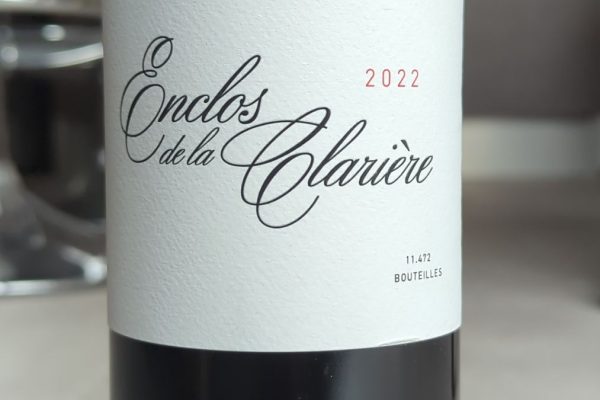
Enclos de la Clarière
Enclos de la Clarière comes from the Castillon side of the Saint-Émilion border. “Enclos” in the name points to a distinct, enclosed single vineyard parcel, and this wine comes from one such site, just six metres from some of Saint-Émilion’s most expensive Grands Crus Classés. Tony Laithwaite’s long connection with Castillon led him to buy the estate from his mentor, Jean Cassin, with the aim of showing that Castillon’s limestone terroir could stand shoulder to shoulder with neighbouring Saint-Émilion. This is the 2022 vintage, made from 100% Merlot, with a year of ageing in a mix of new and seasoned…
-

Bleasdale The Wild Fig
Bleasdale The Wild Fig comes from what was the first winery in the relatively cool-climate Langhorne Creek, founded way back in 1850 and it is still owned by the Potts family. This is a Rhône-style GSM blend, Shiraz 67%, Grenache 26%, Mourvèdre 7%, spends six months ageing in large oak casks. It is 13.5% ABV and is from the 2022 vintage. It has picked up a slew of Australian wine awards. In the glass you get blueberry aroma alongside clove and pepper and a savoury nuance to it all, with the colour showing a slightly browning edge. It drinks dry…
-
The Best of Rioja 2026
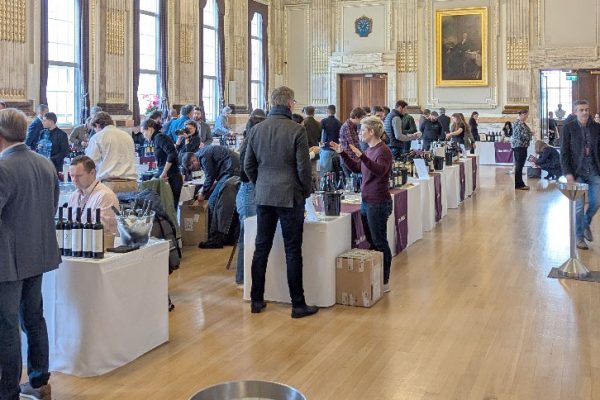
In March 2026, I went to Tim Atkin’s The Best of Rioja, a tasting showcasing more than 300 wines from 39 producers. It was particularly timely, coming just as Rioja had celebrated 100 years as Spain’s oldest DOC. Many of the wines were poured by the producers themselves, which made it possible to talk to them directly, giving real insight into the people and stories behind the wines. The producers present were among those featured in Tim Atkin’s Rioja Report, where he classifies bodegas and cooperatives and awards scores to their wines. While the tasting provided recommended prices for most…
-
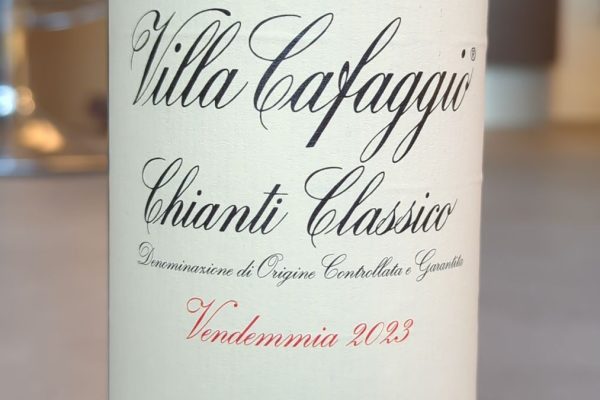
Villa Cafaggio Chianti Classico
Villa Cafaggio Chianti Classico comes from an estate in Panzano in Chianti, with a documented history reaching all the way back to 1408. “Classico” matters here because it means the wine is from the original, historic Chianti zone, before the area was expanded much more widely. This is 100% Sangiovese, given 12 months of maturation in large Slavonian oak barrels, the 2023 vintage and it sits at 13.5% ABV. In the glass it’s slightly browning. The aroma is led by sour cherry and cloves, with a light touch of oak in the background. On tasting it feels very typical of…
-
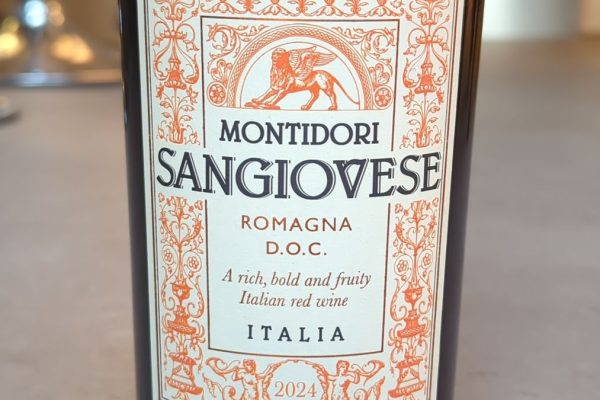
Montidori Sangiovese
This one comes from Emilia-Romagna in Italy. It’s made from Sangiovese, the grape behind Chianti, with a touch of appassimento, that dried-grape technique that brings extra mid-taste richness. It has a high 4.1 scrore on Vivino and this is the 2024 vintage. You get red fruit and caramel on the aroma straight away. Full bodied, with ripe fruit, then that caramel-tinged, gently spicy, long finish that hangs around in a very satisfying way. I happened to taste it alongside a Chianti Classico and it felt much rounder, but also less oaky than the Chianti, which made it really easy to…
-

In the UK, 73% of Alcohol is Bought From Retail Rather Than Hospitality
A new report from Drinkaware examines the shift of alcohol consumption in the UK from pubs and bars to the home. Around 73% of alcohol is now bought from supermarkets or convenience stores for home use, and adults are about twice as likely to drink at home weekly as they are to drink in pubs or restaurants. Although most home drinking is moderate, the report argues that risk can build over time because drinking at home is frequent and less visible. A small group of heavier drinkers account for a large share of alcohol purchases and about 8.2 million UK…
-
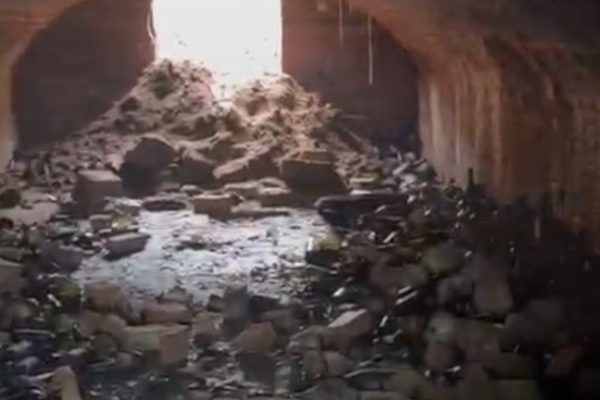
Sinkhole Uncovers 100-Year-Old Wine Cellar Beneath Golf Course
The BBC has reported that a sinkhole at Davyhulme Park Golf Club in Greater Manchester has revealed a brick wine cellar that had been sealed for over 100 years beneath the 13th hole. Greenkeeping staff discovered the cellar while investigating what they thought was a collapsed drain. When they dug deeper, they uncovered a brick structure containing dozens of old, hand-blown glass wine bottles. The cellar likely belonged to Davyhulme Hall, a manor house built in the 12th century and demolished in 1888. It may have been a tradesmen’s entrance, and one blocked doorway could lead to additional underground rooms.…
-

25% Off Wine at Sainsbury’s
Sainsbury’s has 25% off wine for Nectar loyalty card holders, sparkling and Champagne, 6 bottles or more, £6 or more (£7 in Wales), from 6 March to 15 March 2026. See the recent Sainsbury’s press tasting for tips on what to buy.
-
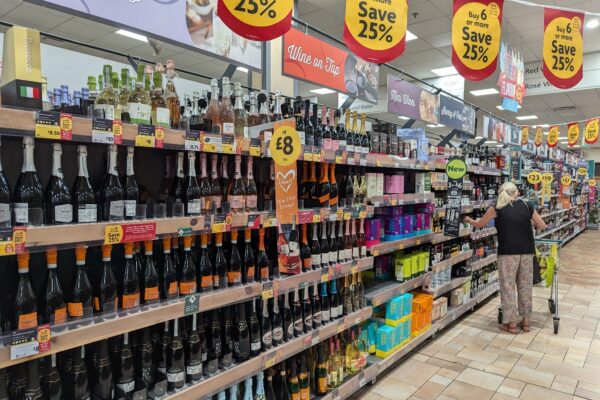
25% Off Wine at Morrisons
Morrisons has 25% discount on 6 or more bottles of wine, More card price, £6 or more until 15 March 2026. See the recent press tasting for my picks.
-
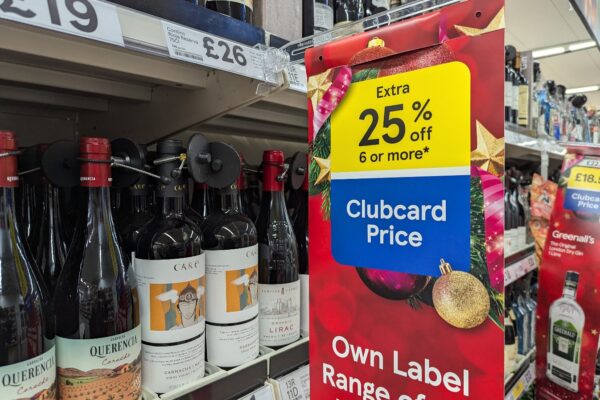
25% Off Wine at Tesco
Tesco has save 25% off wine with Clubcard when you buy 6+ bottles that are £6 and over (£7 in Wales) from 6 March 2026 until 15 March 2026. See the recent Tesco tasting for tips on what to buy.
-
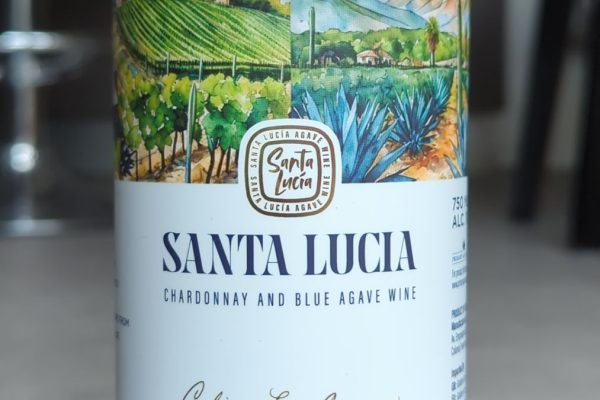
Santa Lucia Chardonnay and Blue Agave Wine
This is a very different one, from Mexico. It’s a blend of Blue Weber Agave and Chardonnay, with the agave coming from Jalisco’s Highlands and the Chardonnay from Valle de Guadalupe. So what is agave? It’s a thick, fleshy, often spiky succulent plant, with leaves that radiate from a central stem. It’s the only plant used for producing authentic tequila. The “Weber” part of “Blue Weber Agave” is named after the botanist Frédéric Albert Constantin Weber, who is credited with deciding this was the best agave plant to use for tequila production. This wine a fairly dark colour in the…
-
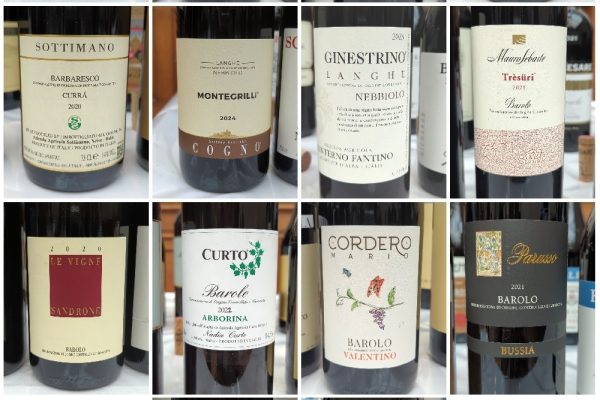
Nebbiolo Day
In early March 2026 I was at Nebbiolo Day in London, a showcase of 91 Italian producers with hundreds of wines, all made using the Nebbiolo grape. Nebbiolo is a northern Italian story, with the main wine areas being Alto Piemonte, Valtellina, Roero, Barbaresco and Barolo. It’s a grape with real detail and variation, including four different Nebbiolo clones, and it’s said that new Nebbiolo vines need around 10 years to really show their true complexity. I’m not especially interested in ageing wine, or even spending much time trying to predict how a wine will age, so I went looking…
-
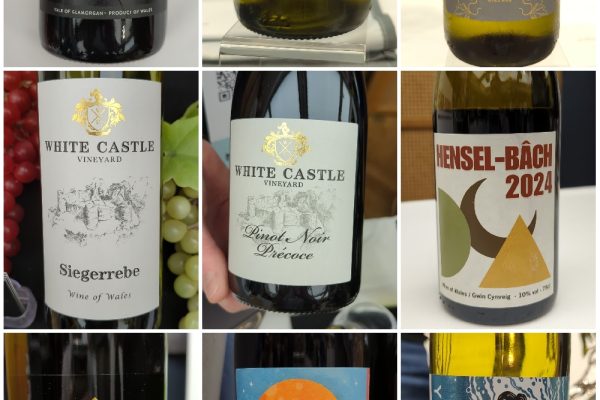
Welsh Wine Showcase
In early March ’26 I went to a Welsh Wine Showcase in London. It was a small, focused tasting with 7 producers showing 28 wines, with a few Welsh cheeses alongside. Despite the modest line-up, I came away with a higher-than-usual proportion of wines to be highlighted: St Hilary Sparkling White Wine 2023 11.5% £37.50From Cowbridge, this is a traditional method blend of Chardonnay, Pinot Noir and Pinot Meunier. It comes from a low intervention, natural winemaker, with a natural ferment and no filtering or fining. It feels very Champagne-like, with a generous autolytic pastry character despite only 12 months…
-
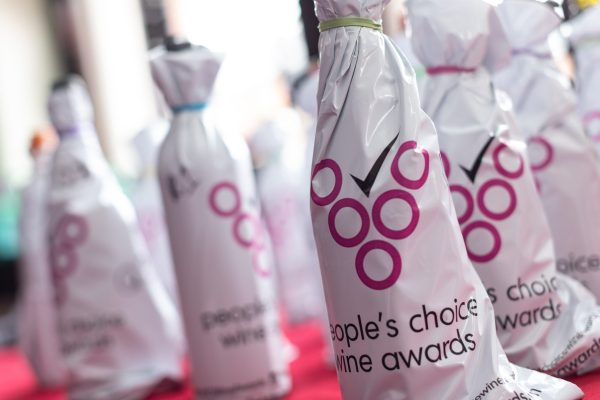
People’s Choice Wine Awards
The results of the 2026 People’s Choice Wine Awards are in. With consumer-friendly categories, the awards welcome wines from around the world across every packaging format and price point. Submissions come from a broad mix of sources, including importers, independent retailers, restaurants, bars, supermarkets, and producers. Judging combines professional expertise with real consumer insight. Passionate wine drinkers taste alongside WSET students at all levels and experienced industry professionals. The expert panel includes leading buyers, sommeliers, importers, journalists, retailers, and wine communicators, creating a balanced and credible assessment of every entry. Here are the winners: Mindful Drinking: Alcohol Free (ABV less…
-
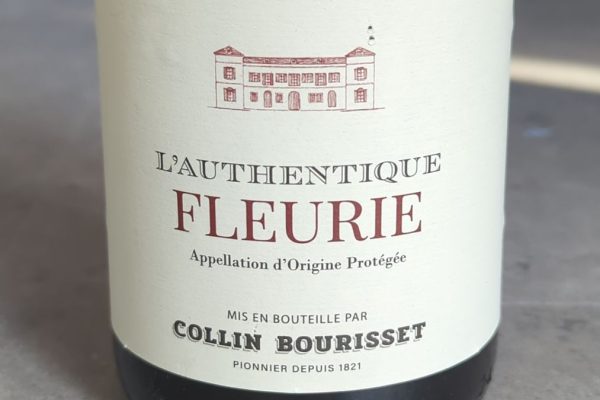
Collin Bourisset Fleurie
This wine comes from a house established in 1821, based in and around the southern Burgundy to Beaujolais crossroads near Crêches-sur-Saône and La Chapelle-de-Guinchay. “The Authentic” on the label leans into a traditional character and you can feel it’s meant to echo the house’s history rather than chase trends. It’s Gamay grape, 2023 vintage, 13%, with an IWC Silver and 92 points, plus a hefty 97/100 from Club Oenologique. In the glass it sits pale to medium ruby, bright and inviting. The aroma is strawberry and raspberry at first, then rose petals float in and give it that Fleurie charm.…
-
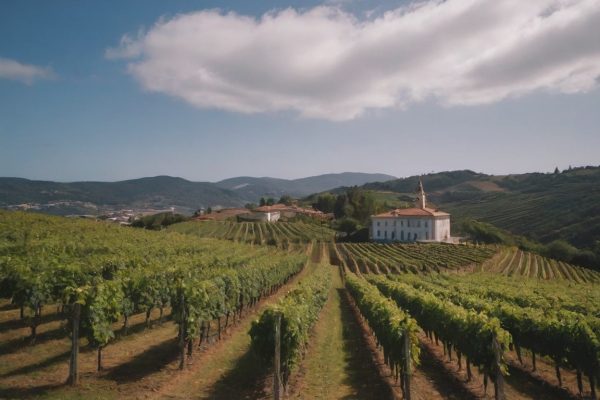
Understanding Rías Baixas
DO Rías Baixas is one of those wine regions whose identity is inseparable from landscape. The name itself comes from Galician and means “lower rías”, with rías being the jagged Atlantic inlets or estuaries that define the south-western coast of Galicia. In the official wine geography, the term is tied to five estuarine systems stretching south from the area below Santiago de Compostela towards Portugal, and that maritime setting is not decorative background but the foundation of the region’s climate, viticulture and taste. Geographically, Rías Baixas sits in Galicia in north-west Spain, mostly in the province of Pontevedra but also…
-
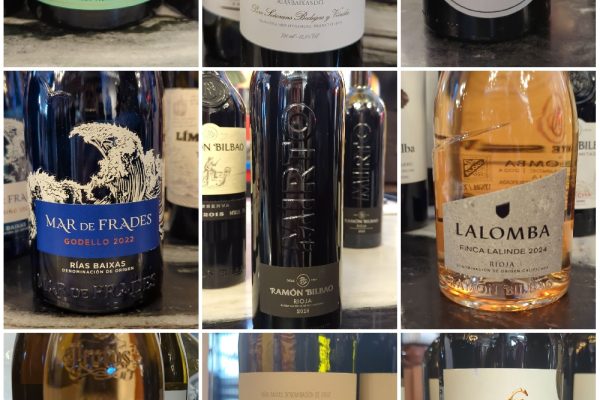
Taste Spain London 2026
In February 2026, I attended a new event organised by the Economic and Commercial Office of Spain in London. Taste Spain brought together Spanish food and wine in a lively showcase. The Spanish Deli featured cheeses, cured meats, olive oils, vinegars and other foods, while The Spanish Cellar focused on wine. The event included Spanish wine exporters seeking UK distribution and also gave established UK importers the opportunity to present their Spanish wine portfolios. As I usually cover Red Rioja and Ribera del Duero at their respective tastings later in the year, I mainly focused on other styles on this…
-
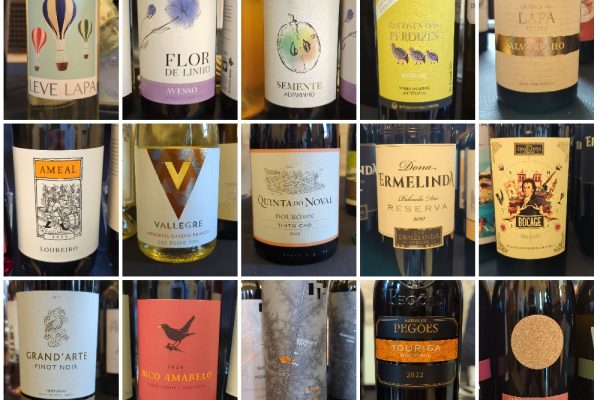
Wines of Portugal’s Grand Trade & Press Tasting
In February 2026 I was invited to Wines of Portugal’s Grand Trade & Press Tasting in London, a wide-ranging snapshot of what’s happening across Portuguese wine right now. There were 59 producers and more than 570 wines, representing 11 different wine regions. Most wines were poured by the producers themselves, which made it easy to get context and detail alongside the tasting, though there was also a Free Pour Area. That section was organised around three themes: low alcohol wines, single-varietal expressions from some of Portugal’s lesser-known indigenous grapes and Portugal’s Sustainable Wine Growing Certification. I also attended a masterclass…
-
World’s Best Sommeliers’ Selection
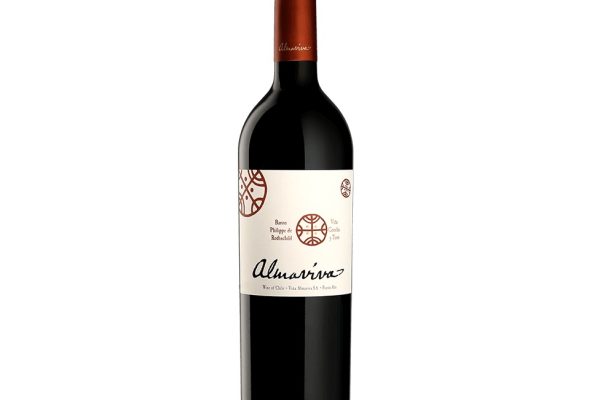
Wine Industry Advisor reports that the World’s Best Sommeliers’ Selection has announced its 2026 results, marking the programme’s third edition. A panel of 29 sommeliers and wine directors from the World’s 50 Best Restaurants network, drawn from 17 countries across six continents and led by Kristell Monot of Mugaritz, blind tasted and debated to produce a final selection of 115 wines from 16 countries, positioned as a practical benchmark for on-trade wine lists. However, a Delicious article argues that Australia’s absence from the World’s Best Sommeliers’ Selection 2026 is both surprising and revealing, presenting the list as a strong but…
-
Domaine du Clos Saint Martin Sancerre
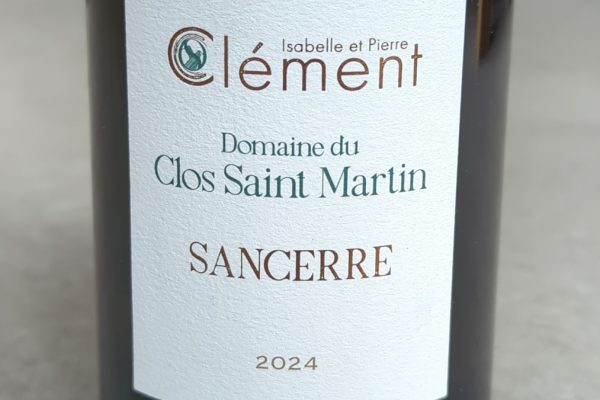
This wine comes from the Loire Valley, produced by the Clément family near the hamlet of Amigny, just below the village of Sancerre. The Clément family have been winegrowers since 1560 and the estate is certified organic. This Sancerre is new and exclusive to Majestic, made from 100% Sauvignon Blanc, sitting at 12.5% abv, from the 2024 vintage. It also received a gold medal at Challenge Millésime Bio. A tip, let it warm for 30 minutes from cold to get a lot out of this wine. In the glass the colour is pale lemon. The aroma brings intense nectarine and…
Pick Lists
Majestic | The Wine Society | Tesco | Waitrose | Sainsbury’s | Morrisons | Co-op | Asda | Lidl | £7 and Under | Over £20
Did You Know?
Australian wine exports to China have collapsed from around $1.2 billion to less than $10 million. More
Wine’s aroma is not determined solely by which flavour compounds it contains. More
Low-to-moderate wine consumption is associated with lower mortality. More
Moderate water stress can be part of what creates flavour and terroir expression. More
Wine appears less frequently online than other alcoholic drinks. More
Independent retailers had 9% fewer customers in March 2026 than two years earlier. More
Average spend per bottle in independents has risen by 23% since 2019, compared with 21% in supermarkets. More.
Nearly a third (32%) of UK consumers say they have already used AI for alcoholic drinks advice. More
Among socially active wine buyers, 37% have bought a wine recommended online. More
In 2026, 72% of consumers now think wine knowledge is essential to appreciation, up 20 percentage points on 2025. More
Rías Baixas wines reached more than 107 countries in 2025 and exports represented 31 per cent of the denomination’s total sales. More
Light Strike Can Cause Wine Degradation in Just One Day. More
People actively adjust their wine choices depending on who might see them. More
In the UK, 73% of Alcohol is Bought From Retail Rather Than Hospitality. More
UK wine production reached 124,377 hectolitres that year, meaning the UK accounted for roughly 0.05 per cent of world output. More
For Crémant, grapes must be harvested by hand and the wines must undergo at least nine months’ ageing before release. More
In 2024, the UK was the second-largest export market for Champagne globally, after the United States. More
Local UK bottling of wine represents about 40% of imported wine. More
Around 1% of people, typically severe asthmatics, have a sulphite sensitivity. More
A large 80% of Australian wine arrives in the UK in bulk. More
Only about 0.02% of Australia’s landmass is dedicated to vineyards. More
In 2024, New Zealand produced only 1% of the World’s wine. More
In 2024, the US imported 37% of World production of Pinot Grigio and the UK was is in second place at 27%. More
In 2024, the UK was South Africa’s largest export market, with 40% of total exports. More
In 2024, the United Kingdom imported 22.3 million bottles of Champagne, a decline of 12.7% compared to the previous year. More
Larger Champagne producers source grapes from as many as 80 different vineyards throughout Champagne. More
Champagne houses and growers collectively produce around 300 million bottles annually. More
In 2025, the Champagne region was home to about 2,124 Champagne houses and approximately 19,000 growers. More
Provence is one of the leaders in the conversion to organic viticulture, with 61% of vineyards certified. More
8% of the South Africa’s grape production is Fairtrade-certified. More
Up to 80% of wine aroma compounds come from grape skins. More
Glycerol is the third-largest component of most dry wines after water and alcohol which is why they so often feel ‘smooth’ or ‘silky’ in the mouth. More
Humans are more than 400 times more sensitive to bitter than sweet. More
Humans can detect the earthy molecule geosmin at about 100 parts per trillion and camels are so sensitive to it they can locate damp ground from roughly 50 miles away. More
During the phylloxera crisis of the nineteenth century, 90% of Europe’s vineyards were destroyed. More
In 2025, for La Vieille Ferme, also known as “The Chicken Wine”, sales surged by 49.4% to £110.8 million. More
In 2025, in the UK, Yellow Tail held the top position with sales, marking a 9.8% increase over the previous year. More
In 2024, the UK was the second-largest wine importer in volume and value. More
In 2024, the UK was the fifth-largest wine-consuming country globally. More
In 2025, global wine consumption continued its downward trend, estimated at 214.2 million hectolitres, the lowest since 1961. More
In 2025, online alcohol sales had a 20% increase in value over five years. More
In 2025, the number of UK vineyards rose to 1,104 and wineries to 238, with land under vine expanding to 4,841 hectares, a 510% increase since 2005. More
Moët Hennessy alone commands nearly 46.66% of the Champagne market, with the top three producers together holding about 61%, and the top five controlling over 72%. More
In 2024, the Champagne market was worth roughly €3.92 billion. More
In the marketing year 2023/24, white wine accounted for roughly 55% of Spain’s output, whereas red and rosé together made up about 45%. More
In the UK, 92% of wine is consumed within 48hrs of purchase. More
The majority of wines, 95%, use commercial rather than wild yeast. More
Between 0.5 and 10 litres of water, per litre of wine, are needed for cleaning during winemaking. More
Machine harvesting can achieve up to 100 tons of fruit per day vs 1 ton for a human. More
In Germany, 2025 was the smallest wine vintage since 2010. More
The majority of vineyards, 90% in 2019, are farmed with heavy chemical interventions. Only 6% are organic. More
90% of low and coastal areas in south Europe and California will no longer be able to produce good wine by the end of the century. More
IMAGE WALL
Tools
Recent



Tags
25% Off Wine Aldi Amarone Argentina Articles Asda Australia Austria Award Awards25 Bizarre Blog Books Bordeaux Bulk Bottling Cabernet Sauvignon Carménère Cava Champagne Chardonnay Chile Climate Change Coop Crémant Decanter Duty English Wine EPR Fairtrade Food France Germany Glossary Greece Health Hungary Italy IWSC Jeroboams Laithwaites Legislation Liberty Wines Lidl Low Alcohol M&S Majestic Malbec Merch Merlot Morrisons Natural Nero d'Avola News New Zealand Non-Alcoholic Ocado Old Vine Organic Past Tastings Pick List Pinotage Pinot Grigio Pinot Noir Port Portugal Primitivo Prosecco Research Reviews Ribera del Duero Riesling Rioja Ripasso Rose Sainsbury's Saperavi Sauvignon Blanc Shiraz Sicily South Africa Spain Sparkling Supermarkets Sustainable Tax Terroir Tesco The Wine Society Unrepresented USA Valpolicella Virgin Wines Waitrose Wanderlust Welsh Wine What to Buy Wine Art WineGB WIne Glasses Zinfandel