Own-label wine has quietly become one of the most interesting parts of the UK supermarket aisle. It no longer simply means a cheap bottle with a supermarket logo on the front. Today it can mean Tesco Finest Champagne, Sainsbury’s Taste the Difference Discovery small parcels, Waitrose Loved & Found treasures, Co-op Fairtrade Irresistible bottles, Morrisons The Best producer collaborations, Lidl Wine Tour discoveries, Aldi Specially Selected bargains or Asda’s new Exceptional tier.
The best examples are not trying to imitate branded wine so much as to solve the supermarket wine problem: how to deliver recognisable style, reliable quality and a persuasive price when duty, packaging, transport and retailer margin all eat into the value of a bottle.
Since 1 February 2025, most wine duty in the UK has been calculated according to alcoholic strength rather than a temporary flat rate, making higher-ABV wines more expensive and lower-ABV wines relatively more attractive. The Government then uprated alcohol duty again by 3.66% from February 2026. That pressure helps explain why supermarkets are concentrating more on their own ranges. They can control sourcing, blend style, packaging, promotion and margin in a way they cannot with global brands.
The broader market has moved in own label’s favour. Kantar reported in September 2025 that supermarket own lines made up 51.2% of all grocery sales, up from 50.9% a year earlier, and that premium own label sales rose 10.3%, the sixth consecutive month of double-digit growth. Shoppers are trading away from familiar branded labels where the value has weakened.
Asda is one of the more dramatic cases because its wine offer has been in transition. The old Extra Special wine tier has been phased into Exceptional by Asda, a broader premium own-brand platform launched in 2024. Asda’s recent offers included a 3 for £18 promotion built around 45 premium wines from the Exceptional range.
What makes Asda particularly interesting is that it operates in two directions at once. Exceptional is the premium offering, while The Wine Atlas is for discovery. The recently revived Wine Atlas range is about lesser-known regions and grapes with an original range of 17 wines and a relaunched 2024 set retailing around £6 to £7, focused on accessible but interesting styles. Wines such as Sparkling Garda Brut and Fetească Regală are encouraging shoppers to try Romania, Corsica, Garda, Touraine or Cahors without specialist retail shop pricing.
Tesco is the scale player, and currently the supermarket to beat on breadth. The IWSC National Drinks Retail Awards named Tesco the 2026 Outstanding Supermarket Wine Range, citing sustained quality and strong performance, including in sparkling wine, own label and rosé. Tesco’s own site currently shows a substantial spread of Tesco Finest award-winning wines, from Premier Cru Rosé Champagne and Vintage Champagne to Falanghina, Western Australia Chardonnay, Puemo Carmenère, Sauternes, Margaux and Pouilly-Fumé. The Finest range is Tesco’s flagship own-brand range, with more than 90 wines made exclusively for the tier.
The strength of Tesco Finest is consistency. Tesco’s advantage is not that every bottle is romantic or surprising; it is that the range has become unusually dependable for a supermarket of its size. A shopper can buy a familiar style such as Marlborough Sauvignon Blanc, Montepulciano d’Abruzzo or Provence rosé, but also step into Greek Assyrtiko, Pecorino, McLaren Vale Grenache or dessert Semillon without feeling they are gambling. There’s continued range refreshment and new cuvées from well-known producers, while older accolades such as International Wine Challenge Own Label Range of the Year show that Tesco’s focus on private label has not come from nowhere.
Co-op has a very different focus. Its wine range is smaller and convenience-led, but its own-label identity is unusually clear because of the combination of Irresistible and Fairtrade. Co-op’s own Fairtrade wine page says it became the largest Fairtrade wine seller worldwide in 2015 and that, in 2022, all its South African wine, across branded and own label, became Fairtrade.
That gives Co-op a niche the others cannot easily copy. Its range cannot match Tesco or Waitrose for depth, but it is strong for last-minute, chilled, food-friendly bottles with a social-purpose layer. Drinks Retailing reported in 2024 that Co-op’s Irresistible white wine sales were up 36% in value terms over the previous 52 weeks and that the business was marking 20 years since its first Fairtrade wine listing. Club Oenologique’s 2026 Co-op review also described a growing premium Irresistible range accounting for 12.2% of total wine sales, alongside Fairtrade branded bottles, premium cuvées and an exclusive Piper-Heidsieck-made Les Pionniers vintage Champagne.
Sainsbury’s sits somewhere between Tesco’s range discipline and Waitrose’s curiosity. Its main own-label wine banner is Taste the Difference, and within that, the Discovery Collection is the interesting part. Sainsbury’s describes Taste the Difference wine as covering everything from full-bodied reds to crisp whites and Prosecco, while Discovery Collection uses language about small parcels, such as Chilean Semillon, South African Sauvignon Blanc from Elim and Fronton from south-west France. That “small parcel” idea is important: it gives Sainsbury’s a way to sell more adventurous wine under a mainstream premium label.
The Discovery Collection has genuine wine-merchant logic behind it. The Drinks Business reported its launch in 2021 as a limited-edition range of distinctive wines refreshed every six months, and Tim Atkin has described the label as a source of unusual wines at decent prices, previously citing Fronton made from Négrette and Malbec as a refreshing, barbecue-friendly example. In 2025, Sainsbury’s corporate material extended the Discovery idea beyond wine into broader Taste the Difference Discovery food and drink, including wines such as Terrasses du Larzac and Blanc de Blancs. Sainsbury’s can sometimes feel safer than the discounters or Waitrose but their opportunity is that Discovery gives it a platform for genuinely characterful bottles without frightening ordinary shoppers.
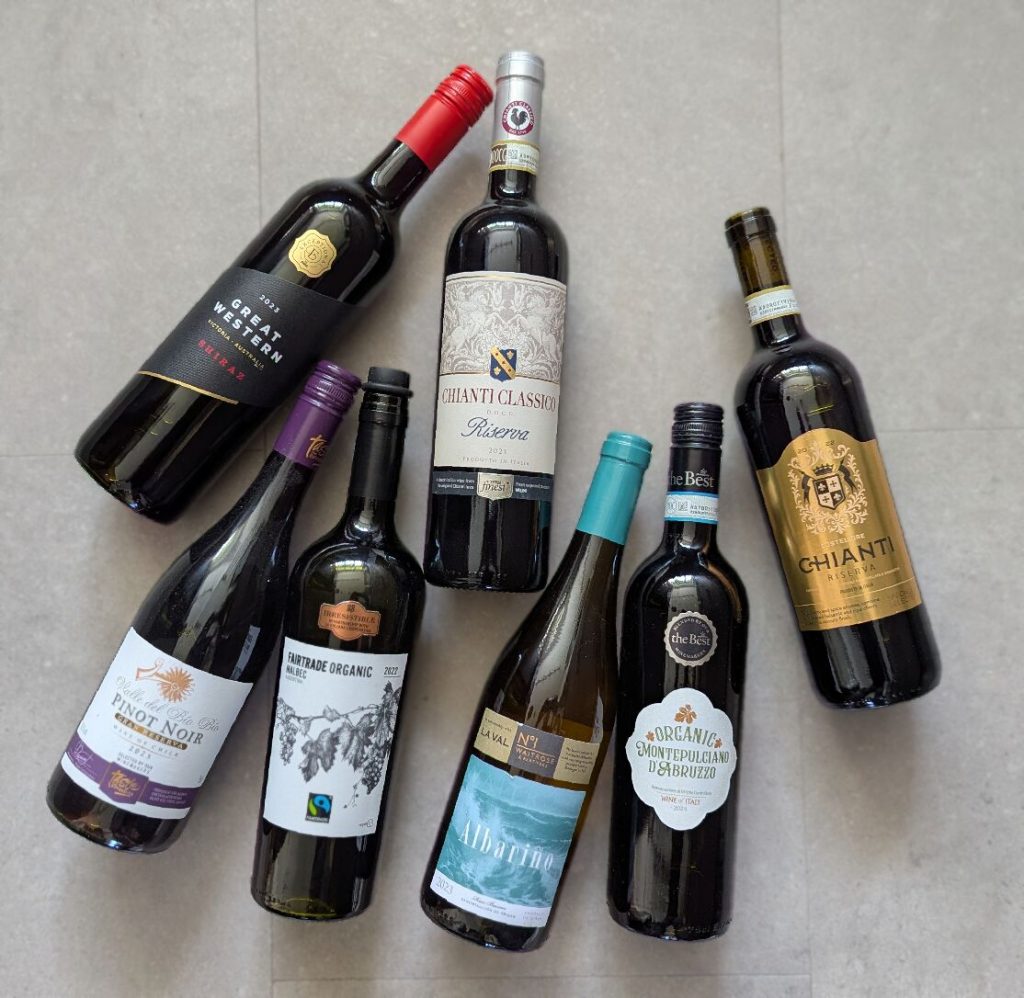
Waitrose is the closest supermarket to a traditional wine merchant, and its own-label architecture reflects that. Blueprint is the everyday-but-serious range, No.1 is the more premium own-label tier, and Loved & Found is the “try something you have not heard of” collection. Waitrose describes Blueprint as outstanding, great-value examples of classic wines, with examples such as Californian Chardonnay, Spanish Albariño and Fine Tawny Port. Loved & Found is presented as a curated collection of hidden gems and lesser-known varieties, and current listings include bottles such as Castelão, Touriga Franca, Gelber Muskateller, Braucol and Vidoc.
Waitrose’s strength is that it makes own label feel like curation rather than cost engineering. No.1 gives it a platform for polished, producer-led wines, while Blueprint gives shoppers reassuring classics and Loved & Found gives them permission to experiment. In October 2025, Waitrose added around 80 new autumn lines, including four new No.1 wines, four Loved & Found wines and additions to Blueprint, noting that the No.1 wine range launched in 2019 and had doubled to 26 the previous year. This is the supermarket for the shopper who wants supermarket convenience but still wants a bottle to feel chosen rather than merely ranged.
Morrisons is less fashionable than Waitrose or Tesco, but its The Best range is often stronger than its reputation. Morrisons describes The Best wine collection as the result of exploration by its wine experts, sourcing wines from around the world. More interesting are the named producer partnerships: The Best South African Sauvignon Blanc with Trizanne Barnard, Côtes du Rhône Villages with Boutinot, Assyrtiko with Kir-Yianni, Primitivo with San Marzano, Ribera del Duero with Bodegas Muriel and Alvarinho with Casal de Ventozela.
That producer-partnership model is Morrisons’ best argument. It can be less glamorous in presentation than Waitrose and less expansive than Tesco, but The Best often gives clear regional typicity at sensible prices, especially when multi-buy or More Card discounts are running. The range is dominated by The Best bottlings and newer “Block” series wines with value choices across Languedoc, Iberia and fortified wines. Morrisons also has a good track record in practical crowd-pleasers: The Best English Sparkling Wine, for example, is described by Morrisons as a classic Chardonnay, Pinot Noir and Meunier blend aged for over six years, which is the kind of specification that would usually cost far more under a producer label.
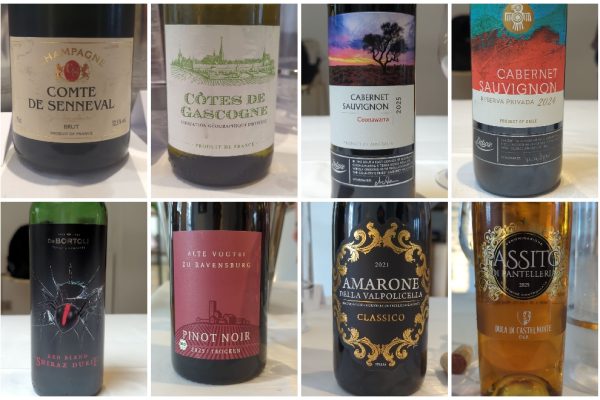
Lidl approaches own label differently from the big-four supermarkets. Its wine offer is less about a permanent wall of private-label tiers and more about a core of retailer-exclusive brands, a Deluxe range and rotating Wine Tour drops. Its Wine Tour bottles carry points from Master of Wine Richard Bampfield, with scores between 80 and 100.
The result is a treasure-hunt model. Cimarosa, Deluxe and the monthly Wine Tours encourage shoppers to buy when they see something, because availability can be short-lived. Lidl’s Deluxe wine is selected as a good example of its provenance and for flavour and value, while Cimarosa includes Pinotage, Cimarosa Malbec, Deluxe Australian Cabernet Sauvignon and Deluxe Pinot Gris.
Aldi is the other discounter, but its own-label feel is a little different. Aldi’s visible premium tier is Specially Selected, supported by proprietary wine brands such as Kooliburra, Cambalala, Pierre Jaurant, Grapevine, Estevez, Baron Amarillo and Freeman’s Bay. There are Specially Selected wines across familiar and less obvious styles, including Australian Merlot, Stellenbosch Shiraz, Ribera del Duero, English White Cuvée, Bowler & Brolly English Bacchus, Côtes du Rhône Villages, Freeman’s Bay Marlborough Sauvignon Blanc and Rías Baixas Albariño. Its Specially Selected brand frames the proposition simply: premium quality at low Aldi prices.
Aldi’s strength is price-to-pleasure ratio, especially for shoppers who are happy with a tighter, more own-brand-heavy range and less producer information. Aldi generally delivers well-made, typical examples of global grape varieties and styles around the £6.99 to £9.99 mark. Aldi has been moving away from older premium wine strategies such as Exquisite Collection and Lot Series towards Specially Selected, with seasonal refreshes and fewer off-the-beaten-track bottles. More recently, Aldi has drastically streamlined it’s ranges resulting in less diversity.
Seen together, the eight retailers show how own label can take many forms. For Tesco, it is broad, award-winning and technically reliable at national scale. For Waitrose, it is curated, merchant-like and exploratory. For Asda, it is sharpened around premium value and revived discovery ranges. For Sainsbury’s, it makes limited parcels approachable through a trusted food-led premium brand. For Co-op, it carries ethical meaning, especially through Fairtrade. For Morrisons, it is built through practical producer partnerships. For Lidl, it is a rotating event. For Aldi, it compresses acceptable quality into the lowest possible price band.
For shoppers, the practical lesson is that own label is now often the safest place to start, but not all own label does the same job. For a dependable bottle for dinner, Tesco Finest, Morrisons The Best, Sainsbury’s Taste the Difference and Waitrose Blueprint are usually the easiest bets. For something more adventurous, look to Waitrose Loved & Found, Sainsbury’s Discovery Collection, Asda Wine Atlas and Lidl Wine Tours. For ethical everyday drinking, Co-op Fairtrade and Irresistible are the obvious destination. For budget pressure, Aldi Specially Selected and Lidl’s Cimarosa or Deluxe ranges often give the most flavour per pound. For a premium supermarket bottle that can plausibly exceed a branded wine-shop choice, I think that Waitrose No.1 is the category that is the most interesting.