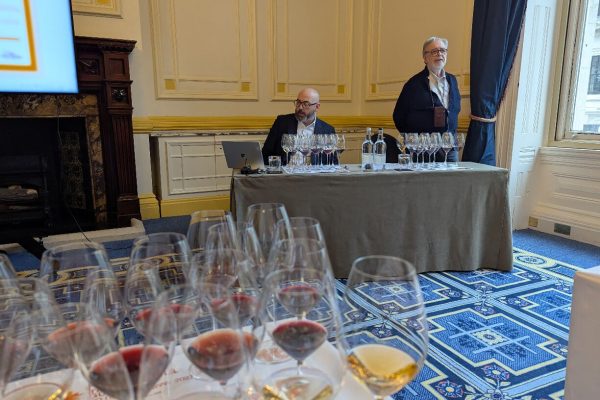
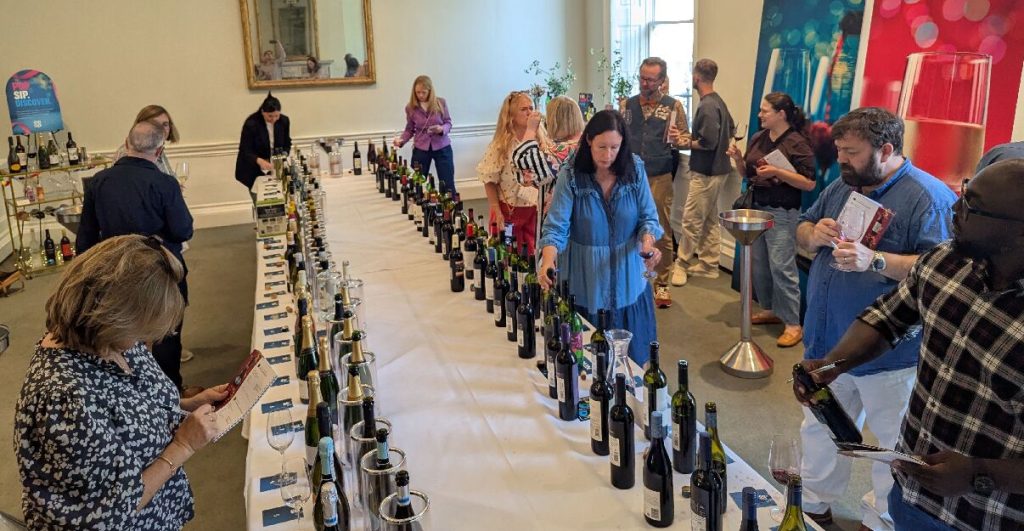
In late September 2026, I attended Co-op’s Autumn/Winter press tasting in London, where 71 wines were on show.
Co-op is refreshing its Fairtrade range, both in terms of quality and branding. The wines will share a consistent two-panel label design, with the right-hand panel giving each wine a better space to tell its own story. Co-op became the world’s largest seller of Fairtrade wine in 2015 and remains the UK’s largest, accounting for 79% of all Fairtrade wine sold by volume in the UK in 2025. That year, Co-op sourced 15.3 million litres of wine on Fairtrade terms, equivalent to 20.4 million bottles. This generated more than £680,000 in Fairtrade Premium for wine producers to invest in projects including educational programmes and sustainability initiatives. For more background, see my previous explanation of Fairtrade and my coverage of the Fairtrade tasting at the Argentinian Ambassador’s Residence in London.
Here are the wines that most caught my attention:
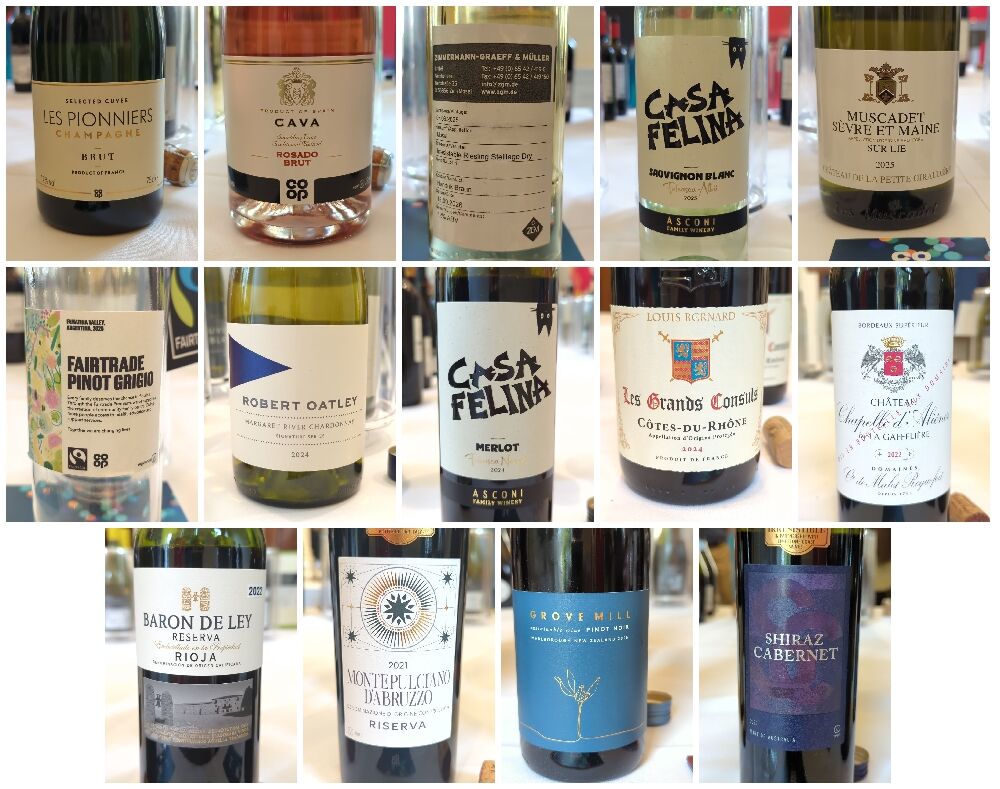
Les Pionniers Champagne Brut NV 12% £26.75
Made by Compagnie Champenoise from a blend of Pinot Noir, Pinot Meunier and Chardonnay. Pale lemon in colour with fine bubbles, with aromas of green apple, lemon and pear alongside brioche/biscuit from the lees. Crisp citrus and orchard fruit are joined by bread and biscuit complexity. Brut in style, light to medium-bodied, with high acidity and a precise finish. There is less brioche character than there was in previous years, but it is still great.
Cava Rosado NV 11% £7.75
Made by Raventos Codorniu from Garnacha, Pinot Noir and Trepat. There is a very lively cranberry aroma, which I suspect comes from the Trepat. The red fruit continues in the taste, with just a very slight sweetness and good length. I picked this one because it provides lots of flavour for an excellent price.
Irresistible Mosel Riesling 2025 11.5% £9.00
Made by Zimmermann-Graeff & Müller. Pale lemon in colour, with green apple, lime and white blossom aromas. Citrus and green fruit follow, with pronounced acidity and a clear mineral line. The higher alcohol than is typical gives it a drier style, while the medium body has a good mouthfeel. Long, precise and rounded on the finish, with lingering citrus. The temporary front label is shown in my photo, with the wine due in stores in late November/early December.
Casa Felina Sauvignon Blanc Feteasca Alba 2025 11% £7.75
From Moldova and made by Asconi from Sauvignon Blanc and Fetească Albă. Tropical fruit, citrus and nettles come through in the aroma, followed by deep tropical peach and passionfruit flavours. It has good length and again offers excellent flavour for the price.
Muscadet Sèvre et Maine Sur Lie 2025 11.5% £11.00
Made by Château de la Petite Giraudière from Melon de Bourgogne grapes. Pale lemon in colour, with intense lemon, green apple and saline aromas, plus bread dough notes from the lees. Very crisp citrus and saline mineral flavours are softened by subtle lees roundness. Dry, with high acidity, exceptional mouthfeel and a long finish. A very nice example compared to other supermarket offerings.
Famatina Valley Fairtrade Pinot Grigio 2026 12% £7.65
Made by La Riojana in Argentina. An extreme pear aroma leads into an equally distinctive pear flavour. Different, full of character and excellent value. Coming this Autumn.
Robert Oatley Signature Series Margaret River Chardonnay 2024 13% £14.75
From Australia and made with 99% Chardonnay and 1% Semillon. Medium lemon-gold in colour, with citrus, stone fruit, nougat and toast aromas. Ripe fruit is well balanced by freshness and restrained oak. Dry and medium-bodied, finishing long with citrus and nutty notes.
Casa Felina Merlot Feteasca Neagra 2024 13% £7.75
This Moldovan red is made by Asconi from 55% Merlot and 45% Fetească Neagră. Floral and fruity aromas lead into generous blackberry and plum flavours. Soft in style and very easy to enjoy, it is also excellent value.
Les Grand Consuls Côtes-du-Rhône 2024 13.5% £10.00
Produced by Louis Bernard from a blend of Grenache, Syrah, Carignan and Mourvèdre. Ripe red and black berry aromas are joined by herbal notes. There is lots of fruit, with an attractive touch of herbal spice. Dry, with medium tannins that make this particularly well suited to food.
Château Chapelle d’Alienor 2022 13% £15.00
A Bordeaux Supérieur by La Gaffelière, made from 80% Merlot and 20% Cabernet Franc. Deep ruby in colour, with plum, black cherry, cocoa, truffle and cedar aromas and a particularly noticeable caramel character. Plush, velvety dark fruit gives it a rich feel. Dry and medium to full-bodied, with medium tannins and a long, truffley, plush finish. It feels more mature than its age suggests. My favourite wine of the tasting.
Baron de Ley Rioja Reserva 2022 14% £13.50
Made from 100% Tempranillo. Deep ruby in colour, with aromas of blackberry, black plum, liquorice, cedar and clove. There is real depth to the cherry flavour, complemented by the oak. Dry and medium to full-bodied, with medium tannins and a long finish dominated by a distinctly cedary character.
Montepulciano d’Abruzzo Riserva 2021 13.5% £9.25
Produced by Botter SPA. Blackberry, deep black cherry and spice aromas lead into very strong blueberry fruit with a little vanilla. Dry and medium to full-bodied, with medium acidity and medium tannins. The finish is very fruity and medium in length. There are more tannins than you might expect, making it a great wine to have with food.
Grove Mill Pinot Noir 2025 14% £12.75
From New Zealand. Red cherry, cranberry, thyme and savoury earthy aromas lead into dark cherry fruit with a herbal, savoury edge. Dry and light to medium-bodied, with low to medium tannins. The finish is elegant and long. I love this one for its savouriness.
Limestone Coast Shiraz Cabernet 2024 14.5% £9.75
Made predominantly from Shiraz with a little Cabernet Sauvignon and Pinot Noir. Blackberry and plum aromas are lifted by lovely eucalyptus. Concentrated dark fruit follows. Dry and medium to full-bodied, with low to medium tannins. The finish is long, dark and spicy, with herbal notes and eucalyptus returning at the end.
I spoke to one of the senior buying managers about current trends. As with other retailers, selling red wine is becoming more challenging. This is partly down to the wider decline in wine consumption, alongside changes driven by alcohol duty. Some reds have had their alcohol levels reduced to keep prices down, while those retaining their strength have come at a higher price. Meanwhile, Crémant is enjoying a resurgence, filling the price gap between Prosecco/Cava and increasingly expensive Champagne. English sparkling wine once helped fill that gap, but prices are now closer to those of Champagne.
Please note that prices may change and some of my followers have previously reported price differences between stores