
, , , ,

La P’tite Pierre Red

Posted by

–

This wine is part of a range that also includes a white and a rosé, both of which I’ll cover another time. Coming from the Languedoc-Roussillon region of France and produced by Les Grands Chais de France, the idea behind the range is simple, to offer affordable wines that still deliver on taste.

The red is made from 100% Carignan and this is the 2024 vintage.

In the glass, there’s a slight purple tinge to the red colour. Give it a swirl and you’re greeted by sweet caramel and strawberries. It’s very fruity when you take a sip, with plenty of juicy strawberry flavour and just a little spice creeping in at the end. Light to medium-bodied, with low tannins, this is the sort of red that could even be slightly chilled.

At 11% ABV, it’s also relatively low in alcohol. Interestingly, the technical sheet for the 2023 vintage shows it was previously 12.5%, so this looks like one of those wines where the alcohol has been reduced to help keep the duty down. The good news is that it doesn’t taste thin or watery, something that can sometimes be an issue with wines at this price point or alcohol level.

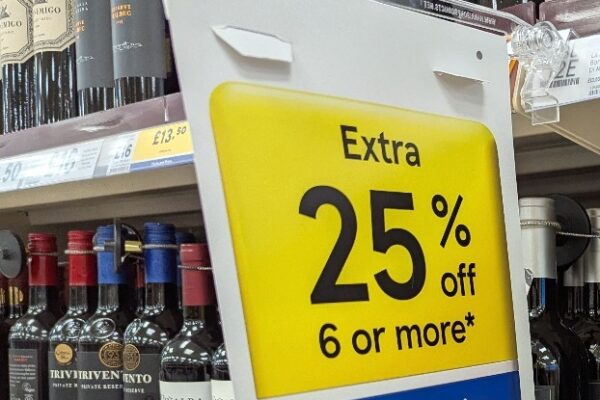
The recommended price is £7.50, and you’ll find it at Tesco, Sainsbury’s and Ocado. Even at full price, it’s good value, but it becomes particularly appealing when included in one of the supermarket mix-six offers. At the time of writing, Sainsbury’s has it on a double discount, reduced to £6.50 and then with a further 25% off when buying six bottles. That brings it down to just £4.87 a bottle. Crazy price for a perfectly decent, fruity little red that delivers far more enjoyment than you might expect for the price.

Did You Know?

Supermarkets remain the dominant purchasing channel, used by 77.8% of respondents. More

Champagne remains the leading celebratory sparkling wine at 33.4%, followed by Prosecco at 27.4% and English Sparkling wine at 20%. More

34% of people identify high wine prices as a leading frustration. More

Australian wine exports to China have collapsed from around $1.2 billion to less than $10 million. More

Wine’s aroma is not determined solely by which flavour compounds it contains. More

Low-to-moderate wine consumption is associated with lower mortality. More

Moderate water stress can be part of what creates flavour and terroir expression. More

Wine appears less frequently online than other alcoholic drinks. More

Independent retailers had 9% fewer customers in March 2026 than two years earlier. More

Average spend per bottle in independents has risen by 23% since 2019, compared with 21% in supermarkets. More.

Nearly a third (32%) of UK consumers say they have already used AI for alcoholic drinks advice. More

Among socially active wine buyers, 37% have bought a wine recommended online. More

In 2026, 72% of consumers now think wine knowledge is essential to appreciation, up 20 percentage points on 2025. More

Rías Baixas wines reached more than 107 countries in 2025 and exports represented 31 per cent of the denomination’s total sales. More

Light Strike Can Cause Wine Degradation in Just One Day. More

People actively adjust their wine choices depending on who might see them. More

In the UK, 73% of Alcohol is Bought From Retail Rather Than Hospitality. More

UK wine production reached 124,377 hectolitres that year, meaning the UK accounted for roughly 0.05 per cent of world output. More

For Crémant, grapes must be harvested by hand and the wines must undergo at least nine months’ ageing before release. More

In 2024, the UK was the second-largest export market for Champagne globally, after the United States. More

Local UK bottling of wine represents about 40% of imported wine. More

Around 1% of people, typically severe asthmatics, have a sulphite sensitivity. More

A large 80% of Australian wine arrives in the UK in bulk. More

Only about 0.02% of Australia’s landmass is dedicated to vineyards. More

In 2024, New Zealand produced only 1% of the World’s wine. More

In 2024, the US imported 37% of World production of Pinot Grigio and the UK was is in second place at 27%. More

In 2024, the UK was South Africa’s largest export market, with 40% of total exports. More

In 2024, the United Kingdom imported 22.3 million bottles of Champagne, a decline of 12.7% compared to the previous year. More

Larger Champagne producers source grapes from as many as 80 different vineyards throughout Champagne. More

Champagne houses and growers collectively produce around 300 million bottles annually. More

In 2025, the Champagne region was home to about 2,124 Champagne houses and approximately 19,000 growers. More

Provence is one of the leaders in the conversion to organic viticulture, with 61% of vineyards certified. More

8% of the South Africa’s grape production is Fairtrade-certified. More

Up to 80% of wine aroma compounds come from grape skins. More

Glycerol is the third-largest component of most dry wines after water and alcohol which is why they so often feel ‘smooth’ or ‘silky’ in the mouth. More

Humans are more than 400 times more sensitive to bitter than sweet. More

Humans can detect the earthy molecule geosmin at about 100 parts per trillion and camels are so sensitive to it they can locate damp ground from roughly 50 miles away. More

During the phylloxera crisis of the nineteenth century, 90% of Europe’s vineyards were destroyed. More

In 2025, for La Vieille Ferme, also known as “The Chicken Wine”, sales surged by 49.4% to £110.8 million. More

In 2025, in the UK, Yellow Tail held the top position with sales, marking a 9.8% increase over the previous year. More

In 2024, the UK was the second-largest wine importer in volume and value. More

In 2024, the UK was the fifth-largest wine-consuming country globally. More

In 2025, global wine consumption continued its downward trend, estimated at 214.2 million hectolitres, the lowest since 1961. More

In 2025, online alcohol sales had a 20% increase in value over five years. More

In 2025, the number of UK vineyards rose to 1,104 and wineries to 238, with land under vine expanding to 4,841 hectares, a 510% increase since 2005. More

Moët Hennessy alone commands nearly 46.66% of the Champagne market, with the top three producers together holding about 61%, and the top five controlling over 72%. More

In 2024, the Champagne market was worth roughly €3.92 billion. More

In the marketing year 2023/24, white wine accounted for roughly 55% of Spain’s output, whereas red and rosé together made up about 45%. More

In the UK, 92% of wine is consumed within 48hrs of purchase. More

The majority of wines, 95%, use commercial rather than wild yeast. More

Between 0.5 and 10 litres of water, per litre of wine, are needed for cleaning during winemaking. More

Machine harvesting can achieve up to 100 tons of fruit per day vs 1 ton for a human. More

In Germany, 2025 was the smallest wine vintage since 2010. More

The majority of vineyards, 90% in 2019, are farmed with heavy chemical interventions. Only 6% are organic. More

90% of low and coastal areas in south Europe and California will no longer be able to produce good wine by the end of the century. More

IMAGE WALL