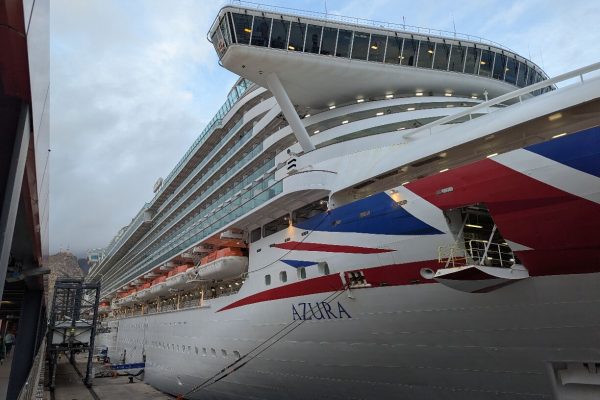
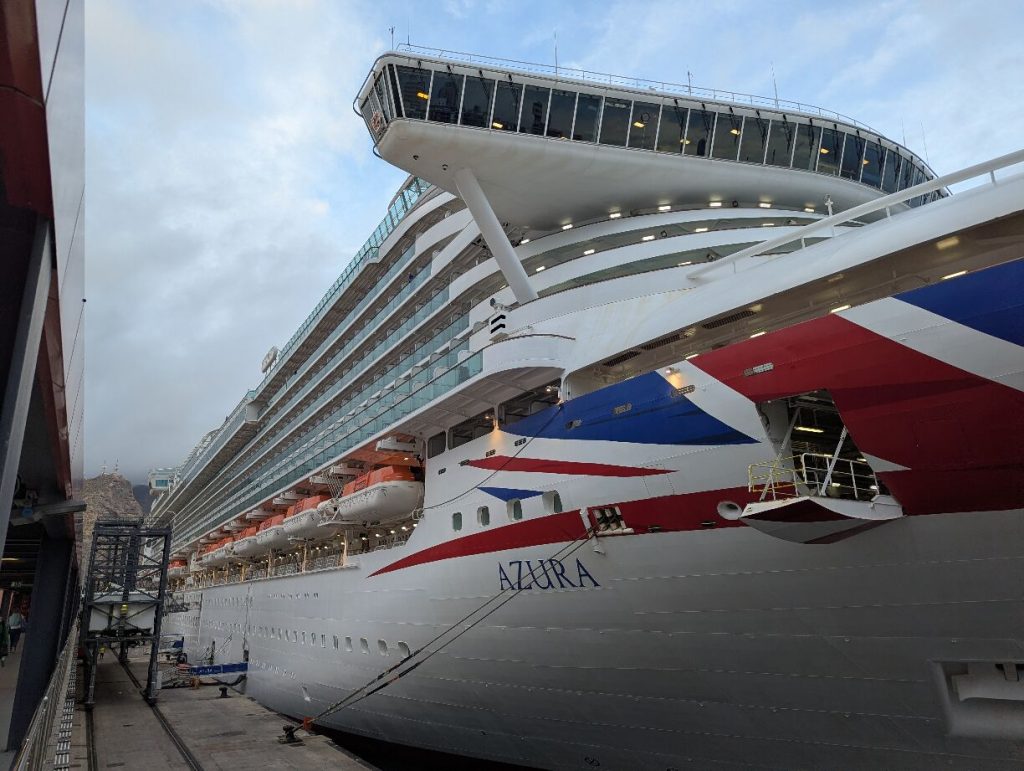
In November 2026, my wife and I went on a short P&O cruise around the Canary Islands aboard Azura. However, this isn’t so much a review of the cruise itself, but rather an account of the wine on board. I’ve previously written about the wine offering on P&O, so this is more of an update based on my latest experience.
As mentioned in my previous article, P&O has a dedicated wine bar and restaurant called The Glass House, championed by wine expert Olly Smith. We spent most of our wine-drinking time there, partly because the general wine offering around the ship is fairly basic, but also because The Glass House offers some genuinely interesting wines at remarkably affordable prices.
The General Wine Offering
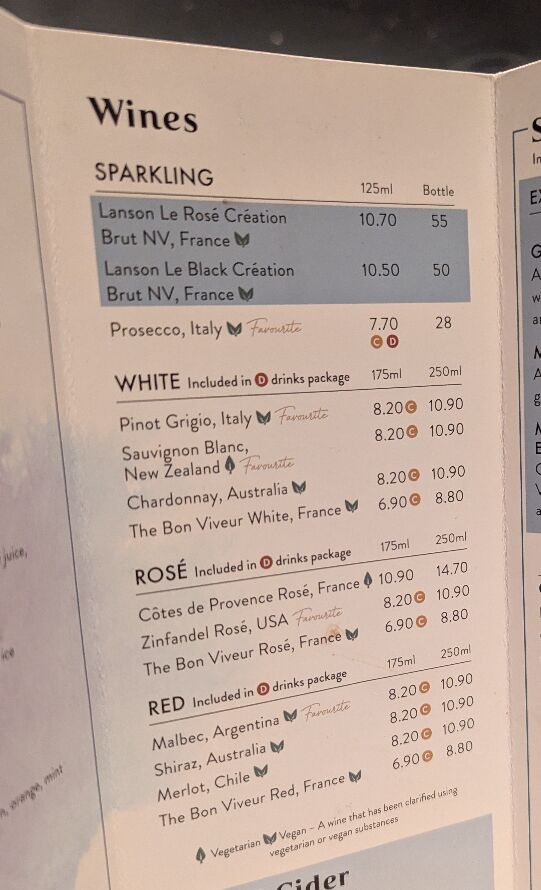
Let’s start with the wine available in the ship’s regular bars and buffet restaurant. As you can see from the menu, the selection and wine descriptions are fairly basic, although the prices are fairly reasonable.
One evening, in one of the bars, I spotted a New Zealand Sauvignon Blanc on the menu and decided to order a glass. Unfortunately, I was told it wasn’t available, but that they could offer me an alternative Sauvignon Blanc.
“Which country?” I asked, expecting France, Chile or perhaps South Africa.
“Spain,” came the reply.
I declined.
Thinking this might be a one-off mistake, I tried an adjacent bar on the ship, only to encounter exactly the same situation. In the end, I walked all the way to The Glass House, ordered an excellent Greywacke Marlborough Sauvignon Blanc and brought it back.
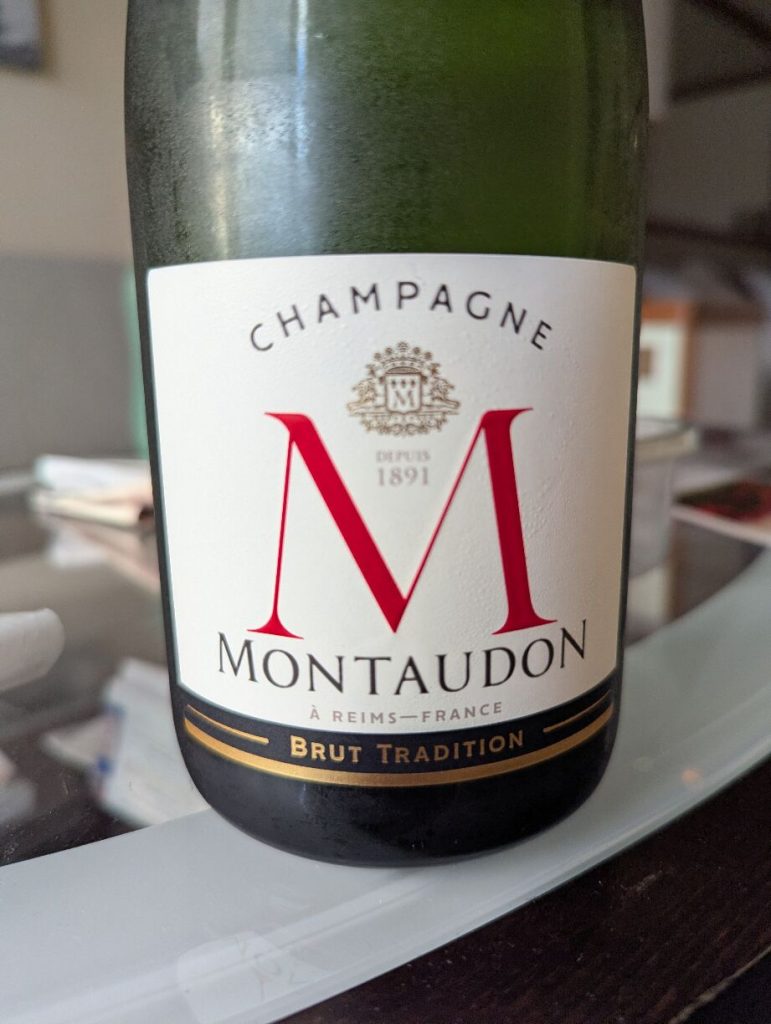
The other disappointment came courtesy of the complimentary Champagne provided as part of our cabin grade. This was Montaudon, and I have to say it was probably one of the worst Champagnes I’ve ever tasted. It had very little of the character or complexity you’d expect from Champagne and was thoroughly underwhelming. We managed two glasses before pouring the remainder away.
The Glass House
Fortunately, things improved considerably once we settled into The Glass House.
First, the service was excellent. The staff were consistently friendly, helpful and welcoming, making it a particularly enjoyable place to spend an evening over a few glasses of wine.
It clearly wasn’t just us who appreciated it. As the cruise progressed, The Glass House became increasingly busy, presumably as more passengers discovered what it had to offer.
You can also eat there, which we did on two occasions. The first was a selection of three tapas dishes for £10.50, while on another evening we enjoyed a full meal.
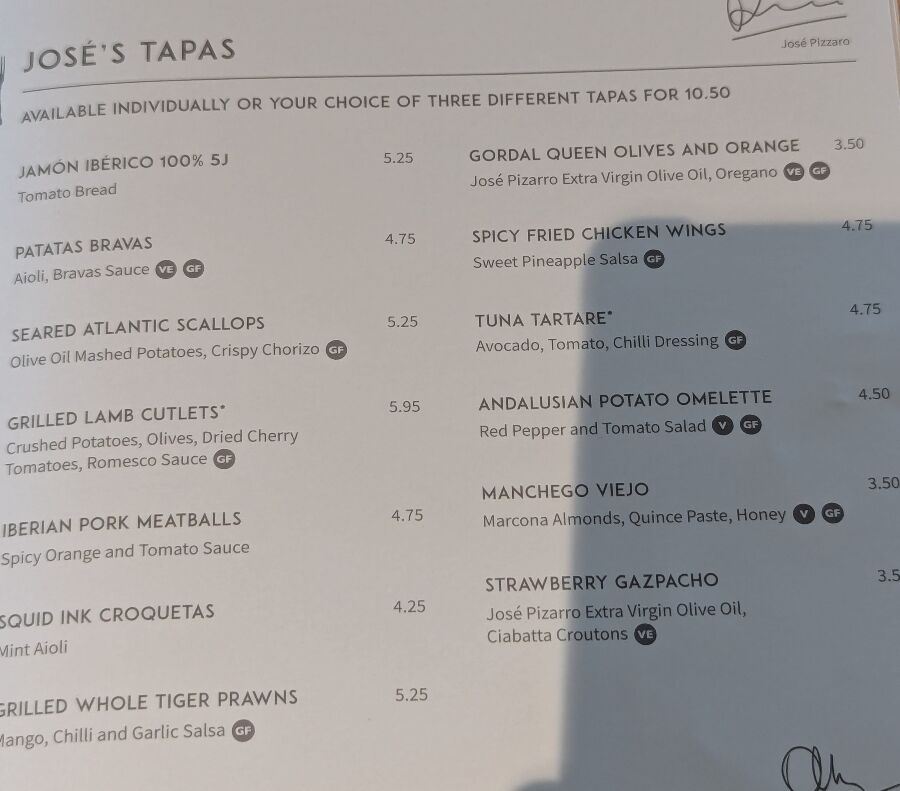
One thing worth mentioning is that Azura operates very much on a ‘keep the fares low and pack them in’ basis. Especially on sea days, when everyone is aboard, the ship can feel rather crowded. This inevitably affects the restaurants, and The Glass House was no exception. If you want to eat there, you really need to join the virtual queue early in the evening to stand a reasonable chance of getting a table.
There are also a few areas where I think The Glass House could improve. The first is the lack of simple snacks to accompany a glass of wine. On our initial visit, we only wanted something small to nibble, perhaps some crisps, nuts or olives. Unfortunately, none of these was available, so we ended up ordering the tapas instead which, in turn, adds stress on The Glass House kitchen.
The second issue was the physical wine menu. Not the contents, which were interesting, but the presentation. The pages were held together in a ring binder, with the punched holes positioned too far from the edge. As a result, the pages constantly caught against one another when you tried to turn them. A minor irritation, admittedly, but one that could easily be fixed.
There was also a section of the wine list devoted to ‘Fine Reds’. I was particularly tempted by the Vega Sicilia Pintia 2018, but when I asked for it, I was told it wasn’t available. Another disappointment, especially as it was one of the more interesting wines on the list.
Wine Prices and a Touch of Olly Smith
Before getting into the wines themselves, it’s worth highlighting just how reasonable the prices were.
All the prices shown in the menus are in pounds sterling, reflecting the predominantly British clientele on board. Another welcome difference from many other cruise lines is that P&O doesn’t add an automatic gratuity to the listed drinks prices. What you see is what you pay. For anyone accustomed to London restaurant wine prices, the offerings in The Glass House represent excellent value.
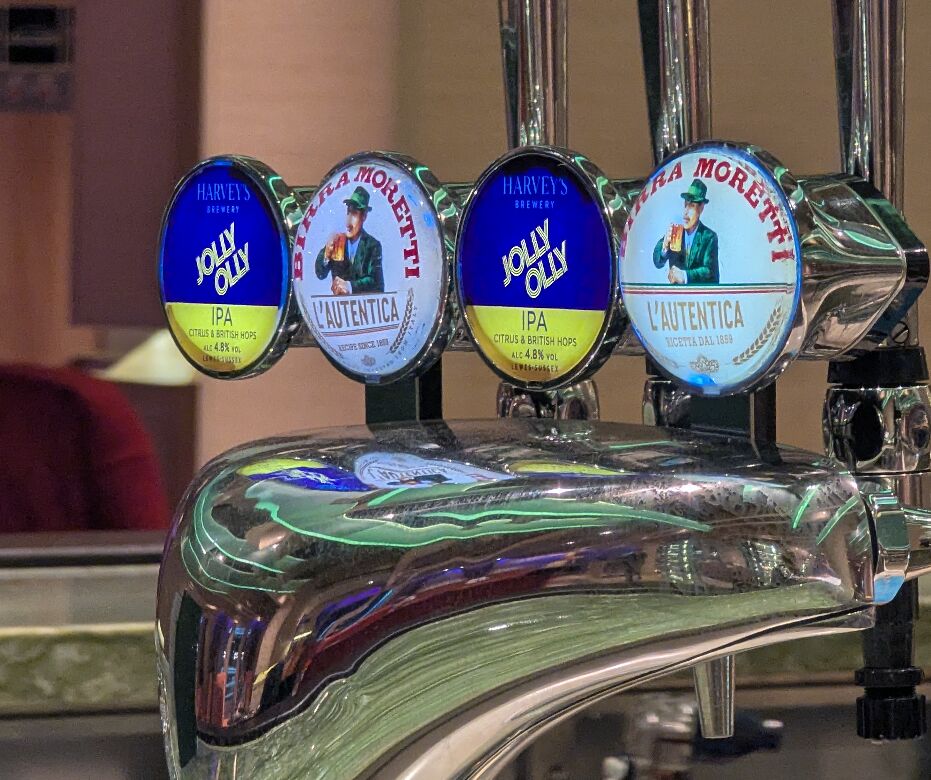
One little detail, for the sharp-eyed, is that The Glass House also serves beer. Among the selection is one called Jolly Olly, an obvious reference to Olly Smith.
The Wine Flights
One of the most appealing features of The Glass House is its selection of wine flights, allowing you to sample several different wines without committing to a full glass or bottle of each.
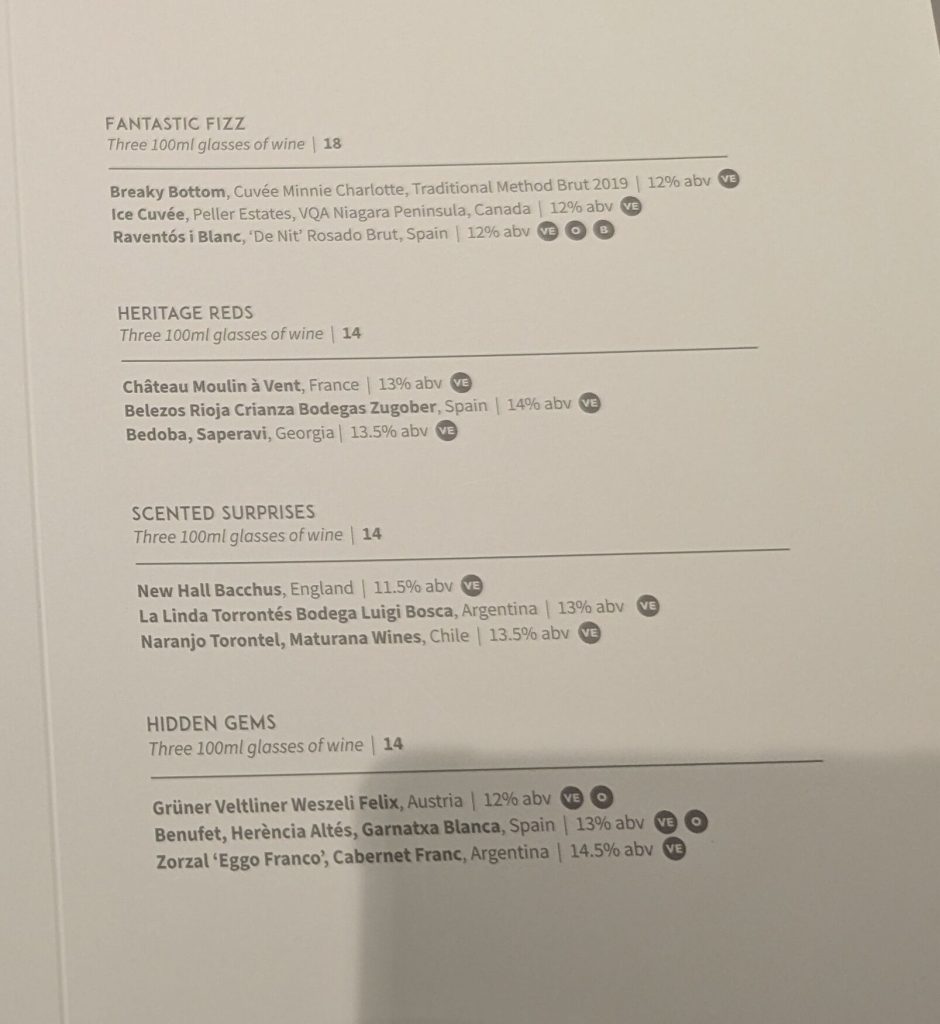
These were very affordably priced, and we quickly took advantage of them, trying both the sparkling and red wine selections.
It’s a particularly good way of exploring wines you might not otherwise choose, and we discovered a few favourites along the way.
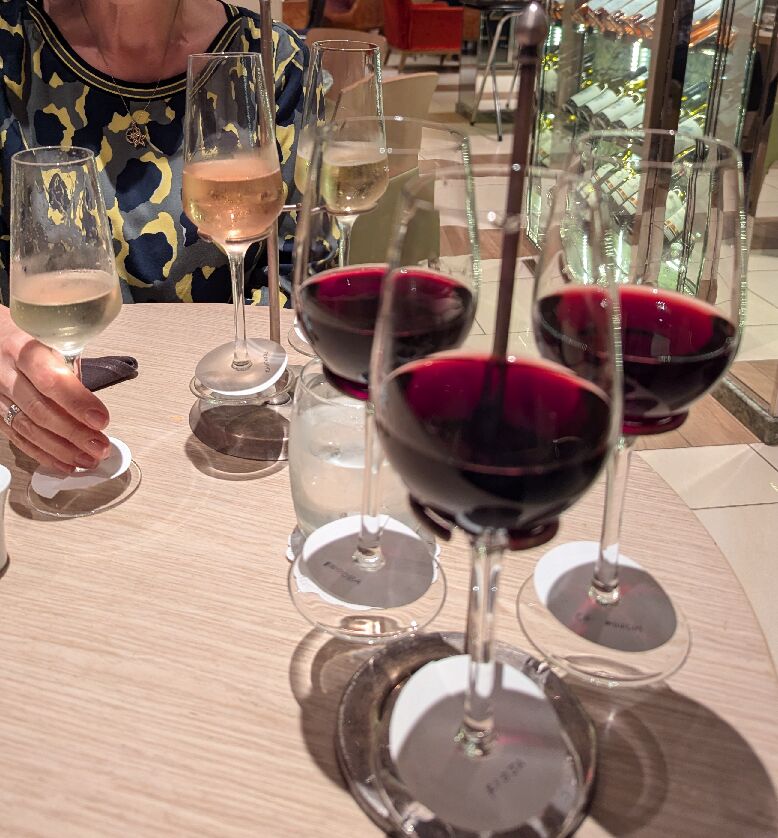
One of these was the Zugober Belezos Rioja Crianza, which I enjoyed so much that it became my default choice to accompany food on the ship.
My wife particularly enjoyed the Ice Cuvée from Peller Estates in Canada and returned to it on another occasion. It’s an interesting sparkling wine and certainly something a little different from the usual selections.
Highlights from the Wine List
Beyond the flights, there were several wines on the main list that deserve a mention.
The Zorzal ‘Eggo Franco’ Cabernet Franc was particularly interesting, while the Zensa Primitivo and Pérez Cruz Reserva Cabernet Sauvignon were both very enjoyable.
However, one of the real highlights was the Barolo from Casa E. di Mirafiore. This was excellent and easily one of the best reds I tasted during the cruise and better than most I have tasted ashore.
Final Thoughts
Overall, the wine experience aboard Azura was something of a mixed bag. The general bar wine selection was basic, and the lack of availability of certain listed wines was frustrating. The complimentary Champagne was also a considerable disappointment.
However, The Glass House more than made up for these shortcomings. The combination of an interesting wine list, excellent service, approachable wine flights and very reasonable prices made it one of our favourite places on the ship. There are improvements I’d like to see, particularly the availability of simple bar snacks, better-designed menus and more reliable stock of the advertised wines. But these are relatively minor criticisms of an otherwise very enjoyable experience.
For anyone with an interest in wine who finds themselves aboard a P&O ship, I’d certainly recommend spending some time in The Glass House. It’s one of the few places on a cruise ship where you can explore some genuinely interesting wines without feeling that you’re paying a small fortune for the privilege.