Hallgarten & Novum Wines have announced two new reports that examine how UK consumers plan to purchase and drink wine over Christmas and New Year 2026. The first focuses on the hospitality sector (restaurants, pubs, bars and hotels), while the second examines retail (supermarkets, independent wine merchants and online retailers). Both are based on research conducted with Nielsen in August 2026, surveying 500 UK consumers who had recently purchased wine.
Consumers anticipate spending more, are interested in premium wines and increasingly want products that make celebrations feel special. However, value for money, familiarity and clear product information remain essential.
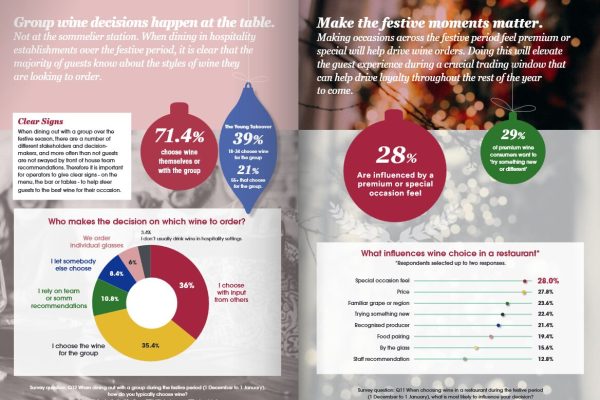
The hospitality report predicts healthy demand for wine throughout December. Some 32% of consumers expect to drink wine in restaurants, pubs, bars or hotels more frequently than during the preceding three months, while 53.4% expect to maintain their usual frequency. Among premium wine consumers, 48.3% anticipate drinking out more frequently. A finding is that customers generally make their own wine decisions. Some 71.4% choose independently or collectively with their group, rather than relying primarily on staff recommendations.
The festive experience itself influences purchasing decisions. A special-occasion atmosphere influences 28% of respondents, almost equal to price at 27.8%. Consumers are most likely to upgrade to more expensive wines when offered a dedicated festive wine selection (27.4%), set-menu wine pairings (23.6%) or compelling information about wine quality and provenance (22.6%). However, 34% identify high wine prices as a leading frustration, while 25% dislike unfamiliar wines being presented without adequate explanation. Premium customers also express frustration with limited by-the-glass choices. Champagne remains the leading celebratory sparkling wine at 33.4%, followed by Prosecco at 27.4% and English Sparkling wine at 20%.
The retail report indicates a positive outlook for Christmas wine sales, with consumers expecting to increase both their expenditure and, in many cases, the number of bottles they purchase. 66.8% expect to spend more on wine than Christmas 2025, 43.8% expect to purchase more bottles, 54.4% would spend £26 or more on a special bottle and 39.2% are interested in exploring UK-produced wine
The most popular price bracket for a special Christmas bottle is £26 to £40, selected by 33.4% of respondents. Premium wine buyers demonstrate considerably greater spending potential, with 36% indicating a willingness to spend over £75.
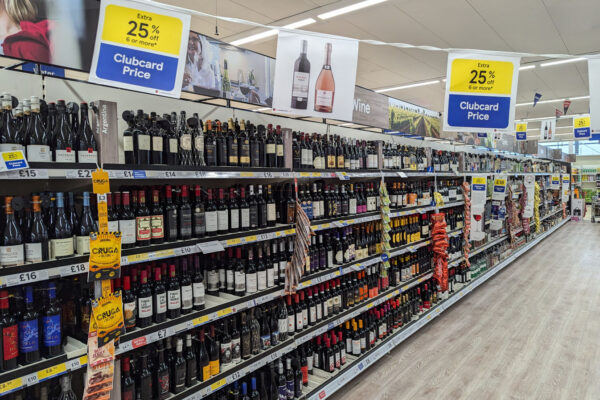
Supermarkets remain the dominant purchasing channel, used by 77.8% of respondents. However, online retailers and independent wine merchants each attract around 30% of consumers with particularly strong interest among premium buyers. Of that group, 54% expect to shop online and 46% through specialist wine merchants.
Promotions and discounts remain the strongest overall incentive to trade up, influencing 33.8% of shoppers. Nevertheless, confidence in the product is also important. Trusted regions or producers, personal recommendations, familiar grape varieties and expert retailer advice encourage consumers to spend more. Premium shoppers are especially motivated by provenance and trust rather than discounts alone.
Wine preferences remain fairly traditional. Consumers favour richer red wines, such as Malbec, Shiraz and Rioja, alongside crisp, refreshing whites including Sauvignon Blanc and Albariño. English wines are becoming increasingly attractive, particularly among younger consumers and premium buyers.
Moderation is another emerging theme. Some 32.8% plan to drink less but choose better-quality wine, while 22% of consumers aged 18 to 34 intend to purchase low- or no-alcohol alternatives, compared with 10% of those aged 55 and over.
The reports point towards five overall trends:
- Consumers are willing to spend more for meaningful celebrations, but premium pricing must be supported by a convincing explanation of quality and value.
- English wine is becoming important, particularly English sparkling wine. It is increasingly being considered alongside established European favourites.
- Traditional, recognisable wine styles remain essential, even though younger and premium buyers show greater interest in discovering new regions and producers.
- Presentation and guidance influence spending. In hospitality, this means clearly structured wine lists and food pairings. In retail, it means trusted recommendations, appealing packaging and differentiated products.
- Drinking moderation and premiumisation can coexist. Consumers may spend more on a special bottle while reducing consumption on other occasions.