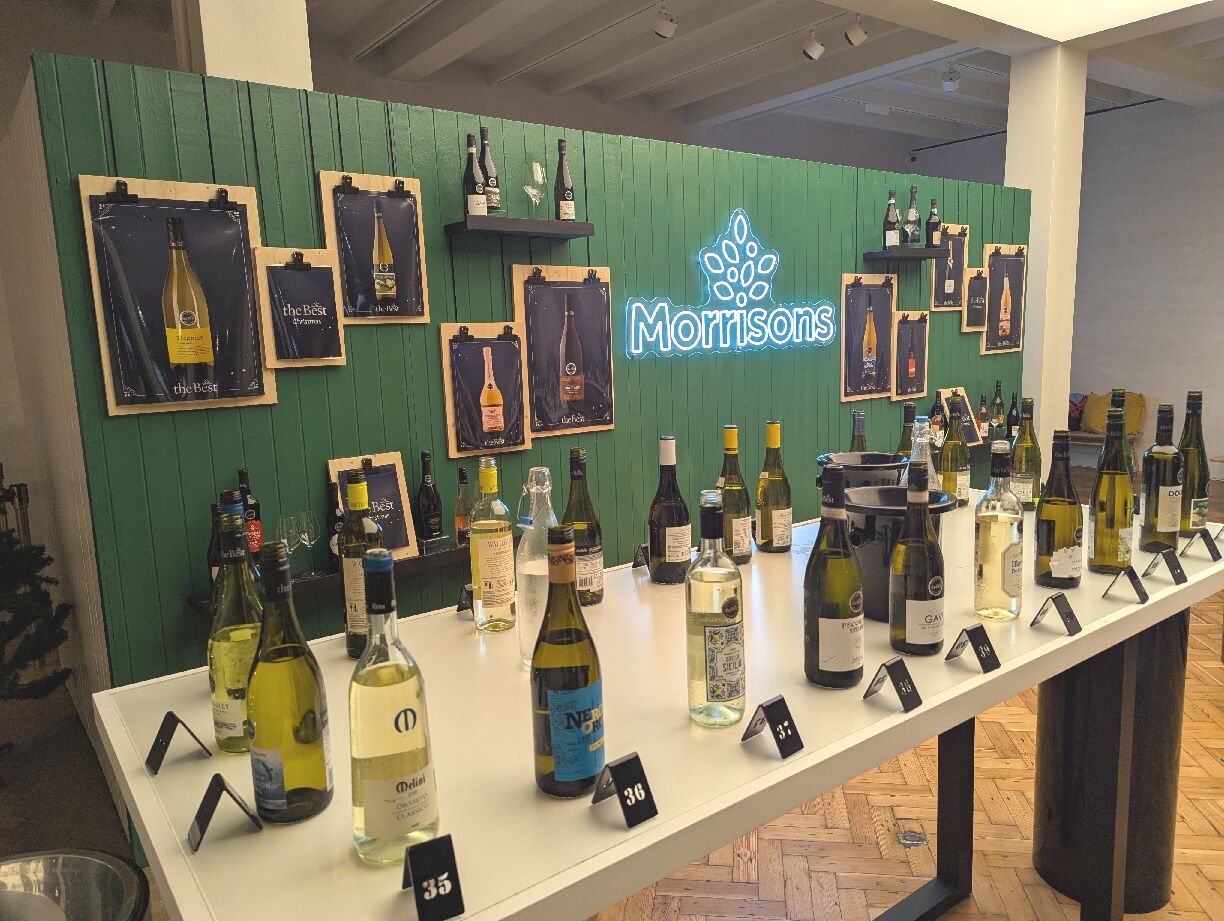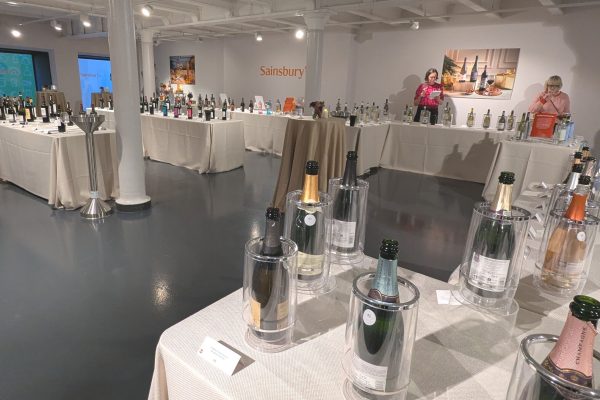
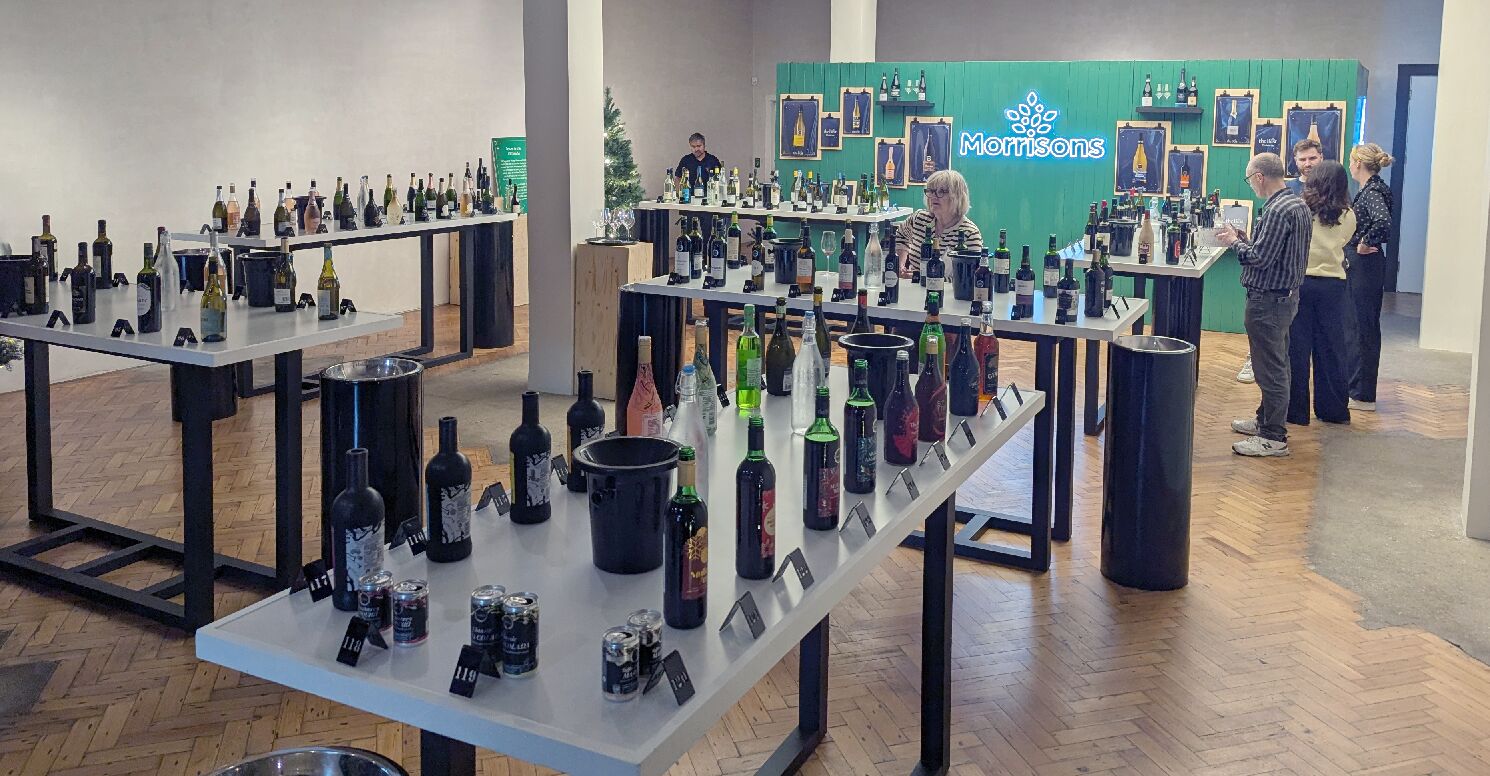
In mid-October, I was back in London for the Morrisons press tasting, held this time at a new venue, The Crafts Council. The gallery-style surroundings made for a change from previous tastings and provided an interesting new setting in which to explore their latest drinks range.
There were noticeably fewer members of the wine press in attendance than usual. While the less-central venue may have played a part, I suspect it had more to do with the previous week having been something of a marathon of press tastings. There was also a ‘Wines of South Africa’ tasting taking place on the other side of London at the same time, which I decided to forego so that I could concentrate fully on what Morrisons had to offer.
In total, there were 128 drinks on show, of which 106 were wines. One noticeable development was the greater emphasis on Morrisons’ Wine of the Week promotions. For the first time, 12 wines were specifically highlighted. There was also a new range, Wattleford and many festive additions to Morrisons’ The Best range.
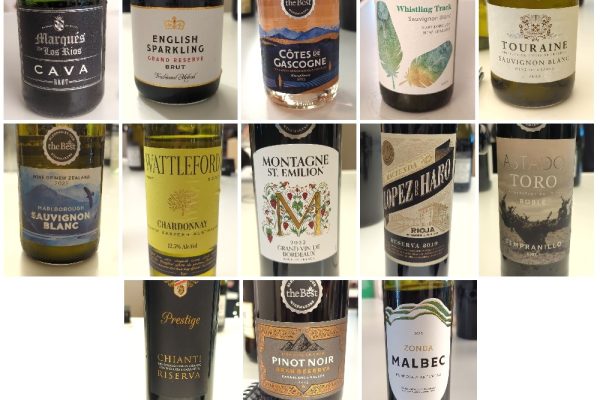
Here are the wines I found particularly interesting:
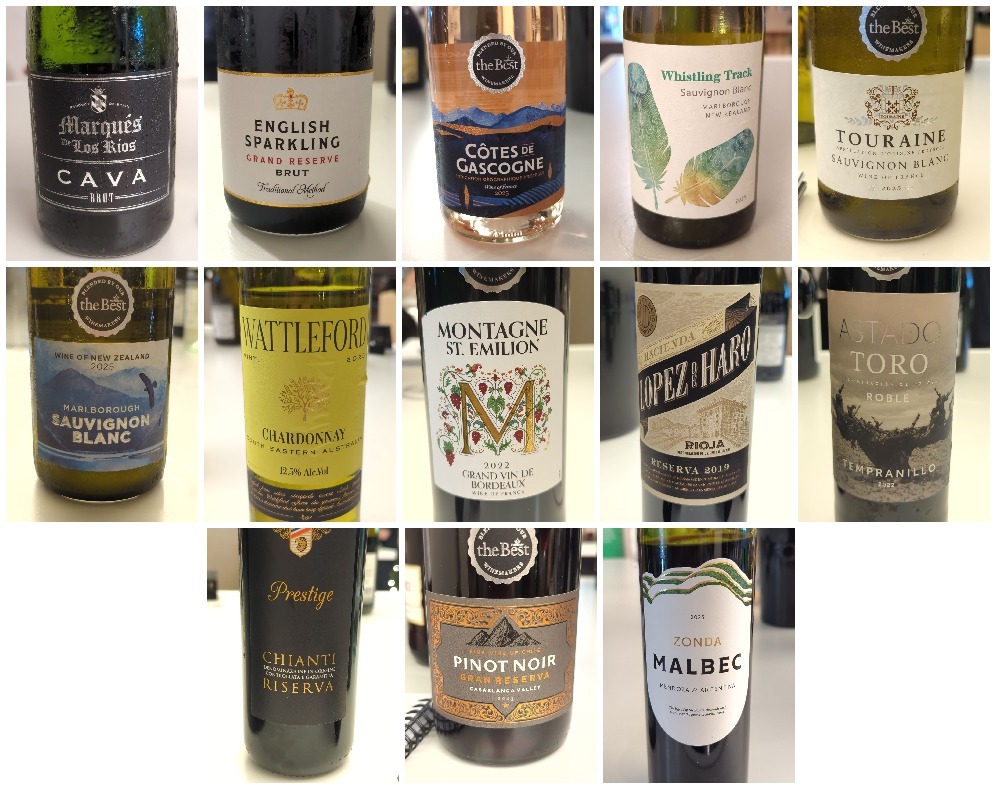
Marqués de los Ríos Cava Brut NV 11% £9.50
Produced by Codorníu from 35% Macabeu, 35% Xarel·lo and 30% Parellada, with nine months spent on the lees. Pale lemon in colour with persistent bubbles and inviting aromas of citrus, apple, brioche and biscuit from the lees ageing. Crisp orchard fruit flavours are complemented by deep biscuity notes, high acidity and a light to medium body. Brut in style, with a long, dry and bready finish. I don’t tend to pick Cava, but this one really stood out for its intensity.
The Best English Sparkling Grand Reserve Brut NV 11.5% £22
Produced by the anonymous ‘Rolling Green Hills’, widely rumoured to be Nyetimber, from 54% Chardonnay, 37% Pinot Noir and 9% Pinot Meunier, with six years of ageing. Pale lemon in colour with fine bubbles and aromas of lemon, green apple and toasted biscuit. Crisp citrus and apple flavours combine with pronounced acidity and layers of baked pastry, butter and subtle citrus richness. I have a love-hate relationship with this wine. A previously purchased bottle was nowhere near as good, but this tasting has persuaded me to give it another chance. Perhaps it was a bad bottle. Interestingly, it’s £2 cheaper than last Spring, although I have found it is often on offer anyway.
The Best Côtes de Gascogne Rosé 2025 11.5% £7.75
Produced by Plaimont from Cabernet Sauvignon, Merlot and Tannat, this rosé has intense tutti-frutti aromas followed by lively raspberry and citrus flavours. Fresh acidity keeps everything bright and refreshing, while the dry style relies on fruit rather than excess sugar for its appeal. A particularly enjoyable rosé and great value for the price.
The Best Wine Touraine Sauvignon Blanc 2025 12.5% £10
Produced by Pierre Chainier in the Loire from 100% Sauvignon Blanc. Pale lemon in colour with intense aromas of gooseberry, elderflower and lemon. The dry, medium-bodied style delivers concentrated, taut citrus fruit, high acidity and a long, refreshing finish. It is verging on a New Zealand Sauvignon Blanc in its intensity.
The Best Sauvignon Blanc 2025 13% £12
A past pick of mine, made from 97% Sauvignon Blanc, 2% Pinot Gris and 1% Chardonnay. Classic grassy and tropical Marlborough aromas lead into flavours with impressive depth and a subtle musky edge. Fresh citrus notes bring a lively finish, balancing the richer fruit character.
Wattleford Chardonnay 2025 12.5% £7.50
A new own-label Chardonnay from Eastern Australia, produced by Kingston Estate Wines. Medium yellow in colour, with almost overwhelming tropical fruit aromas alongside citrus, stone fruit, nougat and toast. Full-on ripe fruit flavours dominate, although there is enough freshness and restrained oak influence to provide balance. Medium-bodied and bordering on off-dry in character, with a long, intense finish. It will also be available on a two-for-£12 promotion at some point, making it even better value.
The Best Montagne St. Emilion 2022 14% £14
Produced by Amand Chaperon from 90% Merlot, 7% Cabernet Sauvignon and 3% Cabernet Franc. Deep red in colour with rich aromas of plum, black cherry, mocha and herbs. Plush dark fruit flavours are complemented by chocolatey notes and subtle spice. Dry, medium to full-bodied, with medium tannins and a lingering finish of ripe plum and warming spice.
López de Haro Rioja Reserva 2019 13.5% £11.50
Made from 95% Tempranillo and 5% Graciano, this Rioja has exceptionally intense aromas of red cherry, strawberry, vanilla, dill and sweet spice. Red fruit flavours are accompanied by gentle oak spice, medium tannins and a medium body. Dry in style, with a medium-length, sweetly spiced finish. I particularly liked this wine for its wonderfully expressive aromas.
The Best Toro Roble 2022 13.5% £12.25
Produced by Bodegas Fariña in Spain from 100% Tempranillo. Deeply coloured, bold and full-bodied, with rich blackberry flavours and layers of dark chocolate. Dry in style, with plenty of power, concentration and depth. A warming, robust red.
Prestige Chianti Riserva DOCG 2022 14% £12
Produced by Uggiano from 70% Sangiovese and 30% other grape varieties. Deep aromas of sour cherry, violet, dried herbs and spice lead into bright cherry flavours with savoury herbal notes and subtle spice. Dry and medium-bodied, with low to medium tannins and a distinctive cherry and savoury finish. Interestingly, this feels more mature than its 2022 vintage might suggest, giving it an appealing, developed character.
The Best Gran Reserva Chilean Pinot Noir 2024 13% £12
A past pick of mine, the same vintage, produced by Viña Ventisquero in Chile’s Casablanca Valley, a producer named New World Winery of the Year 2024 by Wine Enthusiast magazine. Made from 100% Pinot Noir and partly matured in French oak for added depth. Bright red cherry aromas lead into soft cranberry and violet flavours, giving it a refined, fruit-forward character. This time, however, I found it a bit more savoury than before. Perhaps it is beginning to change with age.
Here are two that I particularly liked from the ‘Wine of the Week’ selection that will be available for £5.97 at some point:
Whistling Track Marlborough Sauvignon Blanc 2025 12.5% RRP £12
Produced by Seaview Estate Wines from 98% Sauvignon Blanc and 2% other varieties. Pale lemon in colour with explosive, classic Marlborough aromatics of gooseberry, passionfruit, red capsicum, freshly cut grass and citrus. The intensely concentrated citrus and tropical fruit flavours are supported by high acidity and a medium body, leading to a zesty, pungent finish. Dry, vibrant and certainly not lacking in character. Personally, I find the extreme aromas and flavours almost too much, but even I might buy it when it comes up on Wine of the Week.
Zonda Malbec 2025 RRP £12
Produced by Tecnovitis 3 in Mendoza, Argentina, from 100% Malbec. Deep purple in colour with expressive aromas of black plum, blackberry, violets and spice. Rich dark fruit and floral violet flavours fill the mouth, supported by low to medium tannins and a medium to full body. Dry and generous, with a long, dark-fruited and spicy finish.
There are three main themes that we can expect to see from Morrisons over the coming months.
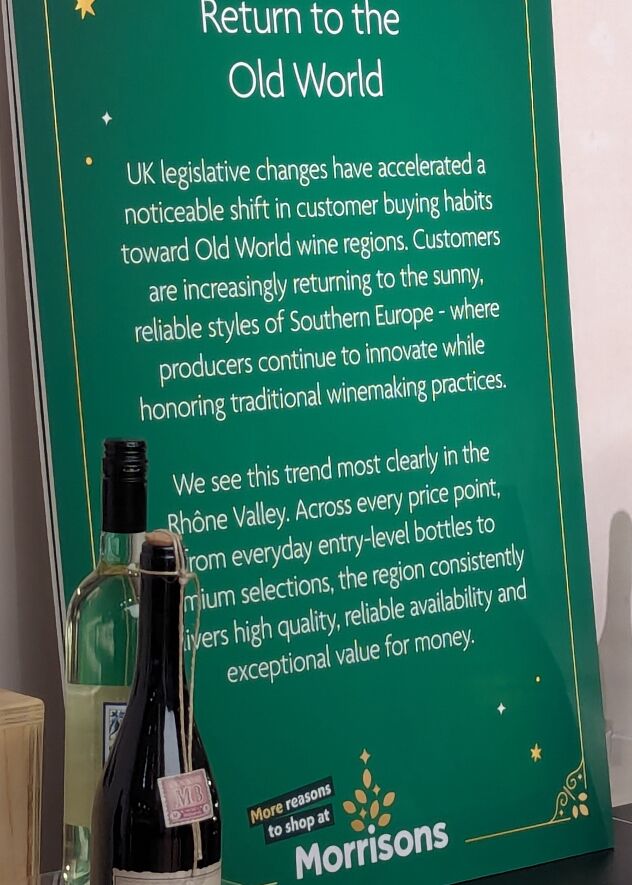
The first is a much greater emphasis on Wine of the Week promotions. The idea is to encourage customers at the lower end of the market, particularly those who habitually buy the same wines, to experiment with something they might not otherwise consider. Of course, the promotions are also designed to attract shoppers into Morrisons in the first place. These are not specially purchased just as promotional wines, but will also be offered during the non-promotional weeks.
The second theme is an expanded own-label festive drinks range under Morrisons’ premium ‘The Best’ branding. The emphasis here is on delivering quality at outstanding value, particularly for the Christmas period when consumers may be looking for something a little more special without spending a fortune.
Finally, there is the introduction of Wattleford, a new own-label range distinguished by its yellow labels. Morrisons has noticed that many wine suppliers have been reducing alcohol levels in response to changes in UK duty rates. This is not necessarily what all consumers want, particularly those who have become accustomed to a wine at a particular strength and style. The Wattleford range is intended to appeal to those customers.
Prices are, of course, subject to change and can drop quite significantly during the 25% off promotions.