,

Lidl Winter Wine Tour

Posted by

–

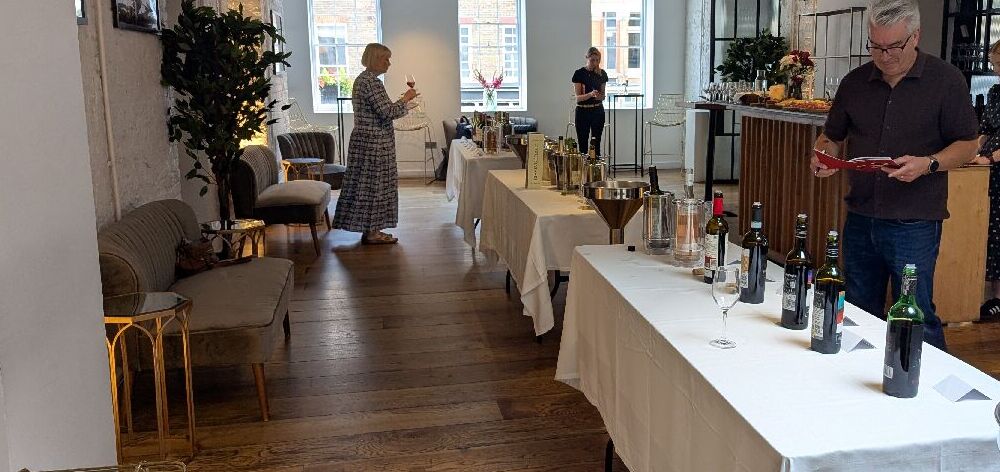
In late September 2026, I attended Lidl’s Winter Tasting, which showcased wines from the forthcoming Winter Wine Tour, available in stores from 29 October 2026 until 28 January 2027, alongside some wines from the core range.

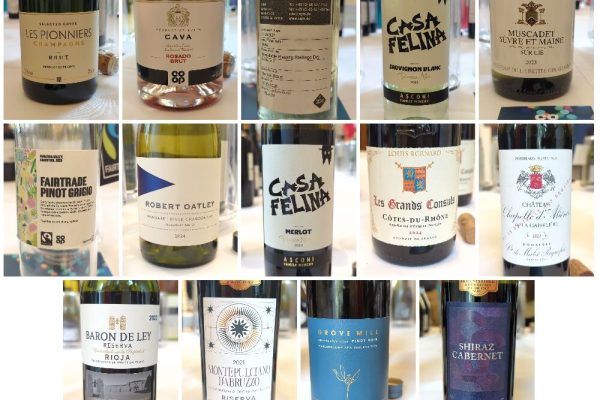
As I previously mentioned, Lidl’s Wine Tours have moved from a monthly to a quarterly format. With this change, there were fewer wines than usual at the tasting, with 33 on show. Here are the ones that caught my attention:
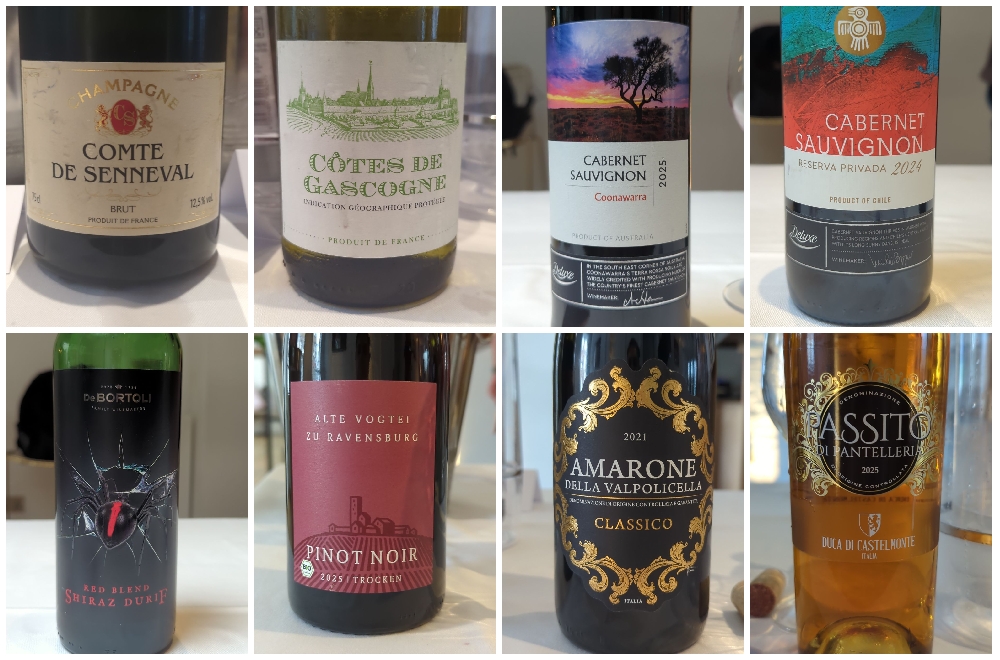
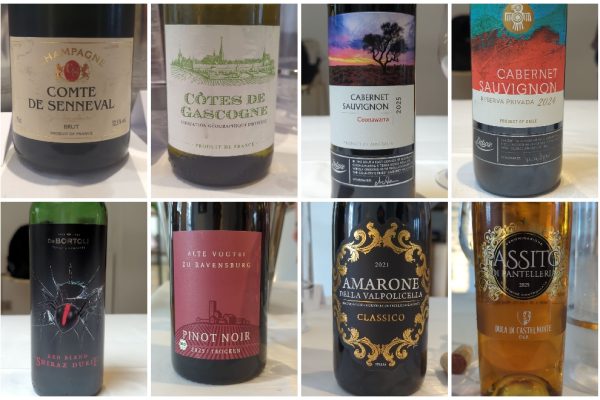
Champagne Comte de Senneval Brut NV 12.5% £13.99
Produced by the UCC Alliance Champagne Jacquart, Union de Coopérative de la Champagne (UCC). Pale lemon in colour with fine bubbles, with aromas of green apple and lemon alongside some brioche and biscuit from time on the lees. Crisp citrus and apple are joined by appealing biscuit complexity. Brut, light to medium-bodied, with high acidity and a long finish. An old favourite that perhaps is not quite as rich in taste as it used to be. However, it is still better than most Crémants at this price level, so it remains a pick. Part of the Winter Wine Tour.

Côtes de Gascogne 2025 10.5% £5.19
Sadly, neither the grapes nor producer are disclosed. Almost clear in colour, with a citrus aroma and a fresh lime flavour. It is dry with bright acidity and, importantly at this very low price level and lower 10.5% alcohol, it has not been spoilt by unwanted sweetness. A bit one dimensional but great flavour for the money. Part of the core line.

Deluxe Coonawarra Cabernet Sauvignon 2025 13.5% £7.29
A return from the previous tasting and the same vintage. Deep ruby in colour, with aromas of blackcurrant, mint, eucalyptus, cedar and leather. Cassis leads the flavour, lifted by mint and supported by a good mouthfeel. Dry and medium to full-bodied, with low to medium tannins. Still great, even though the price has increased slightly. Part of the core line.

Cabernet Sauvignon Reserva Privada 2024 12.5% £7.29
A wine I previously picked up in store and reviewed, but this is a newer vintage. Slightly purple in colour with aromas of cedar and blackcurrant, this is in a very classic Chilean Cabernet Sauvignon style. Blackcurrant continues through the flavour, joined by a herbal edge. Perhaps less mouthfeel than the previous vintage. Dry and medium to full-bodied, with low to medium tannins. The finish is long. Part of the core line.

De Bortoli Shiraz Durif Red Blend 2025 13.5% £7.99
From Rutherglen, Australia and set to be a Halloween special with its spidery label. Deep purple-black in colour, with aromas of blackberry, plum, liquorice, chocolate and a little spice. Dark fruit follows with spice and a little chocolatey depth. It is very slightly sweet, medium bodied and has low to medium tannins. The finish is long and spicy.

Alte Vogtei Pinot Noir 2025 12.5% £11.99
From Baden, Germany, where Pinot Noir is better known as Spätburgunder. This organic wine is pale in colour but intensely aromatic, of red cherry, cranberry, pronounced spice and forest floor. Elegant red fruit is matched by savouriness. Dry and light to medium-bodied, with low to medium tannins and a savoury, long finish. My favourite wine of the tasting. A real treat if you like savoury Pinot Noir. A more unusual wine to find at Lidl.

Amarone della Valpolicella Classico 2021 15% £14.99
Made from Corvina, Rondinella and Molinara. This was a great find earlier this year and I subsequently reviewed the same 2021 vintage. Aromas of dried cherry, fig, raisin, cocoa and sweet spice lead into rich dried fruit and warming alcohol, with a velvety, full texture. The finish is long and luxurious with gentle tannins. I have purchased several bottles since, and the wine’s intensity seems to have diminished over time, as it did with this bottle at the tasting. Still OK, but not as exceptional as it was. The Lidl tasting booklet lists a reduced price of £14.99, down from £16.99. Part of the Winter Tour, although I know it has been in store for most of this year.

Assito di Pantelleria 2025 14.5% £12.99
A sweet wine made from sun-dried Zibibbo, also known as Muscat of Alexandria, grown on the volcanic Italian island of Pantelleria between Sicily and Tunisia. Golden in colour, with intense notes of apricot, honey, dried fig and caramel. Syrupy in texture and rich in style. It was served a little too warm at the tasting, as it only arrived during the event. That said, some wines, including this one, still show remarkably well even when served above the ideal temperature. The £12.99 price is for a 500ml bottle. Part of the Winter Tour.


One thing to keep in mind is that availability does not always follow the published schedule. Last year, some wines appeared in store earlier than expected, so it is worth keeping an eye out.

Prices are also provisional at this stage and may change. It is worth checking vintages carefully too, as the bottles that appear on shelves are not always the same vintages as those I try at the tastings.

Did You Know?

Australian wine exports to China have collapsed from around $1.2 billion to less than $10 million. More

Wine’s aroma is not determined solely by which flavour compounds it contains. More

Low-to-moderate wine consumption is associated with lower mortality. More

Moderate water stress can be part of what creates flavour and terroir expression. More

Wine appears less frequently online than other alcoholic drinks. More

Independent retailers had 9% fewer customers in March 2026 than two years earlier. More

Average spend per bottle in independents has risen by 23% since 2019, compared with 21% in supermarkets. More.

Nearly a third (32%) of UK consumers say they have already used AI for alcoholic drinks advice. More

Among socially active wine buyers, 37% have bought a wine recommended online. More

In 2026, 72% of consumers now think wine knowledge is essential to appreciation, up 20 percentage points on 2025. More

Rías Baixas wines reached more than 107 countries in 2025 and exports represented 31 per cent of the denomination’s total sales. More

Light Strike Can Cause Wine Degradation in Just One Day. More

People actively adjust their wine choices depending on who might see them. More

In the UK, 73% of Alcohol is Bought From Retail Rather Than Hospitality. More

UK wine production reached 124,377 hectolitres that year, meaning the UK accounted for roughly 0.05 per cent of world output. More

For Crémant, grapes must be harvested by hand and the wines must undergo at least nine months’ ageing before release. More

In 2024, the UK was the second-largest export market for Champagne globally, after the United States. More

Local UK bottling of wine represents about 40% of imported wine. More

Around 1% of people, typically severe asthmatics, have a sulphite sensitivity. More

A large 80% of Australian wine arrives in the UK in bulk. More

Only about 0.02% of Australia’s landmass is dedicated to vineyards. More

In 2024, New Zealand produced only 1% of the World’s wine. More

In 2024, the US imported 37% of World production of Pinot Grigio and the UK was is in second place at 27%. More

In 2024, the UK was South Africa’s largest export market, with 40% of total exports. More

In 2024, the United Kingdom imported 22.3 million bottles of Champagne, a decline of 12.7% compared to the previous year. More

Larger Champagne producers source grapes from as many as 80 different vineyards throughout Champagne. More

Champagne houses and growers collectively produce around 300 million bottles annually. More

In 2025, the Champagne region was home to about 2,124 Champagne houses and approximately 19,000 growers. More

Provence is one of the leaders in the conversion to organic viticulture, with 61% of vineyards certified. More

8% of the South Africa’s grape production is Fairtrade-certified. More

Up to 80% of wine aroma compounds come from grape skins. More

Glycerol is the third-largest component of most dry wines after water and alcohol which is why they so often feel ‘smooth’ or ‘silky’ in the mouth. More

Humans are more than 400 times more sensitive to bitter than sweet. More

Humans can detect the earthy molecule geosmin at about 100 parts per trillion and camels are so sensitive to it they can locate damp ground from roughly 50 miles away. More

During the phylloxera crisis of the nineteenth century, 90% of Europe’s vineyards were destroyed. More

In 2025, for La Vieille Ferme, also known as “The Chicken Wine”, sales surged by 49.4% to £110.8 million. More

In 2025, in the UK, Yellow Tail held the top position with sales, marking a 9.8% increase over the previous year. More

In 2024, the UK was the second-largest wine importer in volume and value. More

In 2024, the UK was the fifth-largest wine-consuming country globally. More

In 2025, global wine consumption continued its downward trend, estimated at 214.2 million hectolitres, the lowest since 1961. More

In 2025, online alcohol sales had a 20% increase in value over five years. More

In 2025, the number of UK vineyards rose to 1,104 and wineries to 238, with land under vine expanding to 4,841 hectares, a 510% increase since 2005. More

Moët Hennessy alone commands nearly 46.66% of the Champagne market, with the top three producers together holding about 61%, and the top five controlling over 72%. More

In 2024, the Champagne market was worth roughly €3.92 billion. More

In the marketing year 2023/24, white wine accounted for roughly 55% of Spain’s output, whereas red and rosé together made up about 45%. More

In the UK, 92% of wine is consumed within 48hrs of purchase. More

The majority of wines, 95%, use commercial rather than wild yeast. More

Between 0.5 and 10 litres of water, per litre of wine, are needed for cleaning during winemaking. More

Machine harvesting can achieve up to 100 tons of fruit per day vs 1 ton for a human. More

In Germany, 2025 was the smallest wine vintage since 2010. More

The majority of vineyards, 90% in 2019, are farmed with heavy chemical interventions. Only 6% are organic. More

90% of low and coastal areas in south Europe and California will no longer be able to produce good wine by the end of the century. More

IMAGE WALL