,

Understanding Grower Champagne

Posted by

Grower champagne is the term for a bottle whose producer is legally identified in Champagne as an RM, or Récoltant-Manipulant. According to Comité Champagne, an RM is a grower who makes and markets own-label Champagne from grapes sourced exclusively from that grower’s own vineyards. That is different from an NM, or Négociant-Manipulant, which is an individual or company that may buy grapes, musts or wines in order to make Champagne under its own label. In other words, “grower champagne” is not a separate appellation from Champagne itself, it is a producer category within the wider AOC Champagne system.

Comité Champagne says there are about 280,000 plots, 16,200 registered growers, 130 cooperatives and 370 Champagne houses. Official sources do not give a current public count for how many growers are specifically RM grower-producers.

Until the mid 20th century, almost all growers produced grapes that were then sold to the houses, which made and marketed the wine. Grower champagne therefore sits inside a long-standing regional structure in which vineyard ownership and brand power have more-often been separated.

Not every grower in Champagne bottles grower champagne. Comité Champagne states that some growers sell their grapes to houses, while others belong to cooperative cellars and do not produce Champagne themselves. On labels, the small-print professional registration is the key:
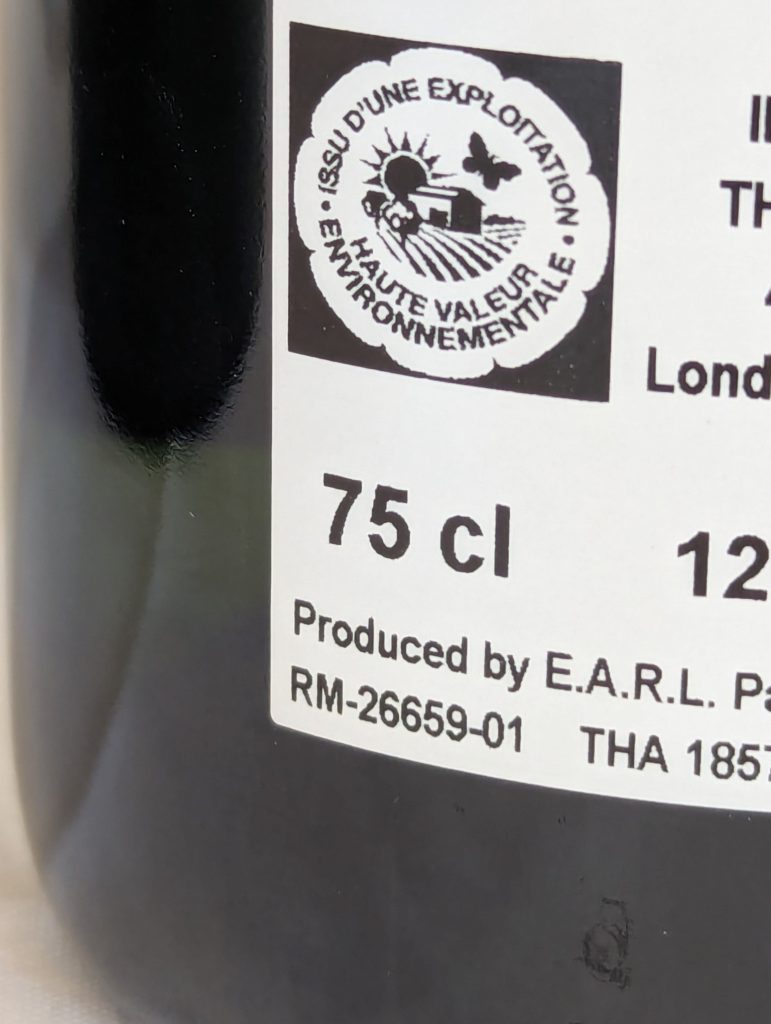
  • RM identifies a grower-producer
  • RC identifies a Récoltant-Coopérateur, meaning a cooperative member selling co-op-produced Champagne under the grower’s own label
  • CM identifies a cooperative producer
  • NM identifies a merchant-producer
  • ND and MA identify other commercial categories

The RM code is not a quality guarantee. It does not guarantee quality or terroir expression. There are strong and weak growers just as there are strong and weak houses. In practice, the letters on the label tell you about producer status and grape sourcing, but they do not, on their own, tell you whether the wine is better or more artisanal.

Having hunted down grower Champagne at tastings, I have also found that not all of them put RM on the back label. Some put NM instead when there is ambiguity due to them being both RM and NM under different circumstances.

Grower Champagne often shows more vintage variation. Non-grower non-vintage Champagne usually relies on blending wines from different villages and bolstering the current base wine with reserve wines is central to ironing out vintage variation. By contrast, RM Champagne is made from the grower’s own vineyards, and grower bottlings tend to change more readily from year to year because they give a more direct snapshot of season, rainfall, sunshine and harvest timing rather than aiming first at the fixed, highly blended profile associated with many larger houses. However, grower producer does not mean the wine necessarily avoids blending or reserve wines. A grower producer can make a wine that is highly site-conscious while still relying on classic Champagne blending techniques.

You might choose grower Champagne because it often feels more distinctive and more closely tied to a specific place. That sense of individuality is a big part of the appeal. The major houses are usually aiming for a recognisable house style year after year, which can be excellent, polished and reliable. Growers often go the other way, making wines that are more idiosyncratic, sometimes more expressive, and occasionally a bit less predictable. For some people, that makes them more interesting to drink.

The highest profile producers include Egly-Ouriet, Jacques Selosse, Pierre Péters, Chartogne-Taillet, Vilmart & Cie, Agrapart & Fils, Tarlant and Roses de Jeanne.
Follow

Did You Know?

Rías Baixas wines reached more than 107 countries in 2025 and exports represented 31 per cent of the denomination’s total sales. More

Light Strike Can Cause Wine Degradation in Just One Day. More

People actively adjust their wine choices depending on who might see them. More

In the UK, 73% of Alcohol is Bought From Retail Rather Than Hospitality. More

UK wine production reached 124,377 hectolitres that year, meaning the UK accounted for roughly 0.05 per cent of world output. More

For Crémant, grapes must be harvested by hand and the wines must undergo at least nine months’ ageing before release. More

In 2024, the UK was the second-largest export market for Champagne globally, after the United States. More

Local UK bottling of wine represents about 40% of imported wine. More

Around 1% of people, typically severe asthmatics, have a sulphite sensitivity. More

A large 80% of Australian wine arrives in the UK in bulk. More

Only about 0.02% of Australia’s landmass is dedicated to vineyards. More

In 2024, New Zealand produced only 1% of the World’s wine. More

In 2024, the US imported 37% of World production of Pinot Grigio and the UK was is in second place at 27%. More

In 2024, the UK was South Africa’s largest export market, with 40% of total exports. More

In 2024, the United Kingdom imported 22.3 million bottles of Champagne, a decline of 12.7% compared to the previous year. More

Larger Champagne producers source grapes from as many as 80 different vineyards throughout Champagne. More

Champagne houses and growers collectively produce around 300 million bottles annually. More

In 2025, the Champagne region was home to about 2,124 Champagne houses and approximately 19,000 growers. More

Provence is one of the leaders in the conversion to organic viticulture, with 61% of vineyards certified. More

8% of the South Africa’s grape production is Fairtrade-certified. More

Up to 80% of wine aroma compounds come from grape skins. More

Glycerol is the third-largest component of most dry wines after water and alcohol which is why they so often feel ‘smooth’ or ‘silky’ in the mouth. More

Humans are more than 400 times more sensitive to bitter than sweet. More

Humans can detect the earthy molecule geosmin at about 100 parts per trillion and camels are so sensitive to it they can locate damp ground from roughly 50 miles away. More

During the phylloxera crisis of the nineteenth century, 90% of Europe’s vineyards were destroyed. More

In 2025, for La Vieille Ferme, also known as “The Chicken Wine”, sales surged by 49.4% to £110.8 million. More

In 2025, in the UK, Yellow Tail held the top position with sales, marking a 9.8% increase over the previous year. More

In 2024, the UK was the second-largest wine importer in volume and value. More

In 2024, the UK was the fifth-largest wine-consuming country globally. More

In 2025, global wine consumption continued its downward trend, estimated at 214.2 million hectolitres, the lowest since 1961. More

In 2025, online alcohol sales had a 20% increase in value over five years. More

In 2025, the number of UK vineyards rose to 1,104 and wineries to 238, with land under vine expanding to 4,841 hectares, a 510% increase since 2005. More

Moët Hennessy alone commands nearly 46.66% of the Champagne market, with the top three producers together holding about 61%, and the top five controlling over 72%. More

In 2024, the Champagne market was worth roughly €3.92 billion. More

In the marketing year 2023/24, white wine accounted for roughly 55% of Spain’s output, whereas red and rosé together made up about 45%. More

In the UK, 92% of wine is consumed within 48hrs of purchase. More

The majority of wines, 95%, use commercial rather than wild yeast. More

Between 0.5 and 10 litres of water, per litre of wine, are needed for cleaning during winemaking. More

Machine harvesting can achieve up to 100 tons of fruit per day vs 1 ton for a human. More

In Germany, 2025 was the smallest wine vintage since 2010. More

The majority of vineyards, 90% in 2019, are farmed with heavy chemical interventions. Only 6% are organic. More

90% of low and coastal areas in south Europe and California will no longer be able to produce good wine by the end of the century. More

IMAGE WALL