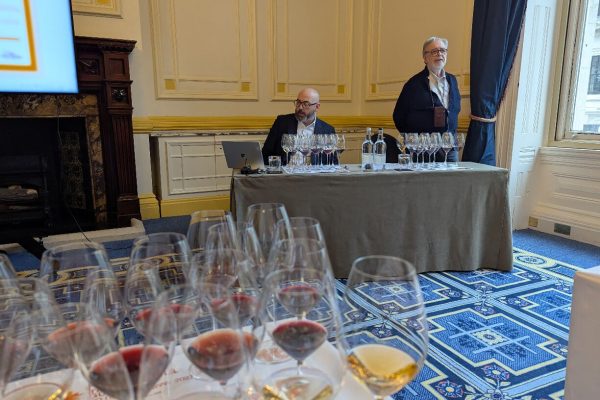
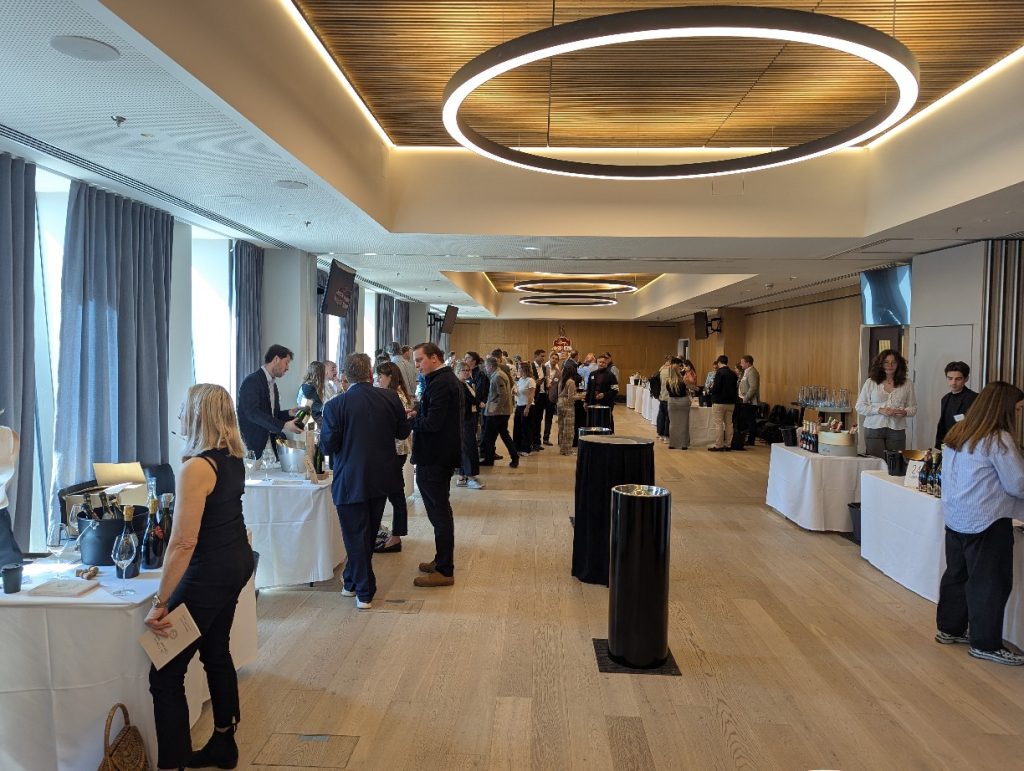
In April 2026, I went to The Definitive Champagne Tasting in London. Run by the Champagne Agents Association, a UK-based trade organisation representing Champagne importers and agents, the event brought together 70 Champagne houses and hundreds of Champagnes. That may sound like a lot, but there are in fact more than 2000 Champagne houses in France.
Having attended last year, I wanted to approach things differently this time. I decided to concentrate on grower Champagnes, meaning producers who both grow their own grapes and make their own wine. I have explained this category in more detail in a separate article.
First, some latest background, courtesy of The Champagne Report from The Drinks Business, which was provided at the event. Like most wine categories, Champagne is experiencing a downturn. Shipments are down 2% year on year, while inflation and taxation mean Champagne is now around 25% more expensive than it was before Covid. Lower demand also means that the excellent 2018 and 2019 vintages, and indeed wines from all vintages, are spending longer ageing in cellars.
The focus is also shifting from what winemakers want to what consumers want. That change is reflected in increased promotional activity, of which this trade tasting forms part, as well as in a large public-facing event planned for Reims in 2027.
From a technical point of view, there is also a continued movement towards organic viticulture. This is particularly challenging in Champagne, which is not a warm region and where vines are vulnerable to climatic variability. In the Champagne region, organic farming can reduce yields by 24%, while sustainable practices can reduce them by 15%. However, yields are already being cut because of excess stock, so a careful balance is needed.
In the UK specifically, volumes are holding up reasonably well, but value has declined. The emphasis has shifted towards brut non-vintage wines, as prestige cuvées have seen the sharpest falls. Around 65% of total Champagne sales in the UK take place through retail, with the remainder in hospitality. Discounted supermarket offers have helped reinforce visibility rather than undermine the Champagne brand. In France, by contrast, the picture is less strong, as consumers have increasingly turned to crémant and Prosecco.
Climate change has also made low- or no-dosage wines more viable, as producers can now rely more on the natural sweetness of riper fruit.
Back to the tasting itself. Here are the grower Champagnes I found most compelling, together with brief notes on their individual nuances. Prices are recommended retail prices.
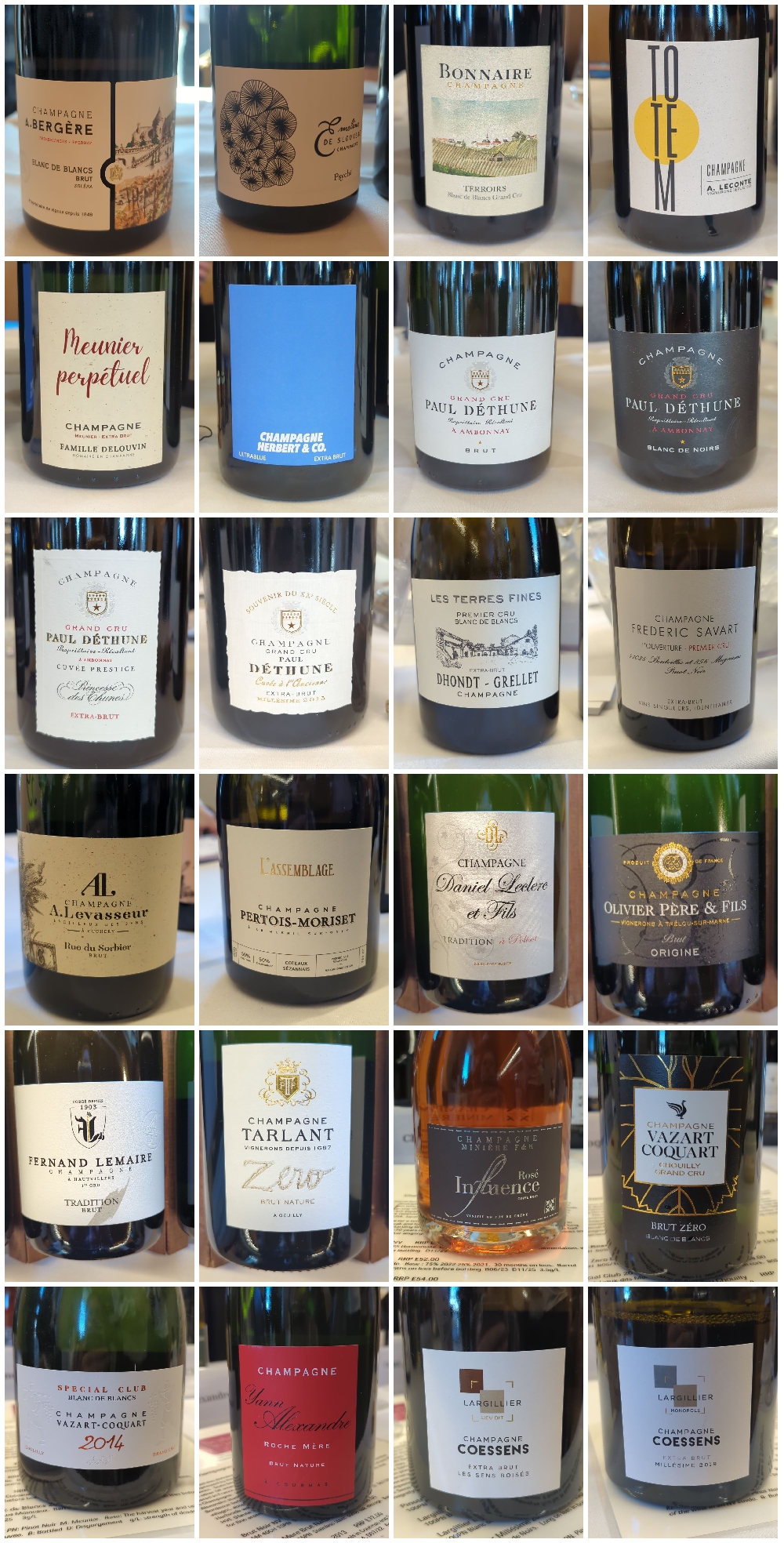
Champagne A. Bergère Blanc de Blancs Brut Soléra NV 12.5% £51
Made from 100% Chardonnay and bottled as brut, this has plenty of brioche character. It is labelled NM rather than RM. Imported by Amathus Drinks.
Emeline De Sloovere Psyche NV 12.5% £50
This low-intervention Champagne is a 50/50 blend of Chardonnay and Meunier. It has a more saline feel, with a clean and distinctive style. Imported by Amathus Drinks.
Bonnaire Terroirs Blanc de Blancs Grand Cru 2021 12% £50
A 100% Chardonnay Champagne aged for six months on lees and finished as extra brut. It feels fresher and creamy, without becoming overly leesy. Imported by Sip Champagnes.
Totem Blanc NV 12% £43
This organic brut is made from 70% Pinot Meunier, 20% Pinot Noir and 10% Chardonnay. It is softer in style, with lower acidity and an easy, rounded feel. Imported by Sip Champagnes.
Delouvin Meunier Perpétul Extra Brut NV £47
Made from 50% Meunier and drawn from perpetual reserves spanning 1992 to 2022, this is a richer Champagne with an excellent aroma. Imported by Sip Champagnes.
Herbert & Co Ultrablue NV 12.5% £65
A very new wine made from 62% Chardonnay and 38% Pinot Noir. It delivers rich autolytic character, a very strong aroma and excellent flavour overall. Imported by Sip Champagnes.
Paul Déthune Brut Grand Cru Champagne NV 12.5% £50
This brut Grand Cru blends 70% Pinot Noir with 30% Chardonnay. It comes from 49 years of perpetual reserve and is made half in oak and half in stainless steel, giving both depth and definition. Imported by Thorman Hunt.
Paul Déthune Grand Cru Blanc de Noirs Extra Brut NV 12.5% £75
A 100% Pinot Noir Champagne with a richer style and three years on lees. The extra brut finish keeps the fruit and depth finely controlled. Imported by Thorman Hunt.
Paul Déthune Extra Brut Cuvée Prestige Grand Cru NV 12.5% £85
Made from equal parts Pinot Noir and Chardonnay, this extra brut has a marked oaky edge that suits the food well. It changes in the glass as you taste it, which makes it especially interesting. Imported by Thorman Hunt.
Paul Déthune Cuvée à l’Ancienne Grand Cru Extra Brut 2015 12.5% £140
A 50/50 blend of Pinot Noir and Chardonnay. It feels fresher and beautifully balanced, and it was one of the standout wines of the tasting. Imported by Thorman Hunt.
Les Terres Fines Premier Cru Blanc de Blancs Extra-Brut NV 12.5% £57
This 100% Chardonnay cuvée comes from a perpetual reserve started in 1987. There is an oaky side to it that makes it particularly gastronomic. Imported by KAL Wine Source UK Ltd.
Frédéric Savart L’Ouverture Premier Cru 12.5% £47
Made entirely from Pinot Noir and finished as extra brut, this has a slightly reductive character with a touch of oak. Imported by KAL Wine Source UK Ltd.
A Levasseur Rue du Sorbier Brut NV 12.5% £47
This organic brut is made from 80% Meunier, 15% Pinot Noir and 5% Chardonnay. It has a deep mid-palate, a long finish and a rich style, with excellent overall quality. Imported by Graft Wine.
Pertois-Moriset L’Assemblage Extra-Brut NV 12.5% £48
A 50/50 blend of Pinot Noir and Chardonnay. It comes across as fresher, less leesy and more acidic, giving it a brisk and focused feel. Imported by Graft Wine.
Daniel Leclerc Brut NV 12% £28
This 100% Pinot Noir Champagne is bottled as brut. It is dry and a little more sour in style, with a firm finish. Imported by Charles Taylor Wines.
Olivier Père & Fils NV £29
Made from 70% Pinot Meunier, 20% Pinot Noir and 10% Chardonnay, this is sweeter and more rounded in style. Imported by Charles Taylor Wines.
Fernand Lemaire Tradition Brut NV 12% £35
This is softer, rounder and sweeter in style, and quite similar to Olivier Père. The brut finish keeps it approachable and broad. Imported by Charles Taylor Wines.
Tarlant Brut Nature Zero NV 12% £49
A blend of 32% Pinot Noir, 32% Chardonnay, 32% Meunier and 4% Petit Meslier, Arbane and Pinot Blanc. With 60 months on lees and zero dosage, it is dry, very intense, fresh and distinctly acidic. Imported by Charles Taylor Wines.
Minière F&R Rosé Champagne NV £53
This rosé is made from 50% Meunier, 29% Chardonnay and 31% Pinot Noir. It has impressive autolytic character for a rosé, along with great colour, extreme aroma and a long, round finish. Imported and marketed in the UK by Scala Wine.
Brut Zero Grand Cru Chouilly Blanc de Blancs NV 12.5% £58
A 100% Chardonnay Champagne with zero dosage (i.e. no added sugar). It combines freshness with brioche notes in a very pure style. Imported and marketed in the UK by Scala Wine.
Vazart-Coquart Special Club Blanc de Blancs Grand Cru 2014 12% £90
Made from 100% Chardonnay, this was aged with cork rather than cap and has plenty of tertiary character. There are intense apple and brioche aromas, followed by a long, rich and balanced finish. Special Club is a group that Champagne growers join to showcase their best wine of the year, always in a specially shaped bottle. Imported and marketed in the UK by Scala Wine.
Roche Mère Brut Nature NV 12% £56
This blend of 45% Meunier, 40% Chardonnay and 15% Pinot Noir spent six years on lees. It seems sweet at first, but with zero dosage that richness must come from ripe fruit. There is plenty of autolytic depth, with a long and full finish. Imported and marketed in the UK by Scala Wine.
Coessens Largillier Les Sens Boisés 2020 12.5% New so no price yet
A 100% Pinot Noir Champagne fermented in barrel. It is oaky and round, with brioche notes and a long, oaky finish that makes it very gastronomic. Imported and marketed in the UK by Scala Wine.
Coessens Largillier Monopole 2019 12.5% New so no price yet
Made entirely from Pinot Noir, this has a Chablis-like feel with smoky notes, good balance and a touch of brioche. It is a very composed wine. Imported and marketed in the UK by Scala Wine.
A few wines carried the NM designation, meaning négociant-manipulant or merchant-producer, rather than the expected RM, which indicates a grower-producer. That was not necessarily contradictory. In some cases, the same producer can operate as both RM and NM under different circumstances, which makes the labelling more complicated.
One useful insight from the tasting was that grower Champagne does not automatically mean very expensive Champagne. In many cases, prices were broadly in line with those of non-grower producers.
I found out that there are a handful of UK importers specialising in grower Champagne, including Sip, Thorman Hunt and especially Scala. Scala in particular seems almost fanatical in its commitment to the category. When I asked why, the answer was simple. It is much more enjoyable dealing with individual growers than with large corporate houses. That spirit perhaps explains part of the appeal. On this occasion, discovering the grower Champagnes was, in truth, more fun than revisiting the big labels.