Wine temperature matters because it changes what you can smell, taste and feel. Cooler wine tastes fresher, sharper and more restrained. Warmer wine smells more expressive, feels fuller and shows more alcohol. Too cold, and aromas are muted, tannins can seem harder, sweetness is less obvious and the wine may taste thin. Too warm, and alcohol can feel hot, acidity can sag, fruit can seem jammy and sparkling wines lose freshness faster.
A wine thermometer is mainly useful because “room temperature” is often misleading. The old idea of serving red wine at room temperature comes from cooler rooms, not modern centrally heated (or cooled) homes. Many reds are better slightly cool rather than warm, while many whites are often served too cold straight from the fridge. As a broad guide, sparkling wines are usually best around 6–10°C, light whites and rosés around 7–10°C, fuller whites around 10–13°C, light reds around 12–15°C and medium to full-bodied reds around 15–18°C. These are not strict rules, but they are good starting points.
The more accurate type is the probe thermometer. This has a metal probe that you dip into the wine, much like a kitchen thermometer. Its main advantage is accuracy, because it measures the wine itself rather than the bottle. It is also inexpensive and useful beyond wine. The downsides are that you need to open the bottle, it can feel a bit fussy at the table, and you must clean it between uses. Hence, while I have one for cooking, I never use it for wine.
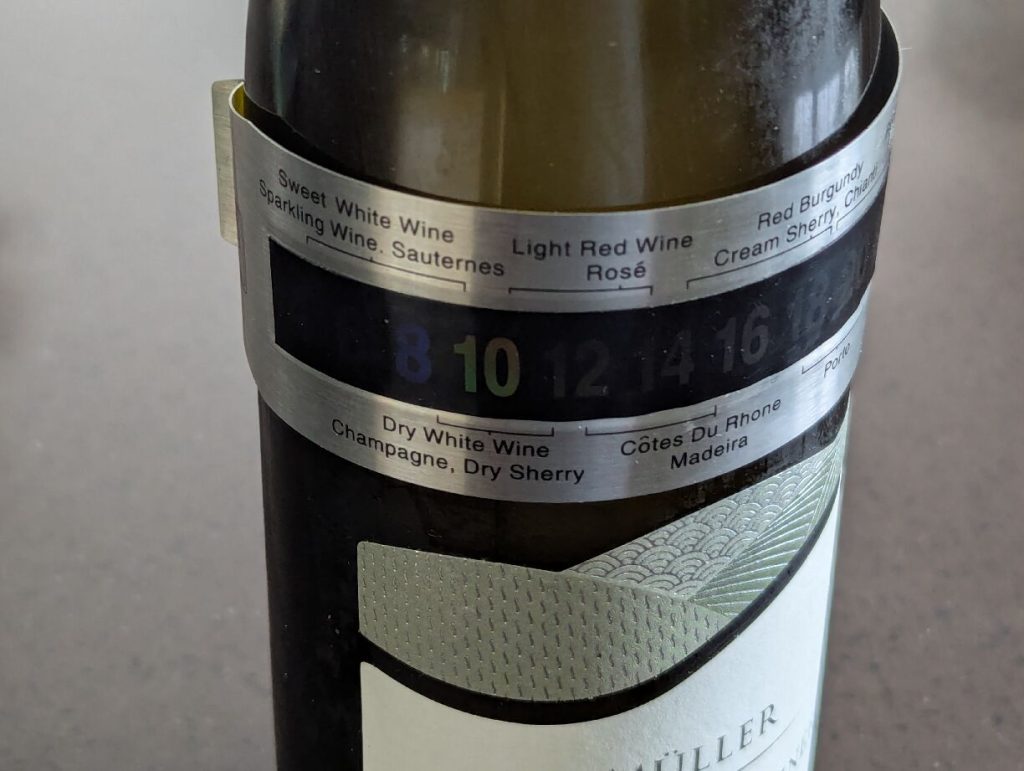
A bottle strap thermometer wraps around the outside of the bottle and gives a reading from the glass. It is cheap, only a few £, waterproof, easy to use and does not require opening the wine. It is useful when chilling a bottle in the fridge or ice bucket. Its limitation is that it estimates the wine temperature through the bottle, so it is slower to respond and less accurate than a probe. It also works less well with unusually shaped bottles or very thick glass. I have several of these and mainly use them when I have a group tasting and need to keep track of the temperature of lots of wines.
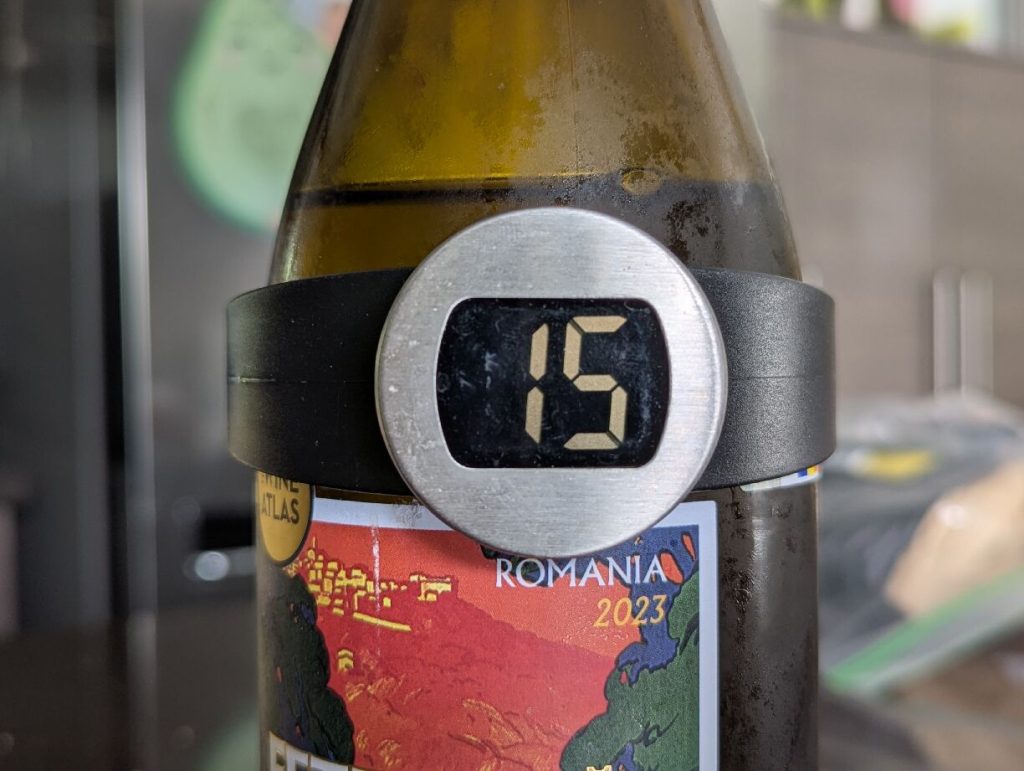
A digital bottle thermometer is a more refined version of the strap style, sometimes clipping or wrapping around the bottle with a digital display. It is easier to read and can look neater. The pros are convenience and looks. The cons are cost, around £12, batteries, lack of waterproofing, and the same basic limitation that it is still measuring the bottle exterior rather than the wine directly. I have one of these and occasionally use it if I have just one wine to monitor.
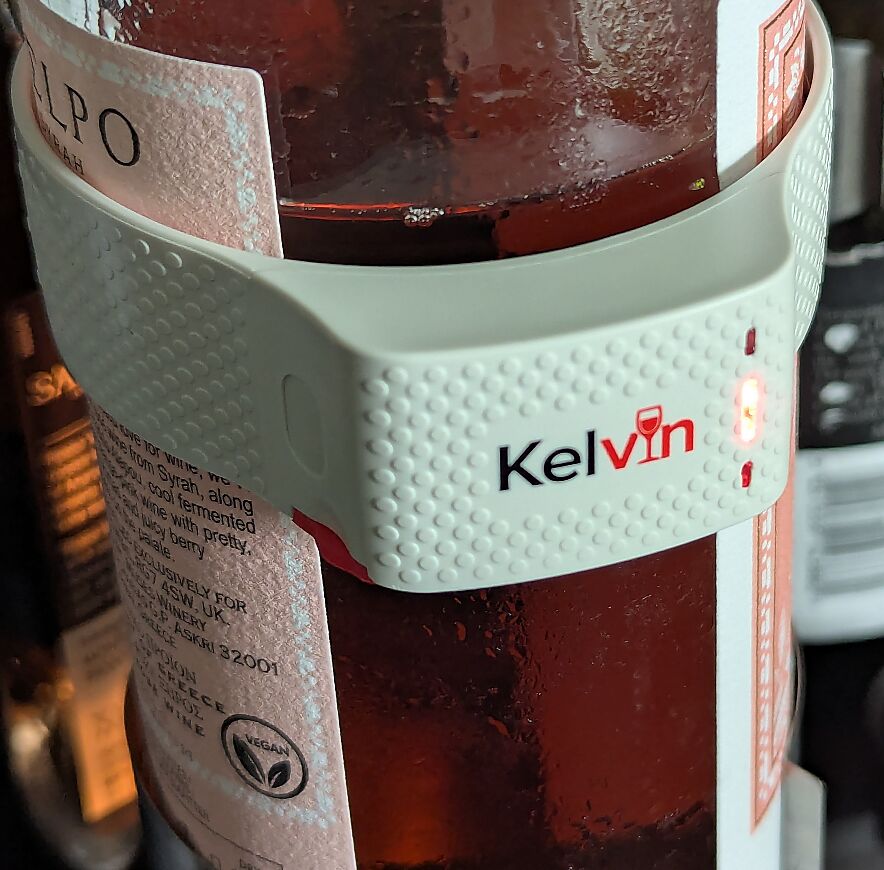
There are also smart wine thermometers and connected bottle monitors. These can track temperature over time and may be useful for collectors, cellars or people who enjoy gadgets. Their benefits are logging, alerts and convenience. Their drawbacks are higher price, app dependency, battery charging and usually more complexity than most drinkers need.
I have one of these, branded Kelvin. It first came out around 2015, cost about £49, but it is no longer manufactured or sold. It works with an app that lets you either find the specific wine in an app database or select the general type of wine to determine its ideal serving temperature range. It then indicates whether the wine is within, above or below that range, both in the app and through flashing LEDs on the strap itself. One particularly useful feature is that it works through a refrigerator door, so it can notify you when the wine has reached the right temperature without needing to open the door and check manually.
For most people, the best choice is a simple strap thermometer for casual bottle checks. A probe is better when you genuinely want to know the wine’s temperature.
In practice, habit matters more than a gadget. Chill whites and sparkling wines then let them warm for about 20 mins, serve reds a little cooler than a warm room, with 20 mins refrigeration and letting the wine warm gradually in the glass if it seems muted. In most cases, your intuition and common sense are as good as a thermometer.