In October 2026, I attended the London launch of The Essential Guide to Italian Wine 2027, organised by Daniele Cernilli, better known as DoctorWine. He is one of Italy’s leading wine experts, an award-winning journalist, author and educator. He is also the editor of The Essential Guide to Italian Wine, working alongside a team of experts to select and review some of Italy’s finest wines.
This was my fourth consecutive year attending the event and it never disappoints. Over the years, I have tasted some outstanding wines, including two vintages of the iconic Tignanello at a previous tasting. The masterclasses are always particularly interesting and I invariably come away having learnt something new about Italian wines, grape varieties or winemaking.
The event marked the launch of the 2027 edition, the thirteenth in the series. This year’s guide features 1,376 wineries and reviews 3,476 wines, assessing individual wines for quality using a 100-point scoring system. It is an impressive undertaking and provides a valuable reference for anyone interested in exploring the diversity of Italian wine.
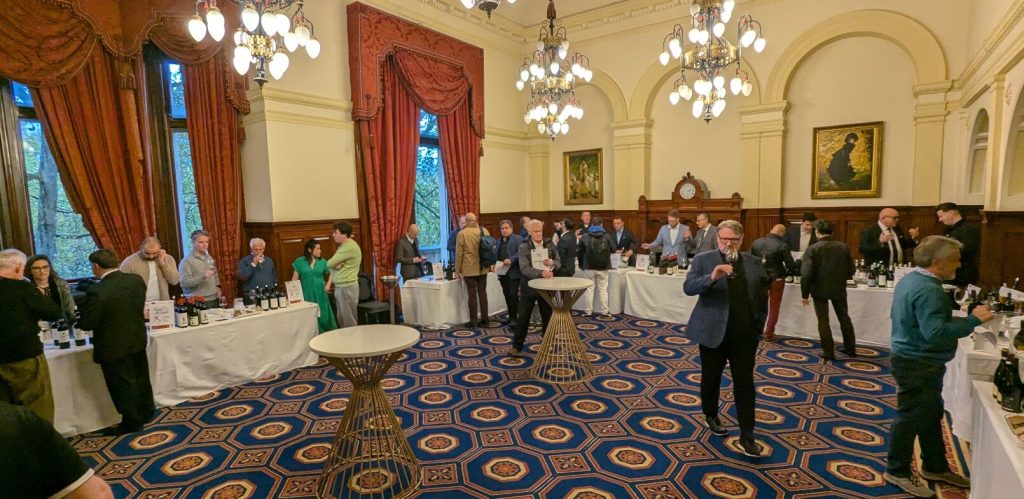
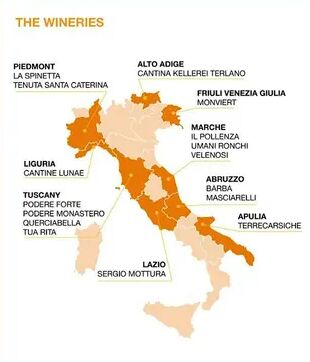
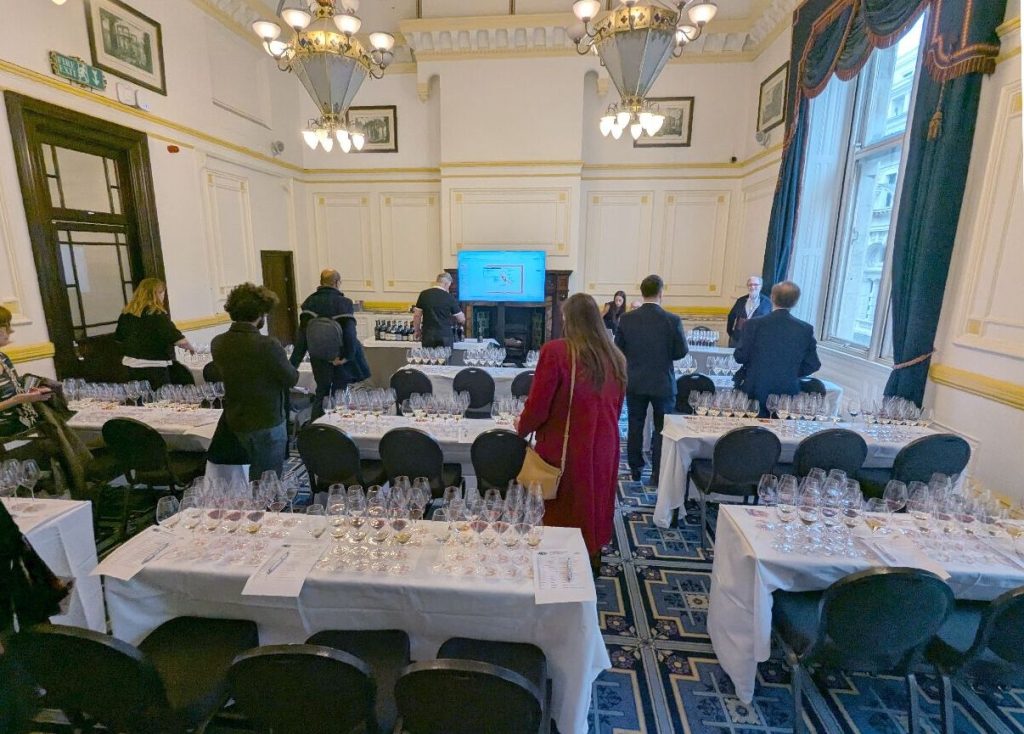
Held at London’s Royal Horseguards Hotel, the event brought together a number of high-profile Italian wineries. Producers included Tua Rita, Monviert, Podere Forte, Terrecarsiche, Tenuta Santa Caterina, Barba, Umani Ronchi, Sergio Mottura and Masciarelli.
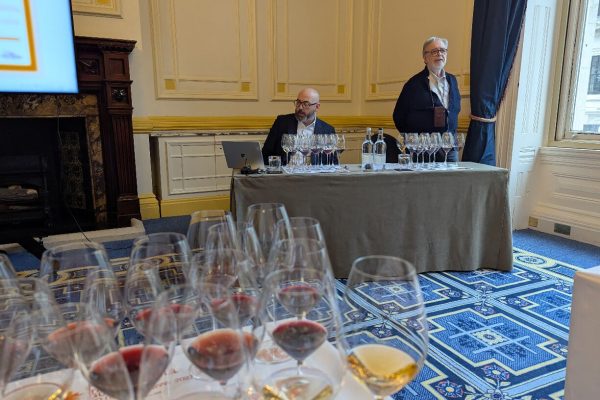
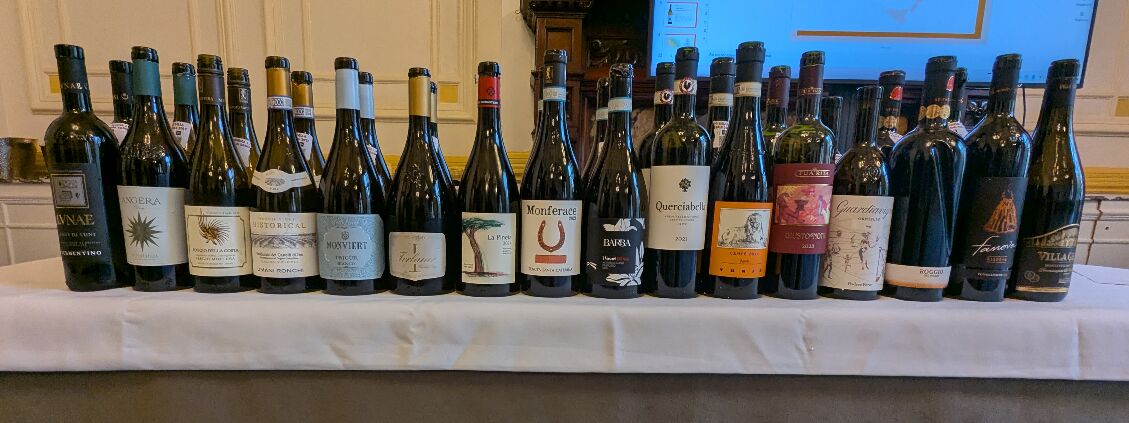
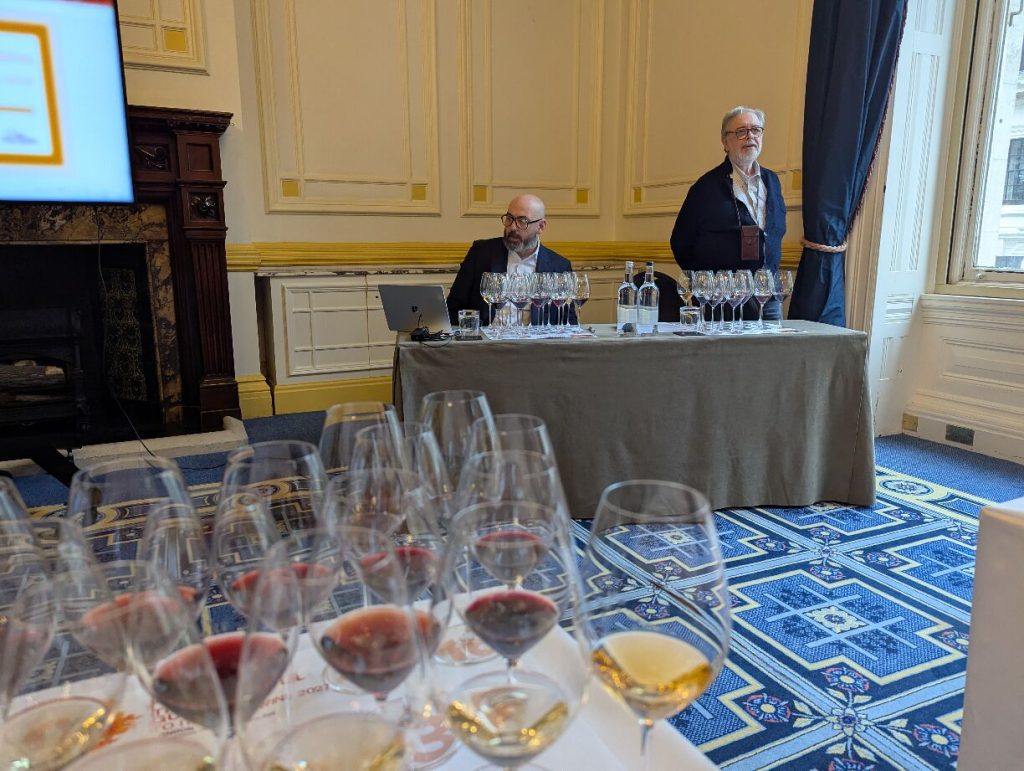
The event combined a walk-around tasting with a masterclass. As it happened, and strangely, all but one of the wines I had independently selected during my initial walk-around tasting also appeared in the masterclass. For that reason, I have concentrated here on the masterclass which featured 16 wines. The masterclass was led by Daniele Cernilli, assisted by Luigi Buonanno, Head of Sales at Berkmann Wine Cellars in the UK. The line-up consisted of six whites followed by ten reds:
Colli di Luni Vermentino Etichetta Nera 2025 – Cantine Lunae Bosoni, Liguria
We started in Liguria with a Vermentino from Cantine Lunae Bosoni. This had attractive peach notes alongside a slightly saline character that added freshness and interest. Vermentino is becoming increasingly popular in the UK.
Colli Maceratesi Ribona Angera 2025 – Il Pollenza, Marche
Next came a wine made from Ribona, a relatively unfamiliar grape variety from the Marche region. It offered musky, apricot aromas, followed by fresh acidity and a surprisingly long finish.
Civitella d’Agliano Grechetto Poggio della Costa 2024 – Sergio Mottura, Lazio
Sergio Mottura is regarded as one of the leading producers of Grechetto. There were exotic fruit, peach and citrus notes, together with a slightly tannic character. Daniele explained how the grape seeds can contribute to this texture, an interesting reminder that tannins are not exclusive to red wines.
Verdicchio dei Castelli di Jesi Classico Superiore Vecchie Vigne Historical 2021 – Umani Ronchi, Marche
This was a particularly aromatic Verdicchio, with orange blossom, fennel and almond notes. It had excellent length and complexity, all without oak ageing.
Friuli Colli Orientali Bianco Riserva Tricûr 2020 – Monviert, Friuli Venezia Giulia
One of the most unusual and memorable whites of the tasting, this was named Best White Wine in the 2027 guide. The blend comprises 50% Riesling affected by botrytis, together with 25% Friulano and 25% Ribolla Gialla. It had a rich golden colour, with exotic fruit, saffron and savoury notes. Full-bodied and complex, it also displayed a distinctive saline character and a very long finish.
Alto Adige Grande Cuvée Terlaner I 2023 – Cantina Terlano, Alto Adige
My favourite white wine of the masterclass was this outstanding cuvée from Cantina Terlano. Made predominantly from Pinot Blanc, at 88%, with Chardonnay and Sauvignon Blanc making up the remainder, it was intensely aromatic. Nectarine and pear notes were complemented by oak and savoury complexity, leading to a wonderfully long finish. It is an expensive wine, but for me was the standout white of the tasting.
Toscana Pinot Nero La Pineta 2024 – Podere Monastero, Tuscany
We moved to the reds with a Tuscan Pinot Noir from Podere Monastero, the winery of Alessandro Cellai, the Guide’s award-winning winemaker for 2027. This was wonderfully aromatic, with ripe strawberry notes, gentle tannins and an appealing spicy character. An elegant and expressive wine, and a reminder that Tuscany has plenty to offer beyond Sangiovese.
Grignolino d’Asti Monferace 2021 – Tenuta Santa Caterina, Piedmont
Grignolino is another fascinating indigenous Italian variety. Despite its relatively light colour, with slight browning at the rim, this wine had considerably more tannic structure than its appearance might suggest. Daniele explained that Grignolino berries typically contain four seeds, contributing to the variety’s pronounced tannins. The wine displayed currant and cherry flavours, together with savoury notes and medium to full tannins. The lively acidity balanced the tannic structure beautifully.
Montepulciano d’Abruzzo I Vasari Old Vines 2023 – Barba, Abruzzo
This was an appealing Montepulciano d’Abruzzo, with cherry, plum and chocolate notes. Medium tannins and a long finish made it a well-balanced, enjoyable wine, showcasing the richness of Montepulciano.
Chianti Classico Gran Selezione Greve 2021 – Querciabella, Tuscany
Made from 100% Sangiovese, this was a deeply coloured wine showing cassis, cherries and darker fruit, alongside warming spice. What particularly interested me was the balance between acidity and tannins. The acidity was more pronounced, suggesting that this wine should have good ageing potential. Gran Selezione represents the highest classification within Chianti Classico.
Barolo Campè 2022 – La Spinetta, Piedmont
La Spinetta represents a relatively modern generation of Barolo producers, and its Campè is made from the region’s renowned Nebbiolo grape. The wine offered deep cassis and cherry notes, complemented by spice and medium tannins. An impressive Barolo.
Toscana Rosso Giusto di Notri 2023 – Tua Rita, Tuscany
Tua Rita is one of Tuscany’s highly regarded producers and was named Winery of the Year in the 2027 guide. This Merlot and Cabernet blend was very dark in colour, with rich black fruit, raspberries and a distinctive eucalyptus note. Concentrated, complex and full of flavour, it was an impressive wine. During the walk-around tasting, I had also particularly enjoyed Tua Rita’s varietal Merlot, which was another highlight of the afternoon.
Toscana Guardiavigna 2022 – Podere Forte, Tuscany
Another of the tasting’s stars, Guardiavigna was named Best Red Wine in the 2027 guide, achieving an outstanding score of 99 points. Made from Cabernet Franc, it displayed blueberries, blackberries and eucalyptus, with wonderful richness and complexity. The finish was exceptionally long, while the tannins were surprisingly restrained, sitting in the low to medium range.
Marche Rosso Picceno 2023 – Velenosi, Marche
Returning to the Marche region, this was a full-bodied red with black cherry and spicy notes, supported by medium tannins. A generous, enjoyable wine.
Gioia del Colle Riserva Primitivo Fanova 2022 – Terrecarsiche, Apulia
My favourite red wine of the masterclass came from Apulia in southern Italy. Made from Primitivo, this was full-bodied and packed with rich black fruit and fig flavours. There was plenty of depth and concentration, together with a long, satisfying finish.
Montepulciano d’Abruzzo Riserva Villa Gemma 2020 – Masciarelli, Abruzzo
We finished with Villa Gemma, Masciarelli’s flagship red wine. Bold and concentrated, it offered blackberry, dark cherry, liquorice and cocoa notes, with medium tannins providing structure. A powerful and complex Montepulciano d’Abruzzo and a fitting conclusion to an excellent masterclass.
One of the interesting questions during the masterclass concerned decanting wine. At a previous Italian tasting, I had spoken to an Italian sommelier who commented that Italians rarely decant their wines. It was therefore interesting to hear Daniele express a similar view. He suggested that, with the right shape of wine glass, wine can aerate more effectively in the glass than in a decanter. I imagine this relates partly to the surface area of wine exposed to air relative to its volume. Luigi Buonanno, from Berkmann, offered another perspective, suggesting that decanting is frequently carried out when it is not really necessary, sometimes more for the theatre and presentation than for any meaningful improvement to the wine.

The Essential Guide to Italian Wine 2027 is available through the DoctorWine website. I have previously reviewed the 2026 edition and continue to find it an interesting resource for discovering Italian producers and wines.
One of the developments accompanying the latest edition is the free DoctorWine app, which allows users to search for wines and wineries, making the guide much more convenient to consult. An interesting inclusion is an AI-powered avatar of DoctorWine himself, designed to answer questions about Italian wine. Naturally, I had to try it. The app itself works in English, but unfortunately, despite selecting English in the AI language settings, I couldn’t get the DoctorWine avatar to respond in English. Hopefully, this is something that will be improved, as the concept is appealing and could make the guide even more useful.
After four consecutive years of attending The Essential Guide to Italian Wine tasting in London, I continue to regard it as one of the highlights of the Italian wine tasting calendar. What makes it particularly enjoyable is the combination of exceptional wines, lesser-known grape varieties and the opportunity to learn directly from Daniele Cernilli.