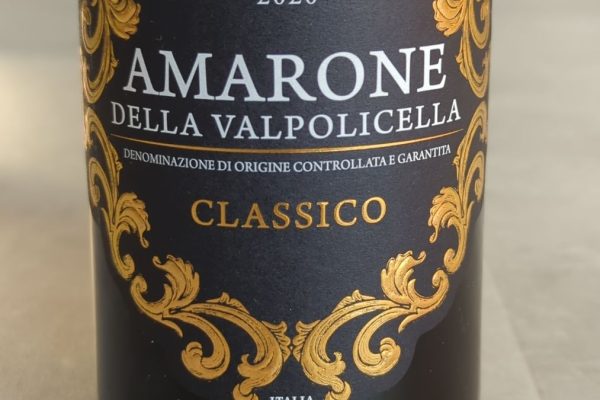
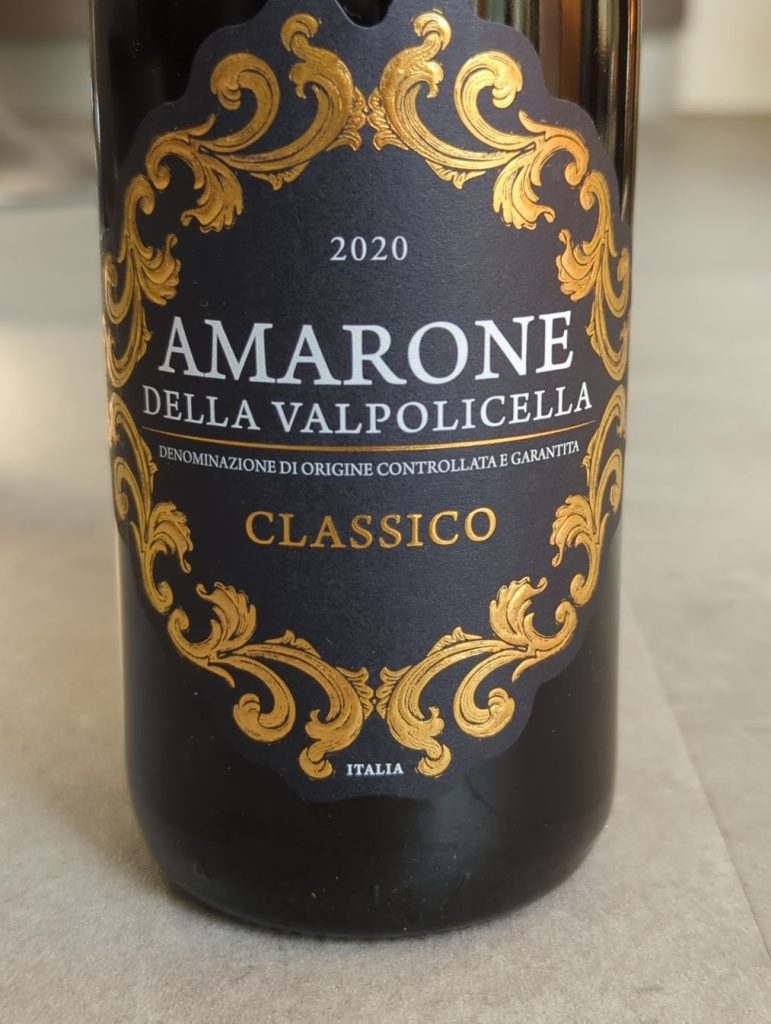
I came across this 2020 vintage Amarone at a Lidl press tasting, where I thought it was the best wine on show, clearly better than the previous 2019 vintage and easily the best supermarket Amarone I have come across so far. Since then, I had been keeping an eye out for it to appear in store, as it only seemed to be the earlier 2019 vintage that was actually on the shelves.
I finally managed to find a bottle in a different store from the one I usually visit and it is every bit as excellent as I remembered. At £17.49, it is relatively expensive by Lidl standards, but inexpensive for Amarone, and even for supermarket Amarone, which tends to sit more in the £20 to £30 range. Another point worth mentioning is that it comes from the Classico region, which makes it feel even better value for money.
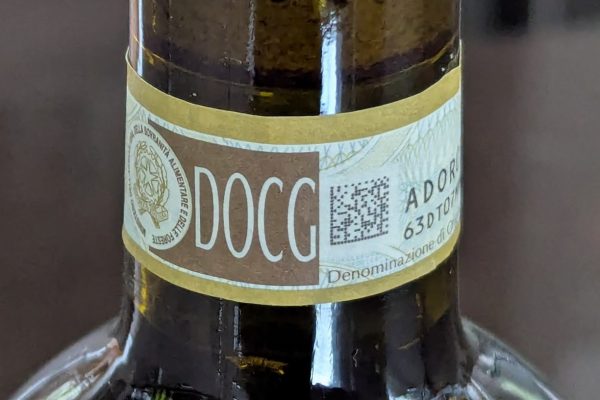
As with some, though not all, Lidl wines, the actual producer is not named. The back label says it is bottled by C.D.B. S.P.A. A bit of digging shows that Gruppo Italiano Vini, G.I.V., owns C.D.B. S.P.A., as well as Bolla, Lamberti and Santi, so it is likely, though not certain, that this bottle comes from one of them. The anonymity is to avoid cannibalising their own branded market and to protect reputation.
It is a Corvina blend, with 15.5% ABV. The label says it must be decanted for an hour, but it is still excellent if you simply let it breathe in the glass for half an hour, or in the partially emptied bottle. In fact, I was once told by an Italian winemaker that most, though not all, Italians do not decant wine, they tend to let it open up in the bottle or the glass.
Visually, it is very slightly browning. On the aroma front, think dried cherry, fig, raisin and sweet spice. In the mouth, it brings concentrated dried fruit, high alcohol, intense cherry and a slightly savoury edge. Sweetness-wise, I measured it and it sits right on the border between dry and off-dry. It is made using the appassimento method, where the grapes are dried for months to concentrate sugars and flavours. That can, though does not always, make the wine sweeter, it really depends on the winemaking. Here, it lands very much at the right ‘sweet’ spot for my personal taste. The body is medium to full, with tannins at a low to medium level.
This is one of those wines that really rewards a swirl in the glass and a few quiet minutes, after which the aroma becomes seriously impressive. I also tried this wine with beef and its slight savoury side worked beautifully, in fact even better than a great Cabernet I was drinking at the same time.
Having tasted lots of examples of very tannic at Amarone trade tastings, this of the type that is very ready to drink. The tannins are not at all alarming in the way some higher-end Amarone can be when you are expected to keep and age. It is probably worth double the £17.49 price, perhaps more. In fact, I have already gone back for more as this strikes me as one of those wines that is likely to keep well in the relative short term and may well never be this at this quality-value again.
Update: Interesting insights into the 2020 vintage “Complex but identitarian”.