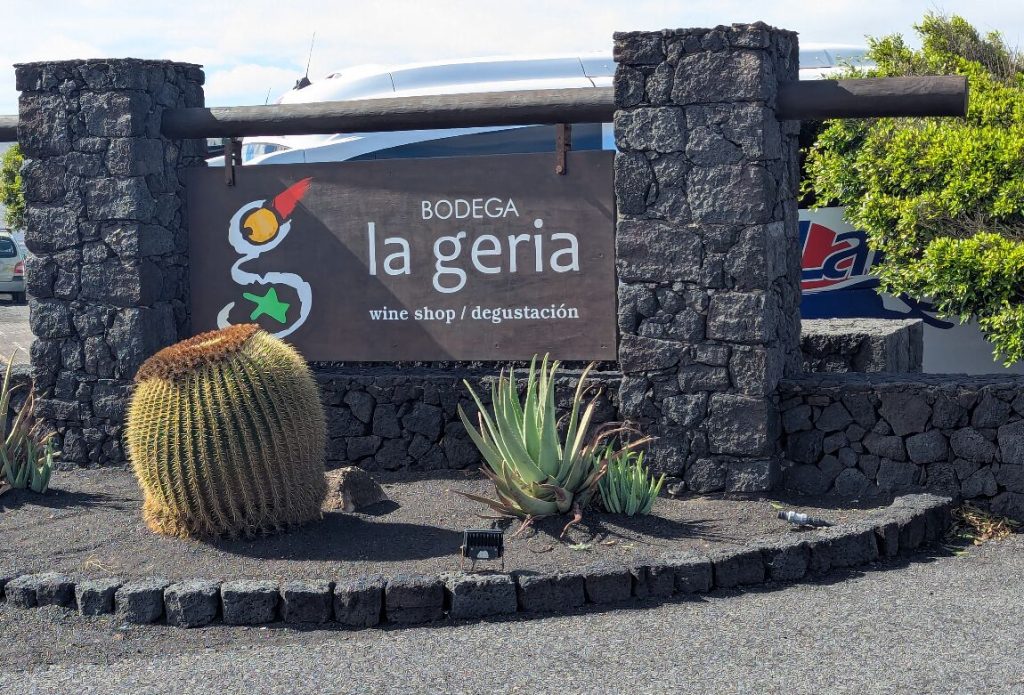
I recently travelled around the Canary Islands on holiday, rather than on a wine-tasting expedition. However, while on Lanzarote, I couldn’t resist visiting two of the island’s wineries, Bodegas Rubicón and Bodegas La Geria whose tasting rooms are located opposite each other.
Lanzarote has a fascinating volcanic history. Between 1730 and 1736, enormous eruptions buried much of the island’s agricultural land beneath thick layers of ash and lava. What might have been an agricultural disaster eventually gave rise to one of the most extraordinary methods of growing grapes anywhere in the world.
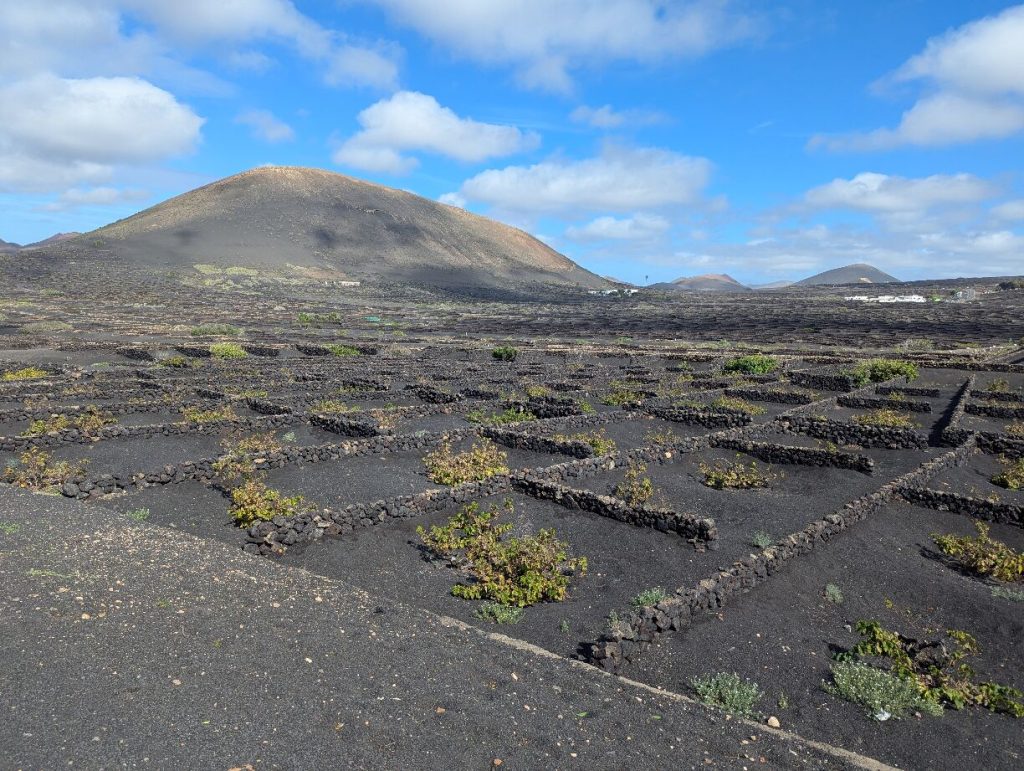
Lanzarote is incredibly dry, often windy and covered in black volcanic ash, hardly ideal conditions for growing vines. Yet local farmers have developed an ingenious way of making it work, planting vines in individual craters dug into the volcanic landscape.
These funnel-shaped holes, known as hoyos, are dug through the volcanic ash until they reach the fertile soil beneath. Some are more than two metres deep. Each hole contains between one and three vines, sheltered by a low, usually semicircular wall built from volcanic stones. Known as zocos, these walls protect the vines from the island’s relentless, drying winds.
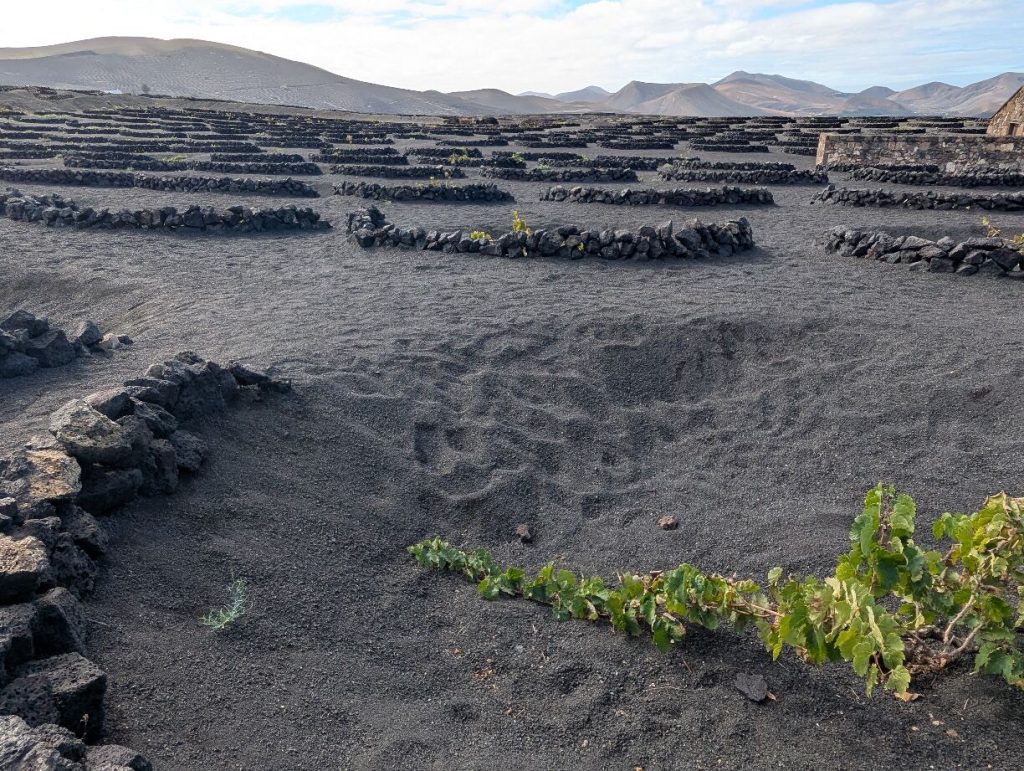
But the really clever bit is the volcanic ash itself, known locally as picón. Its porous structure captures and retains moisture from dew and the occasional rainfall, while also reducing evaporation and keeping the soil beneath damp for longer. It’s an effective system, allowing vines to flourish with little or no irrigation, despite Lanzarote receiving less than 150 mm of rain a year. The downside is that growing grapes this way is incredibly labour-intensive. Those deep holes and protective stone walls make machinery difficult to use, and yields are relatively low. However, the resulting grapes can be of excellent quality.
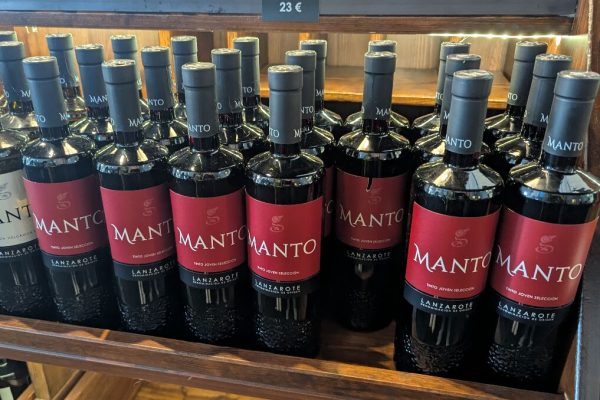
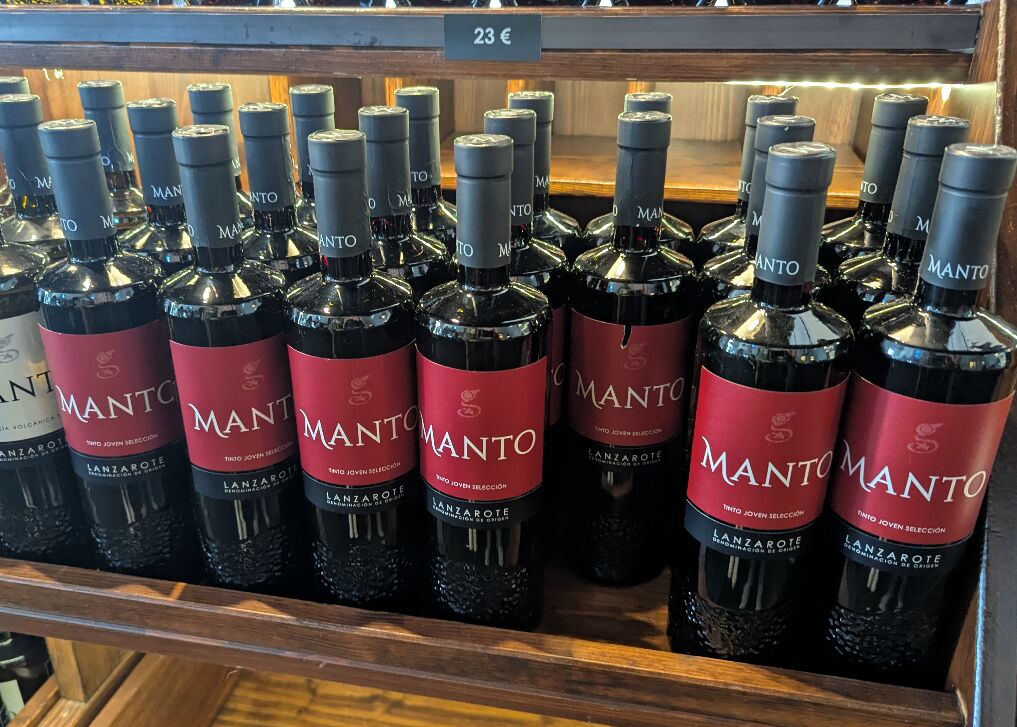
I sampled a few wines during my visits, but the one that really caught my attention was La Geria’s Manto Tinto Joven Selection.
The 2023 Manto Tinto is a blend of Listán Negro, Syrah, Tintilla and Merlot, with an alcohol content of 13%. The word Joven means young, indicating a wine made to preserve its freshness and lively fruit character.
In the glass, it’s a lovely cherry-red colour with violet highlights. There are inviting aromas of ripe blackberries, cherries and plums, accompanied by subtle hints of spice, a touch of toast and an underlying mineral character. It’s medium to full-bodied, with a beautifully smooth, rounded texture. The tannins are gentle, while refreshing acidity keeps everything nicely balanced. The finish is fruity and spicy, lingering pleasantly after each sip.
At €23 a bottle direct from the winery, it’s certainly worth trying a glass, or even a bottle, if you find yourself on Lanzarote. For me, it was an unexpected and thoroughly enjoyable discovery on a holiday that wasn’t supposed to be about wine!