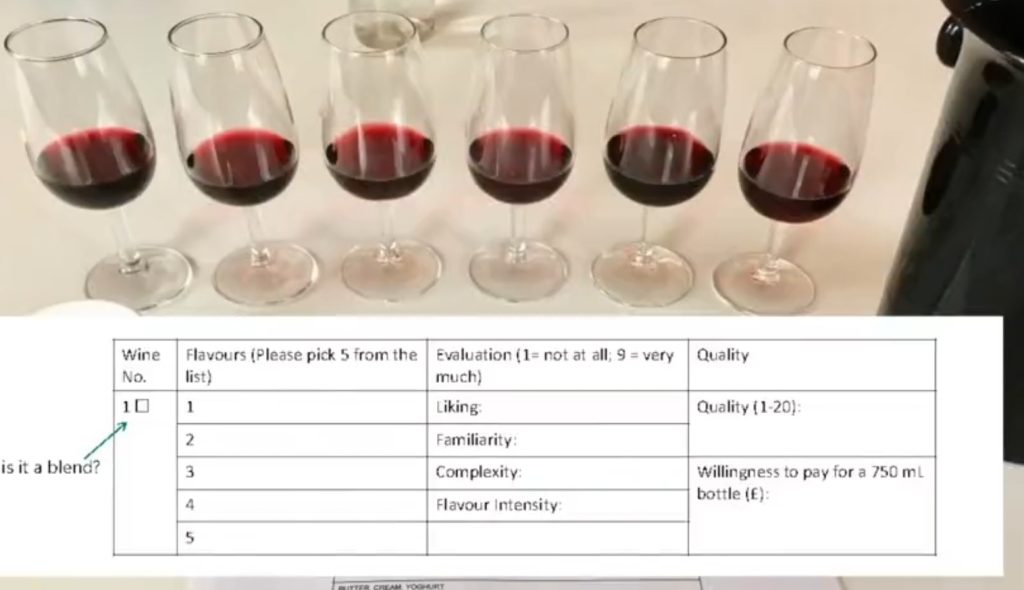
I have written previously about the idea of complexity in wine, but it is also important to look at the research in order to understand it more fully. A particularly interesting TEDx presentation, The Art and Science of Wine Tasting by Qian Janice Wang, explores the question of what wine complexity really is or isn’t.
Her discussion suggests that chemical complexity does not necessarily correspond to perceived wine complexity. In other words, a wine with a more complicated chemical composition is not automatically experienced as more complex by the person tasting it.
The presentation also highlights that complexity can involve the way a wine changes over the course of tasting. A wine that develops and reveals different characteristics on the palate over time may be perceived as more complex than one that remains static.
Another important point is that complexity appears to be something that experts can detect more readily than novices. Experienced tasters are often better able to recognise subtle shifts, layers, and interactions in flavour and aroma, whereas less experienced drinkers may not perceive these features in the same way.
On experts vs novices, Sunny Hodge’s The Cynic’s Guide to Wine, also based on research papers, also suggests that complexity depends on how wine is perceived, not just how it is grown. Flavour is a layered experience involving aroma, texture, structure and interpretation. He explains how a complex wine is therefore one that unfolds in several dimensions at once. It may show multiple aromatic notes, shifts in texture and a sense of development across the taste. Complexity is not simply intensity. A wine can be powerful without being complex, whereas a truly complex wine offers nuance, change and interplay between its sensory elements and over time.