Italian Wine Has a Trust Problem and the Official Checker is Not Helping

Posted by

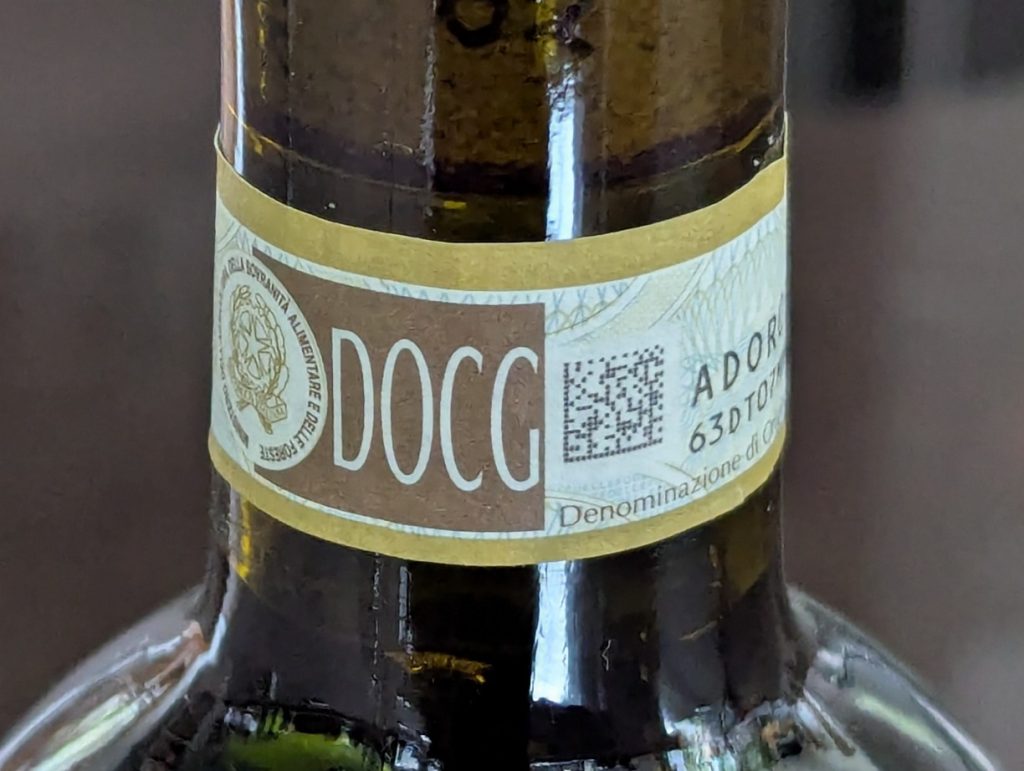
Italian wine has built one of the most serious anti-counterfeit systems in Europe, but it still has a glaring weakness: the last step, where the consumer is supposed to verify the bottle, is not good enough. The official Trust Your Wine app was launched by IPZS in 2017 as the state-backed way to check DOCG and DOC seals by scanning the datamatrix and querying the official system, and it remains available today in the Google Play and Apple app stores. It promises bottle-level authenticity, provenance and traceability.

That promise matters because the underlying problem is real. In March 2026, the UK Food Standards Agency said its National Food Crime Unit seized more than 67,000 bottles of counterfeit wine and prosecco, worth an estimated £500,000, from warehouses in North London and Essex. Consumers really do need better ways to know whether the bottle in front of them is what it claims to be.

I have tried Trust Your Wine on multiple bottles and it never works. It always gives a timeout. Even the linked information page inside the app throws an error 500. An anti-counterfeit system can be beautifully designed on paper, and it can be full of talk about digital passports, secure seals and traceability, but if the public checker fails at the exact moment a consumer tries to use it, the system stops feeling modern and starts feeling redundant.

There is also another reason to doubt that Trust Your Wine has become a meaningful public tool. The visible uptake looks tiny. For example, the public Android downloads suggest very limited use for an app that has been available since 2017 and is meant to support a national wine-authenticity system. Google Play still shows it in the broad “5,000+ downloads” band.

The case for scanning barcodes has only become stronger since the EU’s newer wine labelling rules came into force on 8 December 2023, because the market is already getting consumers used to QR-based access to ingredients and nutritional information. Wine drinkers are learning to expect digital information on demand. If the authenticity layer is clumsier than the labelling layer, that is a design failure.

As an aside, the DOCG and DOC checking should not be used as a magic guarantee that a wine is good. Even defenders of the Italian system would say these classifications are about origin, rules and certification, not a promise that every bottle will thrill you. But they are supposed to guarantee that the wine is what it says it is.

In an era of food fraud, counterfeit alcohol and international confusion over provenance, authenticity is not bureaucracy. It is part of the product. The Italian state seems to understand this. The problem is that the consumer-facing service has not kept up with the seriousness of the mission.
Follow

Did You Know?

For Crémant, grapes must be harvested by hand and the wines must undergo at least nine months’ ageing before release. More

In 2024, the UK was the second-largest export market for Champagne globally, after the United States. More

Local UK bottling of wine represents about 40% of imported wine. More

Around 1% of people, typically severe asthmatics, have a sulphite sensitivity. More

A large 80% of Australian wine arrives in the UK in bulk. More

Only about 0.02% of Australia’s landmass is dedicated to vineyards. More

In 2024, New Zealand produced only 1% of the World’s wine. More

In 2024, the US imported 37% of World production of Pinot Grigio and the UK was is in second place at 27%. More

In 2024, the UK was South Africa’s largest export market, with 40% of total exports. More

In 2024, the United Kingdom imported 22.3 million bottles of Champagne, a decline of 12.7% compared to the previous year. More

Larger Champagne producers source grapes from as many as 80 different vineyards throughout Champagne. More

Champagne houses and growers collectively produce around 300 million bottles annually. More

In 2025, the Champagne region was home to about 2,124 Champagne houses and approximately 19,000 growers. More

Provence is one of the leaders in the conversion to organic viticulture, with 61% of vineyards certified. More

8% of the South Africa’s grape production is Fairtrade-certified. More

Up to 80% of wine aroma compounds come from grape skins. More

Glycerol is the third-largest component of most dry wines after water and alcohol which is why they so often feel ‘smooth’ or ‘silky’ in the mouth. More

Humans are more than 400 times more sensitive to bitter than sweet. More

Humans can detect the earthy molecule geosmin at about 100 parts per trillion and camels are so sensitive to it they can locate damp ground from roughly 50 miles away. More

During the phylloxera crisis of the nineteenth century, 90% of Europe’s vineyards were destroyed. More

In 2025, for La Vieille Ferme, also known as “The Chicken Wine”, sales surged by 49.4% to £110.8 million. More

In 2025, in the UK, Yellow Tail held the top position with sales, marking a 9.8% increase over the previous year. More

In 2024, the UK was the second-largest wine importer in volume and value. More

In 2024, the UK was the fifth-largest wine-consuming country globally. More

In 2025, global wine consumption continued its downward trend, estimated at 214.2 million hectolitres, the lowest since 1961. More

In 2025, online alcohol sales had a 20% increase in value over five years. More

In 2025, the number of UK vineyards rose to 1,104 and wineries to 238, with land under vine expanding to 4,841 hectares, a 510% increase since 2005. More

Moët Hennessy alone commands nearly 46.66% of the Champagne market, with the top three producers together holding about 61%, and the top five controlling over 72%. More

In 2024, the Champagne market was worth roughly €3.92 billion. More

In the marketing year 2023/24, white wine accounted for roughly 55% of Spain’s output, whereas red and rosé together made up about 45%. More

In the UK, 92% of wine is consumed within 48hrs of purchase. More

The majority of wines, 95%, use commercial rather than wild yeast. More

Between 0.5 and 10 litres of water, per litre of wine, are needed for cleaning during winemaking. More

Machine harvesting can achieve up to 100 tons of fruit per day vs 1 ton for a human. More

In Germany, 2025 was the smallest wine vintage since 2010. More

The majority of vineyards, 90% in 2019, are farmed with heavy chemical interventions. Only 6% are organic. More

90% of low and coastal areas in south Europe and California will no longer be able to produce good wine by the end of the century. More

IMAGE WALL