
In February 2026, I attended a new event organised by the Economic and Commercial Office of Spain in London. Taste Spain brought together Spanish food and wine in a lively showcase. The Spanish Deli featured cheeses, cured meats, olive oils, vinegars and other foods, while The Spanish Cellar focused on wine. The event included Spanish wine exporters seeking UK distribution and also gave established UK importers the opportunity to present their Spanish wine portfolios.
As I usually cover Red Rioja and Ribera del Duero at their respective tastings later in the year, I mainly focused on other styles on this occasion. Here are the wines I particularly noted:
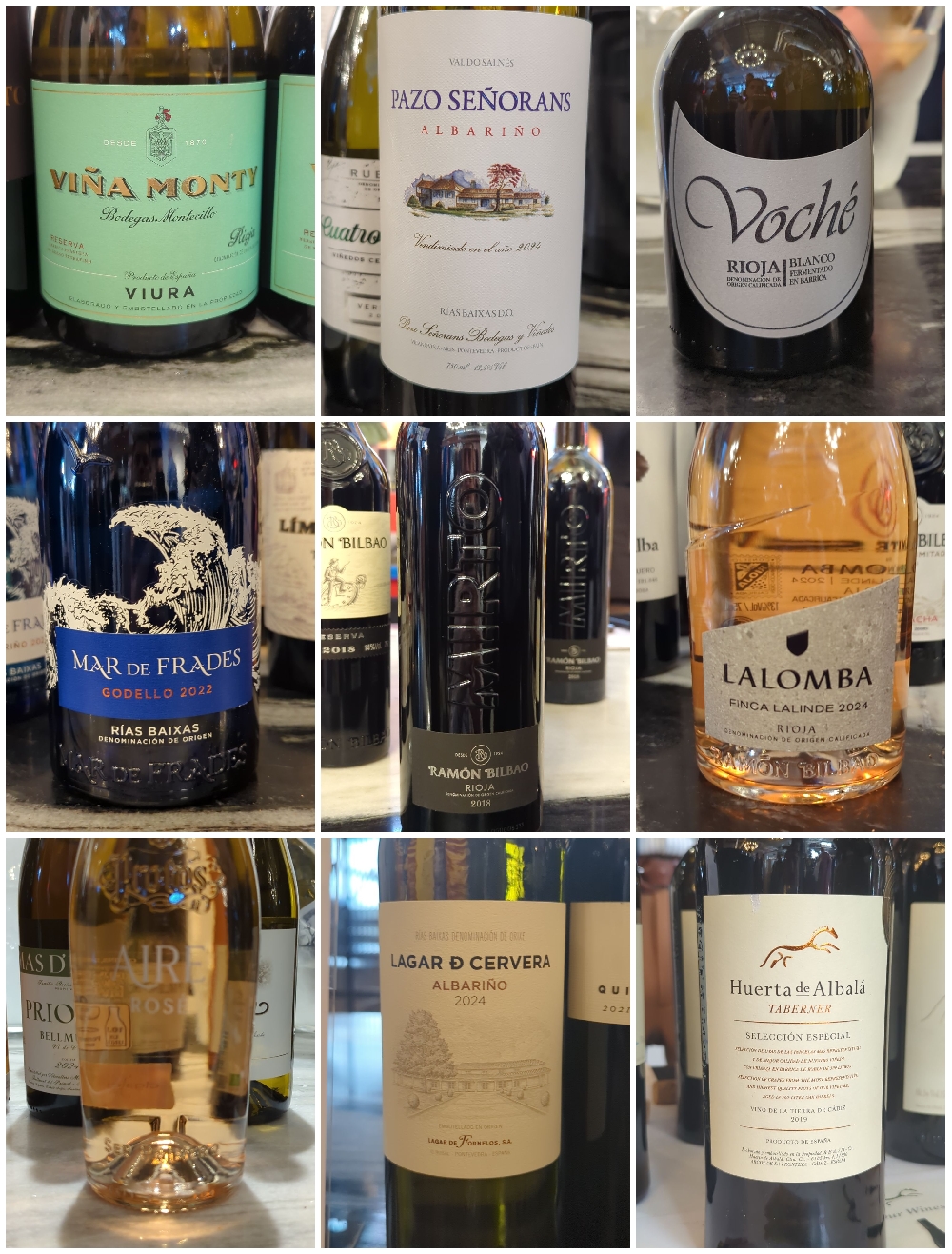
Vina Monty Viura Reserva 2018 13% £40
From Rioja, this Reserva is made from Viura and comes from the third oldest winery in the region. It spent 18 months in semi-new French oak, then at least 20 months ageing in bottle. Vanilla, oak and almonds lead the aroma, followed by peach and pear layered with oak on the flavour. The texture is impressive, with a rich mouthfeel and confident oakiness. Imported by EI Wines and distributed by Ehrmanns Wines, it is available from Waitrose.
Pazo Señorans Albariño 2024 13.5% £21
This is an Albariño from Rías Baixas, Val do Salnés, with real heritage behind it as Pazo Señorans helped establish the Rías Baixas DO. Pale lemon in colour, it has aromas of stone fruit and citrus with floral hints and a saline touch. It tastes of zesty lemon-lime with peach and a salty edge. There is also excellent weight to the mouthfeel, yet keeping it vibrant but not sharp. Distributed in the UK by Alliance Wine.
Voche Blanco NV 12.5% £19
From Rioja’s Bodegas Manzanos, this blend of Viura and Chardonnay is fermented in barrica oak barrels. Citrus, spice and vanilla lift from the glass straight away. The flavours stay bright and fresh, then stretch into a long finish that brings you back to citrus again. Available from Hay Wines.
Mar de Frades Godello 2022 13% £25
From Rías Baixas, this is a Godello rather than the Albariño that Mar de Frades is usually known for. The colour sits in the pale to medium lemon range. Pear, apple, citrus and white flowers shape the aroma, giving it a clean and fragrant feel. On tasting, pear and apple come through first, then a saline note adds definition and snap. Imported by Freixenet Copestick.
Ramón Bilbao Mirto 2018 14% £45
A red Rioja red from Tempranillo, Mirto combines rich fruit with oak on the aroma. Black fruits dominate the flavour, and the finish is smooth, long and nicely composed. It has also picked up 95 points from Decanter. Imported by Freixenet Copestick/Jascots.
Finca Lalinde Lalomba Rosado 2024 13% £23
This Rioja rosé blends Garnacha and Viura for a style that is both aromatic and bright. Flowers and ripe red berries give a generous first impression on the aroma. On tasting, apricot and grapefruit take over, keeping it crisp while still feeling rounded and appetising. Imported by Freixenet Copestick/Jascots.
Protos Aire Rosé Wine 2024 13.5% £17
From Cigales, this rosé brings together Tempranillo, Garnacha tinta, Albillo, Verdejo and Viura. The aroma leans into white fruits and flowers, with a hint of tropical character in the background. It tastes fresh and fruity and there is a light creaminess that softens the edges and lingers gently. Available from C & D Wines.
Lagar de Cervera Albariño 2024 13% £21
An Albariño from Rías Baixas that is highly rated by wine critics. Ripe melon and citrus sit at the heart of the aroma, with a touch of white flowers adding finesse. Ageing on the lees brings extra roundness and complexity, making it softer, rounder and less acidic than a typical Albariño. The finish is long and lingering, staying with you in a very satisfying way. Imported by Hallgarten Wines Ltd, UK.
Huerta de Albalá Taberner Selección Especial 2019 14.5% €52
A red from Vino de la Tierra de Cádiz, this “Special Selection” comes from the vineyard’s highest-altitude plots. It is mainly Syrah at around 80%, blended with Cabernet Sauvignon and Merlot. The aroma is packed with ripe black fruits with balsamic notes and vanilla alongside. Black fruit, wood and spices carry through on the flavour, with balsamic richness adding depth. Full-bodied and intense, it is currently seeking representation.
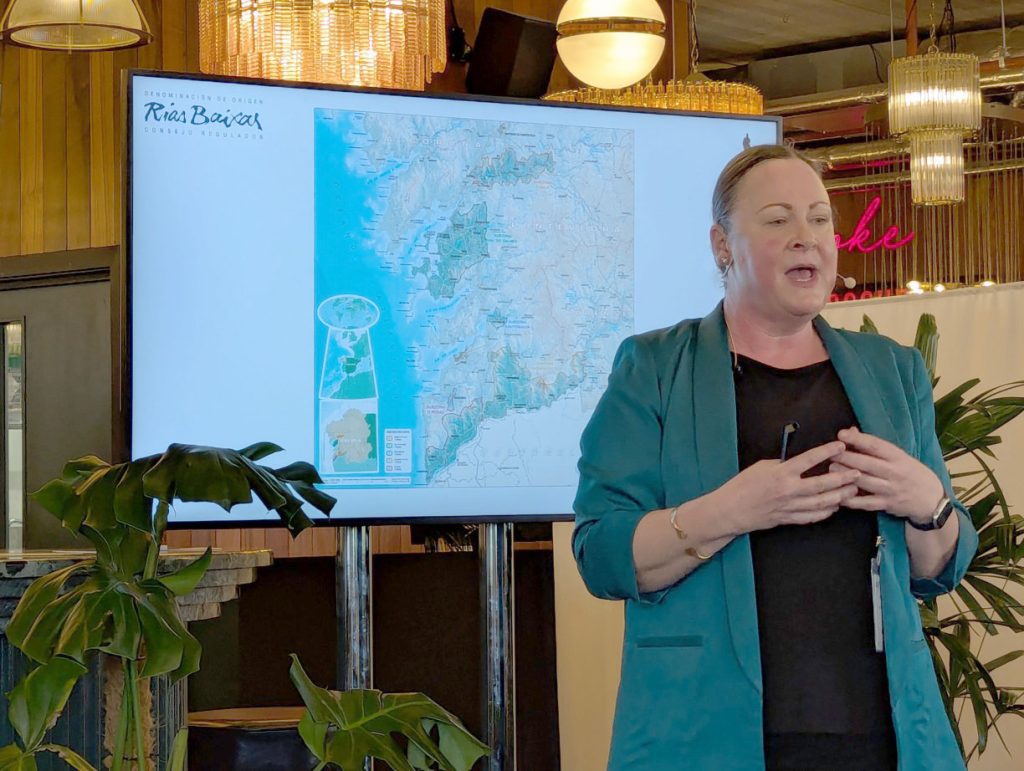
There were also several tutored tastings and I attended a masterclass, ‘Beyond Albariño: The Hidden Faces of Rías Baixas’, presented by Beth Willard. Although Rías Baixas is best known for its vibrant, youthful Albariño, this Atlantic region has far more to offer beneath the surface. In an engaging, expertly led session, Beth guided us through a curated line-up of six wines that challenged assumptions and highlighted the region’s depth and diversity.
Moving beyond the familiar archetype of fresh, early-drinking whites, the selection demonstrated how Rías Baixas can deliver real complexity through lees ageing, enhanced texture, alternative styles and lesser-known native varieties.
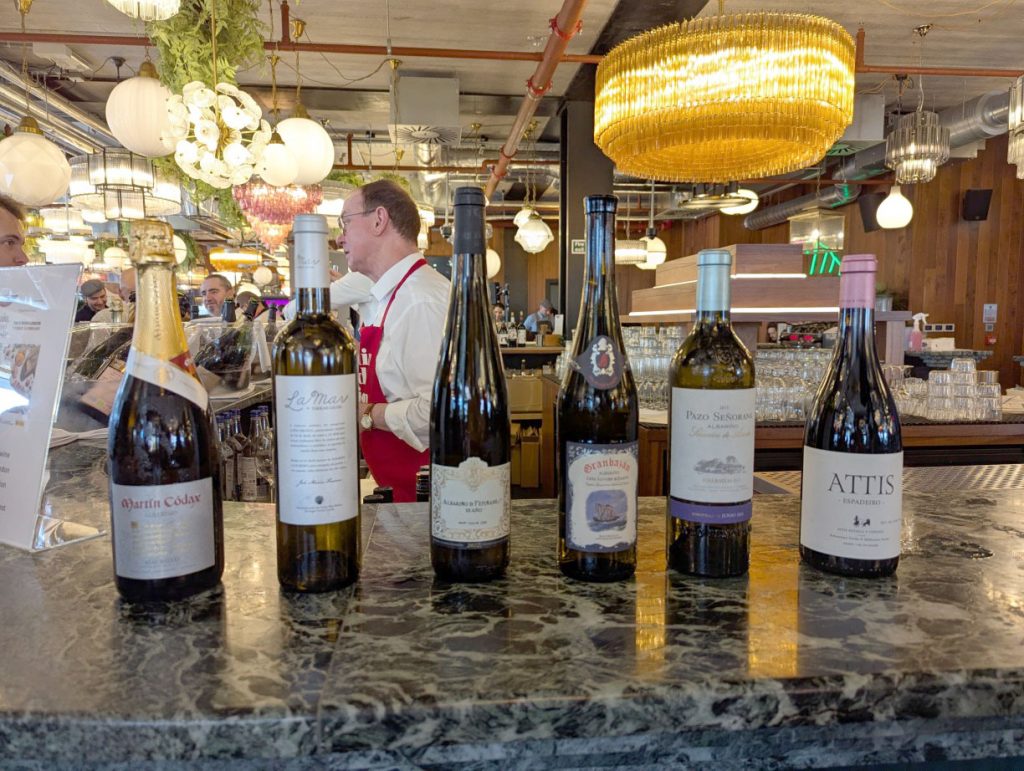
Here are the wines we tried, with my brief notes:
Espumoso NV, Martín Códax 12% £29.50
100% Albariño.
Traditional sparkling method, aged on lees for 38 months.
Unusual to have sparkling Albariño. Still has lime and salinity but not much autolytic leesy character.
Distributor Enotria Wine Cellars.
La Mar 2022, Terras Gauda 12.5% £30.30
97% Caíño Blanco, 3% Albariño and Loureiro.
Aged on lees for around 2 months plus 12 months in bottle.
Unusual majority grape variety. More intensity and roundness on the floral, camomile flavour. Dried herbs finish.
Distributor Les Caves de Pyrene.
III Año Albariño de Fefiñanes 2022, Fefiñanes 13% £45.00
100% Albariño.
Aged on lees for 6 to 7 months followed by a further 2 years of resting in tank.
The first of three aged Albariño. Richer, more intense and concentrated. Honeysuckle, honey notes.
Distributor Winetraders.
Granbazán Don Álvaro de Bazán 2021, Agro de Bazán 13% £45.00
100% Albariño.
Aged on lees for 36 months.
Richer in colour and even more depth with oiliness. Still has saltiness on the finish.
Distributor Boutinot.
Selección de Añada 2015, Pazo Señorans 13% £64.99
100% Albariño.
Aged on lees for 36 months plus 72 months in bottle.
More smoky aroma and taste.
Distributor Boutinot.
Espadeiro 2019, Attis 12% £32.00
100% Espadeiro.
Aged in French oak for 12 months.
A red, Pinot Noir-esque, floral, slightly herbal, slightly oaky, dark forest berries, medium bodied, low to medium tannins.
My favourite of the masterclass.
Distributor Ellis of Richmond.
The masterclass underscored the unexpected diversity of Rías Baixas, revealing a region capable of far more than its signature youthful Albariño.

A mental health sign found outside near King’s Cross, close to the tasting.