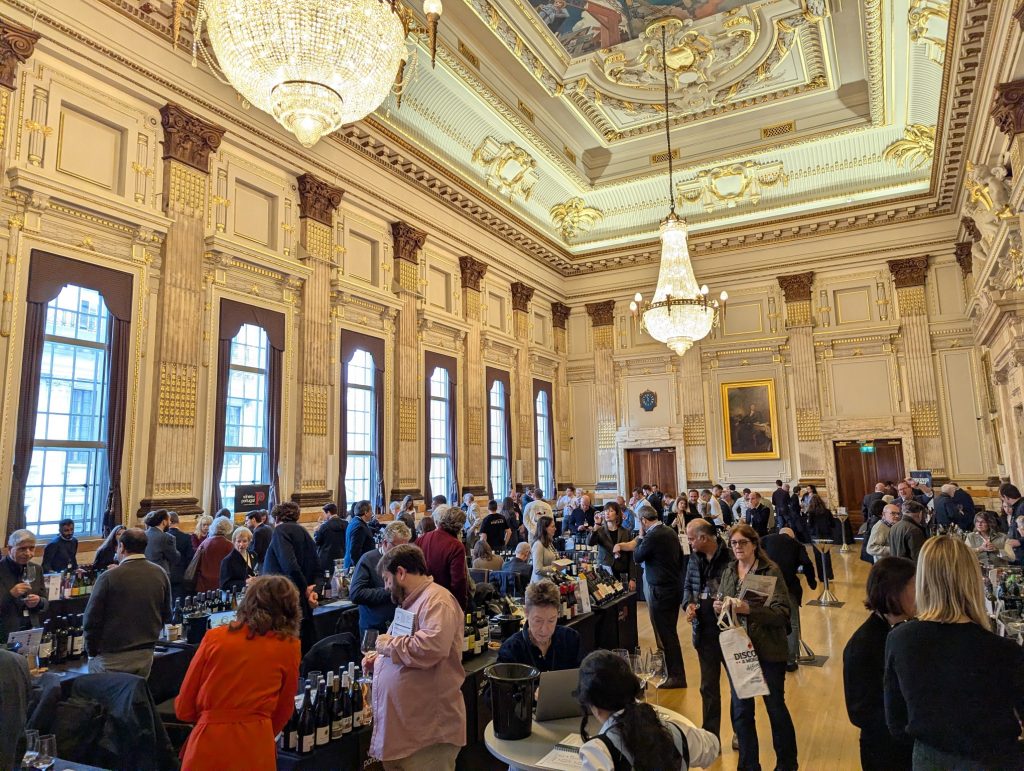
In February 2026 I was invited to Wines of Portugal’s Grand Trade & Press Tasting in London, a wide-ranging snapshot of what’s happening across Portuguese wine right now. There were 59 producers and more than 570 wines, representing 11 different wine regions.
Most wines were poured by the producers themselves, which made it easy to get context and detail alongside the tasting, though there was also a Free Pour Area. That section was organised around three themes: low alcohol wines, single-varietal expressions from some of Portugal’s lesser-known indigenous grapes and Portugal’s Sustainable Wine Growing Certification.
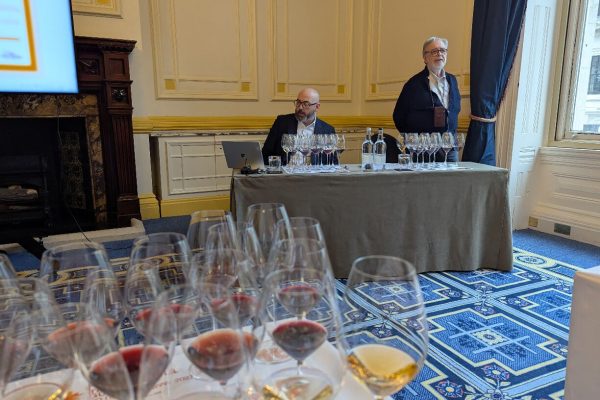
I also attended a masterclass titled ‘Off the Beaten Track’, led by Dirceu Vianna Junior MW, which highlighted styles, regions and varieties that sit outside the obvious classics.
With so many wines on show, I sadly only managed to visit a small fraction of the producers. From those, here are the wines that impressed me most, with an indication of relative price from £ (£10) to ££££ (£40):
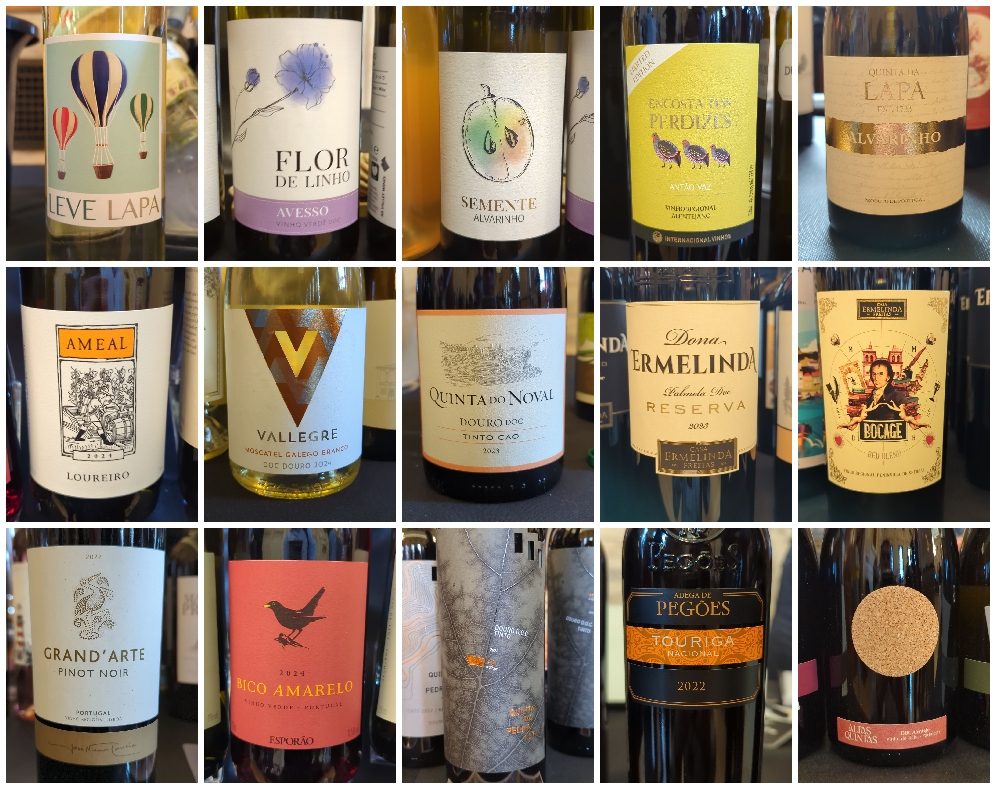
Leve Lapa 2024 10% £
From Jaime Quendera and Jorge Ventura, the winemakers behind Quinta da Lapa in Tejo. I found it on the low alcohol table. It is made from Arinto and Fernão Pires and has a clear lemon aroma and lemony flavour that carries on into a long finish. Imported by Marta Vine Ltd.
Flor de Linho Avesso 13% ££
A Vinho Verde region wine made from Avesso. It is pale lemon in colour, with aromas of white fruit, ripe citrus and stone fruit. The flavour feels rounded and generous, bringing apple and apricot. It seems sweet even though it is dry, because the fruit is so intense. Represented in the UK by Ellis of Richmond and Richard Solomon Fine Wines.
Semente Alvarinho 2025 13% ££
Made from Alvarinho, with citrus, tropical fruits and floral notes. It’s a fuller, more mouthfilling style of Alvarinho, while still keeping the variety’s freshness. Represented in the UK by Ellis of Richmond and Richard Solomon Fine Wines and it is widely available.
Encosta das Perdizes Limited Edition 2023 Antão Vaz 13% £££
An Alentejano white made from Antão Vaz, which I found on the different grapes table. It is extremely aromatic and has a noticeable oaky, Chardonnay-like character, with great length. Medium to full-bodied and currently seeking representation.
Quinta da Lapa Alvarinho 2024 13% ££
From the Tejo region and made from Alvarinho. Pineapple comes through on the aroma, then the taste is fruity with hints of green citrus and tropical fruit. It has a very full mouthfeel with no oak. Imported by Marta Vine Ltd.
Esporão Quinta do Ameal Loureiro 2024 12% £
From Vinho Verde in the Lima Valley, made from Loureiro. It is very aromatic, packed with zesty citrus and delicate floral notes woven through. Six months on lees gives it a fuller feel, with generous citrus and subtle stone fruit, plus a slight minerality. Imported by Hatch Mansfield.
Vallegre Moscatel Galego White 2024 13.5% £
A DOC Douro white from Moscatel Galego Branco grapes that I found on the sustainable table. It has a lovely citrus and floral aroma, fresh acidity and flavours of grapefruit and tropical fruit. Unlike many Moscatel wines it is not sweet. It won a Gold Medal at the Concours Mondial de Bruxelles. Imported by Lanchester Wines.
Quinta do Noval Tinto Cao 2023 13.5% ££££
Made from the Tinto Cão grape and shown on the different grapes table. It has a lighter colour and oaky red-fruit aromas with an oaky red-fruit profile in the mouth, staying medium-bodied rather than heavy. It feels fresh with low to medium tannins, offering an oaked but balanced style. Imported by Gonzalez Byass UK.
Dona Ermelinda Reserva 2023 14.5% ££
From Península de Setúbal, using Castelão, Touriga Nacional, Cabernet Sauvignon and Trincadeira grapes. The aromas are reminiscent of dark fruit, spices and smoke. It is dense and full-flavoured, well structured and the tannins are present but well integrated, leading to an extremely pleasant, long-lasting, persistent finish. Dry and feels more serious than the Vinha Do Fava (sold by Laithwaites) and with less sugar. Sold at Atlântico Bar and at Delicias.
Bocage Red Blend 2023 14% £
Another wine from Casa Ermelinda Freitas, blending Castelão, Aragonez, Alicante Bouschet and Syrah. It again brings dark fruit, spices and smoke on the aroma, then a full black-fruit and oaky taste with lower tannins. This is closer in style to the previously mentioned Vinha Do Fava because it is slightly sweeter. Not represented in the UK yet, and it would make a good mass-market supermarket wine.
Grand`Arte Pinot Noir 2022 13% £
By DFJ Vinhos, made from Pinot Noir. The aroma is of forest fruit, black cherry and dried fruits and those notes follow through into the flavour. The finish is soft, elegant and flavourful, yet the overall impact is very full-on for a Pinot Noir. Seeking distribution.
Esporão Bico Amarelo Red 2024 11% £
A Vinho Verde region red made from Padeiro, Espadeiro and Borraçal. It has a distinctive cherry colour and a good intensity of aromatic red strawberry and blackcurrant. Fresh and very fruity, yet with some tannins. Imported by Hatch Mansfield.
Quinta da Pedra Alta Tinto 2022 13.5% ££
From the Douro, mostly Touriga Franca with a little Tinta Roriz. Deep oak and black fruit come through on the aroma, then the taste is intense with dark fruit and oak. Medium to full tannins give it structure. Imported by Bibendum Wines.
Adega de Pegões Touriga Nacional 2022 14% £
From Península de Setúbal and made from Touriga Nacional. Black fruit notes are complemented by vanilla and oak, and it is the most intense in all dimensions, almost edging towards tawny Port richness. Imported by Hallgarten Novum Wines.
Altas Quintas Talha Red 2022 13% £££
From Alentejo, blending Alicante Bouschet and Aragonez. It is complex, with spicy berry notes and a dry vegetal edge on the aroma, then ripe red fruits on the flavour. The tannins feel silky and there is plenty of freshness and balance, helped by the high-altitude vineyard, alongside balanced acidity and oak. Indeed, this and all their wines were great. Seeking UK representation.
These wines are imported into the UK via a range of different importers and may appear either in retail or on-trade (hospitality). The most reliable way to track them down, at any one time, is through web search.
In writing this up, I was struck by just how inexpensive many of these wines are for the quality on offer. In particular, Bocage Red Blend and Grand’Arte Pinot Noir, both seeking a UK importer, stand out to me as interesting opportunities for larger importers or even supermarkets looking for distinctive, good-value Portuguese listings with mass consumer appeal.
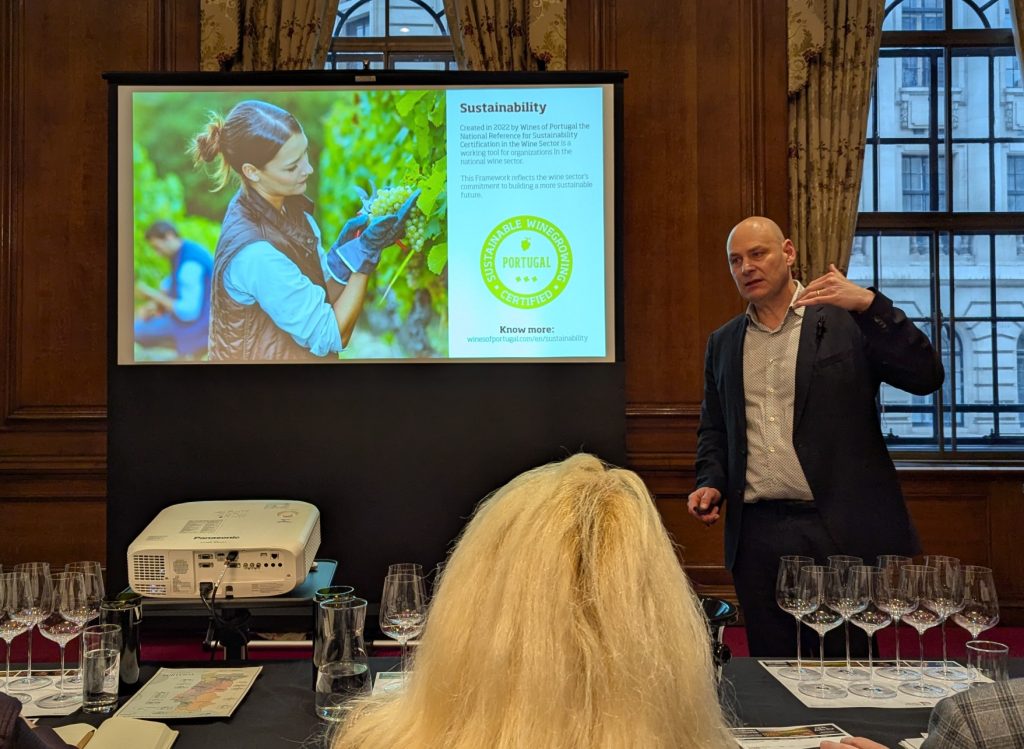
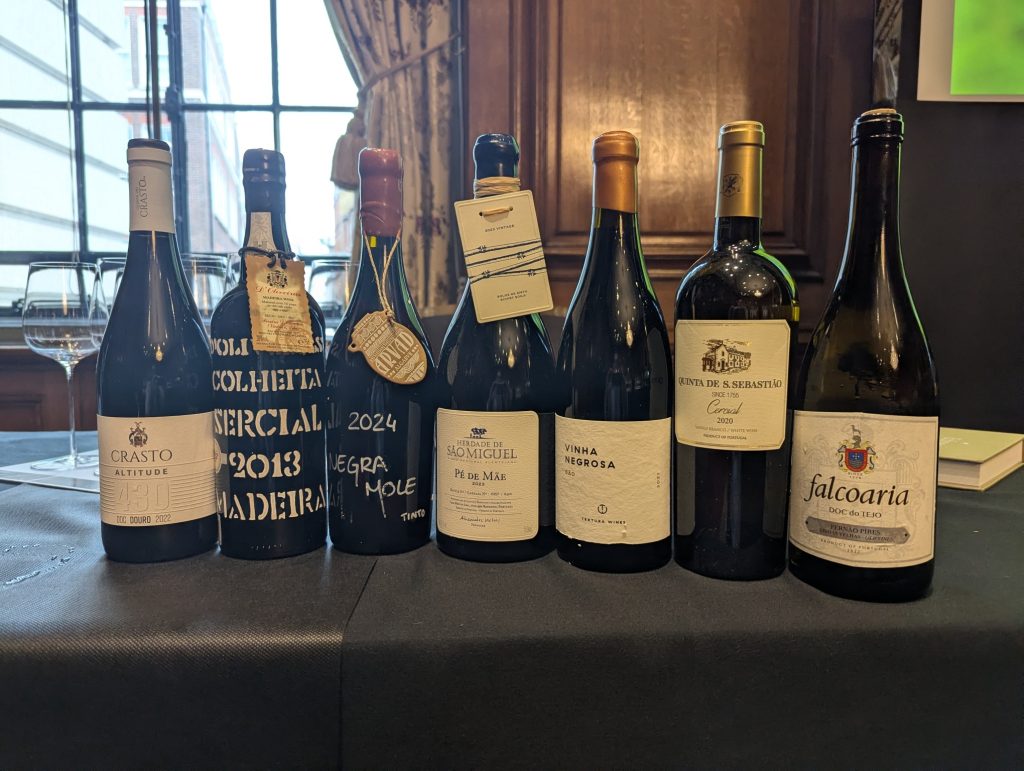
The masterclass led by Dirceu Vianna Junior MW was an in-depth and genuinely inspiring tasting experience, built around lesser-known Portuguese grape varieties and the breadth of expression they can achieve.
Dirceu began by setting the scene with Portugal’s climatic diversity, shaped by Atlantic, continental and Mediterranean influences. He touched on key soil types, but made the point that diversity within those categories can be just as important as the headline label itself, using schist as an example where different forms of just one soil type can behave very differently in the vineyard and in the glass.
Portugal’s genetic and viticultural richness is extraordinary, with over 250 native grape varieties. Even within one of the country’s most famous grapes, Touriga Nacional, there are more than 200 clones. Throughout the session, Dirceu emphasised that Portuguese wine is not static. It’s continually evolving, with new people bringing fresh ideas, new approaches and new interpretations of both classic and obscure varieties.
Here are the wines we tried, with my brief notes:
Cave da Montanha Real Grande Reserva Baga 2018
A sparkling white from Bairrada using the, low yield, concentrated, usually red wine, Baga grape.
36 months on lees gives a very very leesy, autolytic character.
Quinta de S. Sebastião Cercial 2020
A white from Lisboa using the rare, late ripening, Cercial grape.
Oxidative, bruised apple character with high acidity, salinity and slight oak taste.
Casal Branco Falcoaria Vinhas Velhas Fernão Pires 2022
A white from Tejo using the, most widely planted white, Fernão Pires grape.
Oaky, creamy, rich taste.
Arvad Negra Mole 2024
A red from the Algarve using high yielding but not widely planted Negra Mole grape.
Light colour, Pinot Noir-esque, dry with medium tannins.
Casa Relvas Herdade São Miguel Pé de Mãe 2023
A red from Alentejo using the widely planted, usually blended, Trincadeira grape.
Fruity, soft tannins, Malbec-like.
Textura Vinha Negrosa 2021
A red from Dão e Lafões using Jaen (50%) and Alfrocheiro (50%) grapes.
Extremely fruity and floral aroma, fresh, light but still very flavoursome.
Quinta do Crasto Altitude 2022
A red from Porto e Douro using Tinta Francisca (70%) and Touriga Nacional (30%).
High altitude so lighter, fresh, red fruit, fine spice.
Pereira d’Oliveira Sercial 2013
A fortified Madeira using the Sercial grape.
Dry style, very long, woody end.
While I enjoyed Textura Vinha Negrosa the most, that wine also prompted one of the most interesting discussions of the session: its €42 price point. In fact, many of the masterclass wines sat at a notably higher level than the majority of the bottles I picked out from the walkaround tasting. The distinction felt clear. These were more artisan wines, often produced in smaller quantities and with a more niche intent. Nevertheless, they are all already available in the UK.
Dirceu spoke about where he hopes these wines will find their audience. In his view, on-trade (hospitality) has a real role to play in introducing them to customers, especially as an alternative to familiar choices that can sometimes be less compelling, such as default Bordeaux selections. The idea is simple. If people taste something genuinely distinctive and delicious by the glass, they’re far more likely to go looking for it later.
Dirceu also picked up on a theme I’d noted during the walkaround tasting. That is, Portuguese red wines becoming lighter than they once were, yet still retaining depth of flavour. The explanation is rooted in history. Traditionally, many regions grew grapes intended for Port, and that winemaking context rewarded maximum extraction from very ripe grapes to build enough colour and structure to hold up once the wine was fortified and effectively diluted by spirit. Today, for non-fortified wines, producers have realised they don’t need to push extraction in the same way. Many are also picking grapes a little earlier. The result is a shift towards wines that feel more linear and fresh, with brighter energy and better definition, while still delivering plenty of character and flavour.

The event was held at the grand One Great George Street, Westminster,
Headquarters of the Institution of Civil Engineers.