Why There are No Luxury Wines, Only Prestigious Ones

Posted by

Jean-Noël Kapferer, Emeritus Professor of Marketing at HEC Paris and expert in prestige and luxury management, explores how the concept of luxury applies across different cultures and industries, with particular insight into wine. He defines luxury as something desirable but inaccessible, needlessly expensive, and emotionally powerful. True luxury, he argues, must be “somewhere else”, distinct, exclusive, and difficult to attain.

When discussing wine, Kapferer is deliberately provocative, asserting that “there are no luxury wines,” only wines that may form part of a luxurious lifestyle. Even the most expensive bottles remain accessible to the wealthy and therefore cannot reach the same level of unattainability as a yacht or private jet. He observes that no one asks for “a luxury wine” in restaurants, whereas consumers readily use the word “luxury” for cars, watches, or hotels. Instead, wine is more often associated with prestige, a term that carries less exclusivity but more cultural and sensory connotations.

Kapferer notes that genuine luxury requires selective distribution and direct contact with end consumers, something most wine producers lack. Wines and spirits are typically sold through intermediaries such as importers and agents, meaning that control over the customer experience and brand image is limited. In contrast, successful luxury houses like Hermès or Ferrari carefully manage scarcity and customer selection to preserve their aura. He explains that selective distribution should ideally be the final stage before choosing the consumers themselves, as prestige is not only derived from money but from the reputation and status of those who buy and represent the brand.

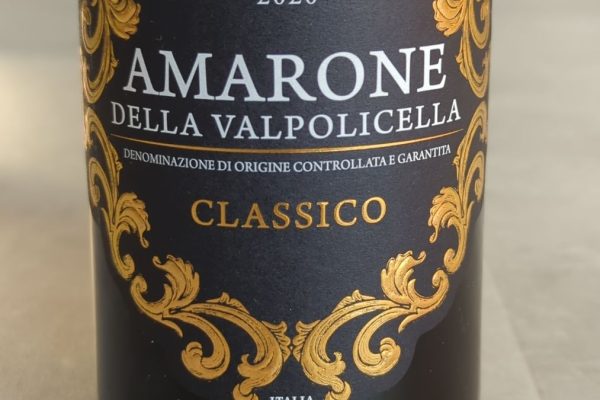
He acknowledges that some wine producers are attempting to adopt luxury-like strategies, such as restricting access to collectors or private networks as I found at Amarone Calling, but warns that invisibility risks undermining long-term desirability. To remain aspirational, a brand must balance visibility with inaccessibility, desirable but not ubiquitous. Kapferer suggests that prestige wine houses, like other luxury brands, should cultivate this tension to maintain allure while still engaging new generations of consumers.

Ultimately, Kapferer concludes that while wine can embody many of luxury’s values, heritage, craftsmanship, scarcity, and emotion, it falls short of being true luxury because it is still too attainable and too dependent on intermediaries. Its power lies instead in its prestige, its connection to culture, and its ability to accompany and enrich a luxurious way of life.

I am not so sure. In wine, “unattainable” can mean access to an allocation, a cellar, a historic vintage or a vineyard with severe production limits. These barriers can be as exclusionary as money. Equally, the claim that intermediaries prevent luxury overlooks how luxury in many categories is routinely mediated by gatekeepers, from auction houses and private dealers to concierge networks, which can intensify rather than dilute aura. If luxury is emotionally powerful and socially distinctive, then a bottle that is scarce, storied and embedded in a closed world of recognition might function as luxury.


Follow

Did You Know?

For Crémant, grapes must be harvested by hand and the wines must undergo at least nine months’ ageing before release. More

In 2024, the UK was the second-largest export market for Champagne globally, after the United States. More

Local UK bottling of wine represents about 40% of imported wine. More

Around 1% of people, typically severe asthmatics, have a sulphite sensitivity. More

A large 80% of Australian wine arrives in the UK in bulk. More

Only about 0.02% of Australia’s landmass is dedicated to vineyards. More

In 2024, New Zealand produced only 1% of the World’s wine. More

In 2024, the US imported 37% of World production of Pinot Grigio and the UK was is in second place at 27%. More

In 2024, the UK was South Africa’s largest export market, with 40% of total exports. More

In 2024, the United Kingdom imported 22.3 million bottles of Champagne, a decline of 12.7% compared to the previous year. More

Larger Champagne producers source grapes from as many as 80 different vineyards throughout Champagne. More

Champagne houses and growers collectively produce around 300 million bottles annually. More

In 2025, the Champagne region was home to about 2,124 Champagne houses and approximately 19,000 growers. More

Provence is one of the leaders in the conversion to organic viticulture, with 61% of vineyards certified. More

8% of the South Africa’s grape production is Fairtrade-certified. More

Up to 80% of wine aroma compounds come from grape skins. More

Glycerol is the third-largest component of most dry wines after water and alcohol which is why they so often feel ‘smooth’ or ‘silky’ in the mouth. More

Humans are more than 400 times more sensitive to bitter than sweet. More

Humans can detect the earthy molecule geosmin at about 100 parts per trillion and camels are so sensitive to it they can locate damp ground from roughly 50 miles away. More

During the phylloxera crisis of the nineteenth century, 90% of Europe’s vineyards were destroyed. More

In 2025, for La Vieille Ferme, also known as “The Chicken Wine”, sales surged by 49.4% to £110.8 million. More

In 2025, in the UK, Yellow Tail held the top position with sales, marking a 9.8% increase over the previous year. More

In 2024, the UK was the second-largest wine importer in volume and value. More

In 2024, the UK was the fifth-largest wine-consuming country globally. More

In 2025, global wine consumption continued its downward trend, estimated at 214.2 million hectolitres, the lowest since 1961. More

In 2025, online alcohol sales had a 20% increase in value over five years. More

In 2025, the number of UK vineyards rose to 1,104 and wineries to 238, with land under vine expanding to 4,841 hectares, a 510% increase since 2005. More

Moët Hennessy alone commands nearly 46.66% of the Champagne market, with the top three producers together holding about 61%, and the top five controlling over 72%. More

In 2024, the Champagne market was worth roughly €3.92 billion. More

In the marketing year 2023/24, white wine accounted for roughly 55% of Spain’s output, whereas red and rosé together made up about 45%. More

In the UK, 92% of wine is consumed within 48hrs of purchase. More

The majority of wines, 95%, use commercial rather than wild yeast. More

Between 0.5 and 10 litres of water, per litre of wine, are needed for cleaning during winemaking. More

Machine harvesting can achieve up to 100 tons of fruit per day vs 1 ton for a human. More

In Germany, 2025 was the smallest wine vintage since 2010. More

The majority of vineyards, 90% in 2019, are farmed with heavy chemical interventions. Only 6% are organic. More

90% of low and coastal areas in south Europe and California will no longer be able to produce good wine by the end of the century. More