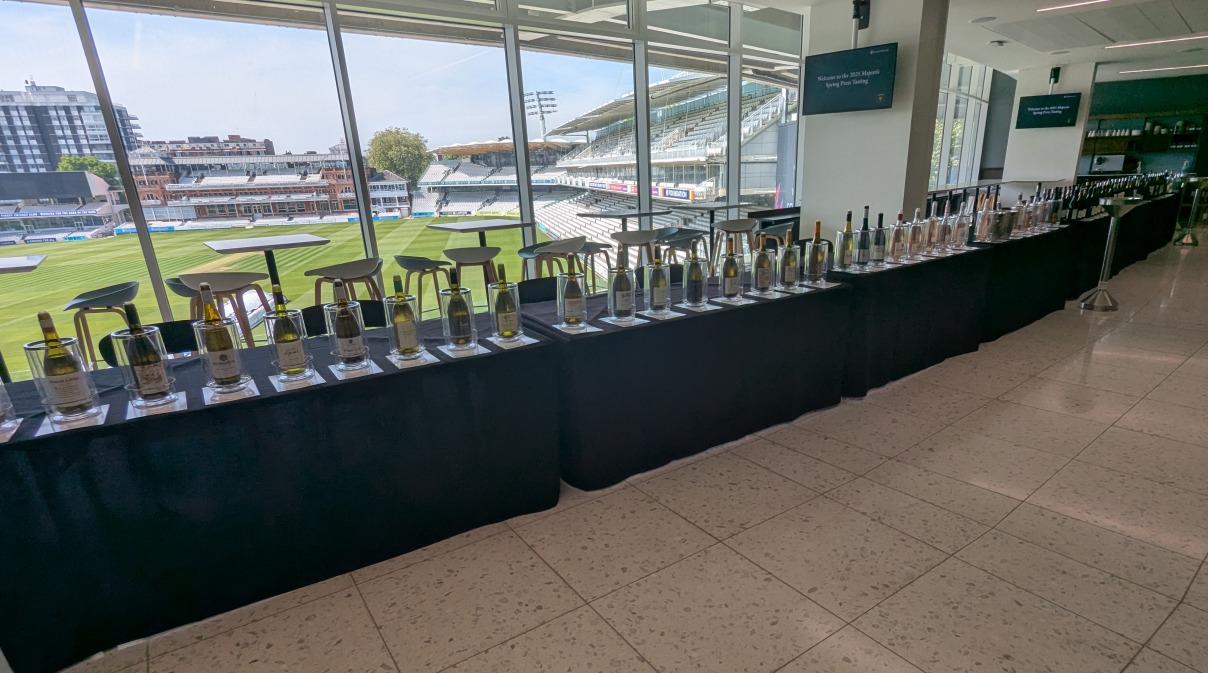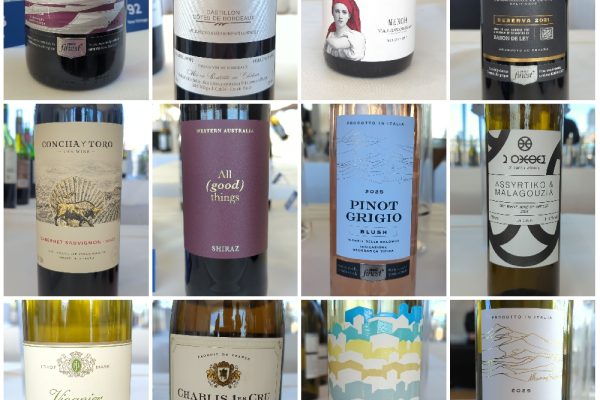
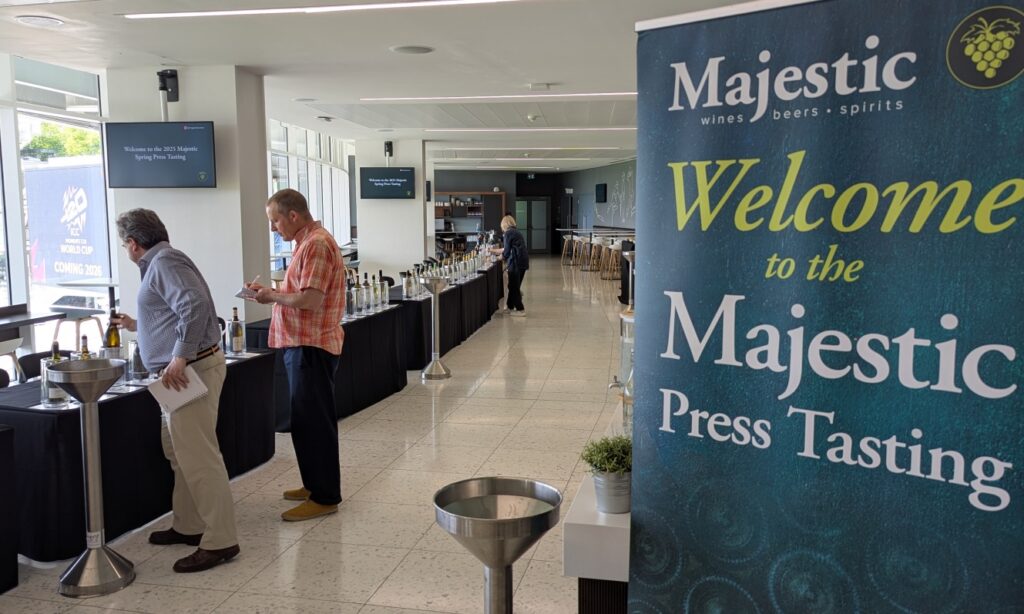
At the start of May, I attended the Majestic Spring Press Tasting 2025, which this time took place at a different venue, the iconic Lord’s cricket ground in London. Spacious and distinct, the surroundings gave a certain charm to the event, helping the wines feel a little more special. The layout benefited from the space too, with all the wines arranged in a very long, uninterrupted line, it felt like a grander offering than the 97 wines available to taste.
As always, Majestic’s tasting booklet was the most comprehensive and detailed, complete with colour coding that made navigating the range easy. The wines on show were mainly new vintages or additions to their selection. In the half year since the last tasting, Majestic has seen significant growth. Six new stores have opened, in Banstead, Plymouth, Solihull and Rickmansworth, and Majestic has enjoyed their strongest Christmas trading performance to date. A new offshoot, Majestic Commercial, is already supplying hundreds of hospitality venues and they’ve acquired the premium wine and spirits supplier Enotria&Coe, a move that should bolster their already impressive portfolio.
As usual at Majestic, there were very many wines I liked, but a handful stood out as particularly memorable.
(Prices mentioned include the mix-6 discount)
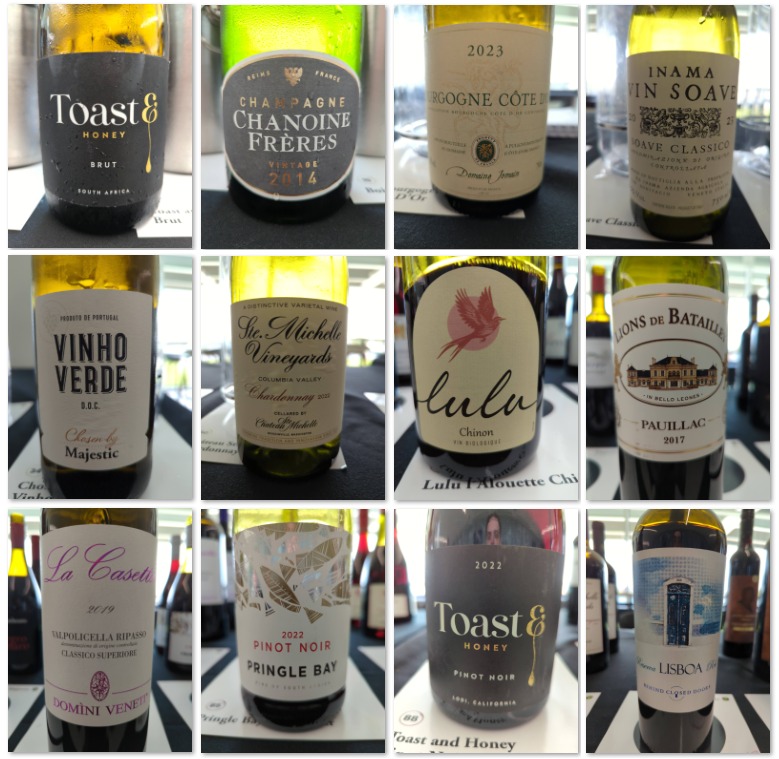
Toast and Honey Brut NV (11.5%, £13), comes from the Western Cape in Tulbagh, South Africa, made by Twee Jonge Gezellen Estates. With a blend of 53% Chardonnay and 47% Pinot Noir, it’s produced using the traditional method with bottle fermentation and nine months on the lees. There’s an oaky, brioche aroma and the taste brings together apple and oak with great persistence. It’s sweet and very full-on, both of which will divide opinion.
Chanoine Frères Vintage 2014 Champagne (12%, £35) is made from 55% Pinot Noir and 45% Chardonnay. This is from the second-oldest Champagne house. Again, it’s not subtle. The brioche aroma is bold and the citrus and apple taste is powerful, leaning slightly sweet. That citrus and the less sweetness lifts the whole wine, giving it freshness despite the intensity.
Jomain Bourgogne Blanc Côte D’Or 2023 (13.5%, £20) is 100% Chardonnay from Burgundy, using grapes from six parcels bordering Puligny’s Premier Cru vineyards. Fermentation takes place 50% in stainless steel and 50% in oak, with 20% of the barrels being new, and it’s aged on lees for 11 months. The result is an outstanding balance of apple fruit and subtle oak. The oak shows up more in the finish. Although technically dry, the fruit is so expressive that it feels more generous. This was one of my favourites of the tasting.
Inama Soave Classico 2023 (11.5%, £15) is a dry white made from 100% Garganega from Soave, Veneto. Lees ageing adds texture, giving it a soft feel in the mouth. The apricot scent is matched by the same fruit in the taste, with fresh acidity to keep things lively.
Chosen By Majestic Vinho Verde 2024 (9%, £8), from Casa Santos Lima, is a blend of Loureiro (40%), Arinto (30%), Trajadura (20%), and Avesso (10%). The ‘Chosen’ label aims to showcase top regional styles. I found this version is a lot more sparkling than most Vinho Verdes. This and the bright citrus flavours make it refreshing and easy to enjoy.
Château Ste. Michelle Chardonnay 2022 (13.5%, £15.50), from Washington State’s Columbia Valley, is produced by the region’s oldest winery. This has a strong honey and oaky scent, with a soft, slightly smoky and flinty taste. There’s a suggestion of orange on the after-taste. It offers a lot for the price.
Lulu l’Alouette Chinon 2023 (12.5%, £12.50) from the Loire is made from 100% Cabernet Franc. The name refers to the skylarks found in the vineyard. Fermented with natural yeasts and with subtle lees contact, this offers ripe raspberry on the scent and a taste that evokes violet sweets. There are gentle tannins at the end that give structure.
Lions de Batailley 2017 (13.5%, £36), a ‘second wine’ of Château Batailley in Bordeaux, comes from a highly respected Grand Cru Classé estate. A blend of 60% Cabernet Sauvignon, 33% Merlot, 6% Cabernet Franc and 1% Petit Verdot, it’s aged for around 18 months in French oak. Slightly brown in colour, this had a deep black fruit aroma and flavour, medium tannins and a woody finish. One of my favourite wines of the tasting.
La Casetta Valpolicella Classico Superiore 2019 (14%, £15.50), from Cantine Negrar, uses 65% Corvina, 15% Corvinone, 10% Rondinella and 10% other varieties. I’ve reviewed this one before. Plum and light oak come through first, followed by a gently sweet profile with vanilla, fig, red cherry and red plum, joined by soft spice. The tannins are smooth and well-integrated, with a satisfying long finish.
Pringle Bay Pinot Noir 2022 (13.5%, £9) from the Western Cape is 100% Pinot Noir. It’s light in colour, with a savoury aroma reminiscent of twiglets. Red cherry notes are there, but the savoury elements dominate. Great for the price.
Toast and Honey Pinot Noir 2022 (13%, £10), from Lodi, California, also 100% Pinot Noir, looks pale and light, but that’s deceptive. This is a mad mix of savoury, sweet, fruity, honeyed and oaky elements. It’s a bit chaotic and hence thought-provoking, but that’s the charm and it could be a hit. Certainly one that will divide opinion.
Behind Closed Doors 2020 (13.5%, £10), from Lisboa and made by Casa Santos Lima, is a blend of Syrah, Touriga Nacional, Tinta Roriz, and Alicante Bouschet. It has dark fruit scents and a soft, rounded feel with some spice. Slightly sweet. Think of it as a more refined version of Porta 6.
Other wines that almost made the above list and are definitely worth trying include:
Roebuck Estates Classic Cuvée 2020 (£27)
Spier Albariño 2023 (£10.50)
Awatere River Sauvignon Blanc 2024 (£11)
Loosen Barry Walhalla Riesling 2019 (£25)
I may get around to reviewing these in more detail another time.
One emerging theme, not just at this tasting but at others I’ve attended recently, is a shift towards sweeter wines. Whether that’s down to changes in duty, where alcohol strength affects tax and therefore encourages lower alcohol, higher sugar styles, or simply a reflection of changing consumer tastes, it’s becoming more noticeable. Personally, the more I taste sweeter wines, the more accustomed I become to sweetness and I’m starting to be less judgemental and enjoy them more than I used to.
Own label wine is a significant focus for retailers at the moment and Majestic is no exception. The company has established strong foundations with its core own label offerings, most notably the main ‘Definition’ and ‘Chosen’ ranges, which have continued to grow.
More recently, Majestic appears to be experimenting with micro-ranges such as ‘Toast and Honey’ and ‘Traitors’. These much smaller, themed collections allow the business to explore more unconventional ideas without diluting or compromising the integrity of their main offering. For example, Toast and Honey plays with the idea of full-on wines usually with sweetness, an area not traditionally highlighted in the core offerings, enabling the brand to engage a different kind of wine drinker.
Similarly, the Traitors range packages affordable, better than average, wine in a way that prioritises storytelling and entertainment over the more traditional, and often dry, focus on provenance and regional authenticity. This approach taps into the interests of younger or less conventional wine consumers who may be more drawn to engaging narratives than to terroir-driven details. In both cases, Majestic is broadening its appeal, making wine more accessible and less intimidating and connecting with new demographics beyond the serious enthusiast.
Not all wines are available in every store. Pricing can change.