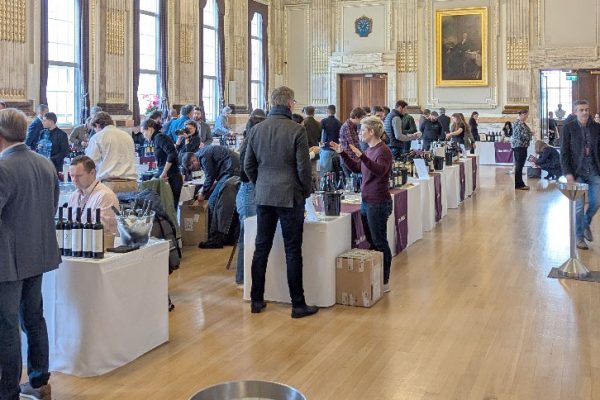
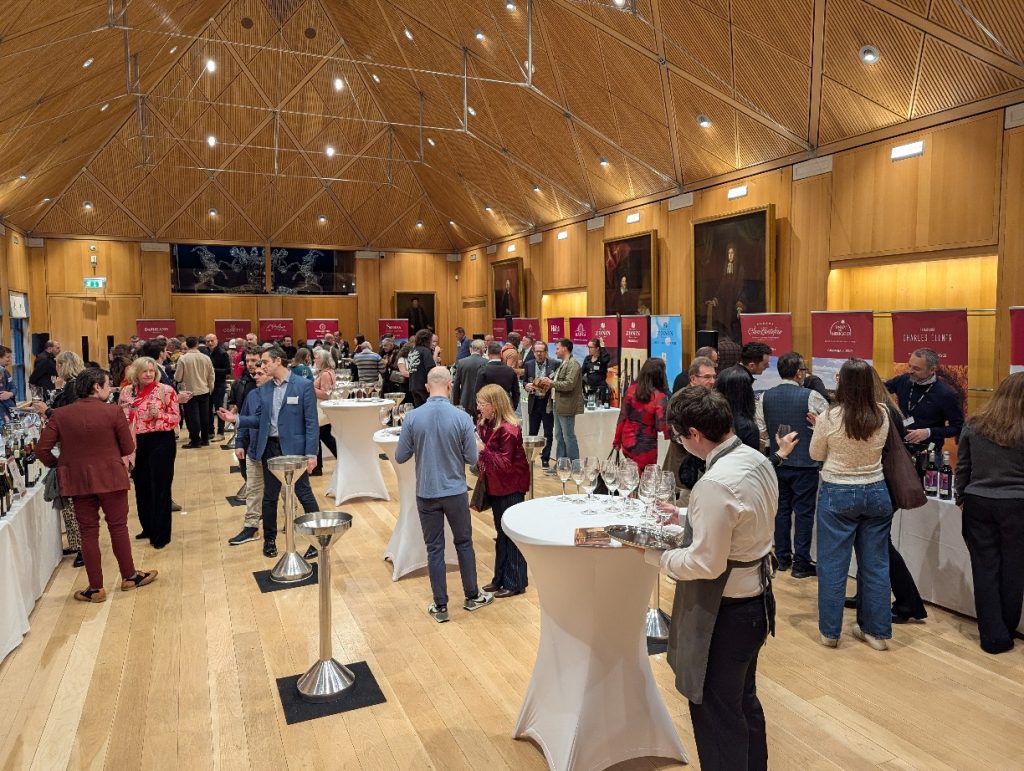
In January 2026 I was invited to ZONIN1821’s portfolio tasting, an event that combined structured masterclasses with the opportunity to explore the range more informally via a walkaround tasting. A key part of the event for me was a food and wine matching masterclass, which offered useful insight into how different styles performed alongside carefully chosen dishes.
ZONIN1821, is one of Italy’s most established wine businesses, with a history that stretches back to 1821. The company was founded in Gambellara, in the Veneto, and while it remains family owned, it now operates on a genuinely international scale.
At the heart of the business are its estate wineries, which are spread across many of Italy’s key wine regions. These include Veneto and Friuli in the north-east, Lombardy and Piedmont further west, Tuscany in central Italy, and Sicily and Puglia in the south. This regional spread allows ZONIN1821 to work with a wide range of grape varieties and styles, from fresh, aromatic whites and elegant reds to richer, warmer-climate wines. ZONIN1821 is particularly well known for its sparkling wines, most notably Prosecco, which has played a major role in building the brand’s international reputation.
In the UK, ZONIN1821 UK operates as a significant supplier to the on-trade and, increasingly, to retail. Importantly, it is not limited to wines from its own Italian estates. The UK arm also acts as an importer and distributor for a carefully selected range of producers from outside Italy, including France, Spain, South Africa and Chile. This makes the portfolio tastings broader than a single-producer showcase, combining Zonin’s own wines with complementary international examples.
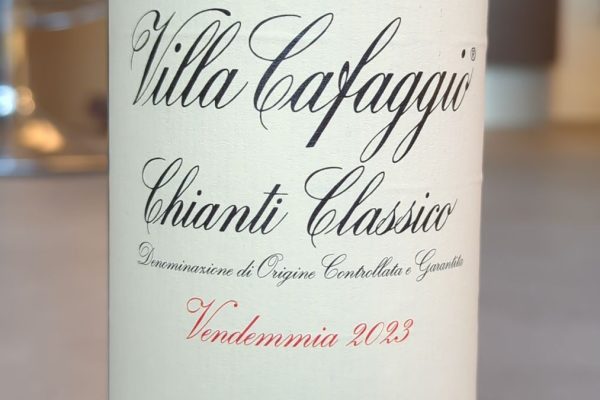
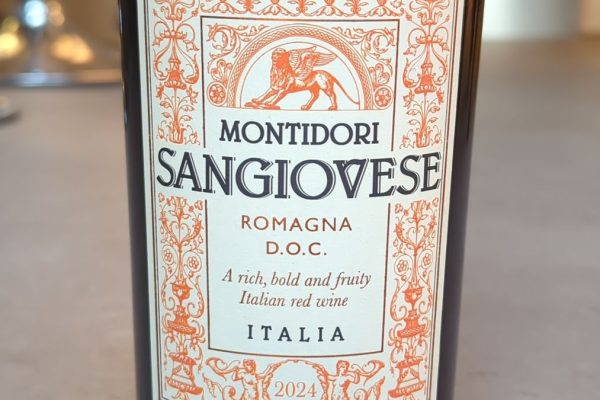
Because the masterclass took up a significant part of the session, I had less time to explore the walkaround tasting, but the following wines were the ones that particularly stood out to me:
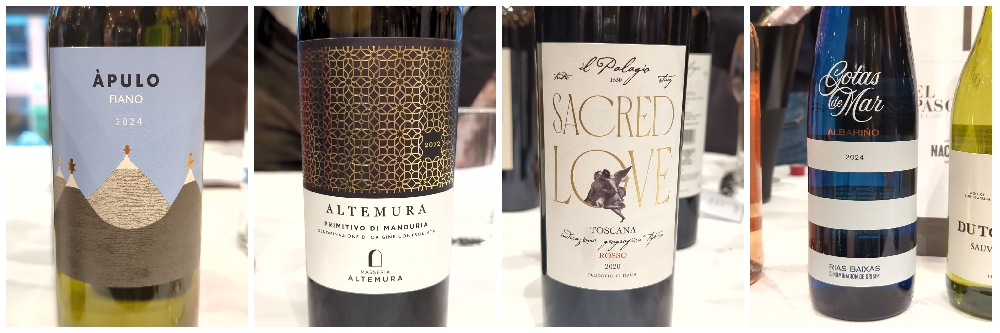
Àpulo Fiano Salento IGT 2024 12.5% Around £11
From Masseria Altemura in Apulia. Medium lemon in colour and dry in style, this Fiano gives off aromas of pear, hazelnut and honey, with a gentle hint of smoke in the background. It sits at medium body with medium plus acidity. The slightly nutty finish is long and persistent, offering excellent value for the price.
Altemura Primitivo di Manduria DOC 15% Around £20
Also from Masseria Altemura, this wine is deep ruby purple in colour. Blackberry and black cherry notes dominate the aroma, lifted by a touch of spice. It is full bodied and leans towards dry to off dry. Lush dark fruit combines with warm alcohol and soft, medium tannins. The finish is plush, spicy and warming.
Sacred Love Rosso Toscana IGT 2020 15% Around £86
Made entirely from Merlot by Il Palagio, the Tuscan estate owned by Sting/Trudie Styler (hence the ‘Sacred Love‘ name) and distributed in the UK by Zonin. Ripe plums, blackberries and vanilla rise from the glass with intensity. The wine is full bodied yet carries a sense of freshness throughout. A woody finish stretches out at the end. The person pouring the wine mentioned that it was probably the best wine in the room. I assumed that was just a bit of exaggeration, but it turned out to be likely. Only later, when I came to write this, did I realise it was from Sting’s vineyard, one of my favourite singers. Had I known at the time, I would have taken a moment to savour it properly and enjoy it even more. The 2021 vintage is also available and brings more noticeable tannins.
Albariño 2024 12.5% Around £20
By Gotas de Mar from Rías Baixas in Spain. Pale lemon in colour with expressive aromas of peach and white flowers. A richer style of Albariño, aged on lees for six months, adding extra weight. Tropical flavours of pineapple and mango sit alongside white peach and green apple. A light touch of salinity gives the finish a refreshing edge.
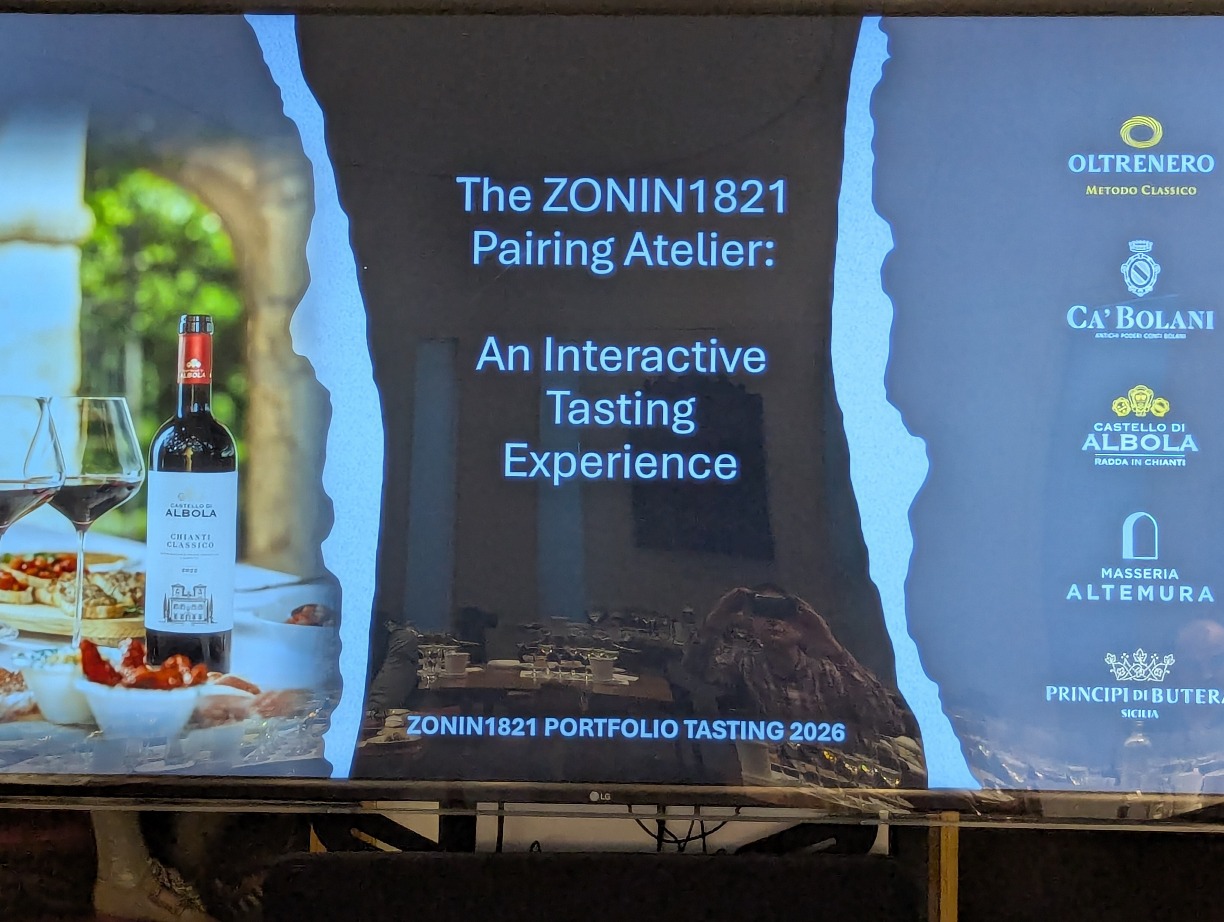
The masterclass, titled an ‘Interactive Tasting Experience’, was run by the UK Sommelier Association and led by Federica Zanghirella, its Vice President. It offered a fresh and engaging approach by pairing a range of Italian wines with a carefully selected menu of dishes. Across the session, we explored seven wines alongside six beautifully created plates, with each wine introduced and explained in depth as we tasted.
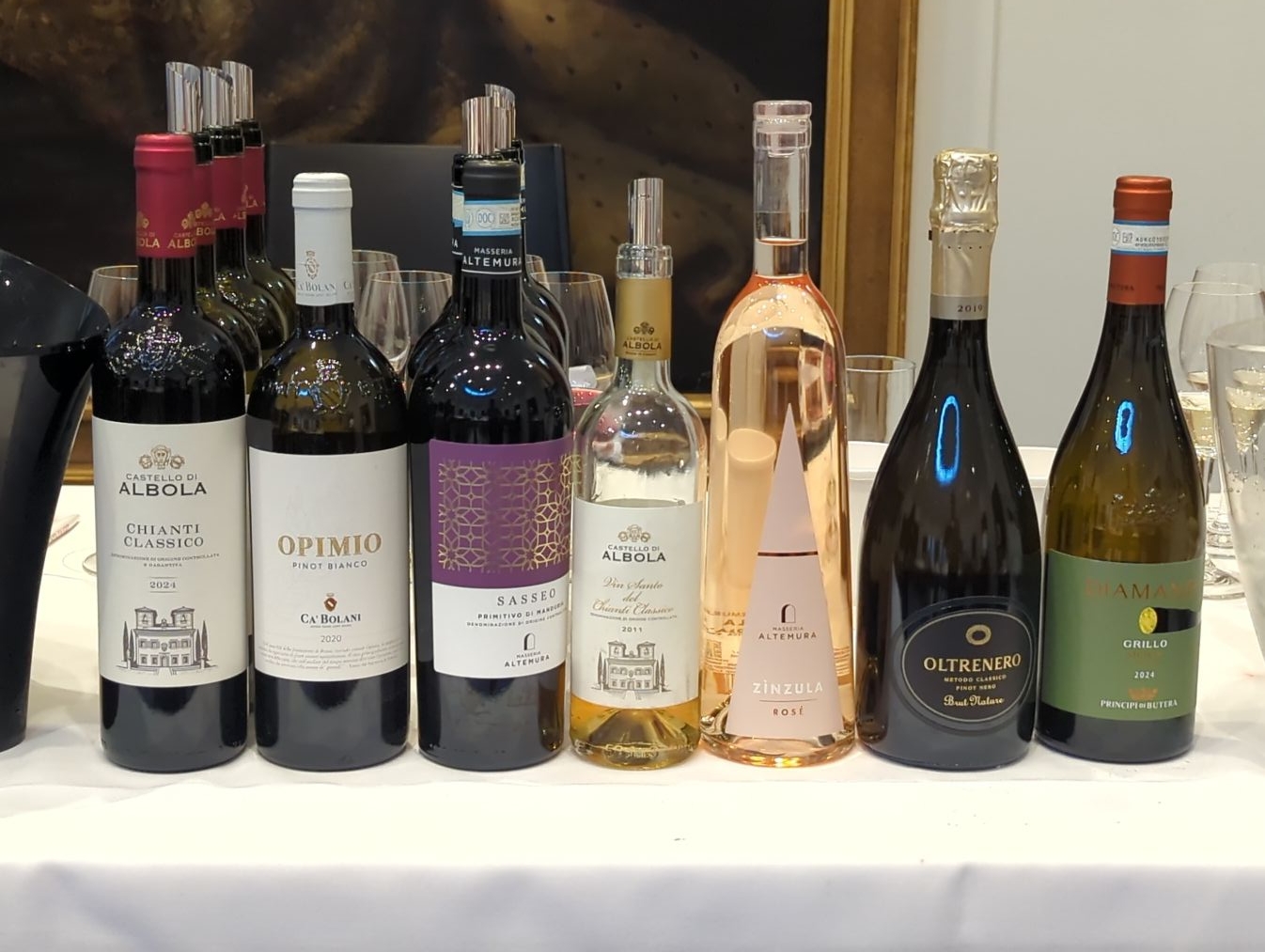
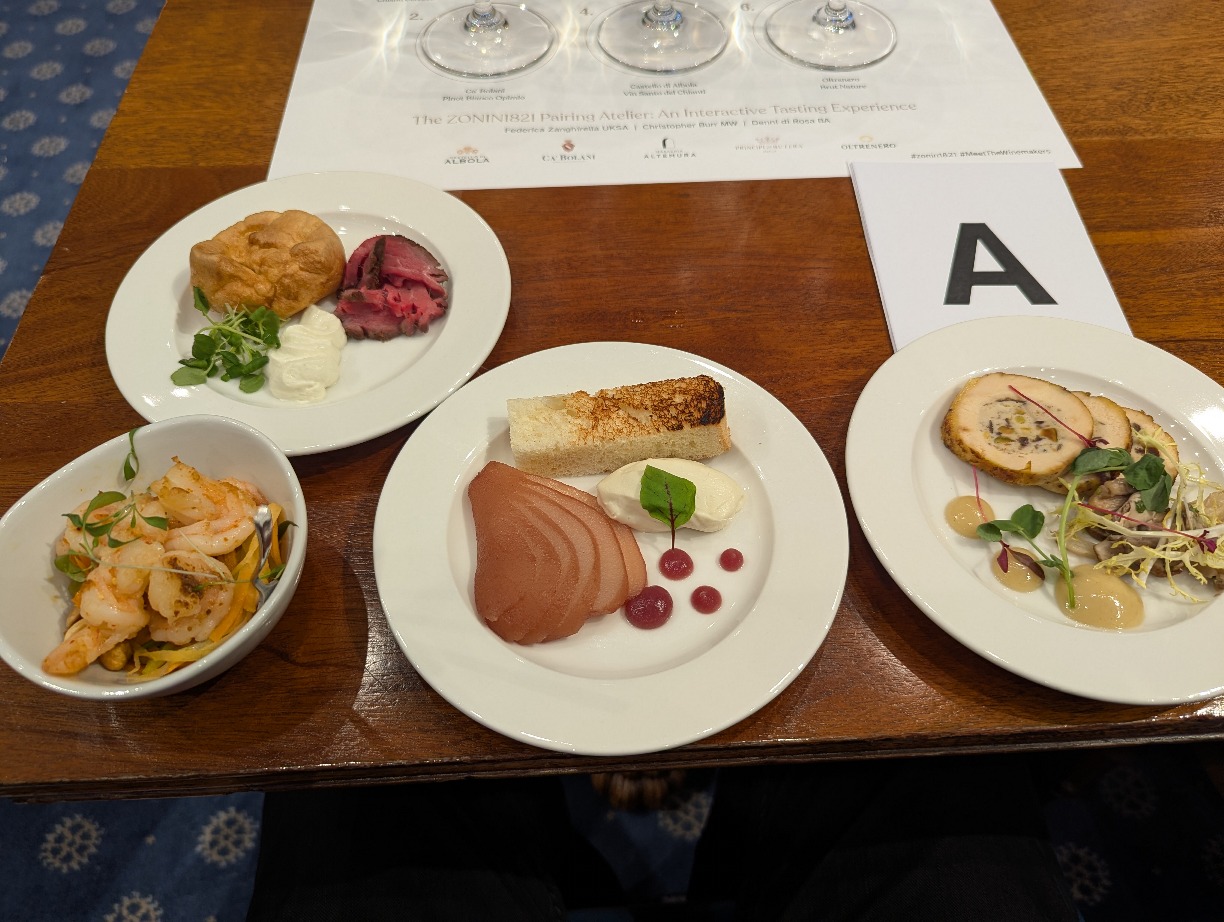
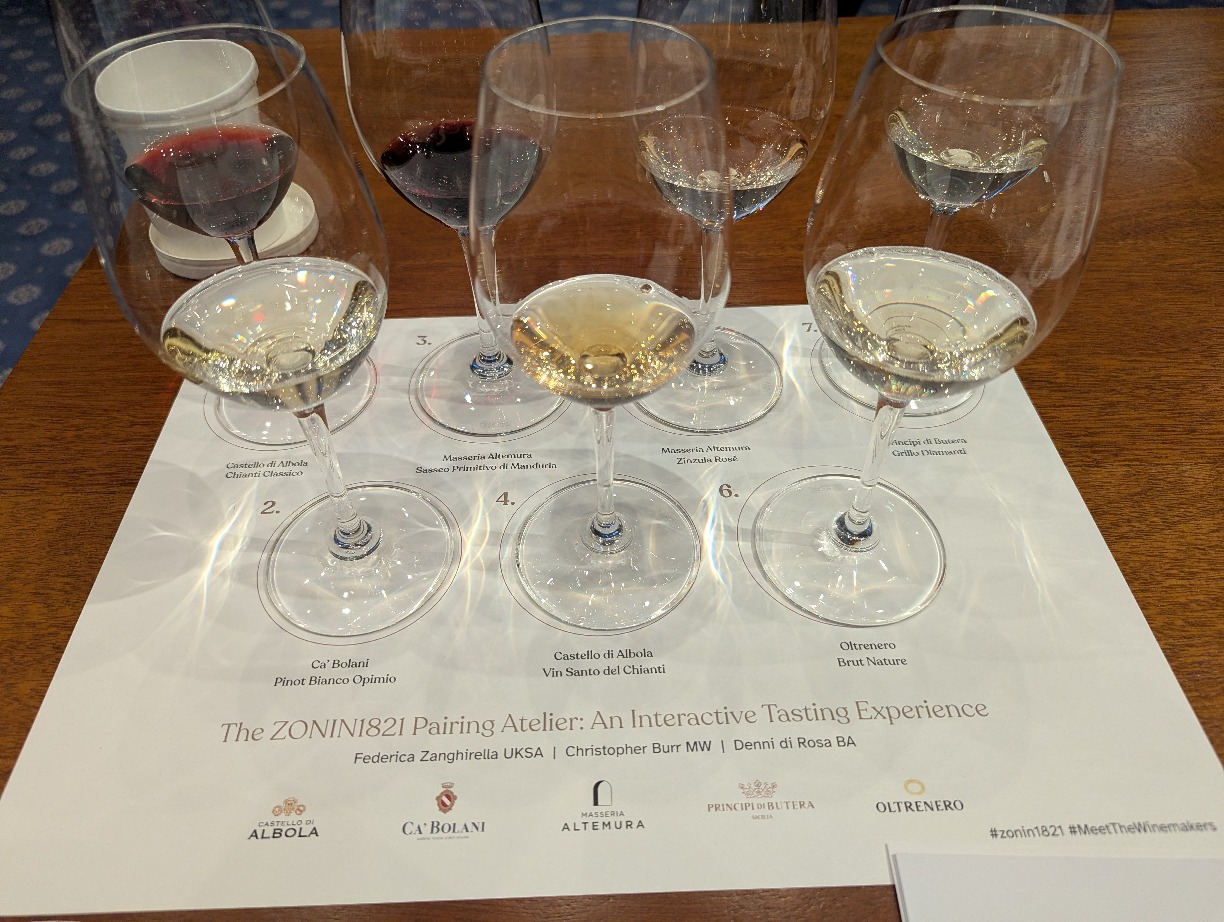
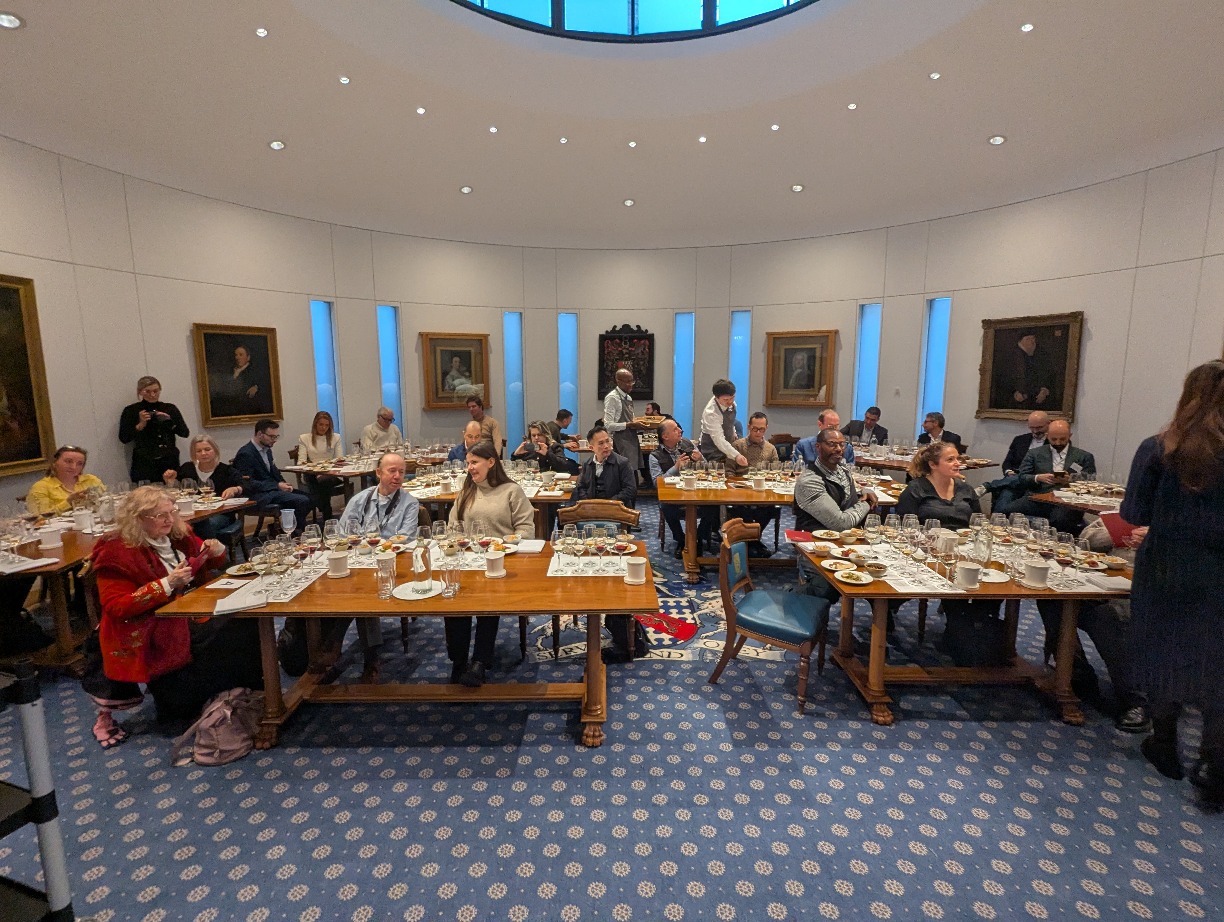
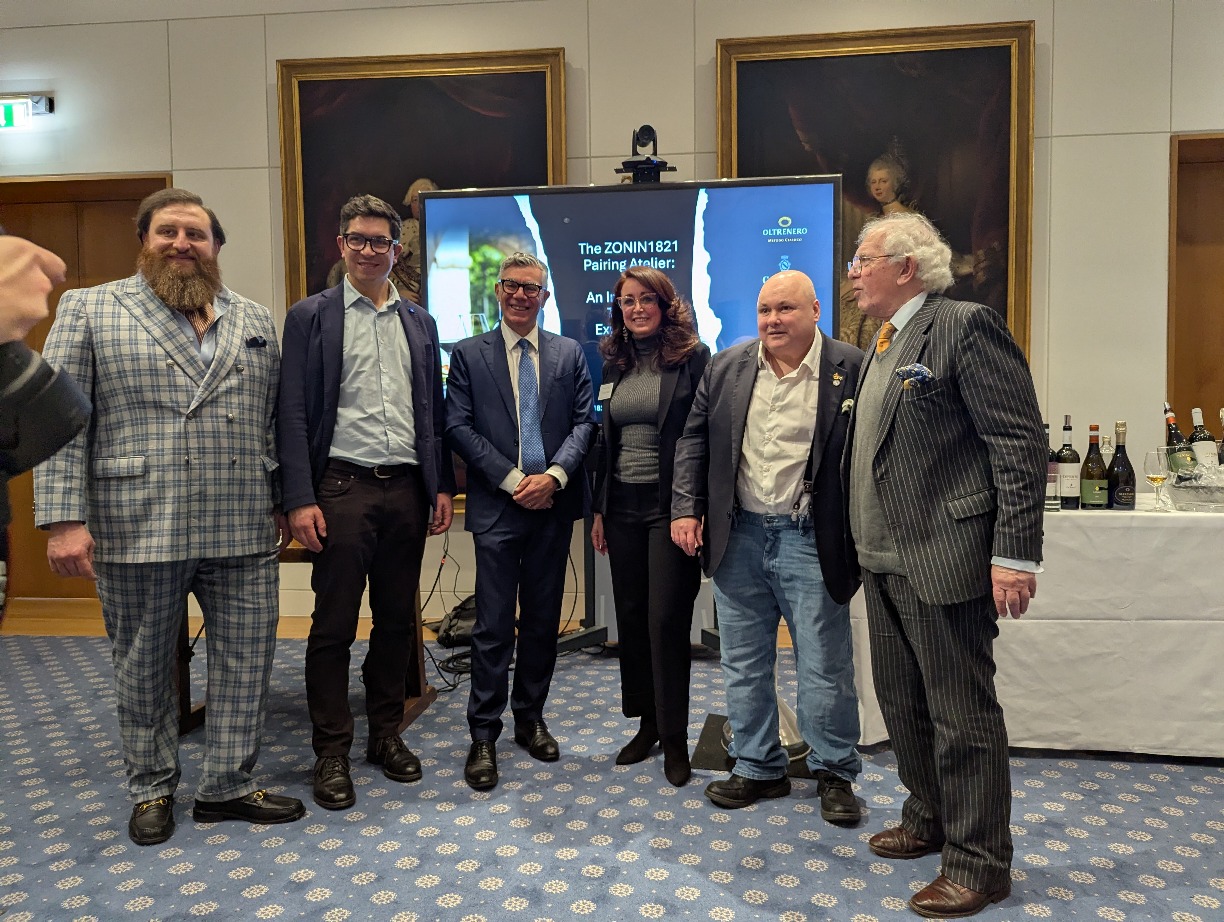
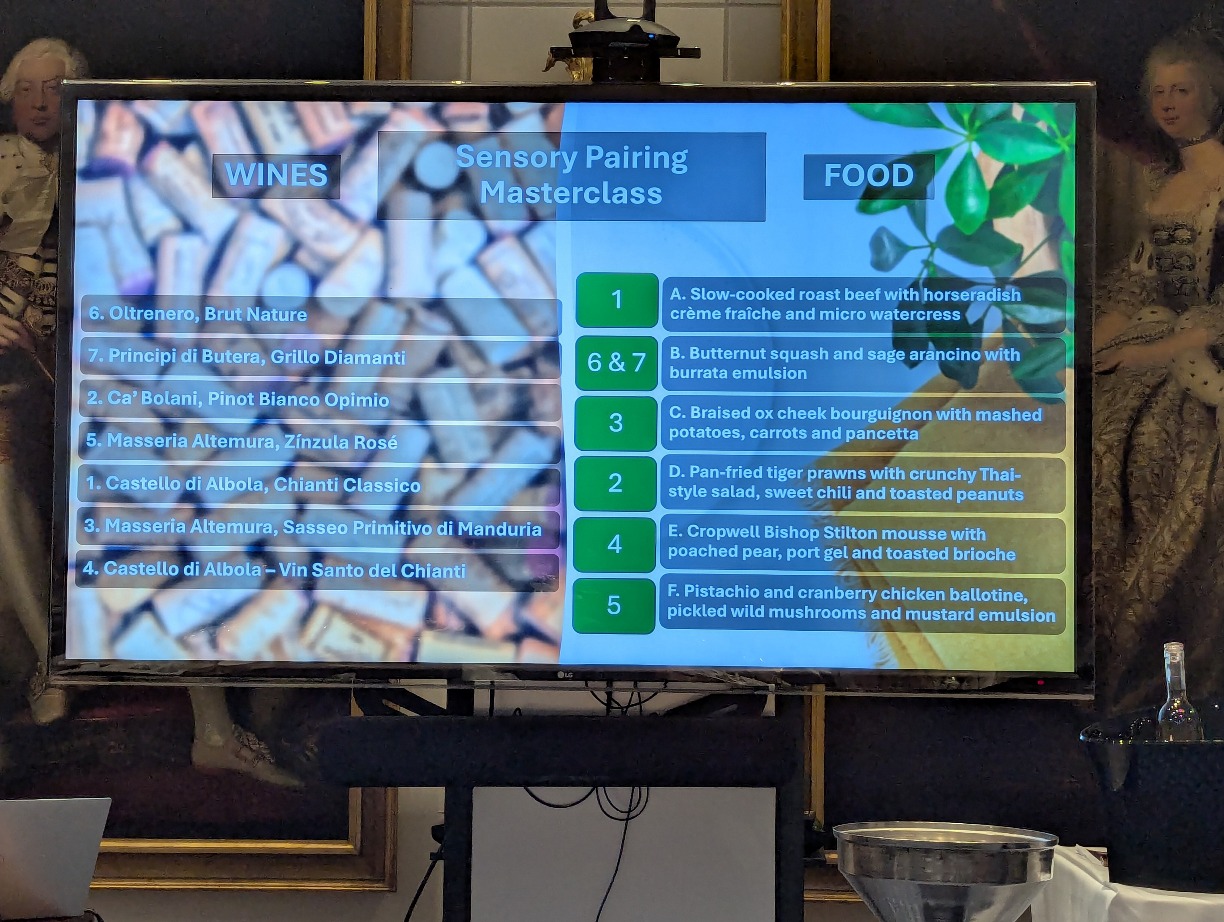
The results – with two, unexpected, historic figures looking on knowingly in the top corners!
What stood out most was how food transformed the character of the wines. Several wines that I had previously tasted but overlooked during the main walkaround tasting revealed surprising appeal once paired with specific dishes. This change in perception highlighted the importance of context in wine tasting and deepened my appreciation for the interplay between wine and food. One particularly memorable pairing, great for future use, was the poached pear with port gel and stilton mousse, which unexpectedly complemented many of the white wines incredibly well. Overall, the experience offered a distinct, enlightening and entertaining departure from the usual masterclasses focused on varietals and terroir.