, , ,

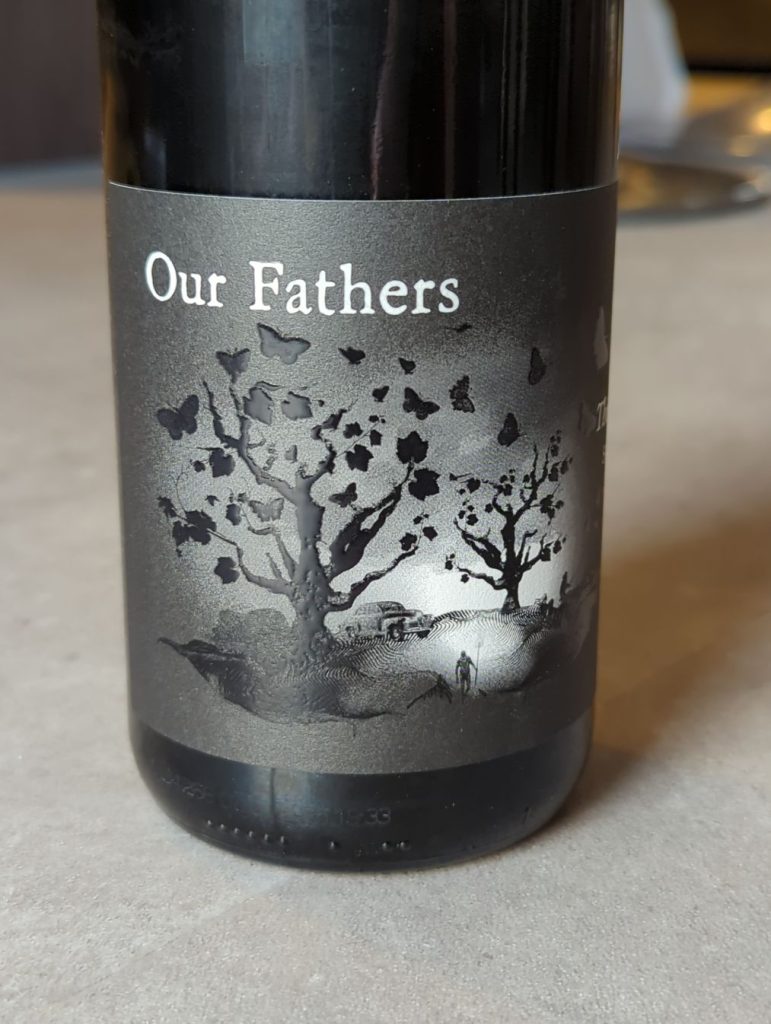
Our Fathers ‘There is a Light’ McLaren Vale Shiraz-Grenache

Posted by

From McLaren Vale, Australia, this red comes with a great endorsement. Jancis Robinson asked, “Surely wines like this would normally be much more expensive?”, which made it impossible not to investigate. It also forms part of The Wine Society’s Wine Champion selection, a curated collection of wines rigorously blind-tasted by their expert buying team and judged to be among the finest in quality and immediate drinkability.

But before getting into the wine itself, the story behind it deserves attention. The Our Fathers Project was founded by British Master of Wine Giles Cooke MW, who already carries a strong reputation for his small-batch wines from Barossa and McLaren Vale. The name stems from a philosophy rooted in hope, the belief that even in the darkest moments, there is light. It emerged from a deeply personal and tragic chapter in Cooke’s life, having lost his father to cancer and his mother to poor mental health. Then, without warning, he suffered a heart attack.

From this sequence of trials came Our Fathers, born with the singular goal of giving back to the communities that had supported him during those trying times. It operates entirely on a not-for-profit basis, with all proceeds going to mental health and related charities across the UK and Australia.

The wine itself is a blend of Shiraz and old-vine Grenache, coming in at 14.5% abv. In the glass, it’s strikingly deep in colour, almost opaque. At first pour, it surprisingly offers little by way of aroma or taste, simply coming across as very ‘winey’ and flat. Patience is essential. It needs at least 40 minutes to open up, and truly comes into its own the next day, a transformation that perhaps explains the mix of reviews on The Wine Society’s website.

Once allowed to breathe, the transformation is remarkable. A lovely aroma of black fruit emerges, edged with a whisper of caramel. On the tongue, it brings tapenade alongside the black fruit, supported by very gentle tannins and ending with a soft, chocolate finish. It sits between medium and full-bodied and has good length once it has fully opened up.

A shape-shifting red, worth every moment of patience and, at just £10.95 from The Wine Society, great value.


Follow

Did You Know?

For Crémant, grapes must be harvested by hand and the wines must undergo at least nine months’ ageing before release. More

In 2024, the UK was the second-largest export market for Champagne globally, after the United States. More

Local UK bottling of wine represents about 40% of imported wine. More

Around 1% of people, typically severe asthmatics, have a sulphite sensitivity. More

A large 80% of Australian wine arrives in the UK in bulk. More

Only about 0.02% of Australia’s landmass is dedicated to vineyards. More

In 2024, New Zealand produced only 1% of the World’s wine. More

In 2024, the US imported 37% of World production of Pinot Grigio and the UK was is in second place at 27%. More

In 2024, the UK was South Africa’s largest export market, with 40% of total exports. More

In 2024, the United Kingdom imported 22.3 million bottles of Champagne, a decline of 12.7% compared to the previous year. More

Larger Champagne producers source grapes from as many as 80 different vineyards throughout Champagne. More

Champagne houses and growers collectively produce around 300 million bottles annually. More

In 2025, the Champagne region was home to about 2,124 Champagne houses and approximately 19,000 growers. More

Provence is one of the leaders in the conversion to organic viticulture, with 61% of vineyards certified. More

8% of the South Africa’s grape production is Fairtrade-certified. More

Up to 80% of wine aroma compounds come from grape skins. More

Glycerol is the third-largest component of most dry wines after water and alcohol which is why they so often feel ‘smooth’ or ‘silky’ in the mouth. More

Humans are more than 400 times more sensitive to bitter than sweet. More

Humans can detect the earthy molecule geosmin at about 100 parts per trillion and camels are so sensitive to it they can locate damp ground from roughly 50 miles away. More

During the phylloxera crisis of the nineteenth century, 90% of Europe’s vineyards were destroyed. More

In 2025, for La Vieille Ferme, also known as “The Chicken Wine”, sales surged by 49.4% to £110.8 million. More

In 2025, in the UK, Yellow Tail held the top position with sales, marking a 9.8% increase over the previous year. More

In 2024, the UK was the second-largest wine importer in volume and value. More

In 2024, the UK was the fifth-largest wine-consuming country globally. More

In 2025, global wine consumption continued its downward trend, estimated at 214.2 million hectolitres, the lowest since 1961. More

In 2025, online alcohol sales had a 20% increase in value over five years. More

In 2025, the number of UK vineyards rose to 1,104 and wineries to 238, with land under vine expanding to 4,841 hectares, a 510% increase since 2005. More

Moët Hennessy alone commands nearly 46.66% of the Champagne market, with the top three producers together holding about 61%, and the top five controlling over 72%. More

In 2024, the Champagne market was worth roughly €3.92 billion. More

In the marketing year 2023/24, white wine accounted for roughly 55% of Spain’s output, whereas red and rosé together made up about 45%. More

In the UK, 92% of wine is consumed within 48hrs of purchase. More

The majority of wines, 95%, use commercial rather than wild yeast. More

Between 0.5 and 10 litres of water, per litre of wine, are needed for cleaning during winemaking. More

Machine harvesting can achieve up to 100 tons of fruit per day vs 1 ton for a human. More

In Germany, 2025 was the smallest wine vintage since 2010. More

The majority of vineyards, 90% in 2019, are farmed with heavy chemical interventions. Only 6% are organic. More

90% of low and coastal areas in south Europe and California will no longer be able to produce good wine by the end of the century. More

IMAGE WALL