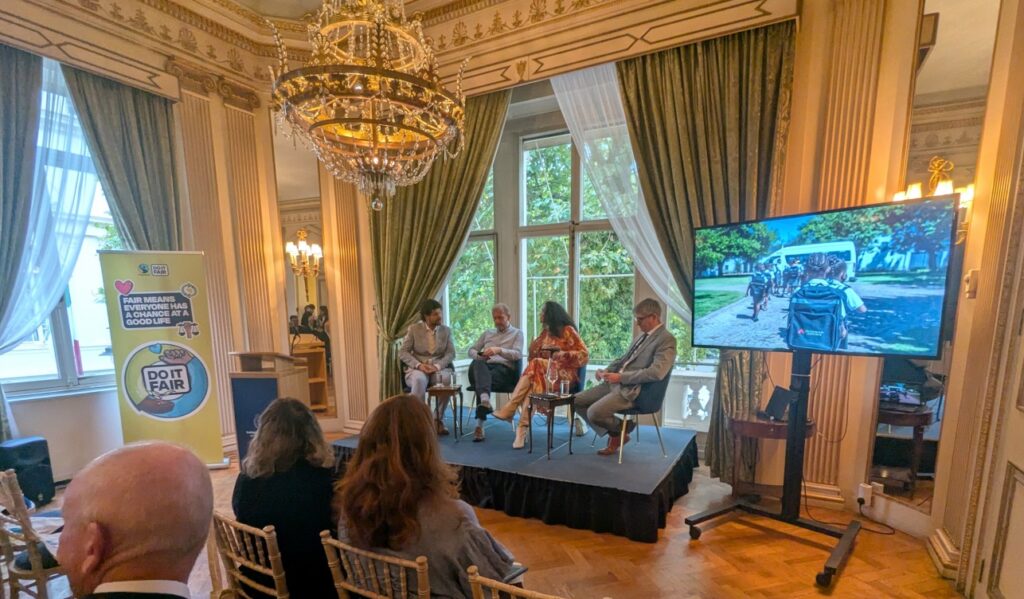
I was recently invited to a roundtable and tasting event hosted by the Fairtrade Foundation to mark Fairtrade Fortnight. The event took place at the Argentinian Ambassador’s Residence in London and offered a fascinating opportunity to explore the real-world impact of Fairtrade wine on communities in Argentina, Chile and South Africa. Following the discussion, we were treated to a walk-around tasting of Fairtrade wines from producers across these three countries.
The panel featured several key figures in the Fairtrade and wine sectors: Ed Robinson, Wine Buyer for The Co-op; Andrés Valero, Sustainability and CSR Leader at Bodega Argento; Aleesha Hansel, Fairtrade Foundation Ambassador, Wine Writer and Broadcaster; and Norberto Gugliotta, Commercial Manager for the Latin American and Caribbean Network of Fairtrade Small Producers and Workers. Importantly, producers who were present in the room were also invited to speak and respond to questions directly, adding valuable first-hand insight.
Ed Robinson opened the discussion by sharing his personal journey with Fairtrade wine. He spoke about how witnessing the tangible benefits on the ground had a lasting effect on him, leading him to become a long-term advocate. From the early days of offering basic Fairtrade wines, The Co-op has expanded to include more premium bottles, and it’s clear Ed has played a pivotal role in growing the category within the UK. He emphasised that customers often show strong loyalty to Fairtrade-labelled wines, drawn by the story as much as the product. For some, shopping Fairtrade is a deliberate ethical choice.
Aleesha Hansel followed by highlighting how Fairtrade’s ethical values align well with the expectations of Gen Z and millennial consumers, who increasingly seek transparency and social responsibility in the products they buy.
Producers spoke movingly about the real benefits Fairtrade has brought to their communities. Perhaps the most striking example came from La Riojana co-operative, which has used Fairtrade premiums to fund vital infrastructure projects including clean water systems, the co-funding of a local secondary school in Tilimuqui, a new health centre, and plans for social housing. There’s a circular element to this development. Children educated through these efforts are now returning to their communities to work in key jobs the local wine industry, creating long-term positive change.
We also learned that Fairtrade can help producers and vineyards establish a brand identity, especially for those without established reputations. The scheme works particularly well in conjunction with worker-shareholder models, further strengthening local ownership and investment.
However, the discussion did not shy away from challenges. A key concern is how to clearly differentiate Fairtrade from other certification schemes such as the Rainforest Alliance in the eyes of consumers. There’s perhaps a need to better integrate the ethical message with the pleasure and quality of wine itself. Will Wong, a regular presence at wine events, raised an important question about why Fairtrade wines are so rarely seen at wine tastings. Part of the answer is that Fairtrade wine still isn’t widely perceived as premium. Unlike products such as coffee, chocolate and bananas, Fairtrade wine does not typically command a price premium. The market remains relatively small, and not all Fairtrade wine producers opt to display the Fairtrade logo on all their bottles. However, there are more layers to this issue, which I mention later.
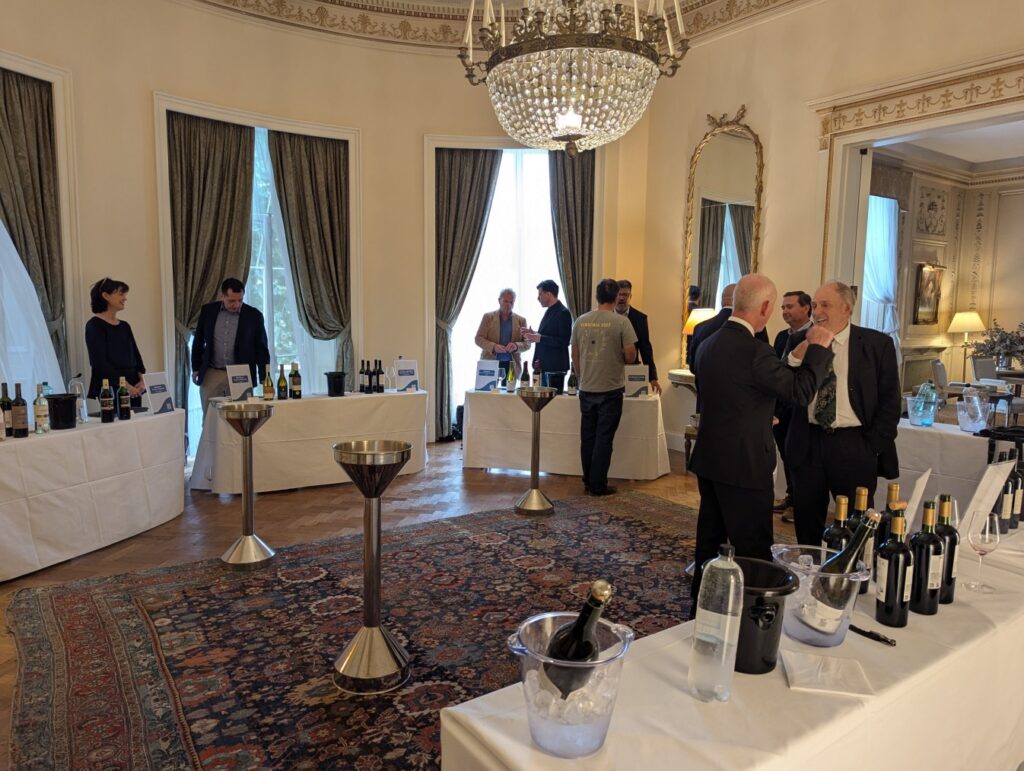
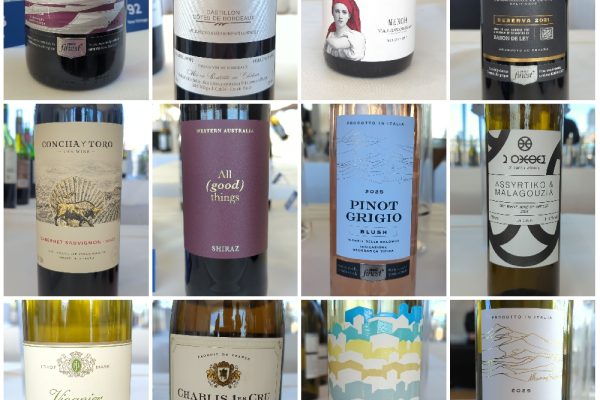
As for the wines themselves, we had the chance to taste 26 bottles from Argentina’s Alta Vista, Bodega Argento and La Riojana; Chile’s Emiliana, Lautaro, Red del Vino and Vidseca; and South Africa’s Bosman and Perdeberg. Below are the wines I found particularly notable:
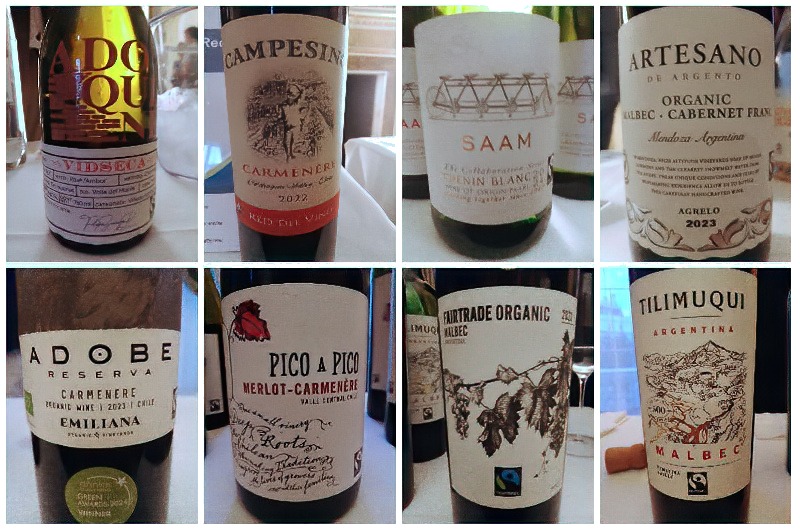
Vidseca Sparkling Rosé NV
From Chile, made with the País grape using the Charmat method, this rich and slightly sweet dry-farmed sparkling wine has a low water footprint and is mainly sold in Belgium, not yet available in the UK.
Campesino Carménère 2022
From Chile, this smoky, vanilla-tinged wine spends six months in oak, was voted one of Belgium’s best wines, formerly stocked by the Co-op, and is part of a project encouraging women in wine.
Pedeberg SAAM Chenin Blanc 2024
From South Africa, this non-irrigated wine is intensely fruity with almond notes and no oak influence.
Artesano de Argento Organic Malbec Cabernet Franc 2023
From Argentina, this deep-coloured wine with blackcurrant notes and medium tannins won a 2025 Decanter Gold with 95 points.
Emiliana Adobe Reserva Carménère 2023
From Chile, a rich and flavourful wine with a deep and inviting aroma.
Lautaro Pico & Pico Merlot Carménère 2023
From Chile, with 15% Carménère but dominated by its character, this full-bodied wine is bulk-shipped to the UK and sold by Ocado.
La Riojana Co-op Irresistible Malbec
From Argentina, a former favourite of mine with red berry aroma, cherry-driven flavour and a touch of spicy oak.
La Riojana Tilimuqui Malbec 2023
From Argentina, a slightly more intense version of the Co-op Irresistible Malbec, sold by Waitrose and Co-op and the second most popular Fairtrade wine in the UK, which helped to establish the Tilimuqui brand.
The wines were excellent overall, with some standing out as particularly different or distinctive. As not all are yet available in the UK, there are interesting opportunities here for importers.
At the end of the tasting, Will and I compared notes, and he had found more pieces to help answer his original question. It turns out that adding the Fairtrade logo to a wine label comes at a significant cost, which can put producers off. There’s also the issue of consumer awareness, which is largely limited to the Northern Hemisphere and only some parts. Fairtrade is still not well known in producers’ home markets or across the Southern Hemisphere.
This reveals a great deal still to be done, but also a major opportunity. Raising the profile and demand for Fairtrade wine could, in turn, encourage more producers, both established and new, to get involved. With ethics and sustainability increasingly in focus, now is the time to make that happen.