Dry January has become the annual moment when even committed wine drinkers are tempted to experiment, not just because they want to “be good”, but because it gives a time to reset habits, compare options and talk about it socially. Ahead of the previous 2025 Dry January challenge, Alcohol Change UK said 15.5 million people were planning a booze-free January, with saving money and better sleep among the top motivations.
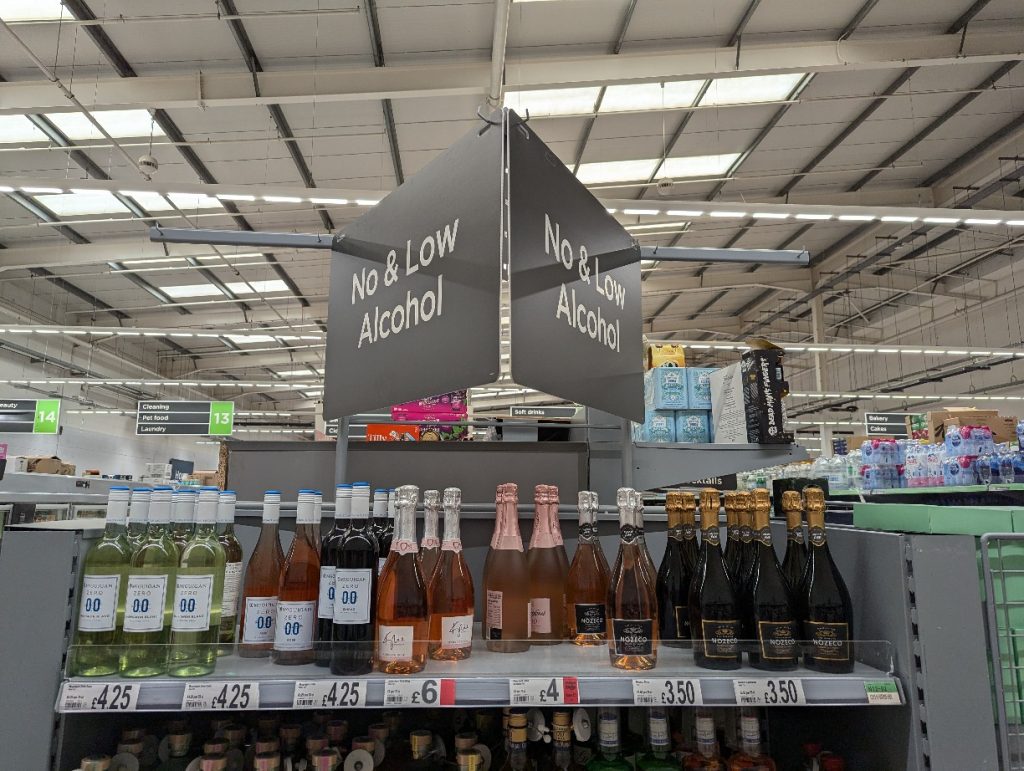
That one-month change has turned into a year-round shift. “Sober-curious” socialising has moved from niche to normal. People still want a drink in hand at a dinner party, a date, a work event, or a Tuesday night “treat”, but they may not want the alcohol, the next-day impact, or the sense that every occasion needs to involve drinking. Producers and retailers have responded, and the market has matured fast enough that non-alcoholic bottles are now visible in supermarket aisles, independent shops and wine lists, rather than being a dusty corner next to the soft drinks. In the UK, IWSR reported that no-alcohol wine grew in 2024 while low-alcohol wine declined, and it points to improving quality and availability alongside the broader wellness trend.
Availability matters because wine is so tied to occasion. If the only option in a restaurant is a sugary mocktail or a fizzy water, choosing not to drink can feel like opting out. Hospitality has been trying to catch up, but research and commentary still suggest the on-trade can lag demand, even as customer expectations rise. At the same time, brands have become smarter about how they position themselves. Some chase a premium, wine-like promise, borrowing cues from fine wine packaging, grape varieties and regions. Others lean into being an alternative on purpose, offering playful flavour additions or hybrid styles that do not insist on being “just like” a classic bottle. That split is increasingly visible in how people respond. When the product is framed as an exact substitute, disappointment can be sharper. When it is framed as its own thing, it often gets more goodwill.
What “non-alcoholic” actually means is less straightforward than most shoppers assume. In England, government guidance currently defines “alcohol free” as no more than 0.05% ABV, and “low alcohol” as no more than 1.2% ABV, with the broader “NoLo” category covering drinks designed to replicate alcoholic styles. In everyday retail, you will also see “non-alcoholic”, “dealcoholised”, “0.0%”, and “no alcohol” and the most useful tip is simply to check the ABV number. Even when a bottle is marketed as alcohol-free, it is rarely literally zero because removing every last trace is technically difficult and tiny amounts can remain after dealcoholisation. The UK Food Standards Agency has also explicitly noted that an absolute 0% ABV is unlikely across the category.
That small percentage can matter, depending on who is drinking. For many people, 0.05% is functionally negligible and far below what you would consume from a standard glass of wine. For others, any alcohol at all is a problem, whether for medical reasons, religious reasons, recovery, pregnancy or medication interactions. It is also worth knowing that labelling conventions vary internationally, so imported products can sometimes look “alcohol-free” at a glance while sitting closer to 0.5% ABV, which is one reason the ABV figure matters more than the marketing phrase. Taste and calories are part of the same story. Removing alcohol usually reduces calories because ethanol carries energy, but producers may add sweetness or other components to rebalance flavour, which can push calories back up. The label is again useful, because there is no single rule that all non-alcoholic wines are “low calorie”. Concerns about sugar additions also show up in sustainability and public health discussions around the category.
How it is made is the real dividing line between bottles that taste vaguely “wine-adjacent” and those that aim for something closer to the structure of wine. The best non-alcoholic wines usually start as normal fermented grape wine. Fermentation creates hundreds of aroma and flavour compounds, as well as acids, phenolics and texture elements that you simply do not get from unfermented grape juice. After that, alcohol is removed using one of several dealcoholisation techniques, each with trade-offs.
One approach is vacuum distillation, which removes alcohol at lower temperatures by reducing pressure, so the volatile components evaporate more easily without the high heat that would “cook” flavours. It is effective, but it can still strip aromas along with ethanol, which is why aroma capture and careful handling are so important. Another method you will often hear about is the spinning cone column, which uses vacuum and thin-film contact to separate volatile aroma compounds and alcohol. Producers can capture aromatics first, remove alcohol in a second pass, then blend the captured aroma fraction back into the wine. A third family of methods uses membrane processes such as reverse osmosis or related filtration techniques, where the wine is separated into fractions under pressure and alcohol is removed from the permeate, ideally allowing some desirable compounds to be retained and reassembled.
Because alcohol is not just an intoxicant but a structural component, producers often have to rebuild the wine after removal. For example, concentrated grape must or sweetness adjustments for balance, tannins for grip, and other natural flavour components to restore aroma and texture that alcohol helped carry. This is where quality diverges. Thoughtful reconstruction can produce something that feels deliberate, while heavy-handed sweetness can make the wine feel more like cordial, especially when the base wine was not strong enough to survive the process.
Understanding the taste starts with what alcohol does in conventional wine. Ethanol contributes body and viscosity, it lifts certain aromas into the headspace, it adds a sense of warmth and it changes how we perceive sweetness and acidity. Research reviews on alcohol reduction techniques also note that higher ethanol influences the perception of hotness and bitterness and interacts with aroma perception, while dealcoholisation can make acidity stand out more strongly. When you take alcohol away, the balance shifts. Non-alcoholic wines commonly feel brighter and more acidic, with a lighter body and a more obvious fruit profile. If sweetness has been added to compensate, the fruit can tip into jammy or “squash-like”. Tannin is particularly tricky. Without alcohol’s cushioning and body, tannins can feel either harsher and more drying, or oddly thin and unresolved, depending on how the wine has been rebuilt. Reds suffer most because red wine enjoyment leans so heavily on tannin structure, aromatic complexity and length, all of which are harder to reproduce once ethanol has gone.
Consumer sentiment research echoes that sensory reality. A large review-based study reported that sparkling and rosé non-alcoholic wines tend to perform better across markets, likely because acidity and bubbles help mask the missing alcohol, while red non-alcoholic wines attract the most negative sentiment, often described as thin, weakly aromatic and lacking complexity. It also notes that British consumers were the most negative among the countries compared, and that higher prices were linked to more positive reviews, suggesting that the UK market is unforgiving of cheaper examples. That aligns neatly with what many people find in tasting. Sparkling styles give you structure from fizz and rosé can carry freshness and fruit without demanding the same depth as a red.
So why is non-alcoholic wine suddenly everywhere, even with those well-known weaknesses? Partly because the market opportunity is real. IWSR forecasts continued growth for the no-alcohol segment and frames the category as benefiting from wellness-led moderation, trial behaviour and improved quality, even as it acknowledges barriers like shelf space and availability. Partly because the wine trade has its own incentives. Independent retailers have reported rising interest in lower-alcohol wines, influenced by duty dynamics and consumer demand for bottles at or below 12% ABV, and they flag sparkling non-alcoholic wine as a growing niche supported by improved production methods. In other words, there is experimentation at both ends. Consumers trialling new habits and the trade trialling new products and price points.
There is also a growing recognition that “wine without alcohol” is not the only route to meeting the same need. Some producers and venues are offering sophisticated alternatives that borrow wine’s ritual and complexity without trying to clone it, such as sparkling teas or botanical aperitif-style drinks designed for spritzes. A recent report on wineries offering non-alcoholic tastings described how some have moved towards curated, high-end non-alcoholic flights because dealcoholised wines can underwhelm, while still wanting to deliver a layered tasting experience. That is an important clue to where the category may end up. Not one perfect imitation, but a broader “adult drinks” space where non-alcoholic wine is one option among several.
Sustainability is the shadow topic that often gets missed in the rush to celebrate moderation. Dealcoholisation adds extra processing steps, which can increase energy and resource use compared with conventional winemaking, and there are debates about whether the category’s health halo is complicated by sugar adjustments used to make products more palatable. The criticism can be blunt. One industry voice argues that dealcoholised wine is energy-intensive and costly, and that it can end up needing additives to recreate taste and stability, raising questions about authenticity and environmental impact. None of this means non-alcoholic wine is automatically “bad”, but it does mean the category has trade-offs, and it is reasonable for drinkers to weigh them, especially when a bottle is priced like proper wine.
My personal take is that the majority of no-alcohol wines I have tried at press tastings have been insipid and/or far too sweet, and generally nothing like wine. The few I have found worth reviewing have tended to be very premium, which fits the broader pattern that quality improves with better base wine, better technology and more careful reconstruction. Is it worth it, practically and financially? Sometimes, but not always, and it depends on what you want the drink to do. If you want a convincing wine ritual with minimal alcohol, the best bottles can achieve that, particularly sparkling and some whites, but I still question why we keep trying to make something taste like something it cannot be, especially when the process can be resource-heavy.
If the goal is simply “lighter drinking” rather than “zero”, I would sooner point people towards naturally lower-alcohol styles where the wine is not dismantled and rebuilt. German Riesling in Kabinett styles, Moscato d’Asti, some Vinho Verde, and a range of lighter sparkling wines can sit at refreshingly modest alcohol levels while still tasting like themselves. If the goal is genuinely no alcohol, I would also encourage looking wider than wine rather than digging deeper into wine. Well-made botanical aperitifs for spritzes, grown-up soft drinks, sparkling tea blends and other non-alcoholic options can feel less like a compromise, because they are not pretending to be a wine in the first place.