Building upon the my previous article on Understanding Bordeaux Wines, this piece looks into the world of Cru Bourgeois du Médoc, a classification that offers high-quality yet accessible wines from Bordeaux’s Left Bank.
The term Cru Bourgeois has historical roots that trace back to the Middle Ages. During this period, the term “bourgeois” referred to the citizens, or bourgeoisie, who lived in the “burgh” (bourg) of Bordeaux. These citizens, often wealthy and influential, began acquiring some of the region’s most esteemed lands for viticulture. Over time, the designation of Cru Bourgeois became associated with these holdings as these landowners cultivated vineyards that produced exceptional wines.
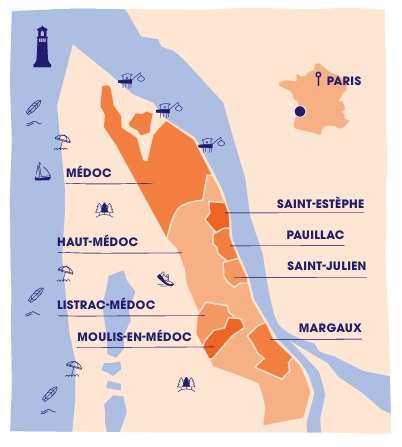
The Médoc Appellations
The Crus Bourgeois classification encompasses châteaux across eight key Médoc appellations:
- Médoc
- Haut-Médoc
- Listrac-Médoc
- Moulis-en-Médoc
- Margaux
- Pauillac
- Saint-Julien
- Saint-Estèphe
Each appellation contributes unique characteristics influenced by its specific terroir, with soils ranging from gravel to limestone and clay, which shape the wines’ style and structure.
The Art of the Blend
Cru Bourgeois wines are classic Bordeaux red blends, typically led by Cabernet Sauvignon and Merlot, with smaller quantities of Cabernet Franc, Petit Verdot, Malbec and occasionally Carménère. The proportions in each blend vary by producer, allowing each château to highlight its individual style.
Flavour Profile and Style
Cru Bourgeois wines are known for their bold and powerful character, marked by high tannins, acidity and alcohol. They exhibit a complex range of aromas and flavours, including:
- Dark fruits like cassis, blackberry, and cherry
- Herbal notes of mint and violets
- Earthy elements such as leather and smoke
These wines are well-balanced, offering both fruit-forward qualities and a strong structure, making them approachable in youth yet capable of aging.
Cru Bourgeois Classification System
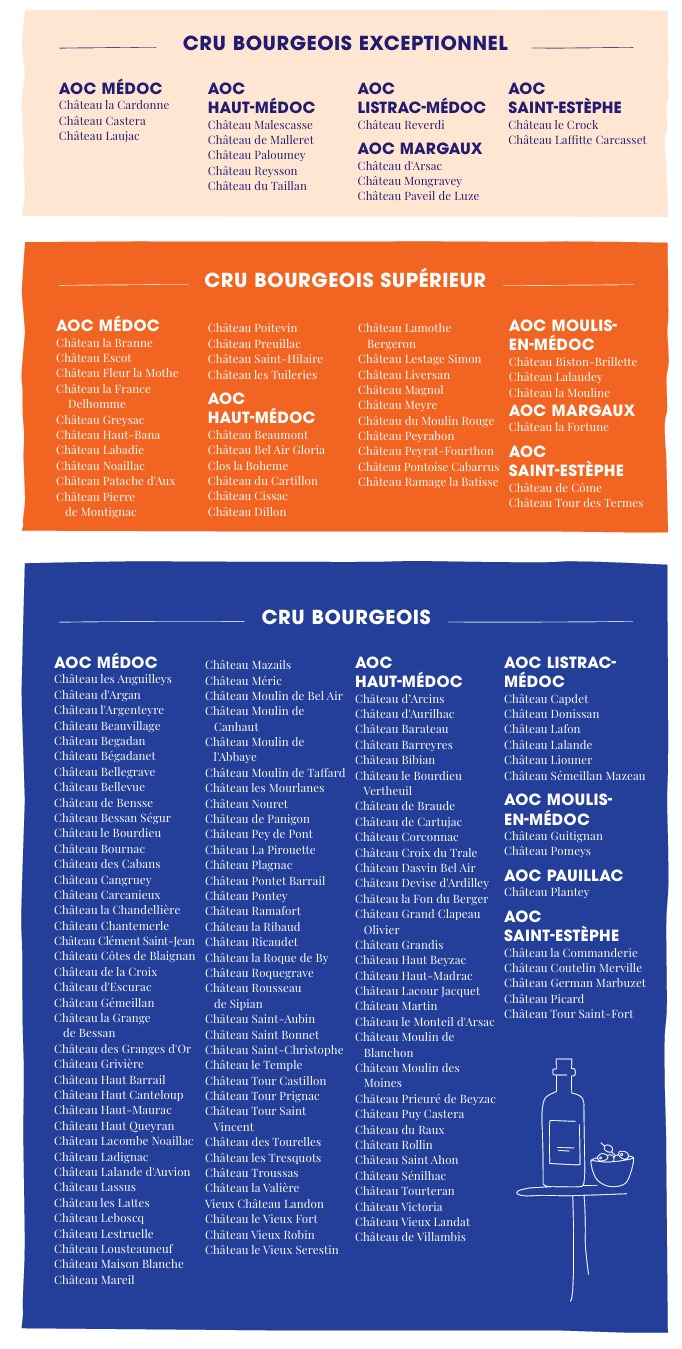
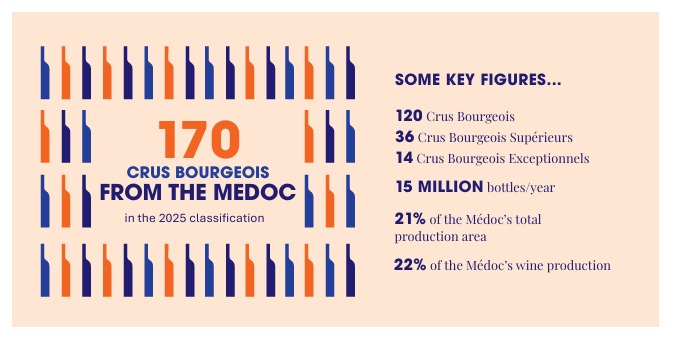
The Cru Bourgeois classification is structured into three tiers, representing ascending levels of quality:
- Cru Bourgeois
- Cru Bourgeois Supérieur
- Cru Bourgeois Exceptionnel
The classification, designed to distinguish the quality among these wines, is awarded for five-year terms based on blind tastings of five vintages. Rigorous standards are upheld by QB Vérification, an independent body ensuring impartiality and precision throughout the process. The strict criteria are approved by French public authorities.
Quality and Accessibility
Cru Bourgeois wines offer great quality-to-price ratios, generally priced between £15 and £35 per bottle. This affordability makes them an attractive entry point for those wishing to explore Bordeaux wines without the high prices often associated with the region’s classified growths. The wines benefit from both traditional winemaking techniques, such as aging in oak barrels, and innovative practices, including the use of amphorae, enhancing the wines’ texture and complexity.
New for 2025
The 2025 Crus Bourgeois du Médoc classification ushered in a far more demanding framework designed to drive consistency, authenticity and environmental responsibility across the region. All candidates were required to present five vintages for compulsory blind tasting, a notable shift from the 2020 rules that had allowed established members to bypass this step. Environmental certification also became essential, with level-2 accreditation needed even for entry and HVE certification required for the higher Supérieur and Exceptionnel tiers, reflecting the growing importance of responsible viticulture in Bordeaux. These stricter requirements, combined with a tougher economic climate and the voluntary withdrawal of some estates, naturally led to a smaller group of classified properties, falling from 250 to 170.
Ageing and Enjoyment
While some Cru Bourgeois wines are made to age, many are made for earlier drinking, offering a balance between structure and approachability. These wines provide a taste of Bordeaux’s renowned Cabernet Sauvignon-based blends with a focus on accessibility, making them ideal for both casual and enthusiast wine drinkers.