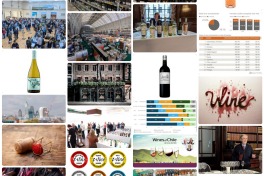
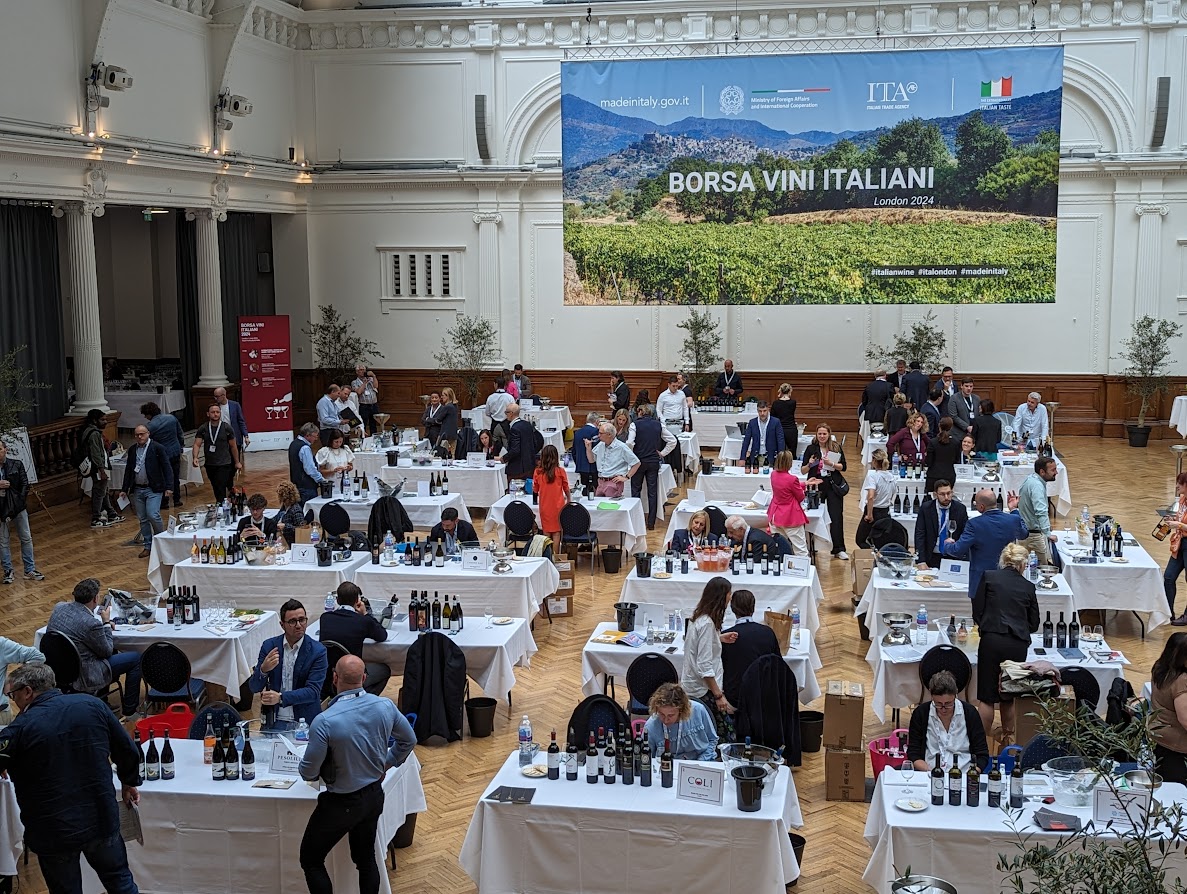
I had the pleasure of attending the Borsa Vini Italiani, a trade event hosted by the Italian Trade Commission, at the Royal Horticultural Halls in London on 4th June 2024. The event featured 41 exhibitors showcasing 197 wines from 13 regions including Piedmont, Lombardy, Friuli-Venezia Giulia, Veneto, Tuscany, Marche, Abruzzo, Campania, Apulia, Calabria, Sicily, Sardinia and Umbria.
My aim for this visit was to explore mainly atypical Italian wine offerings. This approach led me to discover some unique wines, including rosés made from unexpected red grape varieties, wines from non-native grapes and even Champagne-like wines. However, I couldn’t resist sampling some outstanding Negroamaro and Primitivo wines towards the end.
The day began with an insightful masterclass by Patrick Schmitt MW titled ‘International Grapes in Italy: Where They Shine and Why’. This session focused on wines made from ‘international’ grapes rather than native Italian varieties. Patrick explained that non-native grape wines have become more popular because they are niche and novel but, nevertheless, they can still take on the characteristics of their Italian terroir.
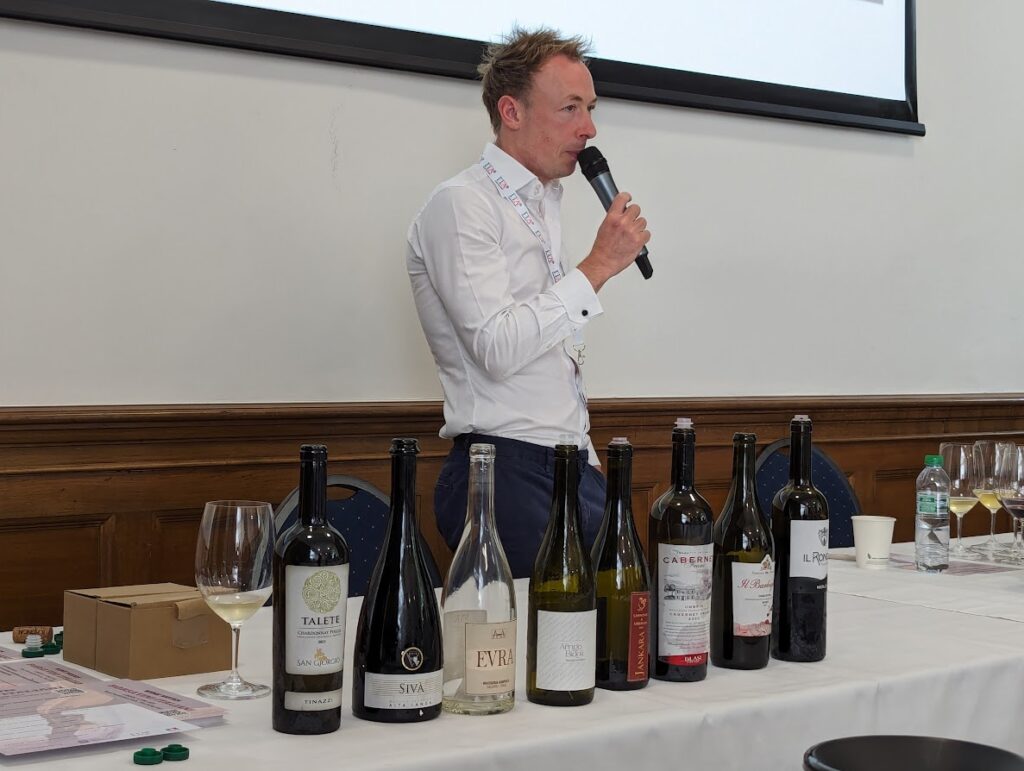
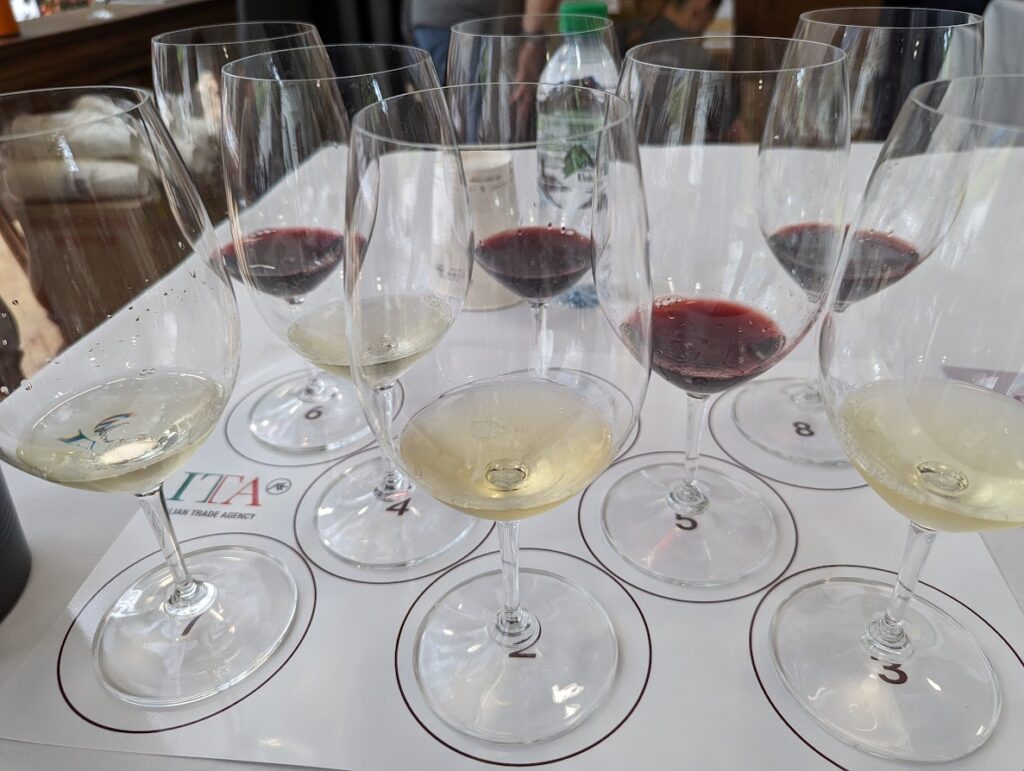
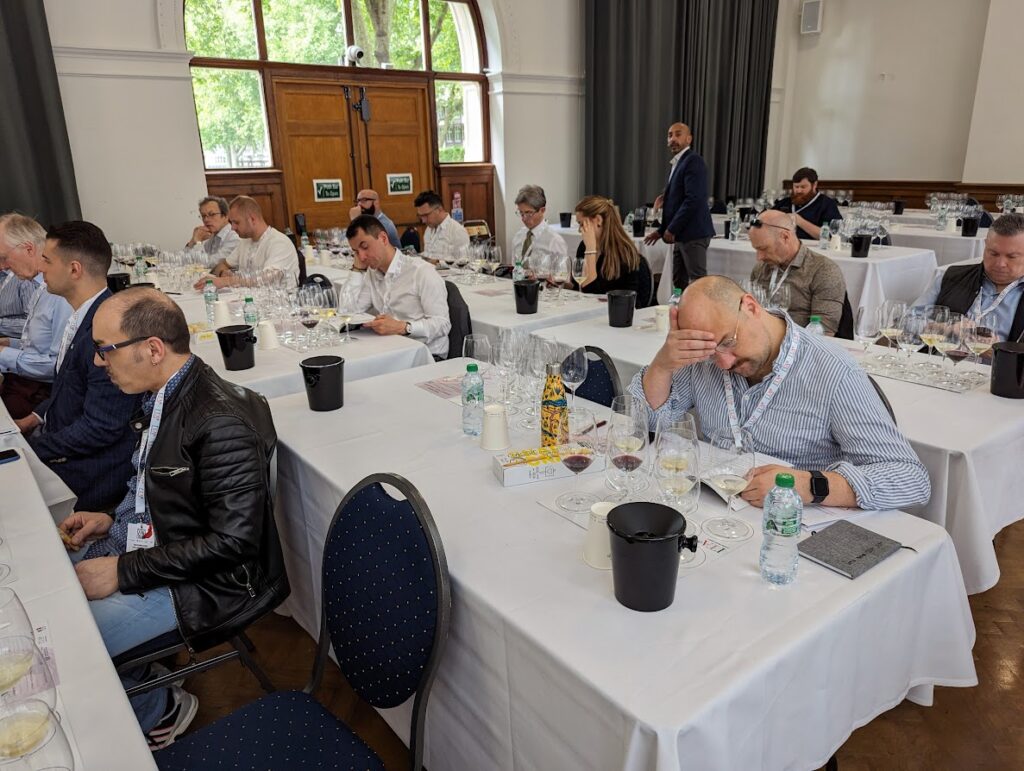
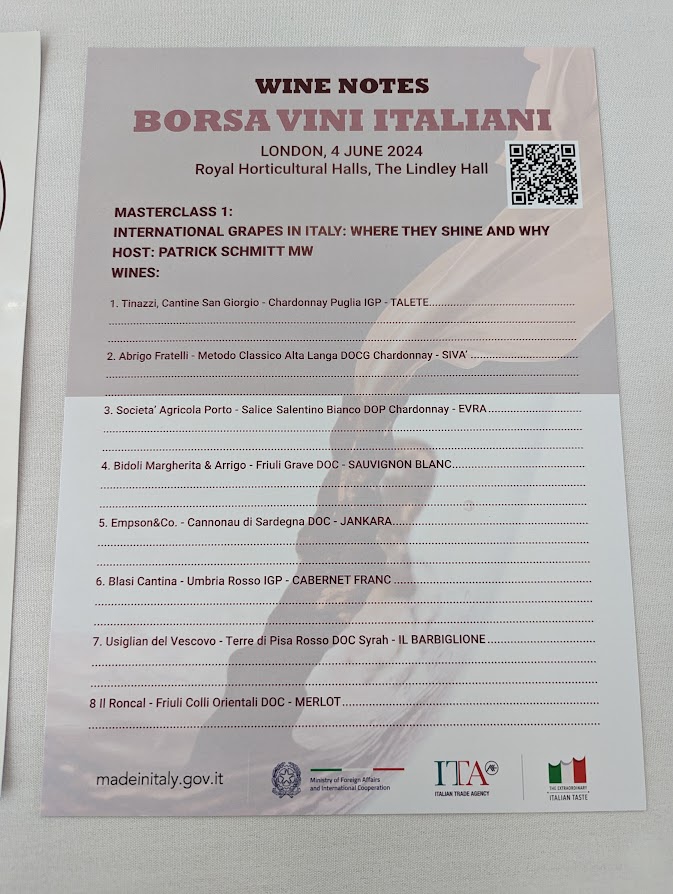
Patrick mentioned how varietals such as Chardonnay, Cabernet Sauvignon and Syrah are almost brands in themselves, implying wines made from them are capable of selling well even when produced in unexpected regions. He also highlighted the intriguing history of grapes like Pinot Grigio, an unstable mutation of Pinot Noir, and the success of Super Tuscans, which owe their reputation to non-native varietals. We tasted two Chardonnays from Puglia, a sparkling Piedmontese Chardonnay, a Grave Sauvignon Blanc, a Sardinian Cannonau (Grenache), a Cabernet Franc from Umbria and a Terre di Ross Syrah. The standout for me was the Merlot Il Roncal – Friuli Colli Orientali DOC 2019, with its coffee, leather notes and gentle tannins.
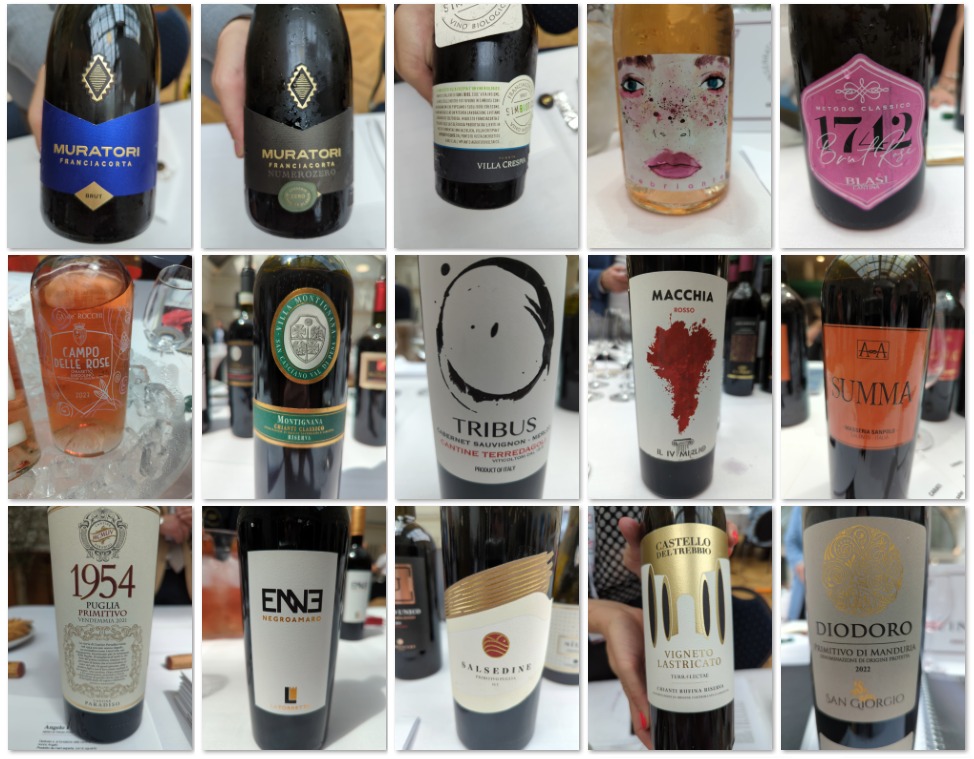
Exploring the exhibitors, I began with three Franciacorta wines from Beacon S.R.L. These sparkling wines are made in the traditional method like Champagne. The Franciacorta Brut, made from Chardonnay, Pinot Bianco and Pinot Nero, was slightly sweet with floral and citrus notes. The Franciacorta NumeroZero, a 100% Chardonnay with peach and pear flavours and no added dosage, was particularly refreshing. The highlight was a special, small-production no-sulphites version with a strong brioche ‘on the lees’ taste, comparable to a great Champagne.
Next, I moved on to the rosés and found some unusual and aromatic options. The Inebriante IGT Sangiovese Rosè Wine 2022 from Tuscany stood out with its striking bottle graphics by a London artist depicting the winemaker’s mother. The San Giorgio – Negroamaro Rosato Salento “Kleio” 2023 offered a fruity and refreshing profile. Another notable find was the Bardolino Chiaretto Campo delle Rose 2023, made from Corvina and Rondinella, with aromas of wild cherry and floral notes and a mouthfeel I haven’t experienced in any UK-sourced rosés.
In the reds, I came across the exceptional Summa 2021, made from Susumaniello, a grape variety I hadn’t experienced before. This bold red was soft, dry yet fruity-sweet. The Tribus Rosso 2023, based on Merlot and Cabernet Sauvignon, impressed me with its bouquet of small black fruits, cherries, spicy notes and oak. Although described as entry-level, it had a complexity that suggested a higher quality.
Finally, I indulged in some Primitivos and Negroamaros and found these particularly outstanding:
- Posta Piana Primitivo 2022
- 1954 Primitivo 2022
- NICKE Negroamaro del Salento IGP 2017
- Salsedine Primitivo Puglia IGT 2022
- San Giorgio – Primitivo di Manduria Diodoro 2022
The Borsa Vini Italiani presented an excellent opportunity for UK distributors to discover interesting wines. My exploration of the ‘edges’ of Italian wines was both educational and rewarding, revealing the diverse and innovative approaches winemakers are taking with both native and non-native grape varieties.