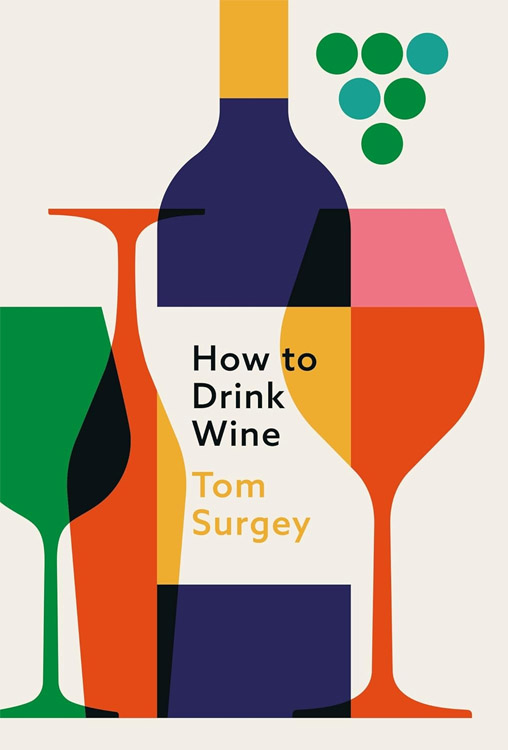
How to Drink Wine

Posted by

Tom Surgey’s How to Drink Wine is a refreshingly unpretentious guide that demystifies the world of wine. Tom, a well-regarded wine expert, brings a wealth of experience from his years in the industry, from starting as a young enthusiast at The Ivy in London to crafting wine lists for restaurants and representing top wine producers globally. His informal, conversational tone invites readers in, making this book accessible and engaging for beginners, yet still valuable for those with a seasoned palate.

At first glance, How to Drink Wine is surprisingly compact, especially for a book written by someone with Tom’s experience. But don’t be fooled, every page is packed with valuable knowledge. Rather than padding the content with lengthy personal stories like most wine book authors, Tom keeps his explanations concise and to the point, weaving in down-to-earth insights that make the reader feel as though they’re having a chat with a friend. His aim isn’t to impress but to share practical tips that can transform an intimidating wine list from a threat into an opportunity for enjoyment.

The book covers everything from the basics of wine acidity, colour, and terroir to more advanced topics like vineyard lifecycles, grafting and winemaking vessels. Tom explains skin contact, biodynamic practices and how wine is a snapshot of its origin, preserving the essence of the vineyard and season. There’s a lot to learn here, but thanks to Tom’s candid style, it never feels overwhelming.

A standout section is his guidance on tasting wine:

“I have friends in the wine trade that sniff EVERYTHING. They can’t walk past a window box without stopping. Bugger that. But if you get a chance to be conscious and enjoy aroma and flavour, then take it. It will help.”

Tom is refreshingly blunt about wine, calling out folklore and letting readers know when they need to make their own mind up about things. His humour also shines in self-deprecating remarks, such as:

“I absentmindedly swirl cups of tea and glasses of water now… which I think adds to my flamboyant character. Others probably just think I’m a tit.”

In terms of practical advice, How to Drink Wine is full of gems. From reading labels and navigating wine lists to pairing food and coping with hangovers, the book covers it all. For Tom, wine is about enjoyment and exploration, wisely urging readers to taste widely across styles and varieties to discover their own tastes.

With an attractive design, this book is an ideal gift for any wine lover, whether they’re just starting out or have years of experience. Its approachable style makes it perfect for anyone who wants to deepen or fill in their knowledge without the formality or elitism often found in wine literature. At £14.99, it’s also available on Kindle and as an audiobook.


Follow

Did You Know?

In 2024, the UK was the second-largest export market for Champagne globally, after the United States. More

Local UK bottling of wine represents about 40% of imported wine. More

Around 1% of people, typically severe asthmatics, have a sulphite sensitivity. More

A large 80% of Australian wine arrives in the UK in bulk. More

Only about 0.02% of Australia’s landmass is dedicated to vineyards. More

In 2024, New Zealand produced only 1% of the World’s wine. More

In 2024, the US imported 37% of World production of Pinot Grigio and the UK was is in second place at 27%. More

In 2024, the UK was South Africa’s largest export market, with 40% of total exports. More

In 2024, the United Kingdom imported 22.3 million bottles of Champagne, a decline of 12.7% compared to the previous year. More

Larger Champagne producers source grapes from as many as 80 different vineyards throughout Champagne. More

Champagne houses and growers collectively produce around 300 million bottles annually. More

In 2025, the Champagne region was home to about 2,124 Champagne houses and approximately 19,000 growers. More

Provence is one of the leaders in the conversion to organic viticulture, with 61% of vineyards certified. More

8% of the South Africa’s grape production is Fairtrade-certified. More

Up to 80% of wine aroma compounds come from grape skins. More

Glycerol is the third-largest component of most dry wines after water and alcohol which is why they so often feel ‘smooth’ or ‘silky’ in the mouth. More

Humans are more than 400 times more sensitive to bitter than sweet. More

Humans can detect the earthy molecule geosmin at about 100 parts per trillion and camels are so sensitive to it they can locate damp ground from roughly 50 miles away. More

During the phylloxera crisis of the nineteenth century, 90% of Europe’s vineyards were destroyed. More

In 2025, for La Vieille Ferme, also known as “The Chicken Wine”, sales surged by 49.4% to £110.8 million. More

In 2025, in the UK, Yellow Tail held the top position with sales, marking a 9.8% increase over the previous year. More

In 2024, the UK was the second-largest wine importer in volume and value. More

In 2024, the UK was the fifth-largest wine-consuming country globally. More

In 2025, global wine consumption continued its downward trend, estimated at 214.2 million hectolitres, the lowest since 1961. More

In 2025, online alcohol sales had a 20% increase in value over five years. More

In 2025, the number of UK vineyards rose to 1,104 and wineries to 238, with land under vine expanding to 4,841 hectares, a 510% increase since 2005. More

Moët Hennessy alone commands nearly 46.66% of the Champagne market, with the top three producers together holding about 61%, and the top five controlling over 72%. More

In 2024, the Champagne market was worth roughly €3.92 billion. More

In the marketing year 2023/24, white wine accounted for roughly 55% of Spain’s output, whereas red and rosé together made up about 45%. More

In the UK, 92% of wine is consumed within 48hrs of purchase. More

The majority of wines, 95%, use commercial rather than wild yeast. More

Between 0.5 and 10 litres of water, per litre of wine, are needed for cleaning during winemaking. More

Machine harvesting can achieve up to 100 tons of fruit per day vs 1 ton for a human. More

In Germany, 2025 was the smallest wine vintage since 2010. More

The majority of vineyards, 90% in 2019, are farmed with heavy chemical interventions. Only 6% are organic. More

90% of low and coastal areas in south Europe and California will no longer be able to produce good wine by the end of the century. More