, ,

AI-Assisted Wine Discovery

Posted by

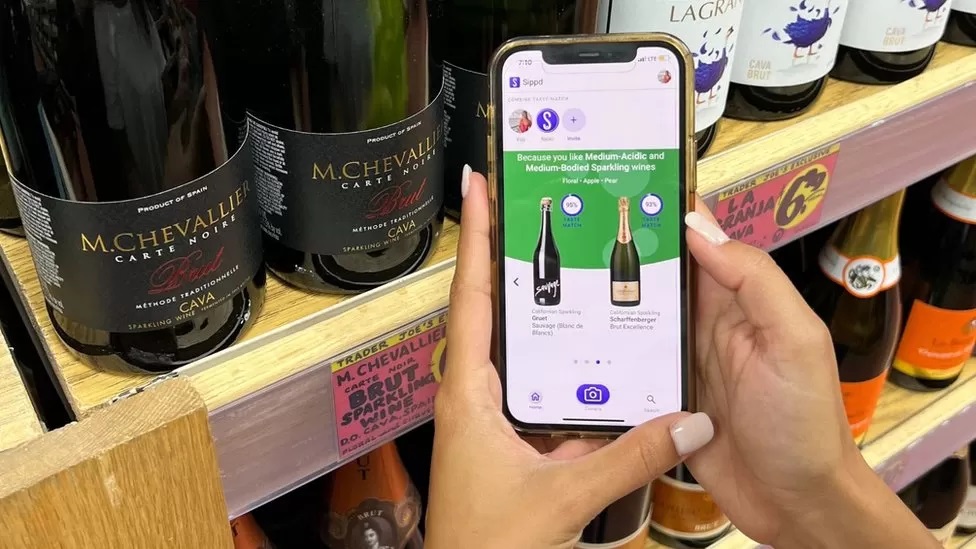
Last year, the BBC highlighted the growing trend of AI-powered wine recommendation apps, such as FinpåVin, which are changing the way people select their next bottle of wine. However, Sippd, a notable application in this field, has recently shut down, raising doubts about the necessity of such technology for simplifying the process of choosing wine.

The story of Sippd, created by Blake Hershey, illustrated the demand for innovative solutions in the wine industry. Hershey recognised the difficulty individuals faced in choosing wine without extensive knowledge or advice. This led to the creation of Sippd, which offered a personalised journey in wine discovery, beginning with a quiz to understand user preferences and evolving with each interaction. Despite Sippd’s closure, its approach and the concept behind it remain interesting.

The popularity of these apps, as seen with Sippd’s initial success in the US with over 100,000 users and FinpåVin’s unique approach in Norway, demonstrates their appeal. They cater not just to novice drinkers but also serve as platforms for wine education and exploration. John Downes, a Master of Wine, notes the significance of these apps in connecting with people in ways the traditional wine trade often does not.

However, there is a counterargument. Wine writer Jamie Goode and Oxford University professor Sandra Wachther suggest that while AI can assist, it cannot fully replicate the human experience and expertise in wine selection. Goode emphasises the complexities of wine that may be beyond the scope of an app.

While AI and apps like FinpåVin provide an accessible introduction to the world of wine, enhancing knowledge and breaking down barriers, the essence of wine enjoyment, in my personal view, is rooted in the physical journey itself, not the destination. It’s about exploration, tasting, personal experiences and the unexpected joy of discovering a bottle that truly resonates. In this journey, technology serves as a very helpful guide, but the true delight in wine lies in the adventure of discovery, driven by our senses and individual tastes.
Follow

Did You Know?

In 2024, the UK was the second-largest export market for Champagne globally, after the United States. More

Local UK bottling of wine represents about 40% of imported wine. More

Around 1% of people, typically severe asthmatics, have a sulphite sensitivity. More

A large 80% of Australian wine arrives in the UK in bulk. More

Only about 0.02% of Australia’s landmass is dedicated to vineyards. More

In 2024, New Zealand produced only 1% of the World’s wine. More

In 2024, the US imported 37% of World production of Pinot Grigio and the UK was is in second place at 27%. More

In 2024, the UK was South Africa’s largest export market, with 40% of total exports. More

In 2024, the United Kingdom imported 22.3 million bottles of Champagne, a decline of 12.7% compared to the previous year. More

Larger Champagne producers source grapes from as many as 80 different vineyards throughout Champagne. More

Champagne houses and growers collectively produce around 300 million bottles annually. More

In 2025, the Champagne region was home to about 2,124 Champagne houses and approximately 19,000 growers. More

Provence is one of the leaders in the conversion to organic viticulture, with 61% of vineyards certified. More

8% of the South Africa’s grape production is Fairtrade-certified. More

Up to 80% of wine aroma compounds come from grape skins. More

Glycerol is the third-largest component of most dry wines after water and alcohol which is why they so often feel ‘smooth’ or ‘silky’ in the mouth. More

Humans are more than 400 times more sensitive to bitter than sweet. More

Humans can detect the earthy molecule geosmin at about 100 parts per trillion and camels are so sensitive to it they can locate damp ground from roughly 50 miles away. More

During the phylloxera crisis of the nineteenth century, 90% of Europe’s vineyards were destroyed. More

In 2025, for La Vieille Ferme, also known as “The Chicken Wine”, sales surged by 49.4% to £110.8 million. More

In 2025, in the UK, Yellow Tail held the top position with sales, marking a 9.8% increase over the previous year. More

In 2024, the UK was the second-largest wine importer in volume and value. More

In 2024, the UK was the fifth-largest wine-consuming country globally. More

In 2025, global wine consumption continued its downward trend, estimated at 214.2 million hectolitres, the lowest since 1961. More

In 2025, online alcohol sales had a 20% increase in value over five years. More

In 2025, the number of UK vineyards rose to 1,104 and wineries to 238, with land under vine expanding to 4,841 hectares, a 510% increase since 2005. More

Moët Hennessy alone commands nearly 46.66% of the Champagne market, with the top three producers together holding about 61%, and the top five controlling over 72%. More

In 2024, the Champagne market was worth roughly €3.92 billion. More

In the marketing year 2023/24, white wine accounted for roughly 55% of Spain’s output, whereas red and rosé together made up about 45%. More

In the UK, 92% of wine is consumed within 48hrs of purchase. More

The majority of wines, 95%, use commercial rather than wild yeast. More

Between 0.5 and 10 litres of water, per litre of wine, are needed for cleaning during winemaking. More

Machine harvesting can achieve up to 100 tons of fruit per day vs 1 ton for a human. More

In Germany, 2025 was the smallest wine vintage since 2010. More

The majority of vineyards, 90% in 2019, are farmed with heavy chemical interventions. Only 6% are organic. More

90% of low and coastal areas in south Europe and California will no longer be able to produce good wine by the end of the century. More