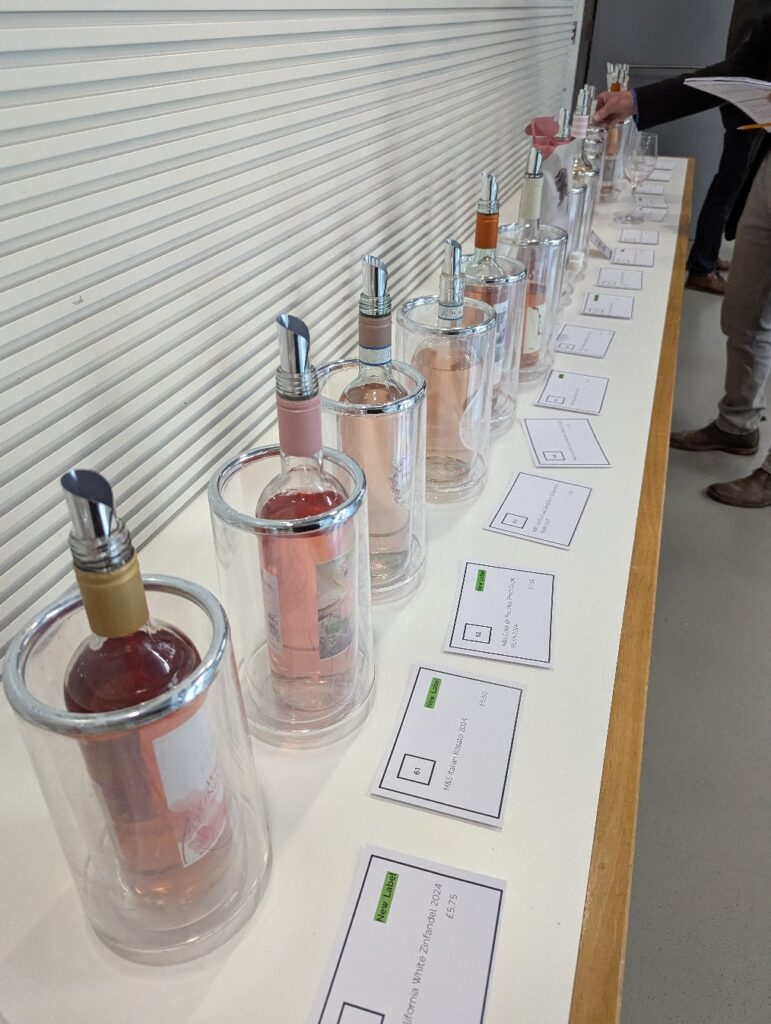
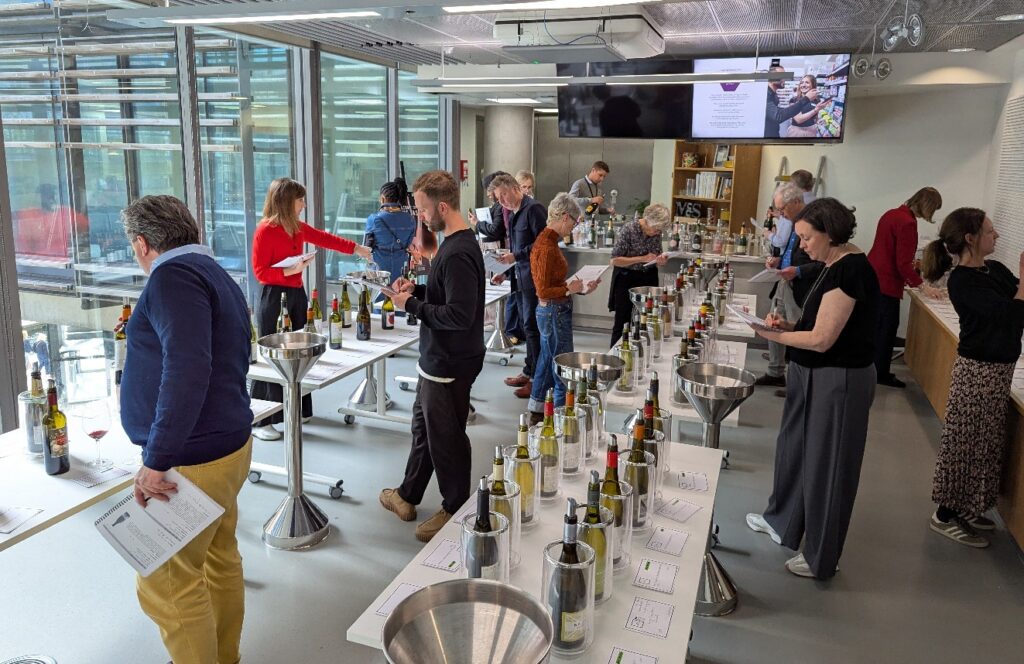
In April 2025 I went to the M&S press tasting in London, where the retailer showcased a raft of new wines and several old favourites. Innovation in English wine was front-and-centre. M&S has released its first own-label Charmat-method sparkling, meaning the second fermentation is carried out in tank rather than in the bottle. Alongside this comes the new, traditional method, Rockferne Brut, made exclusively for M&S by Roebuck Estates in Sussex and highlighted among my picks below.

A clear trend was a surge in demand for smaller formats. M&S has introduced twelve new half-bottles and minis this month, creating one of the most extensive ranges on the high street. Rosé also impressed. The chain sells two bottles every second during the peak of summer and will add seven new rosés this season. The ones I tried were markedly tastier than many I have tried this year, with welcome diversity beyond the usual Provence fare. Finally, the popular ‘Found’ value range of affordable wines, off the beaten track, has expanded to eighteen wines, with seven newcomers and four returning favourites.
I tasted more than one hundred wines. The following were the ones that particularly caught my eye:
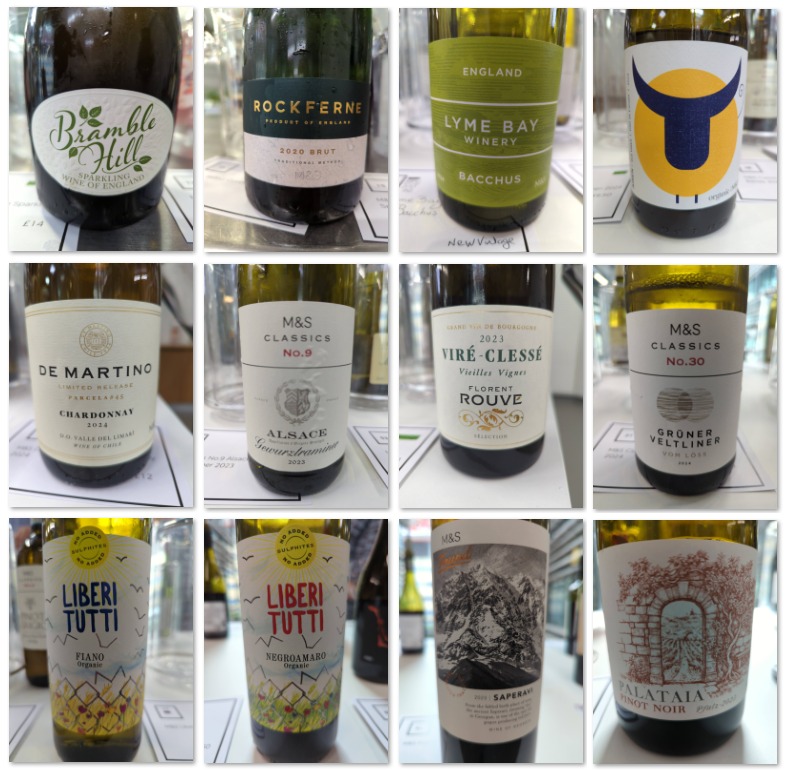
Bramble Hill English Sparkling Brut 2022 (12.5%, £14) is a blend of 40% Chardonnay, 20% Pinot Meunier, 20% Pinot Noir, 10% Bacchus and 10% other grapes. One of my favourites last year, it’s different for some reason this time. The brioche character has gone for some reason, but intense pear aroma and flavour more than compensate. Its second fermentation in tank makes production faster and less expensive than the traditional method, a sign of things to come as the English sparkling category grows.
Rockferne English Sparkling Brut 2020 (12%, £28) offers a Champagne-like profile from 56% Chardonnay, 29% Pinot Noir and 15% Pinot Meunier. Base wines are fermented in old Burgundian oak, then the wine undergoes traditional in-bottle secondary fermentation and ages on lees for at least twenty-four months. A subtle oaky, lemony nose leads to intense brioche, rich fruit and a long finish.
Lyme Bay Bacchus 2024 (12%, £15) is the newest vintage of a wine I selected last year and it feels even more intense now. Dry and highly aromatic, it bursts with lime, elderflower, passion fruit and grapefruit, making a convincing English alternative to New Zealand Sauvignon Blanc.
Organic Airén 2024 (11%, £6.50) comes from Castilla-La Mancha, Spain. Made from 100% Airén and aged briefly on lees, it is a fresh, dry white with orange-citrus and lightly floral notes, decent length and outstanding value.
De Martino Limarí Chardonnay 2024 (13%, £12) comes from Chile’s Limarí Valley. Fermented in used French oak and aged further in barrel, it balances citrus, apricot and a hint of salinity with just the right touch of oak, delivering a fresh yet smoothly textured mouthfeel that will shine with food.
Classics No 9 Alsace Gewurztraminer 2023 (13%, £11), produced by Cave de Turckheim, is fragrant with ripe apricot. On the taste, it has floral lychee and gentle honey, offering a full texture, fine length and sweetness that doesn’t cloy.
Viré-Clessé Florent Rouve 2023 (13.5%, £18) from Burgundy is 100% Chardonnay fermented in a mix of new and seasoned oak and aged on lees. Subtle oak and ripe apricot aroma lead to a dry, rounded taste with slight minerality that paired beautifully with the M&S lunch dishes served on the day.
Liberi Tutti Organic Fiano 2024 (12%, £9) from an Orion Wines, Puglia, is produced without added sulphites. A honeyed aroma introduces intriguing mango and nutty flavours, with a long, very nutty finish that represents excellent value for something, taste-wise, off the beaten track.
Liberi Tutti Negroamaro 2023 (13.5%, £10.50), organic and also without added sulphites, sees half the wine matured six months in French tonneaux and Slavonian oak. Deeply coloured with a black-fruited nose, it is, surprisingly, medium rather than full bodied and has a touch more tannin than usual and I expect would complement many Italian dishes.
Found Saperavi 2023 (13%, £11) is made by Tbilvino in Georgia’s Kakheti region. The 100% Saperavi wine, 20% of which is oak-aged, has a dark hue, leathery aroma, ripe cherry and blackberry fruit, a hint of vanilla and medium-to-full body and tannin. Cabernet Sauvignon drinkers should feel right at home.
Palataia Pinot Noir 2023 (13%, £10) from Pfalz, Germany, made by Gerd Stepp, spends six months in used barriques. Slightly brown-tinged in colour, it follows an oxidative style with savoury, cranberry and raspberry flavours and delivers great value.
As usual, M&S presented a great line-up of English wines and this year’s rosés looked particularly strong as a group. Keen pricing at entry level, especially the Organic Airén, confirms that the retailer continues to combine quality with accessibility.
Not all wines available in all stores and prices subject to change
Ocado’s prices may differ to those in M&S stores